REVIEW · BAYEUX
Normandy WW2 Classic Jeep Tour
Book on Viator →Operated by GoldBeachCompany · Bookable on Viator
A WWII jeep brings D-Day to life. On this private, English-guided ride from Bayeux, you’ll connect the dots from Arromanches Mullberry Harbor to Omaha Beach WN 60 in about four hours. You’re not just seeing monuments. You’re seeing how the coast was fought, supported, and paid for.
I love two things most: the private jeep time (your group of up to 3 gets the vehicle and guide) and the fact that the key stops you visit have free admission tickets included in the plan. Add in the real-deal driving off main roads, and the whole day feels like it has room to breathe.
One thing to consider: the schedule is efficient. Each major stop is timed tightly, so if you want long museum-style browsing, you may feel a bit rushed, especially at Omaha and the harbors.
In This Review
- Key moments you’ll remember from this Normandy jeep drive
- Why a WWII jeep in Bayeux makes D-Day click
- The four-stop coastal route: harbors, defenses, remembrance, and Omaha
- Arromanches Mullberry Harbor at Tracy-sur-Mer: the logistics that made victory possible
- Longues-sur-Mer’s German Battery: what the Atlantic Wall was really for
- The American Cemetery at Colleville-sur-Mer: time to slow down
- Omaha Beach at WN 60: seeing the fighting where losses were heaviest
- What’s the real value of $724.08 per group (up to 3)
- What to bring: the small stuff that saves the day
- Booking fit: who this Normandy WW2 Classic Jeep Tour suits best
- FAQ
- How long is the Normandy WW2 Classic Jeep Tour?
- Where does the tour start in Bayeux?
- Is pickup available?
- What stops are included?
- Are admissions included?
- What’s included in the price?
- What happens if weather is poor?
- Should you book this Normandy WW2 Classic Jeep Tour?
Key moments you’ll remember from this Normandy jeep drive
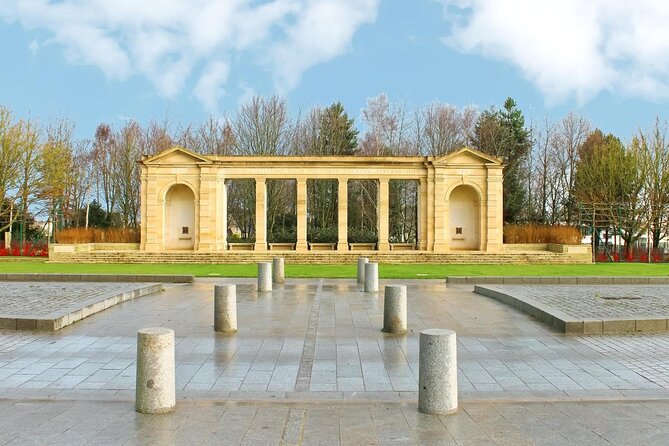
- A private group of up to 3 means your guide can slow down for questions and tailor the pace to your interests
- Four high-impact stops connect the story from logistics to battlefield impact: Arromanches, Longues-sur-Mer, the American Cemetery, and Omaha WN 60
- Free admission for every stop on the planned route keeps your costs predictable
- Driving off the main tourist lanes adds a lived-in feel to the coast journey
- A bumpy, open-air WWII jeep vibe makes the ride feel like part of the history, not just a transfer
- Guides named Eric, Adrian, Phillip, David, Vincent, Thomas, Arnold, Philippe, and Katell show up in feedback often, with a strong focus on storytelling and on-the-spot explanations
Why a WWII jeep in Bayeux makes D-Day click
Normandy can hit you in two ways: with facts on a page, or with a sense of place. This tour leans hard into the second one. Climb into a classic military jeep, and suddenly the coast stops being a distant chapter and starts feeling like a route—turn after turn, viewpoint after viewpoint.
The private setup matters. With only your group in the vehicle, you can ask follow-ups and get explanations that actually match what you’re looking at right now. That’s a big deal when you’re trying to understand why soldiers chose certain crossings, how defenses were built, and what it meant to push inland from beaches like Omaha.
I also like that the ride is built for momentum. You’re not stuck in a giant bus line-up. You’re moving on schedule, reaching major sites, then rolling on. Reviews repeatedly mention guides making the story come alive using the terrain—like calling out tactics near hedgerows and explaining how the Germans tried to break up advancing formations—so you feel the battle logic, not just the dates.
You can also read our reviews of more tours and experiences in Bayeux.
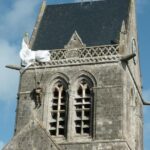
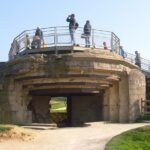
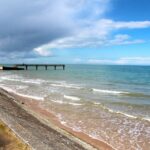
The four-stop coastal route: harbors, defenses, remembrance, and Omaha
Your tour runs about four hours, and it’s paced as a classic coastal sweep rather than a deep museum day. You start in Bayeux at Place du Québec, and the end point brings you right back there. Pickup is offered if you arrange a meeting from your Bayeux residence.
The order is smart. You begin with the support system (how troops and supplies were unloaded), then move to the defensive wall (what the Germans built), then stop for reflection (the American Cemetery), and finish with battlefield impact (Omaha Beach at WN 60). That structure helps your brain build a timeline instead of collecting random stops.
Timing is also part of the experience design. You’ll spend roughly:
- about 30 minutes at each of the first two coastal sites
- about 1 hour at the American Cemetery
- about 30 minutes at Omaha Beach at WN 60
It’s not a long linger kind of plan. It’s a focused “see the big landmarks, understand the why” plan.
Arromanches Mullberry Harbor at Tracy-sur-Mer: the logistics that made victory possible
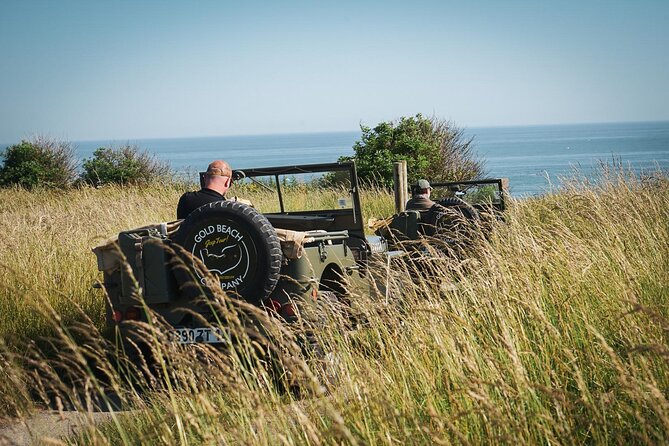
Arromanches Mullberry Harbor is your first stop, and it’s a perfect opener. The story here isn’t just bravery. It’s engineering. The British built a deep-water port so landing forces could unload the logistics that kept the push going after the initial landings.
When you stand in this area, you’re looking at the groundwork of the campaign. Without supply flow—fuel, ammunition, vehicles, men—any beachhead would stall. This is where the war stops being a single day event and starts being a sustained operation.
Expect about 30 minutes. That’s enough time to orient yourself and take in the idea: the harbor was created to function under wartime pressure, and it became a critical part of getting the weight of Operation Overlord ashore. The good news is that the admission ticket for this stop is listed as free in the tour plan, so you can focus on the explanation rather than adding costs.
A practical tip: if you’re sensitive to cold wind off the coast, bring a layer even in shoulder seasons. Many guests describe the ride as feeling chilly, and the harbor area can be breezy.
Longues-sur-Mer’s German Battery: what the Atlantic Wall was really for
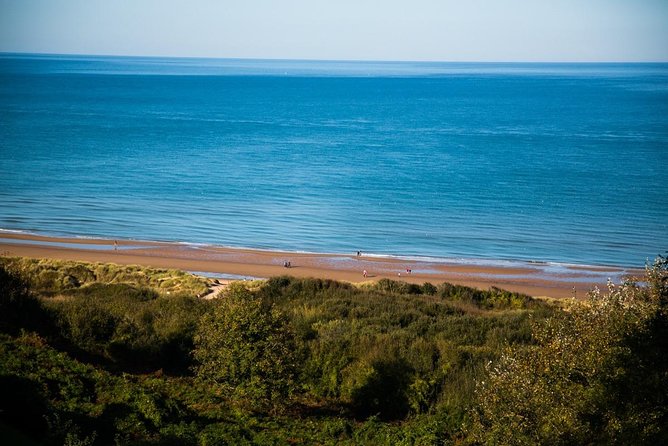
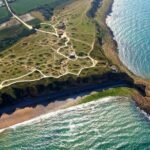
Next comes Batterie Allemande de Longues-Sure-Mer, better known as the Longues-sur-Mer German battery. This site is described as the best preserved Atlantic Wall location you can visit here. That matters because it’s easier to picture how the defenses were used when you can see the structure clearly.
Your guide will connect the dots between the concrete and the D-Day reality. This area is tied to how British and French naval vessels helped silence the guns on D-Day. In plain terms: defenses didn’t just sit there. They were targets, and the Allies worked to neutralize them to open the way for landings.
You get about 30 minutes here. That short stop works because you’re not trying to study every angle like an engineer. You’re trying to understand the purpose of the site and the effect it had on the campaign.
One drawback of a tight stop: if you love reading every sign and want slow walking time, you may want more. Still, this stop is high value because it gives you “defense context” right before you hit the American Cemetery and Omaha.
The American Cemetery at Colleville-sur-Mer: time to slow down
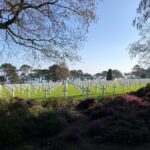
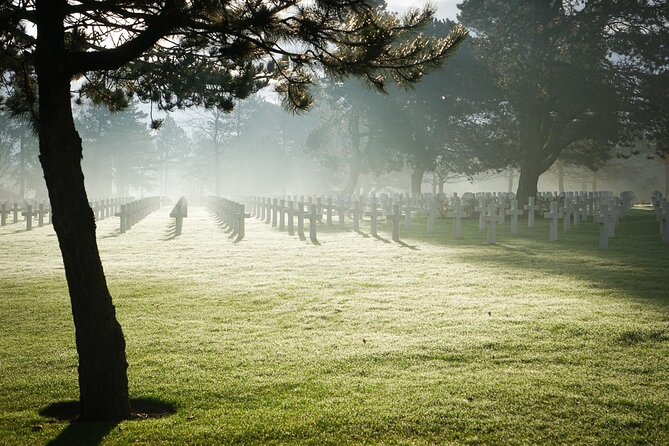
Then you move to Cimetiere Americain de Colleville-sur-Mer for about an hour. This is where the tour shifts tone. The logistics and tactics become names, dates, and visible loss at scale.
The American Cemetery is designed for reflection, and it can land differently for different people. If you’re traveling with teens, it often works well because the setting does what a classroom can’t: it makes sacrifice personal without needing extra theatrics.
You’ll have about an hour, which is enough to walk the grounds, read key markers, and take a moment that actually sticks. The admission ticket for this stop is free in the tour plan.
In feedback, some people describe being in the right place at the right time for ceremonies such as Taps. You can’t rely on that every day, but it’s worth asking your guide if the timing lines up once you’re there.
Practical note: wear shoes you don’t mind walking in. This stop is steady footwork, not museum ramps.

Omaha Beach at WN 60: seeing the fighting where losses were heaviest
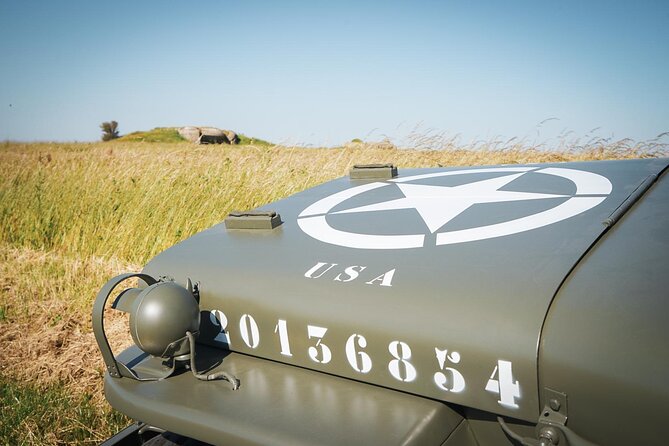
Omaha Beach is your finale, with a stop at WN 60. The WN stands for a specific defense position, and it’s a strong choice because it forces you to think in units and terrain—how a defense site shaped movement, how attackers experienced the beach under fire, and how the plan had to adjust to reality.
You’ll spend around 30 minutes here. That’s the tightest slice of the whole tour, but it also keeps your emotions from turning into burnout. Instead of leaving halfway through a long beach walk, you get a guided focus on the exact spot that matters.
Many guests highlight that the tour feels emotional and that the guide explains the “why” behind what you see. One of the most memorable moments people describe is getting directed toward parts of the site such as tunnels and mortar positions, plus gun-post locations around the area, depending on what’s accessible on the day.
A helpful mindset: at WN 60, don’t rush to memorize details. Let your guide build a mental map. Ask questions about how defenses were structured and what the hedgerow-and-road reality meant to advancing troops.
Also, Omaha can be cold and windy. Even if the sky looks clear, bring a warm layer. This is one of the few places on the coast where the weather can hit you while you’re standing still.
What’s the real value of $724.08 per group (up to 3)
At $724.08 per group for up to 3 people, you’re not paying per person like a standard bus tour. You’re paying for private transportation plus a guide plus the jeep. For the same price, many people would struggle to get equal access to a driver-guide who can slow down at the exact right moments.
The value gets better because the planned stops have free admission tickets listed. That keeps the day from turning into a budget surprise. You’re still responsible for drinks and any extra personal items, but the big ticket entries are handled in the plan.
When a tour is private, you also buy time flexibility inside the fixed schedule. If you care about family history or want to ask about a unit or tactic tied to something you read, you can steer the conversation. Several guide names show up in feedback—Eric, Adrian, Phillip, David, Vincent, Thomas, Arnold, Philippe, and Katell—and the common thread is that guides use the ground you’re standing on to explain decisions and outcomes.
Who benefits most from this pricing model? Small groups who want a guided drive rather than a general narration on a crowded vehicle. It’s also great for families with teenagers because you can keep the pacing friendly without turning it into a lecture.
What to bring: the small stuff that saves the day
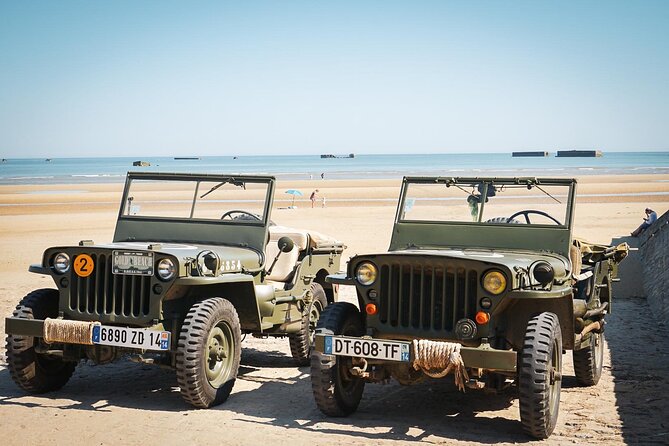
This is a jeep ride. Even if you’re excited, a few basics help.
Bring:
- A warm layer. People mention it gets chilly on the ride, especially with wind off the coast.
- Something rain-ready if the forecast looks shaky. Rain clothes aren’t included.
- Comfortable shoes for walking at the cemetery and around the memorial sites.
- Your patience for bumpy driving. The jeep experience is part of the point, and the ride can feel rough.
If you like to take photos, plan for quick stops and changing light. If you tend to store small items inside pockets, consider how you’ll keep them secure while riding.
One minor detail from feedback: someone wished they had a hair tie. Loose items can get annoying in the wind, so take a second before you leave to think about what you’ll need for comfort.
Booking fit: who this Normandy WW2 Classic Jeep Tour suits best
This is a strong match if you want a direct, guided route through major D-Day landmarks without spending the day bouncing between buses, tickets, and crowds. It also suits people who like practical history—how operations worked, how defenses were set, and what that meant for the men on the ground.
It’s especially good for:
- families traveling with teens who want stories tied to the places they’re seeing
- history lovers who enjoy technical explanations alongside human stories
- small groups who can share the private jeep cost (up to 3)
You should think twice if:
- you want long, unhurried museum time at each stop
- you’re not comfortable with a bumpy ride and outdoor conditions
- you prefer a fully structured walking tour rather than a driven route
One more useful detail: the tour is marked as suitable for most travelers, and service animals are allowed. It’s also near public transportation, so you’re not totally trapped if pickup plans change.
FAQ
How long is the Normandy WW2 Classic Jeep Tour?
The tour lasts about 4 hours.
Where does the tour start in Bayeux?
It starts at Place du Québec, Pl. du Québec, 14400 Bayeux, France.
Is pickup available?
Pickup is offered. You need to indicate your residence link in Bayeux to organize the meeting.
What stops are included?
You’ll visit Tracy-sur-Mer (Arromanches Mullberry Harbor), Longues-sur-Mer (German battery), the American Cemetery at Colleville-sur-Mer, and Omaha Beach (WN 60).
Are admissions included?
Admission tickets for the planned stops are listed as free in the tour plan.
What’s included in the price?
The price includes private transportation, the jeep, and a guide.
What happens if weather is poor?
This experience requires good weather. If it’s canceled due to poor weather, you’ll be offered a different date or a full refund.
Should you book this Normandy WW2 Classic Jeep Tour?
Book it if you want a high-impact Normandy day with a private guide, an authentic WWII jeep ride, and a route that connects the harbor story to defenses, remembrance, and Omaha. For many people, the private setup and the jeep drive are the difference between reading about D-Day and understanding the place.
Skip (or at least adjust expectations) if you crave long stays at each site. This tour is efficient on purpose: you get the essentials and the guided meaning, not hours of free-form wandering.
If you’re traveling in small numbers and you’re ready for a bumpy, sometimes chilly ride, this is a strong use of your Normandy time.