REVIEW · BIARRITZ
Surf lessons beginners in the Basque Country
Book on Viator →Operated by Surf School - Just Surf Course Surf - Bidart - Biarritz. Surf in cote Basque. Surf shop · Bookable on Viator
The best feature of this beginner surf lesson is its small-group limit of six people. At Plage du Centre in Bidart, instructor Etienne can stay close to the class, correct your position, and help you progress instead of leaving you to battle the waves on your own. I like the careful introduction to currents and beach hazards, and I like that the lesson includes both sand practice and water time. The main catch is that tides can force a schedule change, and the advertised two hours includes changing and walking to the beach.
I also like that boards and wetsuits are included, keeping the price of $65.53 per person fairly simple to judge. A possible concern is language: the activity is offered in English, but Etienne may not be able to teach in Spanish, despite a booking being made in that language. Confirm the language and tide-adjusted start time before setting your day around it.
In This Review
- Key Points for Your First Basque Surf Lesson
- Why This Lesson Works for First-Time Surfers
- Meeting Etienne at Plage du Centre in Bidart
- Reading the Beach Before Touching the Board
- Body Surfing and the First Feel for the Waves
- Sand Practice Before the Water Work
- Taking the Board Into the Water
- What $65.53 Buys You
- Language, Timing, and the Details That Matter
- Who Will Get the Most From This Class?
- Should You Book This Bidart Surf Lesson?
- FAQ
- Where does the surf lesson begin and end?
- How long does the activity last?
- How much does the lesson cost?
- How many people can join the class?
- Are boards and wetsuits included?
- Is the lesson offered in English?
- Can the lesson time change because of the tide?
Key Points for Your First Basque Surf Lesson
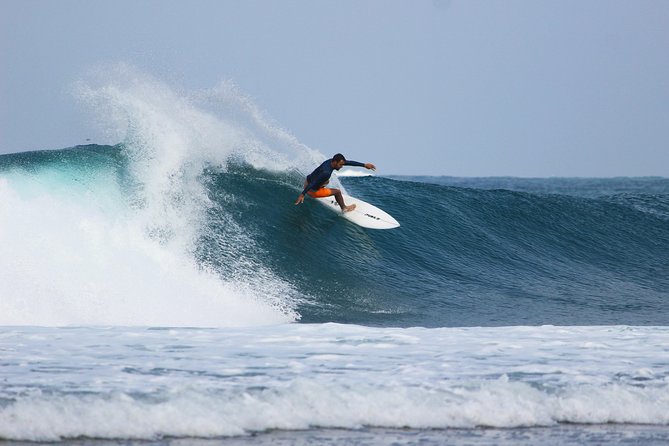
- Small groups of five or six: Etienne can give more direct help than a crowded surf class.
- Plage du Centre in Bidart: The meeting point is at 64210 Bidart, near Biarritz.
- Safety comes first: You cover beach dangers, currents, wave behavior, and rules for avoiding accidents.
- A step-by-step beginner plan: The lesson moves from body surfing and sand drills to standing on a board in the water.
- Equipment included: Boards and wetsuits are supplied, so you do not need to arrange the main gear yourself.
- Two hours door to door: Plan for changing, beach access, theory on the sand, and roughly 1 hour 30 minutes in the water.
Why This Lesson Works for First-Time Surfers
A first surf lesson can easily become a confused session of carrying a board, falling repeatedly, and wondering what you are doing wrong. This class takes a more orderly route. You begin by learning where you can surf safely, how currents work, and how waves behave before you are sent into the water.
That early explanation matters. The Atlantic shore is not a swimming pool, and a beginner needs to understand more than how to lie on a board. Knowing where to enter, where not to go, and how to avoid accidents gives you a better chance of concentrating on the actual surfing.
The group size is the other major advantage. With only five or six people, Etienne can watch your attempts and offer corrections. A small class does not guarantee that every person will stand on the first try, but it does give you more opportunity to ask questions and receive personal help.
The class is intended for beginners, not experienced surfers looking for advanced technique. You should have a moderate level of physical fitness. Surfing involves paddling, pushing up from the board, balancing, getting knocked off, and repeating the process. The lesson is friendly to newcomers, but it is still active work.
A few more Biarritz tours and experiences worth a look

Meeting Etienne at Plage du Centre in Bidart
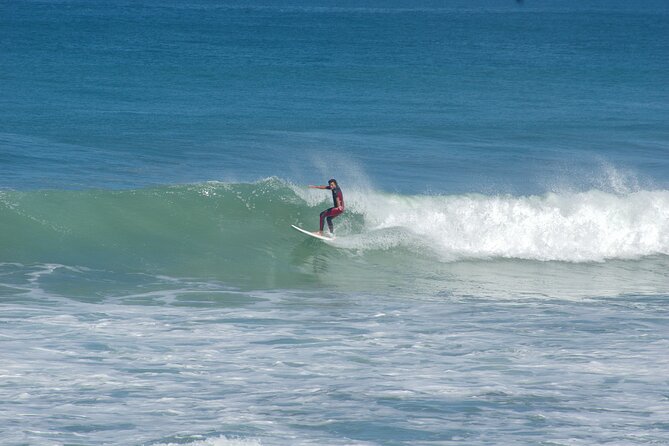
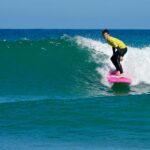
The lesson begins at Plage du Centre, 64210 Bidart, France. It ends back at the same meeting point. Bidart is close to Biarritz, making this a practical choice if you are staying in the Biarritz area and want a lesson outside the most central city setting.
The activity is near public transportation, which helps if you are not driving. The supplied details do not specify a particular bus route or stop, so you should check the exact route from your accommodation before leaving. Allow enough time to find the meeting point and change without rushing.
Your first task is likely getting into the wetsuit and preparing the board. The board and combination, meaning the wetsuit, are included in the price. That is useful for a short holiday activity because you do not need to rent equipment separately or work out which board is suitable for a complete beginner.
The two-hour duration needs a little interpretation. It means the full service, not two uninterrupted hours of riding waves. One account describes about 15 minutes of theory on the sand, around 1 hour 30 minutes in the water, and time to change before the activity finishes. You may also spend time walking down to the beach and returning to the meeting point.
That arrangement is normal for an introductory surf class, but it is worth knowing before you book. If your goal is two full hours in the water, this is not the right expectation.
Reading the Beach Before Touching the Board
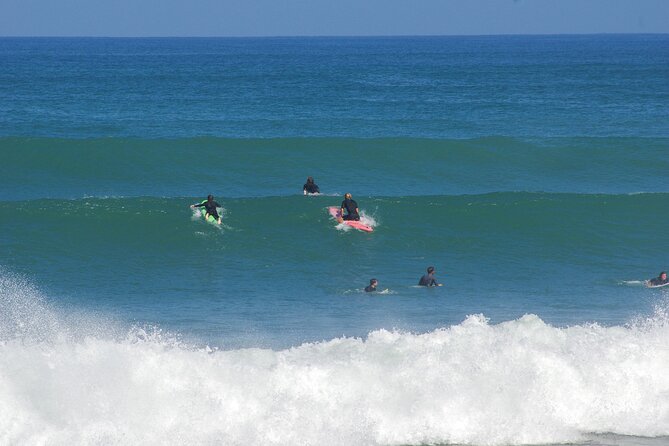
The opening part of the lesson focuses on the place itself. Etienne explains the hazards, safer areas, and basic rules for using the beach. You learn why beginners should pay attention to currents and wave conditions rather than simply copy someone nearby.
The theory covers how currents operate and how waves form and move. For a first-timer, this is useful information, not filler. It helps you understand why a wave may break differently from one minute to the next and why the safest part of the beach may not be the most obvious one.
This is also where the lesson earns its safety focus. The plan includes water safety rules designed to prevent accidents. You should listen closely here, even if you are eager to get started. A good first lesson gives you habits that remain useful after the class ends.
Tide timing is important in this part of the experience. Beginner lessons need suitable conditions, and the instructor says they should take place at low tide for safety. Tide times change each day, so the start time may be moved, sometimes with short notice. An afternoon lesson can become a morning lesson, or the reverse, depending on the conditions.
That flexibility may be inconvenient if you have a tightly packed day. It is also a practical part of learning in the ocean. If the scheduled time is not suitable for beginners, sticking rigidly to it would not necessarily produce a better lesson.
Body Surfing and the First Feel for the Waves
Before using the board, you warm up with body surfing. This gives you a first look at the conditions without adding a board to the problem. You begin to feel how the water moves and how a wave carries you.
For a beginner, that is a smart progression. The board is exciting, but it also makes balance harder and can distract you from reading the wave. Body surfing lets you pay attention to timing and direction first.
You also get a practical introduction to the energy of the sea. The supplied details do not promise a certain wave size or a particular number of successful rides, so you should not book expecting guaranteed ideal surf. Conditions depend on the day, weather, tide, and beach.
The lesson requires good weather and may be canceled if conditions are poor. In that case, you can take a different date or receive a full refund. That policy gives you some protection, though a weather cancellation can still disrupt a short visit to the Basque Country.
Sand Practice Before the Water Work
Once you have an idea of the water, Etienne explains the techniques for starting on a wave. The practice begins on land, where mistakes are easier to correct and you can repeat the movement without being pushed around by the sea.
The planned sequence includes elongated balance in the water and straightening on the sand. In plain terms, you work on lying in the right position, finding balance, and then moving from a prone position into a standing stance.
This is the part where careful instruction can save time. Beginners often try to stand too early, place their feet badly, or lift their upper body without keeping the board steady. Practicing the movement on the beach gives you a simple pattern to repeat when a wave arrives.
I appreciate this kind of preparation because it turns surfing into a series of manageable actions. You are not merely told to stand up. You learn the body position, the timing, and the steps that lead to standing.
The sand session does reduce the time spent riding waves, but that is not wasted time. It is part of the lesson. If you rush straight into the water, you may spend more time correcting basic mistakes and less time making actual progress.




Taking the Board Into the Water
The final stage is the discovery of standing and gliding on a wave. This is the moment most people have in mind when they book, but it works better because of the earlier instruction.
You should expect plenty of attempts. Surfing is built on repetition, and a beginner class cannot control every wave or promise that everyone will stand. Still, the small format gives Etienne a chance to place more attention on each person.
One particularly positive account describes being able to stand on the board by the end of a two-hour lesson. That is an encouraging sign for a first session, though you should treat it as a possible result rather than a guarantee. Your outcome will depend on your balance, fitness, confidence, the sea conditions, and how quickly you respond to instruction.
The instructor’s teaching style is described as clear and helpful, especially for people who have taken lessons elsewhere and found them slower or less personal. The value here is not only the group size. It is the combination of explanation, demonstration, correction, and time in the water.
At the same time, the class has a defined end. A detailed account of the schedule described arriving at 4 p.m., changing and walking to the beach, receiving 15 minutes of theory, surfing until about 5:45 p.m., then returning to change. That adds up to two hours of service, but only about 1 hour 30 minutes of surfing.
What $65.53 Buys You
At $65.53 per person, the price includes the board and wetsuit, plus the instructor’s guidance and the full two-hour session. Lunch and soda are not included, though neither should be part of a short surf lesson in the first place.
The clearest value comes from the limited class size. A large lesson may cost less per person, but you could spend much of the time waiting or trying to copy instructions from a distance. Here, the instructor’s stated maximum of six means the price pays for a more personal teaching setup.
I would judge the cost favorably if you want a proper introduction and do not already own equipment. Renting a board and wetsuit separately, then trying to teach yourself, may look cheaper but gives you less help with safety, currents, and technique.
The value is less certain if you mainly want casual beach time or a long period of independent practice. The class includes theory and preparation, and the water portion is shorter than the total advertised duration. You are paying for instruction and structure, not simply for access to a board.
One organizational issue deserves attention. A booking was once missed by the provider, though the class was rearranged at another time. That suggests you should confirm the meeting time shortly before the lesson, especially if your schedule is tight. It is a sensible precaution for any activity affected by tides.
Language, Timing, and the Details That Matter
The activity is offered in English. If you need another language, ask before booking rather than assuming the reservation system guarantees that language. A Spanish booking was accepted, but the instructor explained that his Spanish was limited and the lesson took place in English.
That language issue may not matter if you are comfortable with English, but technical instruction needs to be clear. You should understand commands about paddling, standing, balance, currents, and safety without hesitation.
Tide changes are another practical concern. The instructor cannot set one timetable months ahead and expect it to suit every day’s tide. A session may be moved from the morning to the afternoon or the next suitable time. If you have a train, flight, or day trip planned, avoid placing this class in the narrowest gap of your itinerary.
The standard cancellation terms allow a full refund if you cancel at least 24 hours before the start time. Changes or cancellations made within 24 hours are not accepted for a refund. The activity may also be canceled for poor weather, in which case you are offered another date or a full refund.
You should bring only what you need for the lesson, since the supplied information does not describe storage arrangements or extra services. The meeting point is also the finishing point, which keeps the start and end simple.
Who Will Get the Most From This Class?
I would choose this lesson if you are a complete beginner, want close instruction, and have enough flexibility to accept a tide-related schedule change. It is also a good fit if you prefer learning in a small group rather than joining a crowded school session.
It suits couples and friends who want to try surfing together, but the group may include other people up to the six-person limit. A pair once received individual attention when communication in the larger mixed class would have been harder, though that was a special arrangement rather than something you should assume.
You should be reasonably fit and comfortable taking part in an active water lesson. The activity data does not provide specific swimming requirements, so you should ask the provider if you have concerns about your swimming ability or comfort in waves.
I would be more cautious about booking if you need a guaranteed language, fixed start time, or exactly two hours of surfing. The class is shaped by the sea, and the instructor’s emphasis on low tide and safety means the schedule can change.
Should You Book This Bidart Surf Lesson?
Book it if you want a practical first step into surfing near Biarritz and value direct coaching. The small group, included equipment, clear safety briefing, and carefully staged progression make $65.53 a reasonable price for a beginner session.
Before paying, confirm three things: the teaching language, the tide-adjusted start time, and your understanding that two hours includes changing, beach access, theory, and the return to the meeting point. If you can accept those limits, this is a focused and personal way to try surfing on the Basque coast.
FAQ
Where does the surf lesson begin and end?
The lesson begins at Plage du Centre, 64210 Bidart, France, and ends back at the same meeting point.
How long does the activity last?
The activity lasts approximately two hours in total. This includes changing, walking to the beach, theory on the sand, water instruction, and returning to the meeting point.
How much does the lesson cost?
The listed price is $65.53 per person.
How many people can join the class?
The maximum is six people, with small groups described as five or six participants.
Are boards and wetsuits included?
Yes. Boards and wetsuits are included in the activity.
Is the lesson offered in English?
Yes. The activity is offered in English. If you need another language, confirm this with the provider before booking.
Can the lesson time change because of the tide?
Yes. Beginner lessons may need to take place at low tide for safety, so the provider may change the scheduled time.