REVIEW · BIARRITZ
Discovery of the Basque Country by sidecar with private driver
Book on Viator →Operated by Les PP Bourlingueurs · Bookable on Viator
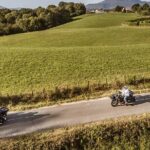
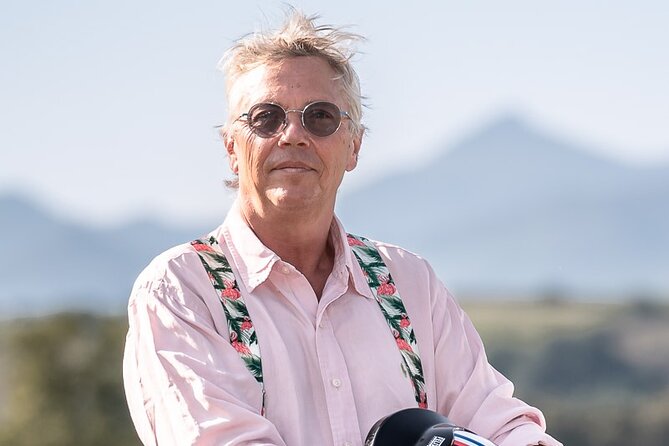
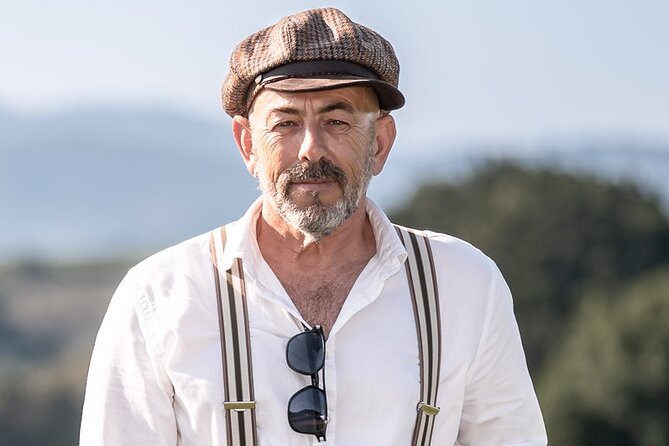
The best part of this experience is the unusual ride itself: you sit in a sidecar with a private driver while narrow Basque roads lead from Biarritz toward the Pyrenees. Pascal and Philippe handle the driving, leaving you free to watch the villages, hills, and Bay of Saint-Jean-de-Luz views.
I like the private format, especially for a couple or a parent with one child. I also like the chance to see Ascain and Sare in one short outing, with time on the road rather than a fixed sightseeing circuit. The main drawback is the limited two-hour length, so this is an introduction to the Basque Country, not a full day of exploring.
In This Review
- Key points to know before booking
- Why a sidecar is a smart way to see the Basque Country
- Leaving Biarritz for Ascain and the Rhune foothills
- Suhalmendi and the view toward Saint-Jean-de-Luz
- Ascain, a mountain village with a borderland past
- Sare, a short stop with a long past
- What the private format means in practice
- Price, timing, and the real value
- Who will enjoy this ride most
- A few practical ways to plan your day
- Should you book the Basque sidecar tour?
- FAQ
- Where does the activity take place?
- How long does the sidecar tour last?
- How many people can join the private tour?
- Who drives the sidecar?
- Are helmets and gloves provided?
- Is the experience offered in English?
- Are snacks included?
Key points to know before booking
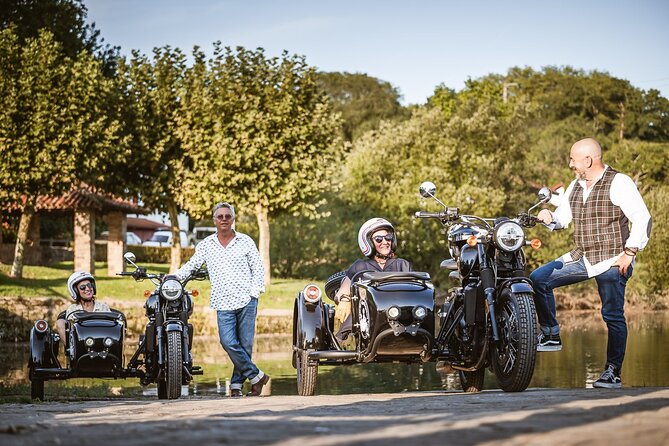
- Private sidecar ride: The price covers a group of up to two people, with Pascal and Philippe named as the local drivers.
- A mountain-road route: You pass Ascain, climb toward the Col de Saint-Ignace and the Rhune, and reach viewpoints above Saint-Jean-de-Luz.
- Local countryside details: The route may include Black Pigeon breed pigs in semi-free range, Pottoks, and birds of prey.
- Two village stops: Ascain forms part of the mountain approach, while Sare provides a short stop in one of the Basque Country’s prettiest villages.
- Useful equipment included: Helmets with intercoms and gloves are supplied, so you can hear and communicate during the ride.
- Good for a short introduction: The tour lasts about two hours and returns to the meeting point, making it easy to fit into a Biarritz stay.
Why a sidecar is a smart way to see the Basque Country
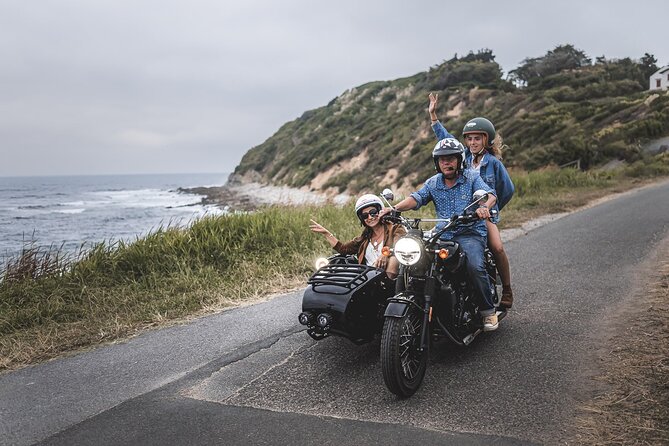
A sidecar gives you a different view from a standard minibus or private car. You are close to the road, open to the air, and sitting beside the driver rather than behind a row of seats. That matters here because the appeal is not only the villages at the stops. Much of the pleasure comes from the winding roads between them.
You do not need to concentrate on navigation or parking. Pascal and Philippe drive while you take in the changing scenery and use the intercoms to communicate. For a short excursion, that is a real advantage. You get movement, views, and local roads without the work of arranging a rental car.
The ride is private for your group, up to two people. That makes the experience more personal than a large coach tour, though it also means the $248.41 price is best understood as a group price rather than a per-person fare. For two people, it works out to about $124 each. For one person, the cost is much harder to justify unless the sidecar format is the main reason you want to go.
The tour is offered in English. Helmets with intercoms and gloves are included. Snacks are not included, so you should not expect food or a planned refreshment stop during the two-hour outing.
You can also read our reviews of more private tours in Biarritz


Leaving Biarritz for Ascain and the Rhune foothills
The route takes you inland from Biarritz toward the Basque villages and the foothills of the Rhune, also called Larun. The coast is not far away, but the setting changes quickly as you reach smaller roads and traditional settlements.
Ascain is an important part of the route. It lies about six kilometres from the Atlantic coast and is crossed by the Nivelle, a coastal river that begins in Navarre before passing through the French Basque Country. The village sits in the historic Basque province of Labourd, whose main city is Bayonne.
The ride then heads toward the Col de Saint-Ignace, which reaches about 759 metres. This is also the starting point for the well-known little train of the Rhune. You are not taking that train on this activity. Instead, the sidecar provides the road-going approach, with the driver taking you through the mountain setting.
That distinction is useful when you plan your day. If you specifically want the railway ride, you will need a separate arrangement. If you want a more flexible road trip with a driver, this tour gives you a compact alternative.
The route includes a few burlingues, a local term used in the description for the small bursts or turns that help carry you upward. The exact road feel can vary, but the point is clear: this is an active scenic ride, not a simple transfer from one town to another.
Suhalmendi and the view toward Saint-Jean-de-Luz
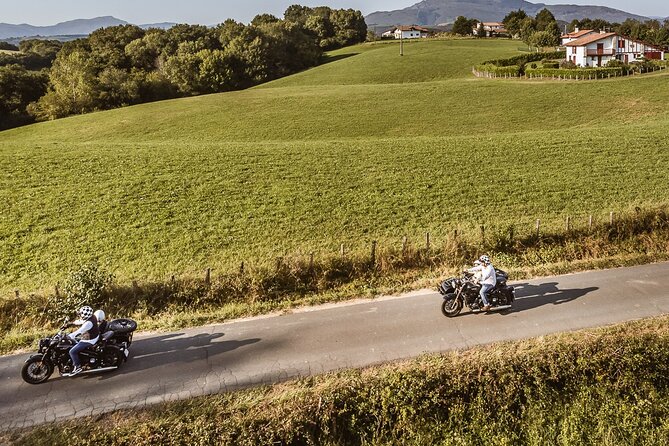
The first main portion lasts about 45 minutes and is associated with Suhalmendi, the mountain setting above the villages. This is where the ride shifts from village streets to open countryside and higher roads.
The animal life gives this section its local character. You may see pigs of the Black Pigeon breed in semi-free range, along with Pottoks, the small traditional horses of the Basque mountains. You might also spot raptors, though birds of prey are naturally a matter of timing and luck rather than a promise.
I like this part because it connects the scenery with working rural life. You are not only looking at hills from a viewpoint. You may see animals that belong to the region and get a sense of how the countryside is used.
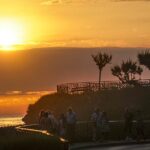
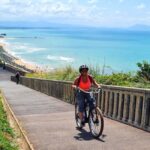
The reward is the view toward the Bay of Saint-Jean-de-Luz. From the higher road, the Atlantic coast opens out below, giving you a useful sense of how close the mountains are to the sea. That combination is one of the defining features of this corner of the Basque Country.
The tradeoff is that the stop is short. Forty-five minutes can give you a strong first impression, but it will not leave much room for an extended walk, a long photo session, or a detailed visit to every point of interest. If you prefer slow hiking, this excursion may feel brisk.
Ascain, a mountain village with a borderland past
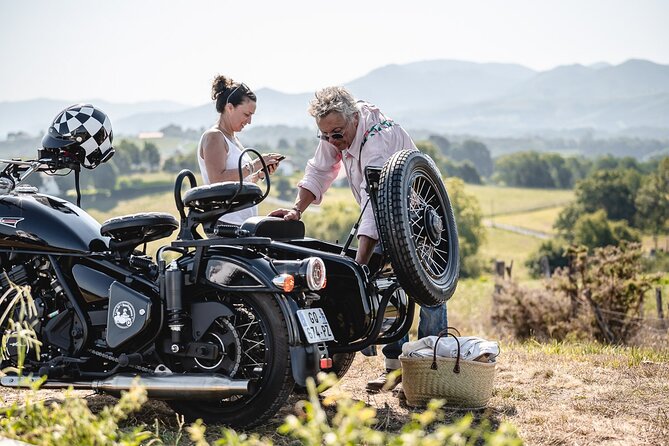
Ascain is more than a pass-through point. Its position helps explain the route. The village sits beneath the Rhune, the last Pyrenean summit before the range reaches the Atlantic, and the summit forms part of the border with Spain.
The Nivelle links this French Basque setting to Navarre in Spain. That cross-border connection is not just a map detail. It helps you understand why the local culture and language do not stop neatly at the national boundary.
The route description also points to the area’s former smuggling trails. Winding paths in these hills were once used by people moving goods across the border. Today, many are popular with hikers. From a sidecar, you get a quick look at the roads and slopes that make the region appealing to walkers, even though you are not taking a dedicated hiking tour.
You should think of Ascain as part of the story of the ride rather than a long independent stop. The time is geared toward seeing the village and its setting from the road, then continuing upward. If you want cafés, shops, or a detailed village walk, you may need to return on your own.
Sare, a short stop with a long past
The second named stop is Sare, with about 15 minutes allowed. That is brief, but the village is one of the reasons this route feels more rewarding than a simple mountain viewpoint trip.
Sare is often described as one of the prettiest villages in the Basque Country, and it is also known for its older buildings and village atmosphere. The village sits against the Pyrenees in a basin shaped like an open bowl, with the land opening toward the east and north.
Its position gives the area a strong border identity. Sare shares 25 kilometres of border with Spain and forms an enclave in Navarre. The Basque language is shared on both sides, and pastoral agreements with nearby Spanish villages have shaped local life over many centuries.
The surrounding ground also contains caves occupied during the Aurignacian period. Bronze Age burial monuments remain along mountain paths and plateaus. You will not have time to study these sites during a 15-minute stop, but knowing they exist adds weight to what might otherwise seem like a pretty village pause.
This is the clearest limitation at Sare. Fifteen minutes is enough to stretch your legs, take a few photographs, and get a quick feel for the setting. It is not enough for a museum visit, a cave excursion, or a thorough walk through the commune.


What the private format means in practice
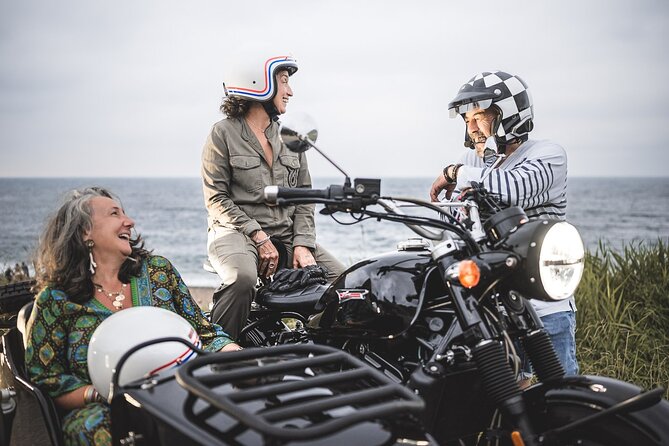
A private activity can make a short tour feel much more relaxed. You are not waiting for a large group to board, and the drivers can focus on your party of up to two. The format also works well if you want to ask questions during the ride, although the available details do not specify how much guided commentary is provided.
Pascal and Philippe are the named drivers. Their friendly and helpful approach is part of the appeal, particularly for families. One recorded booking included a couple and their eight-year-old son, which shows that the experience can suit a small family group when the child is comfortable with the sidecar format.
You should still judge the ride by your own comfort. The supplied information says most people can participate, and helmets, gloves, and intercoms are provided. It does not give a detailed set of height, age, or mobility rules, so ask the operator before booking if anyone in your party has a specific concern.
The meeting point is also the ending point. That makes the excursion easy to combine with other plans in Biarritz, since you are not being left in another town. Public transportation is nearby, though the exact meeting address should be confirmed when you book.
Price, timing, and the real value
At $248.41 per group of up to two, this is a specialist experience rather than a budget sightseeing ride. The price includes the private driver, sidecar transport, helmet communication systems, and gloves. It does not include snacks.
For two people, the cost can be reasonable if you value the private vehicle and the novelty of the sidecar. A private car tour could offer more interior space, but it would not give you the same open-air position or direct contact with the road. A larger group tour might cost less per person, but it would lose the small-scale feel.
The two-hour duration is both a strength and a weakness. It is long enough to reach the countryside, climb toward the Rhune, see the coast from above, and visit two Basque villages. It is short enough to fit around a half-day in Biarritz.
You should not book it expecting a full exploration of the French Basque Country. The stops are concise, and the activity is built around the ride itself. If you have only a short stay, that focus is useful. If you have several days, you may want to use this as a first look, then return to Sare, Ascain, or Saint-Jean-de-Luz with more time.
The published operating period runs from December 11, 2024, through March 22, 2027, with departures listed daily from 10 a.m. to 7 p.m. Confirm the available time when booking, since a scenic ride is more enjoyable when it fits your daylight and meal plans.
Who will enjoy this ride most
I would recommend this for a couple seeking a memorable outing from Biarritz, especially if you have already seen the main coastal sights and want a quick change of pace. The private setup also suits a parent and child, provided the child is comfortable riding in the sidecar.
It is a good match for you if you value:
- A private experience instead of a shared coach
- Mountain roads and coastal viewpoints
- Traditional Basque villages
- A short activity that returns to Biarritz
- A local driver-led outing rather than self-driving
It is less suitable if you want extensive walking, archaeological visits, food tastings, or a long stop in each village. You should also consider the price carefully if you are traveling alone, since the fare is charged per group of up to two.
The English-language option removes a common hurdle for international visitors. The intercom is especially useful because it lets you communicate while the vehicle is moving, rather than trying to talk over road noise.
A few practical ways to plan your day
Keep food separate from the tour. Snacks are not included, and the stops are short, so eat before the ride or plan a meal afterward. Do not count on having time for a leisurely café break in Sare.
Wear clothing suited to an open-air road ride. Gloves are supplied, but the activity does not list other clothing items, and mountain roads can feel different from Biarritz even when the coast is mild.
Leave room in your schedule after the tour if you want to explore the meeting area or have lunch. Because the experience returns to its starting point, you can continue with your Biarritz plans without arranging a separate return journey.
If you want a longer visit to the Rhune, its train, or the caves around Sare, treat this as a sampler. The ride can help you decide which place deserves more of your time later.
Should you book the Basque sidecar tour?
Book it if the idea of riding in a private sidecar appeals to you as much as the destinations. Pascal and Philippe take you beyond Biarritz into the hills, where Ascain, the Rhune, Suhalmendi, and Sare fit together in one compact outing. The best moments are likely to come between the stops, when the road climbs and the Bay of Saint-Jean-de-Luz appears below.
Skip it if you need long visits, substantial walking, or the lowest possible price. For two people who want an unusual and personal way to see the Basque countryside, the private group fare offers solid value. For one person or a visitor with only a narrow interest in village sightseeing, the short duration and per-group cost deserve a closer look.
FAQ
Where does the activity take place?
The experience is based in Biarritz, France, and travels through the Basque countryside toward Ascain, the Rhune area, Suhalmendi, and Sare.
How long does the sidecar tour last?
The activity lasts about two hours and ends back at the meeting point.
How many people can join the private tour?
The price covers a private group of up to two people.
Who drives the sidecar?
The named drivers are Pascal and Philippe from Les PP Bourlingueurs.
Are helmets and gloves provided?
Yes. Helmets with intercoms and gloves are included.
Is the experience offered in English?
Yes, the activity is offered in English.
Are snacks included?
No. Snacks are not included in the activity price.