REVIEW · BIARRITZ
Walking Tour of Biarritz history and curiosities
Book on GetYourGuide →Operated by Charleswalksbawardforyou · Bookable on GetYourGuide
Biarritz reveals its best stories when you connect the grand seaside palaces with the old fishing quarter. This two-hour walk with Charles starts high at the lighthouse, follows the coast south, and ends above the water at the Virgin Rock. Along the way, you get architecture, local characters, surfing, fashion, Basque culture, and plenty of odd little tales.
I like the wide coastal view at the start, which gives you a useful map of Biarritz before you enter its streets. I also like the mix of famous sights and less obvious details, from the Hotel du Palais and Regina Palace to Coco Chanel, the old fishing village, and the Orthodox Church.
The main consideration is the pace. You cover a lot in two hours, with stairs and a little uphill and downhill walking. You will not go inside every building, and food, transport, and entry fees are not part of the experience. Wear good shoes and bring biodegradable sunscreen.
In This Review
- Key points to know before you book
- Starting above the Bay of Biscay at Biarritz Lighthouse
- Streets, façades, and the making of a resort town
- The Regina, Hotel du Palais, and Orthodox Church
- Casinos, Coco Chanel, and Biarritz fashion
- From seaside resort to surfing town
- The old fishing village and St. Eugenie Church
- Crossing the passerelle to the Rock of the Virgin
- What the $199 price means for value
- Who will enjoy this Biarritz walk most
- Should you book Charles’s Biarritz tour?
- FAQ
- Where does the Biarritz walking tour start?
- Where does the tour finish?
- How long does the tour last?
- Which languages does Charles speak?
- What should I bring?
- Is food or transportation included?
Key points to know before you book
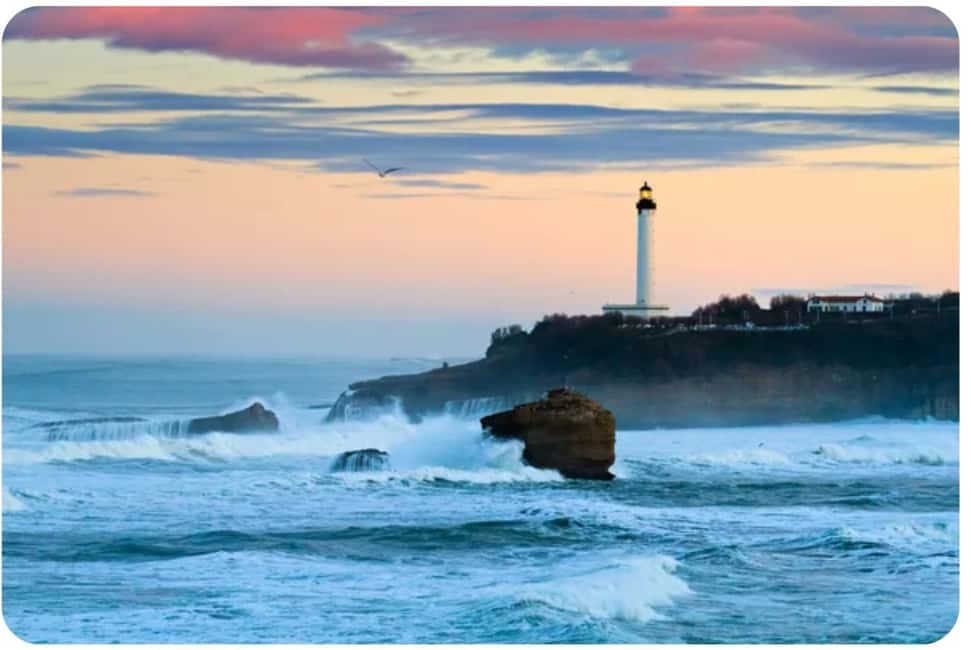
- The route runs from the lighthouse to Port Vieux: You begin at the Phare de Biarritz and finish near the cosy old harbor beach.
- Charles makes the tour flexible: He speaks French and English and adjusts the discussion to your interests.
- The coast is part of the story: You look north toward the Bayonne river mouth and south toward the Basque coast.
- Palaces get the full treatment: Expect stories about the Regina, Hotel du Palais, Napoleon III’s summer palace, and the nearby architecture.
- The walk links several eras: Thermal baths, aristocratic holidays, couture, surfing, religion, fishing, and Basque culture all fit into one route.
- The tour costs $199 per group up to one person: Check the booking details carefully, since the price format is unusual and the value depends on your party size.
Starting above the Bay of Biscay at Biarritz Lighthouse
Meet Charles by the propeller at the bottom of the lighthouse. The Phare de Biarritz is a smart starting point because you begin with geography rather than isolated sights. From this high position, Charles describes the coast north toward the mouth of the Adour near Bayonne and south toward the distant Basque Country.
That opening view helps you understand Biarritz as a meeting place between ocean, river, and foothills. It also gives the rest of the walk a clear shape. You can see why the town became a seaside resort, why the coast attracted wealthy visitors, and why waves later made it a major surfing center.
The lighthouse is not just a photo stop here. It sets up the physical side of Biarritz. You will be looking at cliffs, beaches, rocky points, and the curve of the shore before walking down into the town. If you enjoy maps, geology, and coastal scenery, this is one of the strongest parts of the route.
The tour then heads downhill toward the beach through Biarritz’s eclectic streets. The elevation is limited, but the walk includes stairs and some up and down movement. That is manageable for most people who can comfortably walk for two hours, but it is still worth choosing supportive footwear rather than beach sandals.
You can also read our reviews of more walking tours in Biarritz



Streets, façades, and the making of a resort town
Biarritz can look like a polished resort at first glance, with grand hotels, casinos, and manicured seaside buildings. Charles adds the reasons behind that appearance. The buildings reflect different periods and tastes, so the town is less uniform than a quick stroll along the waterfront might suggest.
You will hear about the days when thermal baths helped put Biarritz on the map. The tour reaches back to the 18th century and follows the town’s change from a local coastal settlement into a fashionable resort. That shift explains why you find such a striking mix of older village elements and large, showy buildings.
I appreciate this kind of context because it keeps the architecture from becoming a parade of façades. A palace is more interesting when you know what it was built for, who came to stay there, and how the town’s fortunes changed. Charles also uses anecdotes and humor, which keeps the historical material from feeling like a lecture.
The route includes a stop in front of Napoleon III’s summer palace, now closely associated with the Hotel du Palais. From outside, you can appreciate its position and ornate design while hearing about the imperial connection and the neighborhood that grew around it.
You should not expect a formal interior tour of the palace. The value here is the explanation of how one building helped shape Biarritz’s identity. If you want detailed access to hotel interiors or museum collections, you would need a separate visit.
The Regina, Hotel du Palais, and Orthodox Church
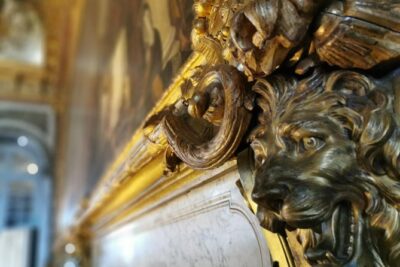
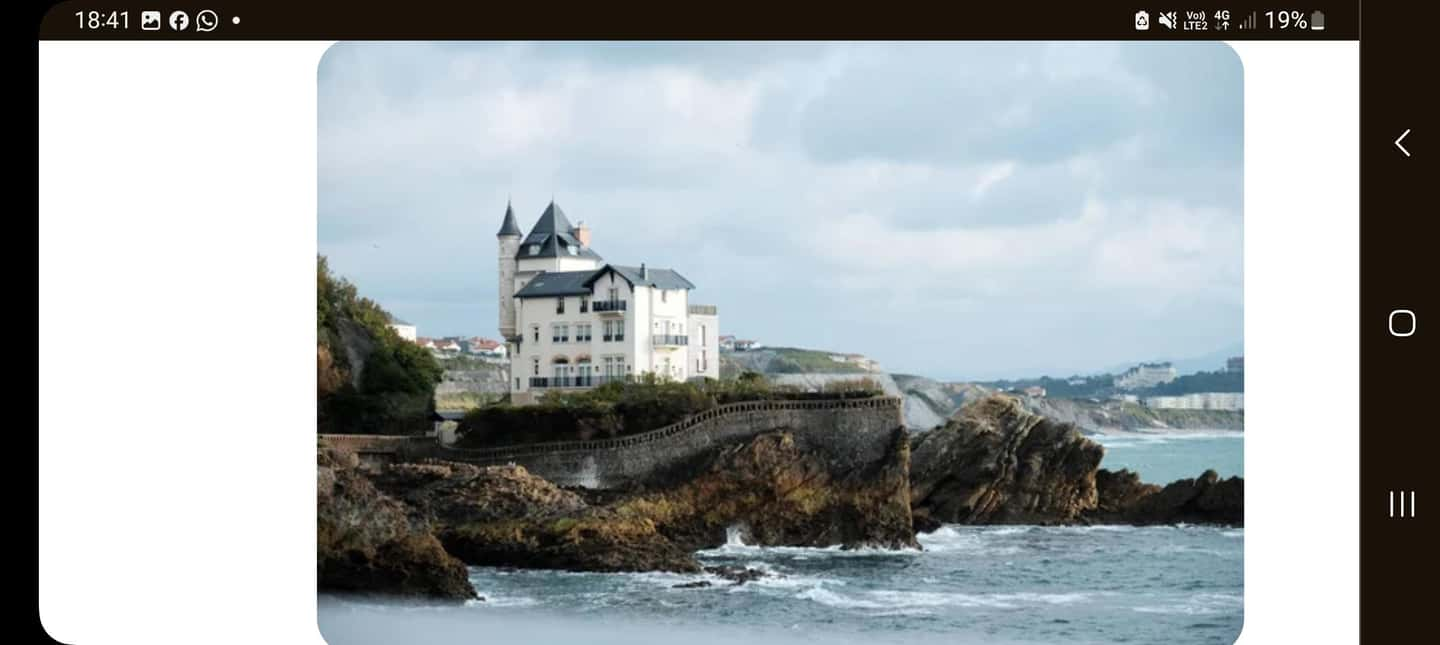
The palaces of Biarritz are central to the walk, but they are not treated as isolated luxury landmarks. Charles ties them to the people and habits that made the town fashionable. The Regina and Hotel du Palais represent different parts of that resort story, while the surrounding streets show how grand architecture spread through the town.
The Orthodox Church adds another layer. Its presence points to Biarritz’s international holiday culture and the different communities drawn to the coast. You get a look at how religion, travel, status, and architecture overlapped in the resort’s past.
This section should suit you if you like architecture but want more than dates and names. Charles is especially good at bringing in legendary characters, strange turns, and funny details. The five available ratings describe him as friendly, enthusiastic, engaging, and able to connect facts with humor. One French participant specifically praised his ability to adapt the talk to the group’s interests, while a Canadian participant described him as a strong communicator.
That adaptability matters on a small tour. You can ask about a palace, a church, local customs, surfing, or the coastline instead of following a fixed speech. The activity includes unlimited questions, so use that freedom. A good question can shift the emphasis toward the parts of Biarritz you care about most.
Casinos, Coco Chanel, and Biarritz fashion
The walk also turns toward the casinos and the town’s couture connection. Biarritz was not only a place for sea air and grand hotels. It became linked with fashion, leisure, and the style culture that followed wealthy visitors to the coast.
Coco Chanel is part of this story. The tour points out her connection to Biarritz and the best-kept details surrounding her shop and local fashion legacy. The subject works well here because you see how a resort town can influence clothing and social habits as much as it reflects them.
You will not be shopping as part of the tour, and the shop story is not a substitute for a fashion museum. Still, it gives you a useful way to read the town. Look beyond the stone, stucco, and sea views. The casinos and boutiques show how Biarritz sold an experience of elegance, relaxation, and spectacle.
The casinos are also a reminder that the resort developed around entertainment as well as health and scenery. Charles brings those strands together: thermal baths, aristocratic holidays, gambling, couture, and later surfing. That broad range is one reason this tour offers more than a standard introduction to the central streets.
From seaside resort to surfing town
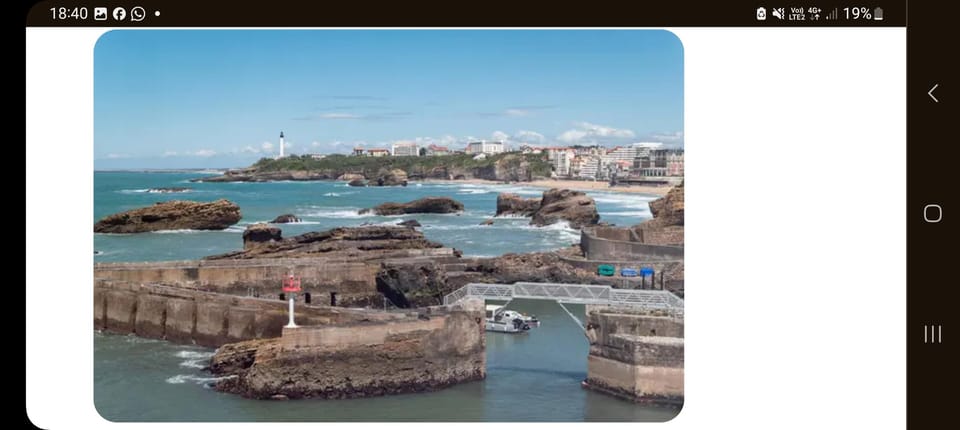
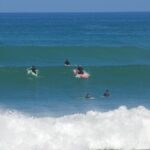
Biarritz’s surfing story gives the walk a modern turn. Charles discusses the intense history of surfing in the town, connecting the sport to the same coastline that first attracted bathers and holidaymakers.
The point is not simply to look at the sea and call it a surfing beach. You get a sense of how Biarritz’s identity changed again, from a fashionable resort to a place strongly associated with waves and surf culture. The contrast between imperial palaces and active beach life is part of what makes the town so interesting.
The route stays focused on walking and interpretation. There is no surfing lesson, equipment rental, or time set aside for swimming. If you want to surf, plan that separately. This tour is better for understanding why the coast matters and how the sport fits into Biarritz’s wider story.
The coastal route also gives you repeated chances to look back at the buildings from different angles. From the water’s edge, the grand architecture has a different scale than it does from a city street. You can compare the open ocean, rocky shoreline, beaches, and dense resort buildings as you continue south.



The old fishing village and St. Eugenie Church
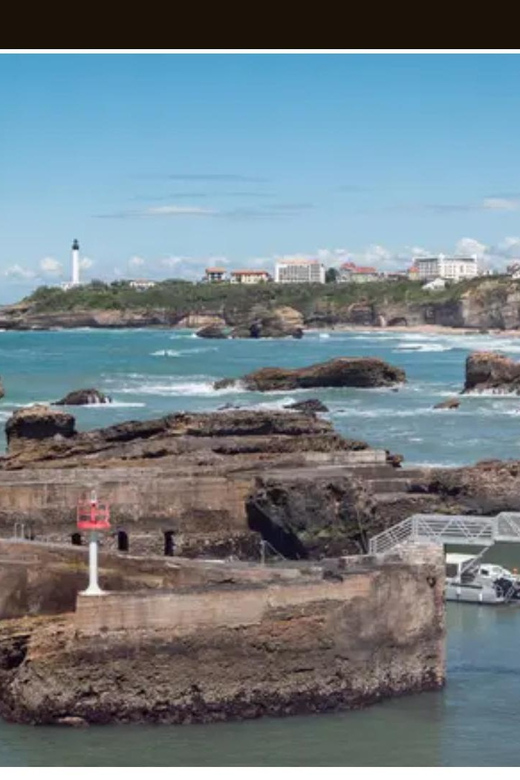
Later, the walk moves into the old scenic fishing village. This is where Biarritz’s earlier working identity comes into view. The village provides a useful contrast with the palaces and casinos, showing that the town was not created from scratch as a resort.
I like this part because it brings the tour back to ordinary coastal life. Fishing, boats, churches, and local traditions give Biarritz a more grounded feel. The town’s appeal is not only its grand hotels. Its character also comes from the older settlement near the water.
St. Eugenie Church adds a strong visual and cultural stop along the way. Charles places the church within the wider story of Biarritz and the Basque Country, rather than presenting it as a quick architectural photo opportunity. You can ask questions about local religious traditions, the town’s development, or the links between Basque culture and the coast.
The tour does not promise entry into every church or building, so you should treat these stops as guided outdoor visits unless Charles tells you otherwise. That is normal for a two-hour walking route and lets you cover more ground without paying extra admission fees.
Crossing the passerelle to the Rock of the Virgin
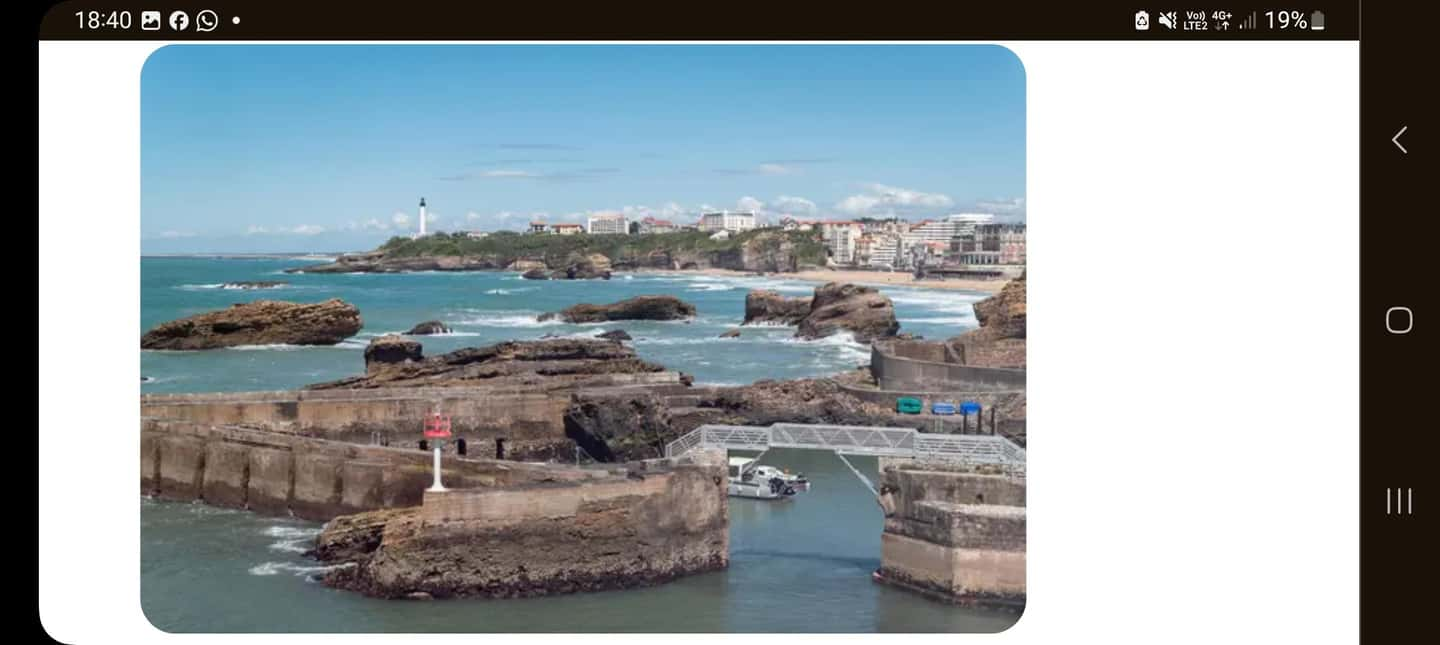
The walk’s most dramatic section comes near the end, when you follow the coast toward the Rock of the Virgin. The passerelle leads above the water and gives you one of Biarritz’s classic viewpoints.
This is a fitting final stretch because it combines the main themes of the tour: ocean geography, geology, coastal engineering, local legend, and scenery. You are no longer viewing the shore from the lighthouse. You are walking out above the water and seeing the coast from a lower, more immediate position.
The passerelle can be an exposed place in coastal weather, so hold onto hats and protect your phone. That is practical advice rather than a complaint. The views are part of the reason to choose a walking tour, but wind, sun, and uneven surroundings are also part of being beside the Atlantic.
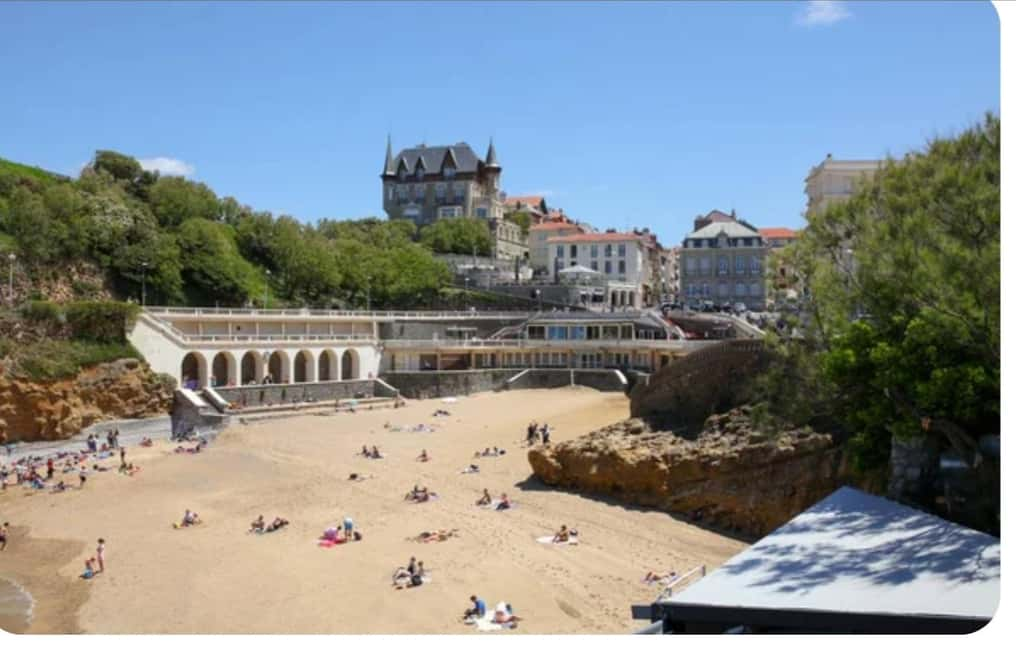
After the Rock of the Virgin, Charles ends the route downtown near Plage du Port Vieux. This is a useful finish. You are close to a small beach area and can continue with your day without having to return to the lighthouse.
Charles also offers local guidance for what to do next. The information is not a scheduled extra activity, but it makes the final stop more useful. You can ask about continuing along the coast, spending time near the port, or choosing your next stop in town.
What the $199 price means for value
The listed price is $199 per group up to one person. That wording is unusual, so check the final booking screen before paying and confirm how the price applies to your party. The experience is listed as a two-hour guided walk, not a package with transport, meals, or admissions.
The value comes from the guide’s time, local storytelling, and the route’s range. In two hours, you cover the lighthouse viewpoint, resort architecture, palaces, church, casinos, fashion history, fishing village, coastline, and Virgin Rock. If you were trying to connect all of those pieces alone, you would need to do the research and work out the route yourself.
It is a stronger buy if you enjoy asking questions and want a flexible conversation. Charles speaks English and French, and his ability to adjust the discussion is one of the clearest strengths of the experience. The five available ratings are all five out of five, with repeated praise for his humor, friendliness, motivation, and ability to explain local stories.
The price is less attractive if you mainly want a quick orientation or a short list of photo stops. At two hours, the walk is not an express introduction. It is a story-led route with a lot of ground to cover. You are paying for interpretation rather than for entry tickets or transport.
Food is not included. Neither is transportation to the lighthouse or away from Port Vieux. Plan those parts yourself, and remember that the starting point and ending point are different.
Who will enjoy this Biarritz walk most
I would choose this tour if you want Biarritz to make sense as a whole. It suits first-time visitors who want the major sights linked by a clear story, as well as returning visitors who want unusual details about places they have already seen.
It is particularly good for people interested in:
- Coastal geography, geology, and ocean views
- Architecture and resort history
- Napoleon III and the Hotel du Palais
- Coco Chanel and Biarritz fashion
- Surfing and the changing identity of the coast
- Basque culture, churches, and the old fishing quarter
- Local anecdotes delivered with humor
It may be less suitable if you have difficulty walking for two hours or managing stairs. The elevation is described as slight, but the route does include going up and down steps. Comfortable shoes are essential, and biodegradable sunscreen is a sensible choice for an exposed coastal walk.
The tour is offered in French and English. Free cancellation is available up to 24 hours before the activity, and you can reserve now and pay later, which helps if your plans are still shifting.
Should you book Charles’s Biarritz tour?
Book it if you want a guide who can connect Biarritz’s grandest buildings with its working coast, fashion past, surfing culture, and Basque setting. The lighthouse to Virgin Rock route gives you strong views, several iconic landmarks, and a practical finish near Port Vieux.
I would be especially comfortable recommending it to someone who enjoys stories more than checklists. Charles’s humor, local insight, and flexible style are the main reasons to choose this experience over a simple self-guided stroll.
Skip it if you want a food tour, a private vehicle, interior access to palaces, or a shorter walk with almost no stairs. For everyone else, this is a lively two-hour introduction to Biarritz that leaves you with both a better sense of place and useful ideas for the rest of your day.
FAQ
Where does the Biarritz walking tour start?
The meeting point is by the propeller at the bottom of the Phare de Biarritz lighthouse.
Where does the tour finish?
The walk ends downtown near Plage du Port Vieux.
How long does the tour last?
The tour lasts two hours.
Which languages does Charles speak?
The tour is available in French and English.
What should I bring?
Bring comfortable shoes and biodegradable sunscreen. The route includes a little elevation and some stairs.
Is food or transportation included?
No. Food and transportation are not included in the activity price.