REVIEW · PARIS
Jewish History Tour of Le Marais
Book on Viator →Operated by Sight Seeker's Paris · Bookable on Viator
Paris changes when you walk Le Marais.
This Jewish History Tour of Le Marais strings together some of the neighborhood’s most meaningful stops in about four hours, starting near Place des Vosges and finishing at the Mémorial de la Shoah. You’re not just looking at buildings; you’re hearing how Jewish life, Parisian history, and modern memory connect in one focused walk.
I also love the guide-led storytelling style. Guides such as Karen and Emma are known for making the past feel current, with humor and human details that help it land for both adults and teens. Add in a sit-down history break inside one of the oldest synagogues in Paris, and the tour has a welcome rhythm instead of nonstop standing.
One thing to plan for: it’s a walk-first itinerary, so bundle up if you’re going in cooler months, and you’ll pay separately for the optional VIP lunch at L’As du Fallafel (about €15 to €25). In rare cases, access to the synagogue interior can be affected by neighborhood security, though the tour is still designed to work around it.
In This Review
- Key highlights to expect on this Le Marais Jewish history walk
- Le Marais is the stage for Jewish Paris
- Starting at Louis XIII Square: how the tour sets the tone
- Place des Vosges and the Hôtel de Sully exterior moments
- Hector Guimard’s synagogue exterior: when style carries meaning
- Inside a historic synagogue: the sit-down break that matters
- Musée Carnavalet exterior: Paris history as the surrounding frame
- L’As du Fallafel VIP lunch: plan for the extra €15–€25
- The Mémorial de la Shoah ending: where the story reaches modern memory
- Price and value: what $96.33 buys you in Le Marais
- Who this tour suits best (and who might want a different option)
- Should you book the Jewish History Tour of Le Marais?
- FAQ
- How long is the Jewish History Tour of Le Marais?
- What language is the tour offered in?
- Where does the tour start?
- Where does the tour end?
- What’s included in the price?
- Is lunch included?
- Is admission included for the Shoah Holocaust Memorial & Museum?
- What is the cancellation policy?
Key highlights to expect on this Le Marais Jewish history walk

- Small group size (max 14) for easier questions and a calmer pace
- Art Nouveau synagogue exterior by Hector Guimard as a visual anchor in the neighborhood
- A sit-down break inside an old synagogue that gives your legs and your brain a reset
- A guided end at the Mémorial de la Shoah, followed by optional time on your own
- Mostly walking in one area, which makes the whole story feel more connected
- L’As du Fallafel lunch is optional and extra, so it’s easy to control your budget
Le Marais is the stage for Jewish Paris

Le Marais is both old Paris and intensely specific Paris. You’ll be walking through streets that have long ties to Jewish community life, while also passing landmark squares and buildings that shaped the city beyond the neighborhood.
What makes this tour feel especially worthwhile is that it doesn’t treat Jewish history as a separate chapter. It frames it as part of Paris itself—right alongside royal-era squares, museum surroundings, and the modern duty to remember.
You’ll also get the benefit of staying in one compact area. With most of the tour in Le Marais, you spend more time absorbing meaning and less time figuring out transit between distant stops.
You can also read our reviews of more historical tours in Paris

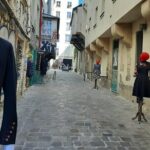

Starting at Louis XIII Square: how the tour sets the tone
You’ll begin at Louis XIII Square in the Place des Vosges area (75004). That’s a smart start point: it puts you in the right neighborhood immediately, with easy walking connections to the sights ahead.
The tour is offered in English and uses a mobile ticket, which keeps logistics simple once you’re on the ground. With a maximum of 14 travelers, expect a more intimate group size than the big-bus style tours that make questions hard and photos frantic.
In practice, the biggest value of an organized start is mental. You arrive at the first stop with a story in your head, and the rest of the neighborhood starts to make sense faster.
Place des Vosges and the Hôtel de Sully exterior moments

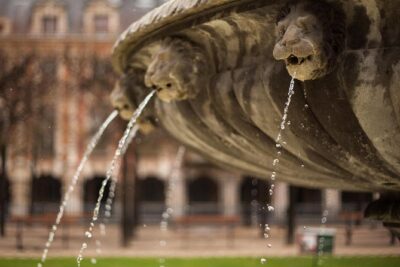
One early highlight is the swing through Place des Vosges, one of Paris’s most beautiful squares. It’s not just a pretty backdrop. The square helps you understand scale—how the city’s planning and architecture shaped daily life long before modern street names became familiar to you.
From there, you’ll see Hôtel de Sully from the outside. Even as an exterior stop, it’s useful because it places you in the broader timeline of Parisian grandeur, so the later story about Jewish life doesn’t feel stuck in one narrow pocket of time.
The one drawback here is also honest: you’re not going inside these buildings as part of this walking route. If you love interiors and grand rooms, you may want to pair this tour with a separate museum or ticketed visit afterward.
Still, as a primer, the architecture works. It gives you something solid to look at while your guide connects the dots.
Hector Guimard’s synagogue exterior: when style carries meaning

The tour then takes you to a famous synagogue exterior associated with Hector Guimard, celebrated for its Art Nouveau architecture. This stop is a gift for first-timers because it gives you a clear visual hook right in the neighborhood.
Art Nouveau is all about expression—curving forms, decorative detail, and a belief that beauty matters. Seeing that style linked to a place of worship makes the architecture feel like more than decoration. It becomes a clue to how communities marked identity in a changing Paris.
Because you’re viewing it from the outside, you’ll want to give yourself time to look. Stand slightly back, scan the facade details, and then listen to how your guide frames what you’re seeing. That’s the moment when a photo turns into a memory.
Inside a historic synagogue: the sit-down break that matters

A major feature of this tour is a sit-down history break inside one of the oldest synagogues in Paris. The phrase sit-down isn’t a throwaway detail. It changes how you experience the information.
When you pause to sit, you also pause to absorb. The guide can slow the pace at a moment when the subject matter often gets heavy. That’s one of the tour’s strengths: it balances “look and listen” with a real human break.
There’s one practical consideration: interior access is described as happening in normal conditions, except in rare cases of increased neighborhood security. If that happens, don’t assume the tour falls apart. The route is built to keep the story moving, even if the interior portion is affected.
If you value context you can feel in your body—not just in your head—this stop is the kind that earns your time.






Musée Carnavalet exterior: Paris history as the surrounding frame

Next up is Musée Carnavalet, shown from the outside. This matters even without entering because Carnavalet is Paris’s story museum, and your guide uses it as a framing device.
Think of it like this: after you’ve learned how the Jewish community shaped life in Le Marais, you zoom out. Paris history becomes the “container” around the neighborhood story, so you understand how citywide events and policies could affect daily life locally.
The limitation is also clear. You won’t be walking galleries during this portion. If museums are your main reason for travel, you might want to plan a follow-up visit on another day with your own time and ticket.
But as a guided walking tour stop, the exterior works well as a reminder: this neighborhood is not isolated. It’s part of the whole city’s timeline.
L’As du Fallafel VIP lunch: plan for the extra €15–€25

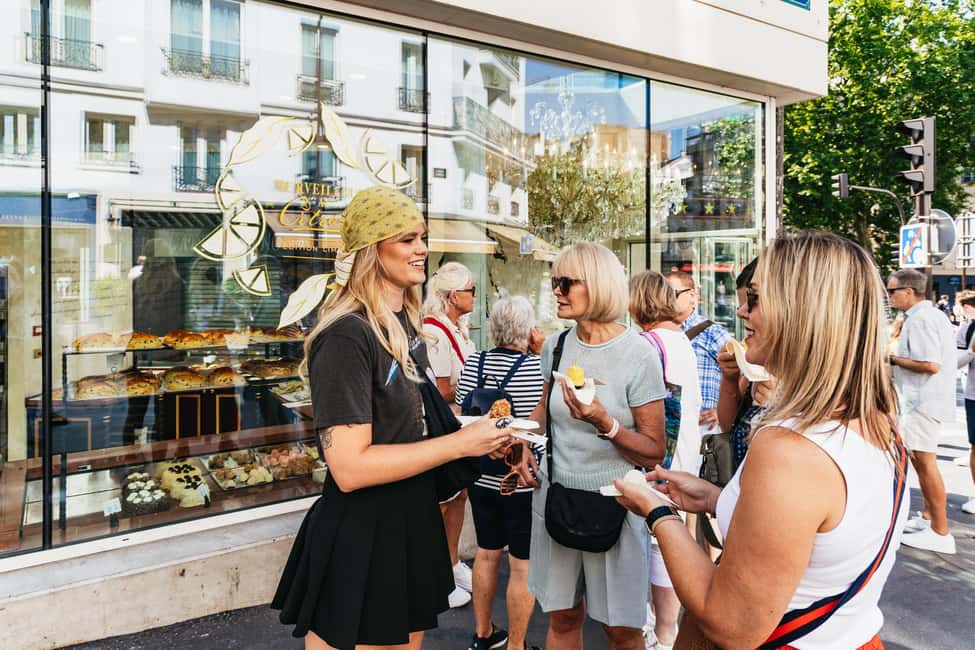
At one point you’ll be offered a VIP lunch stop at L’As du Fallafel, but lunch is not included in the tour price. The cost range is about €15 to €25 per person.
This is a good setup because it gives you control. If you’re hungry and want the full experience of eating in the heart of the story, you can lean in. If you prefer to eat elsewhere—vegetarian options, dietary needs, or you just want to keep moving—you can skip the meal without hurting the tour.
My practical advice: budget it from the start. If you only think about the base price, lunch can feel like a surprise add-on. If you plan for the typical range, it becomes a fun optional bonus instead.
Also consider timing. Because the tour ends at a major memorial, eating too late or too heavy can make the final portion harder. If you do lunch, aim for a meal that keeps you comfortable for walking afterward.
The Mémorial de la Shoah ending: where the story reaches modern memory

The tour concludes at the Mémorial de la Shoah at 17 Rue Geoffroy l’Asnier. This is where the emotional weight changes from neighborhood storytelling to the responsibility of remembrance.
The format here is especially meaningful: your guide shares stories at the memorial location, and then you have the option to explore the museum on your own. That split is smart. You get guided context first, so the exhibits won’t feel like random panels. Then you can choose what to sit with and how long to stay.
The tour information also lists the Shoah Holocaust Memorial & Museum admission as free. That’s a strong value point because museum time can otherwise add unpredictable costs in Paris.
This is also a stop where pace matters. Give yourself extra room in your schedule for reflection. If your plan back to the hotel is tight, consider keeping your next appointment flexible.
Price and value: what $96.33 buys you in Le Marais
The listed price is $96.33 per person for roughly four hours with a guide, in an English-language group capped at 14 people. Since the tour includes the key guided stops in one area, you’re paying for interpretation and time efficiency more than for tickets to multiple paid attractions.
What boosts the value is that the route is built to cover high-impact sites without you having to stitch together separate bookings. You get the architectural and neighborhood beats (Place des Vosges, Hôtel de Sully exterior, Guimard synagogue exterior) plus the emotional end at the Shoah memorial.
Two costs to remember: lunch at L’As du Fallafel is extra (about €15–€25), and the tour’s final museum experience is described as admission ticket free. In other words, most spending risk is low, and the only predictable optional add-on is lunch.
One more practical note: this is commonly booked about 53 days in advance on average. That doesn’t mean you can’t book later, but if you have a specific day in mind, earlier reservations will help you avoid getting shut out.
Who this tour suits best (and who might want a different option)
This experience is a strong fit if you want guided context with minimal transit. You’ll like it if you enjoy neighborhood history, architecture that tells a story, and a humane pacing that includes a sit-down moment.
It also works well for families. The tour’s reviews include positive feedback even with teenagers around 13 and 14, which suggests the guide approach can keep younger minds engaged without talking down.
You might consider a different option if you’re primarily after museum interiors and ticketed gallery time. This is a walking tour with key external sights and one sit-down interior synagogue stop, then a memorial ending. The museum side at Shoah is self-guided after the guided setup, so you’ll want to plan enough time to actually benefit from that option.
Should you book the Jewish History Tour of Le Marais?
If you want one morning or afternoon that connects Paris’s Jewish story to place, architecture, and modern remembrance, I’d say book it. The format is efficient: everything is concentrated in Le Marais, the group stays small, and the end at the Mémorial de la Shoah gives the day real meaning.
Choose it especially if you value a guide who can connect details into a story you remember later. Names like Karen and Emma come up for a reason: a warm, humorous delivery can make difficult topics easier to hold.
Skip or rethink only if you strongly prefer fully ticketed interiors all day long. This isn’t a crawl through paid museums. It’s a walking narrative, with one sit-down synagogue moment and a guided lead-in to the memorial.
FAQ
How long is the Jewish History Tour of Le Marais?
The tour is listed at about 4 hours.
What language is the tour offered in?
The tour is offered in English.
Where does the tour start?
You start at Louis XIII Square, in the Place des Vosges area, 75004 Paris.
Where does the tour end?
The tour ends at the Mémorial de la Shoah, 17 Rue Geoffroy l’Asnier, 75004 Paris.
What’s included in the price?
The tour includes a guide.
Is lunch included?
Lunch at L’As du Fallafel is not included. It’s listed as approximately €15 to €25 per person.
Is admission included for the Shoah Holocaust Memorial & Museum?
Admission for the Shoah Holocaust Memorial & Museum is listed as free.
What is the cancellation policy?
You can cancel for a full refund up to 24 hours in advance of the experience start time.