REVIEW · PARIS
Private Historical Tour of Notre Dame
Book on Viator →Operated by Paris in person · Bookable on Viator
A Notre-Dame lesson you can actually use. This private walk puts you face-to-face with the cathedral’s exterior and explains the meaning behind what you’re seeing, from Point Zero to the Western Portal. You get a professional art historian in your group, so the tour is built for questions, not just listening.
I especially like how the stops are chosen to make the church readable. You’ll connect the ground-level sites to larger ideas about France and faith, and you’ll leave with a stronger sense of why those stone figures matter. A second highlight for me is the way the route circles the building, so details on windows, gargoyles, and Gothic design snap into place as one story.
One thing to consider: this experience focuses on the cathedral grounds and exterior viewing. The information around the crypt is taught from the outside, and the visit does not include an inside tour of Notre-Dame—so plan any interior time separately if that’s your priority.
In This Review
- Key things to know before you go
- Why a private, art-historian tour works at Notre-Dame
- Meeting at the Parvis: your 90 minutes start fast
- Parvis crypt teaching, Point Zero, and Charlemagne in context
- The Western Portal: where stone becomes a language
- Rue du Cloître to Fontaine de la Vierge: reading Gothic from the edges
- Inside access and what you should plan for instead
- The guide factor: what the best moments tend to sound like
- Price and value for your 90 minutes
- Should you book this private Notre-Dame tour?
- FAQ
- Is this tour private?
- How long is the tour?
- What language is the tour offered in?
- Does this tour include entry into Notre-Dame inside?
- What about the Archeological Crypt of the Parvis of Notre-Dame?
- Is Point Zero included, and is it free?
- Are the other exterior stops included for viewing?
- Where does the tour start and end?
- Does the tour include food or drinks?
- What is the cancellation policy?
Key things to know before you go
- Private format with an art historian means you can ask as many questions as you like, as you move from spot to spot.
- Exterior-focused route helps you understand the cathedral’s design through multiple angles instead of rushing one area.
- Point Zero and Charlemagne add political and cultural context that most casual visits skip.
- Western Portal symbolism gets the time it deserves, with explanations of statues and reliefs.
- Crypt learning without entry: the underground parvis crypt gets discussed, but you’re not going in as part of this tour.
- Multiple departure times are available online, scheduled in 30-minute windows.
Why a private, art-historian tour works at Notre-Dame
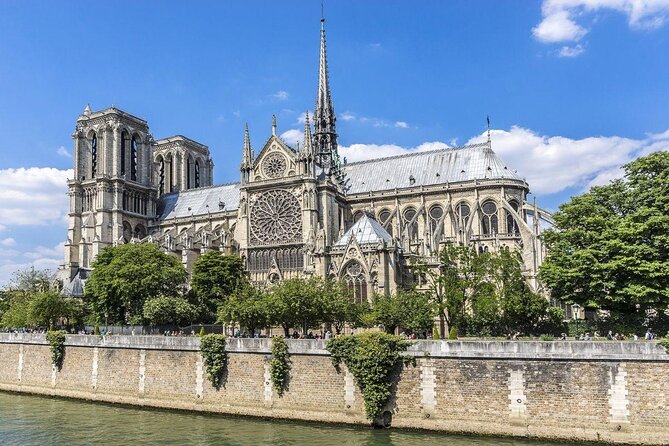
Notre-Dame is the kind of sight where you can take a hundred photos and still miss the point. This private tour is built to fix that. You’re not stuck behind a crowd while someone reads a script. Your guide can slow down when you ask questions, and they can explain what a feature is doing and why it was placed there.
The value here is that an art historian doesn’t just point at stone. They help you “read” it—how religious ideas show up in art, how architecture answers engineering problems, and how the building connects to French identity. Guides like Boris (praised for covering architecture and religion with real patience) and Allison (praised for thoughtful, fun storytelling) set the tone that makes this feel like a guided lesson, not a checklist.
At $299.57 per person for about 1 hour 30 minutes, it’s not a budget add-on. But it can still be good value if you want depth without spending a whole day juggling multiple tickets and tour formats. If you’re mainly after quick pictures and don’t care much about symbolism, a standard free-entry plan might feel more efficient.
You can also read our reviews of more private tours in Paris


Meeting at the Parvis: your 90 minutes start fast
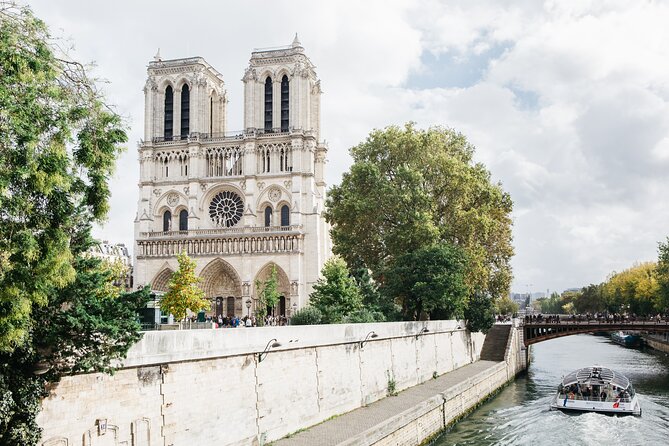
You meet at 7 Parvis Notre-Dame – Pl. Jean-Paul II, right where the cathedral’s story begins at street level. The tour ends back at the same meeting point, which is handy because you can keep your momentum after the walking and planning is minimal.
The duration is about 1 hour 30 minutes, and departures are offered in many time slots online, spaced so you can match your day. In practice, that matters in Paris, where Notre-Dame area crowds can turn “one stop” into a long, slow shuffle if you pick the wrong time.
A practical tip: wear shoes you can stand in for a while and bring a layer. This tour keeps you outside for most of the experience, and weather in Paris can swing, especially in shoulder seasons. Since your focus is exterior details, you’ll want good visibility, not scarf-covered binoculars.
Parvis crypt teaching, Point Zero, and Charlemagne in context
The first stop is the Archeological Crypt of the Parvis of Notre-Dame, but here’s the important nuance: you discuss the crypt’s significance without entering it. That’s still useful, because the guide can frame how Notre-Dame sits on layers of older Paris, and how that underground history connects to the cathedral’s meaning. Just know the crypt admission is not included here, and it’s described as a separate visit.
Then you shift to Point Zero, a site many people overlook. The tour frames why it matters—cultural, symbolic, and overall relevance—so you understand what you’re standing on instead of treating it like background. This stop is short, but it can change how you think about the cathedral’s location in the city.
Next comes the Equestrian Statue of Charlemagne. The guide explains how France came to be and the role Notre-Dame had in that larger story. It’s a smart move because it links the cathedral to national myth and politics, not just art. If your brain likes timelines, this stop gives you a spine to connect later details on the building.
The Western Portal: where stone becomes a language
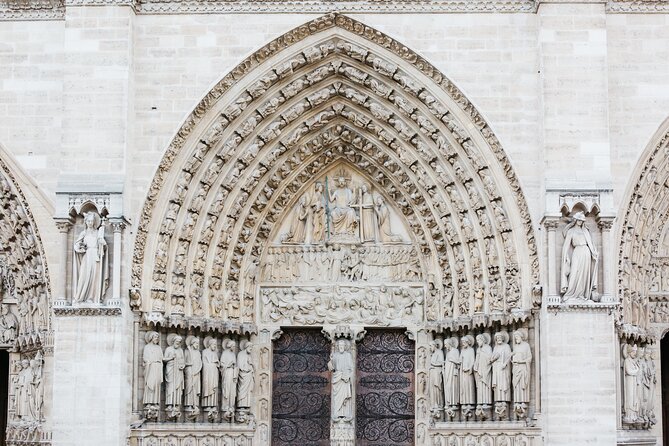
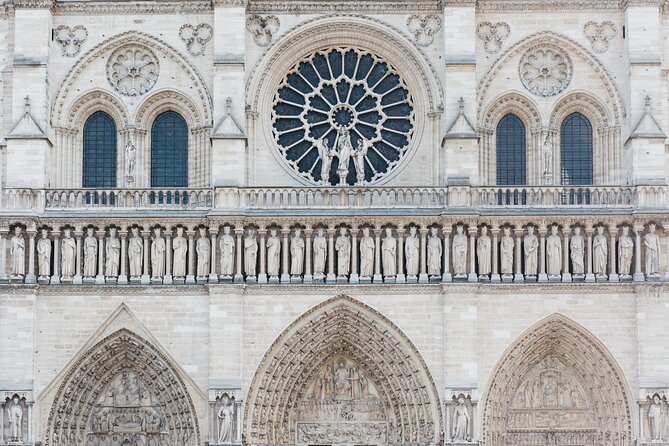
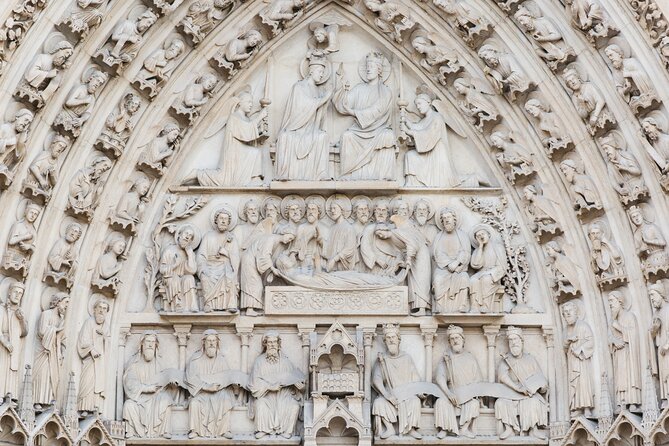
One of the biggest payoffs of this tour is the time spent on the Cathedrale Notre-Dame de Paris Western Portal. This is where the guide slows down and teaches you to look at statues and reliefs as communication, not decoration. You’ll learn how the figures and carving sit in a system of meaning—and that art here is instrumental, tied to ideas you can’t fully see unless someone explains the symbols.
This kind of explanation is what makes a private tour feel different from scrolling photos. The “portal” is basically a visual sermon. When your guide connects the statues and reliefs to what they represented historically, the façade stops being only dramatic and starts being understandable.
A possible downside: if you’re hoping for a frantic sprint through every corner, this tour’s rhythm may feel more thoughtful than you expect. But for most people, that’s the point. You leave with your own mental map of which parts of the exterior tell stories, and which parts show design choices.
Rue du Cloître to Fontaine de la Vierge: reading Gothic from the edges
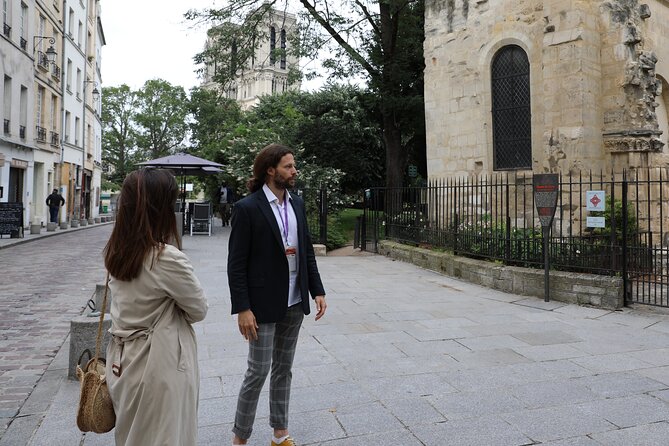
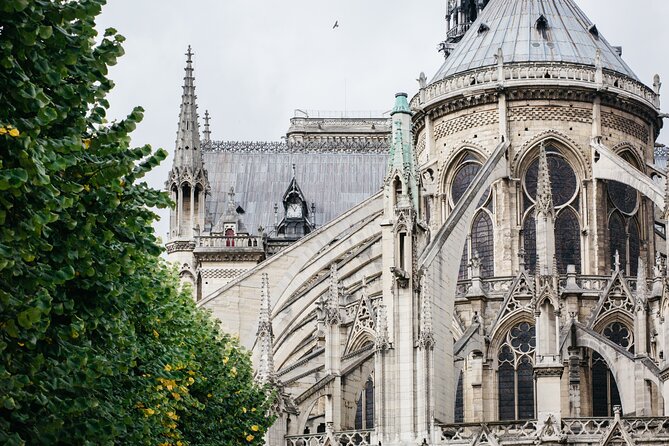
After the portal, the route starts to widen your view. At Rue du Cloitre Notre-Dame, you get a side perspective that helps you see architecture as a three-dimensional object. This is where the guide talks about windows, gargoyles, and how the structure comes together both symbolically and functionally.
You’ll likely feel the value of this stop if you’ve ever seen Notre-Dame straight-on and thought it looked complicated but not clear. From the side, details connect: window rhythm, stonework layering, and how the building’s features are both practical and symbolic. It’s also a nice way to break up the heavier symbolism of the portal with design-focused clarity.
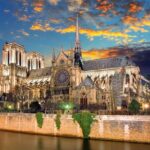
Then you head to Fontaine de la Vierge, viewing the cathedral from the back. This is a good reminder that Gothic architecture isn’t only about what people photograph. The guide highlights the Gothic complexity in a way that helps you see depth and structure, not just ornament.
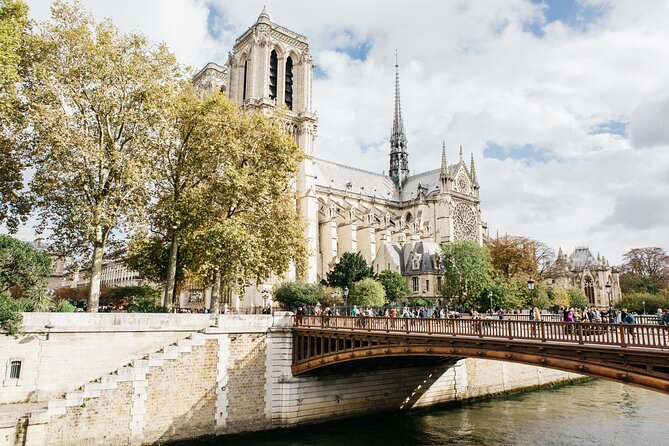
Finally, at Petit-Pont-Cardinal-Lustiger, the tour zooms back out. You’ll get an overview of the entire cathedral and hear how the story connects to Marian Catholicism, French identity, and politics. This is another stop where explanations can change your understanding fast: the building isn’t isolated. It’s part of cultural conflict, cultural pride, and religious meaning that evolved over centuries.
You can also read our reviews of more historical tours in Paris



Inside access and what you should plan for instead
Here’s the part you need to get right before you book: this experience does not include going inside Notre-Dame. The tour information is clear that cathedral access in this case is tied to the experience setup, and the visit stays on the outside.
In addition, the crypt discussion at the parvis happens without entry. Even though the crypt itself is historically important, you’re learning it as a separate layer of context, not as a ticketed walk-down underground as part of this time slot.
So if you want interior experiences like stained glass views and the sense of scale inside, you’ll likely need to plan that separately on your own schedule. The tour can still be worth it, because understanding the exterior symbolism often makes the interior (if you add it) hit harder. But if your main goal is an inside visit during these 90 minutes, this one may feel like a mismatch.
The guide factor: what the best moments tend to sound like
The strongest reviews share a pattern: the guides can answer questions without getting stiff. In some cases, guides are described as funny and political, while others lean more into engineering and how the architecture works. Boris is singled out as a scholar-level expert in religion, architecture, history, art, literature, and politics, which tells you the tour can go beyond surface explanation.
Allison gets praise for making the experience feel fun and thoughtful, with the sense that the guide prepared real structure for what you’ll see. Mila/Mira is praised for high-level expertise and answering both historical and lighter questions with ease, and one guide is even noted for a background in medical history, which suggests you may get creative cross-links when your questions lead somewhere unexpected.
On the flip side, there is at least one review that points to a guide being dry or unfriendly, and another notes that limitations around inside communication can affect the feeling of a special tour. That’s a reminder that private tours still depend on your guide’s style and on what’s permitted in the moment. Still, a private format is usually your best chance to get clarity quickly, because you can steer the conversation toward what you care about.
Price and value for your 90 minutes
Let’s be honest: $299.57 per person is a premium. The question isn’t just what you get, it’s whether you’ll use it.
You’re paying for three main things:
- A professional art historian who explains meaning, not just what something is called.
- Private Q&A access, so you don’t have to guess what you’re looking at.
- A guided route that changes your perspective, since the time is spent around the exterior, not just one façade shot.
This tour can be excellent value if you’re the type who likes to understand how images, symbols, and power show up in public buildings. It’s also a good deal for families who want one adult to handle the explanations while kids (or you) ask questions.
If you’re only interested in a quick look and you already plan to visit inside separately, the premium may feel steep for 90 minutes outdoors. In that case, compare it to doing a self-paced walk around the parvis, plus a separate interior plan. The difference is: this tour gives you a guided “why,” while self-guided is mostly “what.”
One nice practical detail: there are group discounts, so if you’re traveling with friends and can share the booking, the price pain drops. The tour also supports a mobile ticket, which makes last-minute logistics easier in a city where paper tickets are always one small hassle away from chaos.
Should you book this private Notre-Dame tour?
Book it if you want Notre-Dame to make sense. If you care about symbolism on the Western Portal, want context about Point Zero and Charlemagne, and enjoy understanding how Gothic design works from multiple angles, this private format is a strong match. The guide quality seems to be a real driver of success, with multiple guides praised for expertise and patience.
Skip it (or think twice) if your top priority is going inside during these 90 minutes, because this tour keeps the focus on the outside. Also, if you’re very time-pressed and only want photos, you may get similar results with a self-walk plus a separate interior plan.
If you’re undecided, the safest approach is this: use the tour for the exterior meaning, then decide later if you want interior time on your own. That way, you’re not gambling on the parts that don’t match your expectations.
FAQ
Is this tour private?
Yes. It’s a private tour/activity, so only your group participates.
How long is the tour?
It’s about 1 hour 30 minutes (approx.).
What language is the tour offered in?
The tour is offered in English.
Does this tour include entry into Notre-Dame inside?
No. The visit stays on the outside, and the cathedral is not accessible on the inside as part of this experience.
What about the Archeological Crypt of the Parvis of Notre-Dame?
You discuss the crypt, but you do not enter it. The admission ticket for the crypt is not included.
Is Point Zero included, and is it free?
Point Zero is included in the tour, and admission is listed as free.
Are the other exterior stops included for viewing?
Yes, the itinerary’s listed stops (such as Charlemagne’s statue, the Western Portal area, Rue du Cloitre Notre-Dame, Fontaine de la Vierge, and Petit-Pont-Cardinal-Lustiger) are part of the experience with admission listed as free for those stops.
Where does the tour start and end?
It starts at 7 Parvis Notre-Dame – Pl. Jean-Paul II, 75004 Paris, and ends back at the same meeting point.
Does the tour include food or drinks?
No. Food and drinks are not included.
What is the cancellation policy?
You can cancel for a full refund up to 24 hours in advance. If you cancel less than 24 hours before the start time, it’s not refunded.