REVIEW · DIJON
Private guided tour – Dijon – 2h
Book on Viator →Operated by Alexia Papin - French Tour Guide · Bookable on Viator
Dijon’s old center packs a lot into a short walk, from the Notre-Dame owl to the grand Palace of the Dukes. This private tour with certified guide Alexia Papin gives you a clear route through the city and adds the local stories that can be easy to miss when you walk alone. I like the personal format and the way the route mixes major sights with smaller streets such as Verrerie Street.
I also like that the tour can help you plan the rest of your stay, with Alexia pointing out places worth returning to, including locally made mustard shops. The main consideration is time: two hours goes quickly, and the Palace of the Dukes is viewed from outside rather than entered.
In This Review
- Key points at a glance
- Why this short Dijon walk works
- Starting at Porte Guillaume and Place Darcy
- Les Halles and Dijon’s food identity
- Notre-Dame church and the famous owl
- Hôtel de Vogüé and the city’s architecture
- Verrerie Street and the pleasure of the smaller route
- The Palace of the Dukes from the outside
- Place de la Libération and François Rude Square
- Alexia Papin’s guiding style
- Who gets the best value from this tour
- Timing, price, and booking advice
- Should you book the Dijon private tour?
- FAQ
- Where does the tour start?
- Where does the tour end?
- How long does the tour last?
- Is this a private tour?
- Is the tour offered in English?
- Who is the guide?
- What places are included on the walking route?
- Is admission included?
- Are food and drinks included?
- Can I cancel for a full refund?
Key points at a glance
- The Notre-Dame owl: See Dijon’s famous good-luck marker and hear the story tied to the church.
- A private group of up to 15: You are not combined with strangers, and the guide can adapt the walk to your group.
- Alexia Papin’s local storytelling: Expect history, architecture, Burgundy connections, and the story of Dijon mustard.
- Les Halles and the market area: A useful early stop for understanding Dijon’s food culture and for spotting places to revisit.
- A central finish: The walk ends at Place François Rude, with another ending point possible depending on the route and your needs.
- A compact introduction to Dijon: The tour covers the central sights on foot in about two hours, with no admission tickets included or required for the listed stops.
Why this short Dijon walk works
Dijon is easy to underestimate. Many people know it mainly as the home of mustard, but the center also brings together churches, elegant town houses, public squares, market life, and the former seat of the dukes of Burgundy. A good guide helps you connect those pieces instead of seeing them as unrelated photo stops.
This tour is built for that first orientation. You begin at Porte Guillaume, at 13 Place Darcy, and walk toward the historic center. The route finishes at Place François Rude, close to the market area, though Alexia can finish elsewhere if the course of the walk or your group’s needs call for it.
The private format matters here. A group of up to 15 people can book together, and only your party takes part. That does not guarantee a completely customized route, but it gives the guide room to respond to questions and adjust the pace more easily than a large shared group.
At $276.36 per group, the value depends on how many people join. For one or two people, it is a fairly costly two-hour walk. For a family or group of friends, the same price is divided among everyone, making the arrangement much more reasonable. You are paying for a certified guide and a private visit, not for food, transport, or entry to paid attractions.
You can also read our reviews of more guided tours in Dijon


Starting at Porte Guillaume and Place Darcy
Porte Guillaume is the stated meeting point, at 13 Place Darcy. This gives you a clear place to begin, rather than asking you to find a small shop or a particular corner of the old town. From here, the walk moves into central Dijon and builds a basic sense of direction.
That opening is useful if Dijon is your first stop in Burgundy. You can ask Alexia about the places you want to see later, and the walk gives you a framework for returning to the center on your own. One particularly practical part of her approach is directing you toward spots to revisit after the tour.
The meeting point is near public transportation, according to the tour details. Private transportation is not included, and you should expect to walk between the stops. Bottled water and snacks are also not included, so bring your own water if you like to sip while walking.
Les Halles and Dijon’s food identity
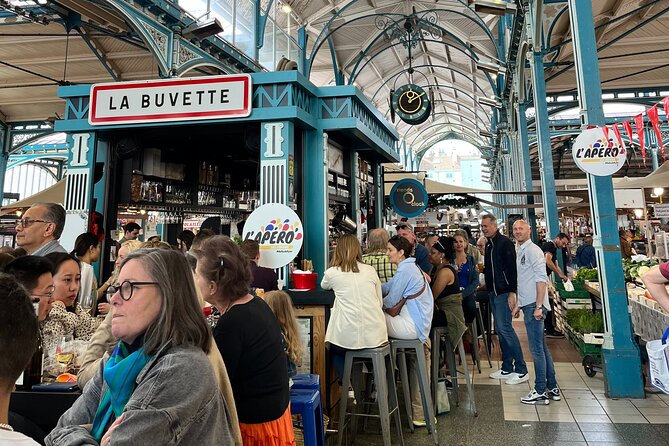
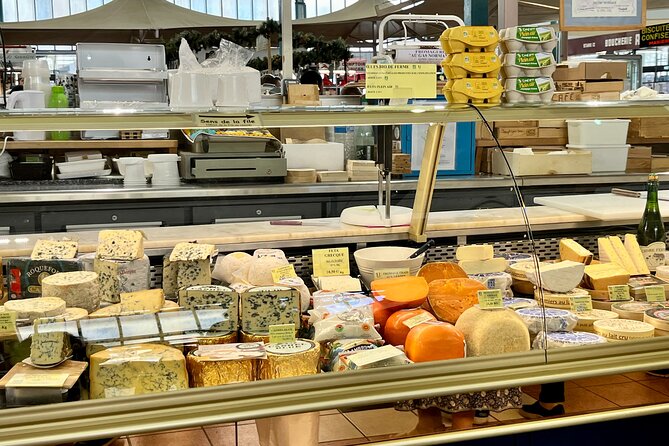
The market place, referred to in the route as Les Halles, brings the food side of Dijon into the tour. It is not simply a quick pass by a famous building. It helps place mustard and Burgundy food traditions within the everyday life of the city.
The market is also a useful practical stop. You can ask about locally made mustard and note places to return to after the walk. Alexia has a clear connection to this subject in her storytelling, including the history of Dijon mustard and advice on finding mustard made locally.
Do not expect a food tasting to be part of the $276.36 price. Snacks are excluded, and there is no stated tasting component. Think of this as a guided introduction to the market area, with ideas for your own later shopping or eating.
If you want plenty of time to browse stalls, shop for jars, or stop for a snack, plan to return after the tour. Two hours is enough for orientation, not a leisurely market visit.
Notre-Dame church and the famous owl
Notre-Dame is one of the central stops, and its owl is the detail that gives the visit a particularly Dijon character. The small carved owl has become a local symbol, and touching it is linked with good luck. The tour provides context for the church and the tradition rather than leaving you to spot the feature without explanation.
This is the sort of detail I value on a guided walk. You might notice an unusual carving on your own, but without the story, it remains just part of the stonework. Alexia’s style, as shown by the way she handles Dijon’s history and architecture, puts these small details into an understandable story.
The church is viewed as part of the walking route. The supplied details do not promise interior admission, special access, or a religious service visit, so do not book this tour expecting a long indoor church visit. Its value here is as a key point in the city walk, paired with the owl and the surrounding streets.
Hôtel de Vogüé and the city’s architecture
Hôtel de Vogüé adds an architectural stop to the walk. The route is not limited to royal and religious landmarks. It also shows you the kind of grand historic building that helps explain Dijon’s character.
Alexia has been praised for explaining architecture as well as history, which is important in a city where the buildings can otherwise blur together. A guide can point out why a facade matters and how it fits the story of Dijon, rather than giving you only a name and a date.
The information provided does not state that you enter Hôtel de Vogüé, so treat it as an exterior sight on the walking route. That is not a flaw for a two-hour overview, but it is worth knowing if your priority is touring historic interiors.
You can also read our reviews of more private tours in Dijon

Verrerie Street and the pleasure of the smaller route
Verrerie Street is one of the more specific route choices, and it keeps the walk from becoming a simple circuit of the largest squares. Smaller streets often give a better sense of how the historic center is arranged, even when the tour does not stop at every building.
Here, the benefit is variety. You move from market life and church architecture to a narrower street, then on toward the ducal center. The route feels like an introduction to the old town rather than a single subject lesson.
The tour details do not promise shopping time or a particular shop on Verrerie Street. I would treat this stop as part of the guided walk and save any browsing for after the formal two hours.
The Palace of the Dukes from the outside
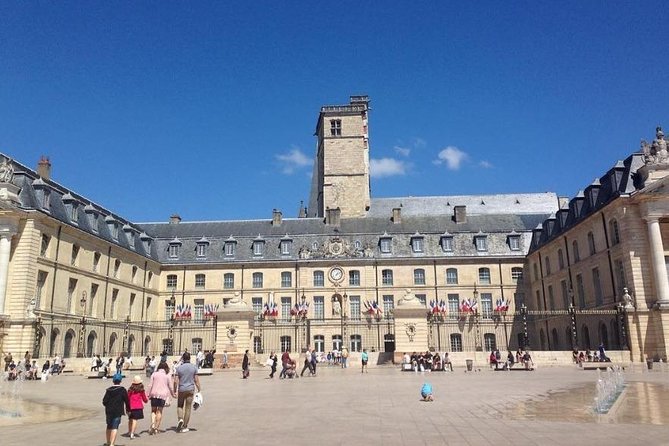
The Palace of the Dukes is one of the major landmarks on the route, but the tour visits it from outside. That distinction matters. You will hear about the building and see its place in the city, yet the price does not include admission to an interior section or a separate museum visit.
The palace gives the walk historical weight without requiring a long indoor stop. Alexia can explain its connection to the dukes of Burgundy and relate it to the surrounding square. Her talks about Dijon and Burgundy include historical facts, so this is a good place to ask questions about the wider region.
If you want to explore the palace interiors, set aside additional time and check opening information separately. The tour is not selling that access. Its job is to put the landmark in context and help you recognize what you are seeing.
Place de la Libération and François Rude Square
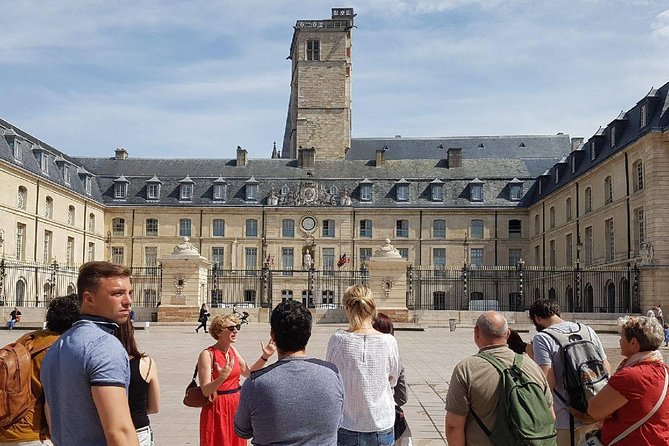
Place de la Libération provides one of the route’s broad public spaces and a natural setting for discussing the palace and the city center. The walk then continues to François Rude Square, where services normally end.
Ending at Place François Rude is convenient because it keeps you in central Dijon. You can continue on foot, return toward the market, or follow Alexia’s suggestions for places to see later. The tour can also end at another point of arrival if that better suits the route or your group.
The finish gives the experience a useful shape. You begin at Porte Guillaume and end near the heart of the old center, so you are not left at an isolated meeting point. Still, the tour does not include a ride back, and private transportation is not part of the service.
Alexia Papin’s guiding style
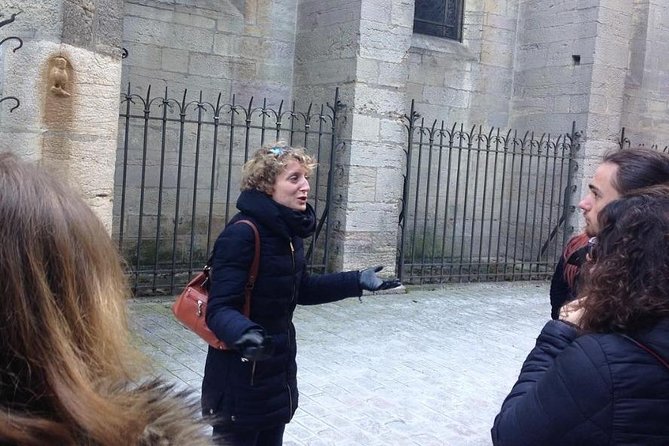
Alexia Papin is the named guide and the provider of the experience. The strongest theme in her work is lively storytelling. Her approach combines Dijon’s past, Burgundy connections, architecture, and practical suggestions for the rest of your visit.
That balance is more helpful than a speech filled only with dates. You get the story of Dijon mustard, explanations of places along the route, and suggestions for returning to sites after the tour. She also guides in Beaune, so you may find her Burgundy knowledge useful if your trip includes both cities.
The tour is offered in English. One piece of feedback also describes a visit adapted for a group from several backgrounds, and another notes that Alexia managed to move a Saturday tour to Friday after a scheduling issue. Those details suggest flexibility, but they do not guarantee that every date or change can be accommodated.
The overall rating is 4.9 from seven reviews, a small sample but a strong one. The most consistent praise centers on Alexia’s entertaining delivery, historical explanations, architecture commentary, and ability to keep attention through the full walk.
Who gets the best value from this tour
I would choose this walk for a first visit to Dijon, especially if you have only a short stay and want a well-organized introduction. It is also a good match for a family or group of friends because the private price is shared across up to 15 people.
It suits people who want to ask questions. The private setup gives you a better chance to steer the conversation toward food, architecture, Burgundy, or later sightseeing than a large public tour usually allows.
You should think twice if your main goal is entering monuments, tasting mustard, or spending a long time at the market. The listed stops are primarily viewed along the route, the palace is exterior only, and food and admission costs are not included.
The tour also requires good weather. If poor weather cancels it, you are offered another date or a full refund. The activity is near public transportation, service animals are allowed, and most people can participate, but the data does not provide a detailed accessibility assessment for every street or surface.
Timing, price, and booking advice
The walk lasts about two hours. That is long enough to cover the main central sights, but short enough to fit before lunch, after arrival, or at the start of a multi-day Dijon visit.
At $276.36 per group, the arithmetic changes the decision. A group of 10 pays about $27.64 per person, while two people effectively pay $138.18 each. If you are traveling as a larger party, the private arrangement offers much better value than the headline price suggests.
The tour is booked on average 75 days ahead, so popular dates may fill early. Confirmation arrives within 48 hours of booking, subject to availability. Free cancellation is available until 24 hours before the local start time, but changes or cancellations inside that window are not accepted for a refund.
Because the route depends on good weather, I would book it near the beginning of your Dijon stay when possible. That leaves room to use Alexia’s suggestions afterward and gives you a chance to reschedule if weather interferes.
Should you book the Dijon private tour?
Book it if you want a short, private introduction to central Dijon led by a certified guide who can connect architecture, Burgundy history, the market, and mustard. Alexia Papin’s lively style is the main reason to choose this walk over simply following a map.
For a couple, the price may feel high for two hours. For a family or larger group, it becomes much better value. I would also book with the right expectations: this is a walking orientation, not a tasting tour, museum visit, or palace interior tour.
If that description fits your plans, the route gives you a practical start, a few memorable details such as the Notre-Dame owl, and useful ideas for the rest of your time in Dijon.
FAQ
Where does the tour start?
The tour starts at Porte Guillaume, 13 Place Darcy, 21000 Dijon, France.
Where does the tour end?
The stated end point is Place François Rude, Dijon. The guide may be able to finish elsewhere depending on the route or your group’s needs.
How long does the tour last?
The tour lasts approximately two hours.
Is this a private tour?
Yes. Only your group participates, with up to 15 people included in the group price.
Is the tour offered in English?
Yes. English is one of the offered languages.
Who is the guide?
The experience is provided by Alexia Papin, a certified French tour guide.
What places are included on the walking route?
The route includes the market place, Notre-Dame church and its owl, Hôtel de Vogüé, Verrerie Street, the exterior of the Palace of the Dukes, Place de la Libération, and François Rude Square.
Is admission included?
The tour includes a certified guide and a private visit. Admission tickets are not listed as an inclusion, and the Palace of the Dukes is visited from outside.
Are food and drinks included?
No. Bottled water and snacks are not included.
Can I cancel for a full refund?
Yes, if you cancel at least 24 hours before the experience start time. Cancellations or changes made less than 24 hours before the start are not refunded. If poor weather causes the tour to be canceled, you are offered another date or a full refund.