REVIEW · DIJON
Burgundy wine tasting tour Half-Day Beaune from Dijon
Book on GetYourGuide →Operated by Authentica Tours · Bookable on GetYourGuide
Grand Cru roads in only five hours. This Dijon to Beaune trip feels like a fast lesson in Burgundy, with scenic driving past vineyard villages and Romanesque churches, then a focused tasting with an English-speaking wine expert. I love the Grand Cru route view from the van windows, and I like that you taste 5–7 wines across Côte de Beaune and Côte de Nuits rather than just one style. One possible drawback: with only a half-day, your Beaune stroll is short, so you’ll want a quick game plan for shops and sights.
What makes it work is the pacing. You’re not racing between ten stops; you’re getting guided context—appellations, terroir, and what to look for on a label—then tasting long enough to notice differences between whites and Pinot Noir. And because the group is capped at 8, questions don’t get swallowed by the clock.
If you’re not a die-hard wine person, that’s fine. The tour’s guides have a habit of explaining Burgundy in plain language (names like Paul, Ann, Gabriel, Sébastien, and Sonia come up often), and they’ll help you compare what you’re tasting so it actually sticks.
In This Review
- Key takeaways before you book
- Entering Burgundy: the Dijon-to-Beaune drive that teaches
- Wine tasting stops: how you go from labels to taste
- Côte de Beaune vs Côte de Nuits: the difference you’ll taste, not just hear
- Beaune on your own: the medieval streets and the shop list that matters
- The guide and group size: small enough for answers
- Price and what’s included: does $112 feel fair?
- Logistics that actually matter (without making it stressful)
- Should you book this Dijon to Beaune half-day wine tour?
- FAQ
- How long is the Burgundy wine tasting tour from Dijon to Beaune?
- How many wines will I taste?
- What type of wines are included?
- Will the tour include the Côte de Beaune and Côte de Nuits areas?
- Do we have free time in Beaune?
- Where do we meet in Dijon?
- How big is the group?
- What languages are the guides available in?
- Is the tour wheelchair accessible?
- What are the cancellation terms and payment options?
Key takeaways before you book
- Grand Cru scenery without a full-day commitment
- 5–7 tastings across Côte de Beaune and Côte de Nuits
- Premier Cru included in the mix
- Small group size (max 8) for real Q&A
- A guided Beaune walk where you also shop like a local
- Drive-by stops: vineyards, castles, abbeys, and Roman churches
Entering Burgundy: the Dijon-to-Beaune drive that teaches
You start in Dijon and head out along the Côte d’Or, the part of Burgundy people talk about like it’s a secret. It isn’t secret, but from the road it still feels like it. The minivan ride is where the tour earns its keep, because you’re constantly seeing the structures Burgundy is built on: vineyard slopes, village layouts, and the stone landmarks that have outlasted grape trends.
The route specifically points you toward famous Grand Cru areas, including Romanée Conti, Clos de Vougeot, Chambertin, and Montrachet. You won’t be doing a long hike through all of them, but that’s not the point of a half-day. The point is to connect the names you’ll see on bottles to what Burgundy looks like: villages perched on the edges of vineyards, old winemaking properties, and the churches and castles that signal how long this region has been organized around agriculture.
Even if the vines aren’t at peak bloom (and in many seasons they won’t be), you can still spot what matters: working vineyards, layered slopes, and the rhythm of rural life. One of the best parts of driving this area is that you learn to “read” the scenery. After a few minutes, you start noticing why certain grapes end up tasting a certain way in Côte de Beaune versus Côte de Nuits—because you’re seeing the geography that shapes them.
Practical tip: when you’re seated by the window, keep your eyes on the ridge lines and village edges. Those are the visual clues guides use to explain why the wines differ.
You can also read our reviews of more food & drink experiences in Dijon
Wine tasting stops: how you go from labels to taste
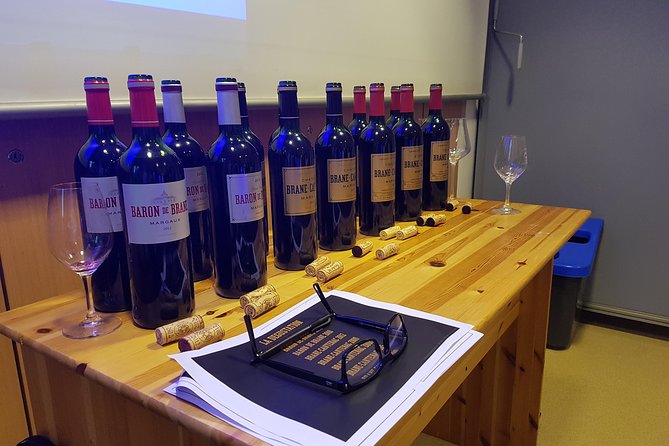
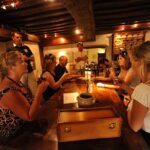
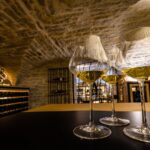
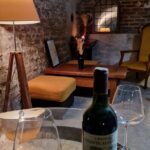
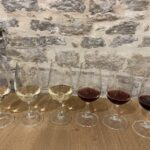
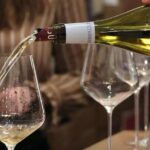
This tour’s tasting is the core experience. Expect 5 to 7 Burgundy wines, including both white wines and Pinot Noir red wines. You’ll also have chances to taste wines described as Premier Cru, which is one reason this half-day punch above its weight.
What I like about the tasting setup here is that it’s guided. A good sommelier (or collector/producer-type expert) doesn’t just pour wine and hope you get it. They help you pay attention to:
- how the aroma shifts between whites and reds
- why Pinot Noir can taste different even when the grape name looks the same on paper
- how to connect terroir terms to actual flavor impressions
If you’re learning, this format is ideal because it doesn’t overwhelm you. You taste a set of wines close together, then talk through what you tasted. That makes the comparisons easier than if you visited several separate tastings on your own.
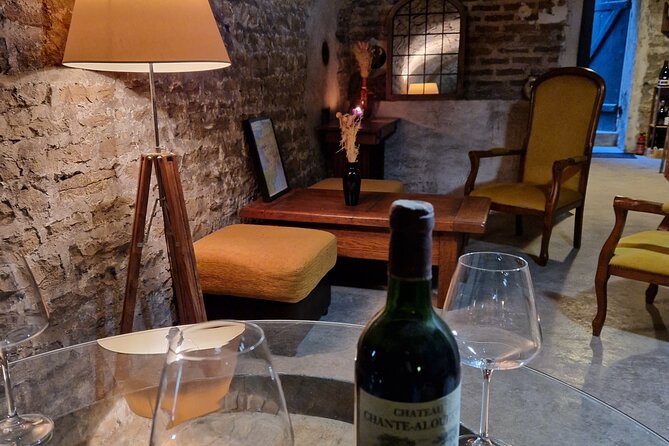
A note on expectations: Burgundy isn’t like some regions where you can hop between lots of “factory-style” winery visits. Even when you’re tasting in a partner cellar or tasting room, the experience is often more about expert instruction than a behind-the-scenes tour of multiple farms. One downside that can matter to you: if you’re the type who wants lots of separate winery stops and extended pours, you may wish there were more than one main tasting moment. With this half-day schedule, it’s a curated sampling rather than a marathon of cellar time.
Practical tip: bring a small notepad. After the second or third pour, it gets hard to remember which wine was which, especially when labels and appellations start looking similar.
Côte de Beaune vs Côte de Nuits: the difference you’ll taste, not just hear
The names Côte de Beaune and Côte de Nuits show up again and again in Burgundy. Here’s the trick: on this tour you don’t just hear the distinction; you taste it during the tasting flight. The expert will guide you through what changes between the two areas so you can start recognizing patterns.
In broad strokes, Côte de Beaune is strongly associated with whites like Chardonnay and with elegance and roundness in many bottlings. Côte de Nuits is where Pinot Noir takes center stage, often with structure and a more serious edge to the red wines. Those words can sound abstract until you smell and sip the wines back to back.
That’s why tasting across both areas in one afternoon is such a smart way to learn. You build a mental “before and after.” Even if you don’t become a Burgundy scholar, you’ll leave with a clearer sense of why bottles from different sectors taste different even when they come from the same overall region.
Also, you’ll be shown famous appellations while driving. For me, that makes the tasting feel anchored in place. Instead of treating Grand Cru names as marketing, you start to see them as maps and slopes—things with physical reality behind the label.
Beaune on your own: the medieval streets and the shop list that matters
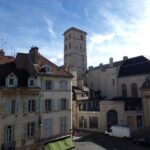
Beaune is the reward stop. After the driving and tasting, you get free time to wander the historic center. This is where you shift from wine education to getting the feel of Burgundy life: narrow streets, traditional storefronts, and the kind of food shops that make it hard to walk out with just one small purchase.
Here’s what you can look for as you stroll:
- blackcurrant liquor
- mustard (classic regional gift material)
- honey spice cake
- aniseed treats from Flavigny
If you like practical souvenirs (stuff you’ll actually use and eat), these are more fun than generic wine-themed magnets.
This is also your window for a bigger Beaune moment. One standout suggestion from the tour’s past guests: squeeze in the Hospices de Beaune, the well-known historic hospital with centuries of story behind it. Even if you just see the key areas, it adds depth to the time you spend in town.
Time matters here. Because you’re only on the tour for about 5 hours, treat Beaune like a short “greatest hits” visit. If you want a slow lunch plus long shopping plus extra museum time, you might feel rushed. If you keep it focused—walk, shop, and pick one main sight—you’ll enjoy it.
Practical tip: decide before you go which shop category you care about most (food gifts or wine shopping). That prevents you from wandering for 45 minutes and realizing you missed what you actually wanted.
The guide and group size: small enough for answers
One of the best value points is the group size: a maximum of 8. In a small group, the guide can actually bounce between people and answer follow-ups. If you’ve got questions about how to read a label, what to expect from Pinot Noir, or why Premier Cru matters, you’re far more likely to get a straight answer here than on bigger bus-style tours.
You’ll also appreciate the “drive + tasting + Beaune” mix because it gives the guide natural moments to teach. Scenic roads are used for visual explanations. Tastings are used for sensory explanations. Beaune time is used for real-world context, like how the region’s foods and flavors connect to what you sampled.
From what I’ve seen consistently with this kind of Burgundy tour, the guides tend to keep the tone friendly rather than lecture-y. Names that have shown up with strong impressions include Paul, Ann, Gabriel, Sébastien, Sonia, Dylan, Leonid, Matthiueu, Hubert, John, Stevie, and Kelly. You may not get the exact same person, but the point is that the expertise is real and the delivery is meant to be understandable.
Practical tip: if you’re traveling with someone who doesn’t drink much, this is still a good match. The cultural and food side in Beaune plus the explanation format can make it feel worthwhile even without deep tasting enthusiasm.
You can also read our reviews of more wine tours in Dijon
Price and what’s included: does $112 feel fair?
At about $112 per person for a 5-hour experience, you’re paying for three things together: transportation, a guide/expert in English, and structured wine tastings (5–7 wines).
If you price those pieces separately in Burgundy, the math often tilts toward “this is a decent deal” because:
- You don’t have to plan the route or secure a driver.
- You get expert guidance that helps you understand what you’re tasting.
- You’re tasting a focused selection designed for learning and comparison.
Could it cost more depending on your departure time and availability? Yes, but the baseline is still competitive for the region’s reputation and the fact you’re covering both Grand Cru roads and Beaune in one afternoon.
The main “value risk” isn’t the price; it’s fit. This tour is best for people who want a strong Burgundy introduction, a guided tasting set, and a short Beaune window. If you’re hunting for lots of distinct cellar visits and lots of extra wine variety, you may end up wishing for more time or more tasting stops.
Logistics that actually matter (without making it stressful)
To join the tour, you meet your group where the minivans stop in the bus lane by the kiosk labeled SIZZLE & CHILL. Aim to arrive 5 minutes early so you’re not playing a waiting game. The vehicle may wait up to 10 minutes for late arrivals, and after that, the booking is treated as a no-show.
Also, a scheduling reality: there’s a minimum of 4 participants needed for the tour to operate. If you’re traveling with limited flexibility, this matters, because it can affect which dates are confirmed.
For comfort, the ride is designed for a small group, and the tour is listed as wheelchair accessible.
Should you book this Dijon to Beaune half-day wine tour?
Book it if you want a high-quality Burgundy taste test with just enough structure to make the names make sense: Grand Cru roads, a guided flight of 5–7 wines, and free time in Beaune for shopping and a real sense of the region.
Skip (or look for a longer alternative) if you’re the type who wants lots of separate winery stops, lots of tasting variety, and long time in cellars. This half-day focuses on learning and tasting effectively, not on stacking multiple cellar experiences.
If you’re on your first trip to Burgundy, this is an efficient way to get oriented fast, taste across sectors, and leave Beaune with food-gift ideas you’ll actually use.
FAQ
How long is the Burgundy wine tasting tour from Dijon to Beaune?
The tour runs for about 5 hours.
How many wines will I taste?
You’ll taste a selection of about 5 to 7 Burgundy wines.
What type of wines are included?
The tasting includes white wines and Pinot Noir red wines, and it may include some Premier Cru wines.
Will the tour include the Côte de Beaune and Côte de Nuits areas?
Yes. The tour covers both Côte de Beaune and Côte de Nuits wineries as part of the tasting.
Do we have free time in Beaune?
Yes. You’ll have time to wander the historic streets of Beaune.
Where do we meet in Dijon?
The minivans stop in the bus lane by the kiosk SIZZLE & CHILL.
How big is the group?
It’s a small group limited to 8 participants.
What languages are the guides available in?
The live guide speaks English and French.
Is the tour wheelchair accessible?
Yes, it is listed as wheelchair accessible.
What are the cancellation terms and payment options?
You can cancel up to 24 hours in advance for a full refund. You can also reserve now and pay later (you pay nothing today).