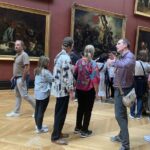
REVIEW · PARIS
Paris Occult and the History of the Dark Arts Private Tour
Book on Viator →Bookable on Viator
Paris gets stranger after dark. This private 2-hour walk turns famous Paris landmarks into clues, with secret-society style stories and symbolism you can actually see. I especially like that you do not need to follow a map, because a guide keeps the route clear and the meaning pointed.
The other big plus is that it is built for questions. With a private format, you can ask about what you are hearing as you go, not after the fact. One consideration: the stops are short, and even when an entrance is possible (like at Shakespeare and Company), it depends on time.
In This Review
- Key highlights I’d plan around
- Why this dark-arts route beats a solo walk
- Price and value: what $210.27 buys you in real terms
- The route: from Nicolas Flamel to Saint-Sulpice in about two hours
- Stop 1: Maison de Nicolas Flamel and the alchemist legend
- Stop 2: Eglise Saint-merry, the Little Notre Dame angle
- Stop 3: Square de la Tour Saint Jacques and what remains
- Stop 4: Notre-Dame de Paris without going inside
- Stop 5: Shakespeare and Company, where the supernatural meets literature
- Stop 6: Eglise Saint-Sulpice and the Da Vinci Code reality check
- What you should do before you go
- The guide and why the private format matters
- Who this tour suits best
- Should you book this Paris Occult and the Dark Arts private tour?
- FAQ
- How long is the Paris Occult and the History of the Dark Arts private tour?
- Where does the tour start and end?
- How much does the tour cost?
- Is the tour offered in English?
- Is this a private tour?
- Do I need to buy admission tickets for the stops?
- Is Notre-Dame visited inside?
- What is the cancellation policy?
- Is it near public transportation?
Key highlights I’d plan around

- Maison de Nicolas Flamel: Start with the alchemist legend tied to a real, old address in the 3rd arrondissement
- Eglise Saint-merry: Learn why this gothic church is nicknamed the Little Notre Dame
- Square de la Tour Saint Jacques: See the leftover structure from a bigger church with a history that feels “mystical”
- Notre-Dame de Paris (no interior visit): You get symbolism and metaphors without going inside
- Saint-Sulpice: Sort truth from fiction connected to the Da Vinci Code
Why this dark-arts route beats a solo walk

This tour is fun for one simple reason: it gives you a lens. Without that lens, Paris landmarks can feel like they are just buildings. With it, you start noticing patterns—names, shapes, and stories that connect to the occult theme the guide uses as the thread.
I also like the practical design. It is a guided route with set stops, so you are not spending your time looking for street corners, guessing angles, or losing your place. And because the tour is private, you can steer the conversation. If a symbol grabs your attention, you can ask what it might mean right then.
There is a nice balance in the subject matter too. The tour leans supernatural, secret societies, and metaphors, but it also invites you to separate truth from fiction at the places where pop-culture has taken over the narrative.
You can also read our reviews of more private tours in Paris
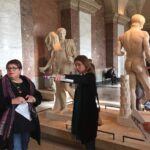


Price and value: what $210.27 buys you in real terms

At $210.27 per person for a 2-hour private experience, the question is value. Here is where it earns its keep.
First, admission tickets are free at each listed stop. That matters in a city where even “quick” visits can add up. You also get a professional local expert guide, which is the core of the experience. This is not a silent self-guided audio thing; it is storytelling tied to specific locations.
Second, it includes group discounts, which can make the same tour feel much more reasonable if you are traveling with friends or family. Third, it uses a mobile ticket, so you are not fussing with printouts.
What is not included is equally important for planning: tips and food/drink are on you. Since the tour runs about two hours with multiple quick stops, you should not count on grabbing snacks mid-route.
One more timing note: this kind of tour is often booked ahead (it is listed as commonly reserved about 66 days in advance). If you are aiming for a specific day and time, book early rather than hoping.
The route: from Nicolas Flamel to Saint-Sulpice in about two hours
You start at Auberge Nicolas Flamel, 51 Rue de Montmorency, 75003 Paris, and the tour ends at Église Saint-Sulpice, 2 Rue Palatine, 75006 Paris. That end point is handy because it is a central, well-known church area, and you can keep exploring afterward.
Expect a steady rhythm: six stops, roughly 10 to 20 minutes each, with short walks between them. This matters because the tour’s vibe is not “slow museum time.” It is more like you are doing a symbol-hunting sprint, with the guide constantly pointing out what to notice.
It is also offered in English, so you are not going to feel shut out by language. And the tour is described as having a structure most people can participate in, with it being close to public transportation.
Stop 1: Maison de Nicolas Flamel and the alchemist legend
You begin at Maison de Nicolas Flamel, the old home tied to Nicolas Flamel—claimed to be the most famous and powerful alchemist who ever lived. The theme here is key: the tour sets up the idea that Paris hides meanings in plain sight, and that “history” in this world often comes wrapped in claim, rumor, and symbolism.
This first stop is brief—about 10 minutes—but it is a strong opener. Starting with an alchemy-associated address does two things for you:
- It sets the occult “vocabulary” the guide will keep using.
- It tells you what to listen for later when churches and famous buildings start feeling less straightforward.
Because the admission ticket here is free, you are not losing time to logistics. You can stay focused on the story and the visual cues the guide mentions.
A small expectation tweak: since this is the launch point, the guide will likely plant concepts you will see again later. If you feel a little confused at the start, that is normal. The tour gradually tightens the connections.
Stop 2: Eglise Saint-merry, the Little Notre Dame angle

Next is Eglise Saint-merry, nicknamed the Little Notre Dame. That nickname is not just marketing. It signals the kind of comparison the guide will use throughout the tour: big reputations, coded details, and symbolism people keep returning to.
You get around 20 minutes here, which is longer than the first stop, so you should expect more back-and-forth. This is a good place to ask your questions, because the whole premise invites interpretation. If you are the type who likes to know how legends form, you are likely to have a great time.
Admission is listed as free, so again, you are keeping momentum. The practical win: you do not have to switch from “thinking mode” to “ticket mode.”
One thing to keep in mind: this church is described as an unsuspecting gothic medieval site that has captivated visitors for years. That tells you to look at it like a puzzle piece, not like the main event. Let the guide set the tone.
You can also read our reviews of more historical tours in Paris

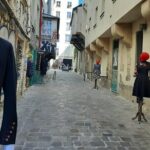
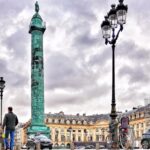
Stop 3: Square de la Tour Saint Jacques and what remains
At Square de la Tour Saint Jacques, you stop at what remains of a larger church. Even from outside, the setting itself supports the tour theme: leftovers can feel more interesting than complete structures because the gaps leave room for stories.
You are given about 20 minutes at this stop. That extra time relative to some other stops suggests the guide will likely explain how the site’s history sticks to the present. It is a location that fits the “dark arts history” approach because it naturally encourages speculation—while still keeping you grounded in what is actually there.
Admission is listed as free, and you are not dealing with “enter or not enter” decisions here. This makes the stop low-stress. You can focus on what you are seeing and what the guide helps you interpret.
Stop 4: Notre-Dame de Paris without going inside
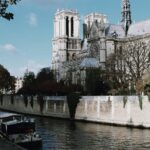
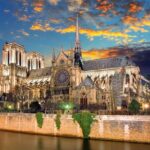
This is one of the most famous names on the route: Cathedrale Notre-Dame de Paris. But here’s the twist—you do not go inside. Instead, you scratch underneath the surface of the real Notre Dame to reveal hidden metaphors and meaning woven into the structure.
The stop is short—about 10 minutes—so do not plan to treat it like a full Notre-Dame experience. Plan to treat it like a focused symbolism lesson at the front of one of the world’s most recognizable facades.
What makes this valuable is that you still get the tour’s main payoff: the guide’s reading of what the architecture is saying. For people who do not want to rush through crowds inside, this “from the outside” format can be a relief. You get to connect details without the time drain.
A practical tip: if you are photo-heavy, you will want to be ready with your camera quickly. Since the stop is brief, you cannot count on long pauses for “one more shot.”
Stop 5: Shakespeare and Company, where the supernatural meets literature

Then you move to Shakespeare and Company, where the tour theme shifts from church symbolism toward text-based hidden meaning. The framing is fun: a savant writer, playwright—and magician? The stop focuses on more that is hidden in Shakespeare’s work.
You get around 10 minutes here, which is tight. That means the guide will likely point you toward a few specific angles rather than trying to cover Shakespeare in full.
There is also an entry note: you will enter inside time permitting, and there is usually a long time. Since that detail is part of the plan, you should treat the inside visit as a bonus, not an expectation.
For practical reasons, this is a good stop if you like your “occult history” to include culture—stories, writing, and wordplay—not just buildings and ceremonies. If you love literature, you will probably enjoy the shift in tone.
Stop 6: Eglise Saint-Sulpice and the Da Vinci Code reality check
The last major stop is Eglise Saint-Sulpice, linked in pop culture to the Da Vinci Code. The tour is explicit about what you’ll do here: explore what is hidden and separate truth from fiction.
You get about 20 minutes at this church, making it one of the longer segments. That length makes sense. When a book or film creates a myth around a real place, people usually want clarity. This is where the guide’s job becomes part history lesson, part story correction.
Admission is listed as free, and the tour ends here. If you want to keep exploring after the tour, this is the easiest stop to extend your time because it is the finish point.
This ending also does something satisfying: you start with a famous alleged alchemist and end with a famous modern myth attached to a real church. The tour theme has stayed consistent—people make meaning, and sometimes meaning survives longer than the original claim.
What you should do before you go
This is a short tour with a fast tempo, so your prep should match the pace.
- Bring comfortable shoes. The stops are spread out enough that you will be walking and moving through city sidewalks.
- Keep your mobile ticket ready. The tour includes a mobile ticket, and having it on hand avoids last-minute delays.
- Come with 1–2 curiosity questions. If you want to know how symbolism forms, or why certain legends stick to specific places, think of a question before you meet the guide.
Also, if you are sensitive to crowds, plan your expectations for famous churches. The tour does not promise interior access for Notre-Dame, and it mentions timing limits for entry at Shakespeare and Company. That’s a realistic setup for not getting disappointed when time runs short.
The guide and why the private format matters
A standout from the feedback I saw is the guide experience—specifically Shelley—praised as amazing, with a talent for taking the group off the beaten path and staying informative. That lines up with what this tour is built to do: keep the attention on meaning, not just geography.
In a private setup, you can also ask follow-ups. That matters with occult and supernatural history because one symbol often leads to another. If you have a background interest—art, architecture, symbolism, or historical rumors—you’ll get more out of the tour when you can steer it.
And because the format is private, the guide can pace the explanation to your questions. If you want more story, you can ask. If you want more practical interpretation, you can ask that too.
Who this tour suits best
This is ideal if you like:
- symbolism and coded meaning in real places
- secret-society style stories that connect to art and architecture
- history that mixes legend with physical locations
- a guided walk where you can ask questions without holding back
It is also a good pick if you prefer a compact 2-hour plan instead of a half-day commitment. You get a lot of theme across multiple locations without it turning into a marathon.
If you dislike supernatural themes or you want purely academic history with no legend content, you might find the occult angle a mismatch. But for people who enjoy a mix of mystery and meaning, the format is strong.
Should you book this Paris Occult and the Dark Arts private tour?
I’d book it if you want a guided way to read Paris beyond the postcard level. This tour’s value comes from three practical pieces: free admissions at stops, a real expert guide, and a private format that lets you ask questions as you go.
It might not be the right choice if you want long interior visits or a slow-paced museum style experience. Notre-Dame interior access is not included, and Shakespeare and Company entry is time-dependent. Also, the stops are relatively short, so you should be ready for a fast, focused walk.
FAQ
How long is the Paris Occult and the History of the Dark Arts private tour?
It runs about 2 hours.
Where does the tour start and end?
It starts at Auberge Nicolas Flamel, 51 Rue de Montmorency, 75003 Paris, and ends at Église Saint-Sulpice, 2 Rue Palatine, 75006 Paris.
How much does the tour cost?
The price is $210.27 per person.
Is the tour offered in English?
Yes, it is offered in English.
Is this a private tour?
Yes. Only your group participates.
Do I need to buy admission tickets for the stops?
Admission tickets are listed as free for the stops included in the tour.
Is Notre-Dame visited inside?
No. The tour notes that you do not go inside Notre-Dame on this route.
What is the cancellation policy?
You can cancel for a full refund up to 24 hours before the experience’s start time.
Is it near public transportation?
Yes, the tour is near public transportation.