REVIEW · PARIS
Paris: Croissant Baking Class with a Chef
Book on GetYourGuide →Operated by Studio Pâtisserie · Bookable on GetYourGuide
Butter, dough, and patience: Paris in your hands. In this Paris croissant baking class, you work with Chef Léo in the Studio Pâtisserie kitchen, with the focus on technique you can actually use at home. I especially like the hands-on rolling and folding practice and the small group setup that keeps the guidance personal as you go.
One practical drawback: croissant dough takes physical strength to roll out, and there are age limits for kids. If you’re worried about arm stamina, plan to pace yourself and be ready for real work, not just a demo, since the class is not suitable for children under 15.
In This Review
- Key things that make this croissant class work
- The setting: Studio Pâtisserie, right by Metro Lines 2 and 3
- What you actually make in 3 hours
- Folding, rolling, and why Chef Léo’s corrections matter
- The science lesson you’ll actually remember
- Warm sampling plus a take-home recipe
- Bi-color croissants: the fun option on selected days
- Pain au chocolat may join the croissant session
- Price and value: is $140 fair for a 3-hour class?
- Who should book this croissant class
- A quick heads-up on age and physical effort
- Should you book this Paris croissant class?
- FAQ
- Where is the meeting point for the croissant class?
- How long is the class?
- Is the class taught in English?
- How big is the class?
- What is included in the price?
- Is there a bi-color croissant option?
- Are there age requirements?
- What does payment look like?
Key things that make this croissant class work
- Small group coaching (up to 8) so you’re not waiting in line for help while butter is melting
- Chef-led technique for folding and shaping with direct corrections while your dough is in front of you
- Science explanations you can apply immediately like butter quality and proofing timing
- You eat warm croissants you made during the class, not just at the end of a long lecture
- Bi-color option on selected days if you want the fun twist of two-toned croissants
- Take-home recipe and tips so you can repeat the process later instead of relying on memory
The setting: Studio Pâtisserie, right by Metro Lines 2 and 3
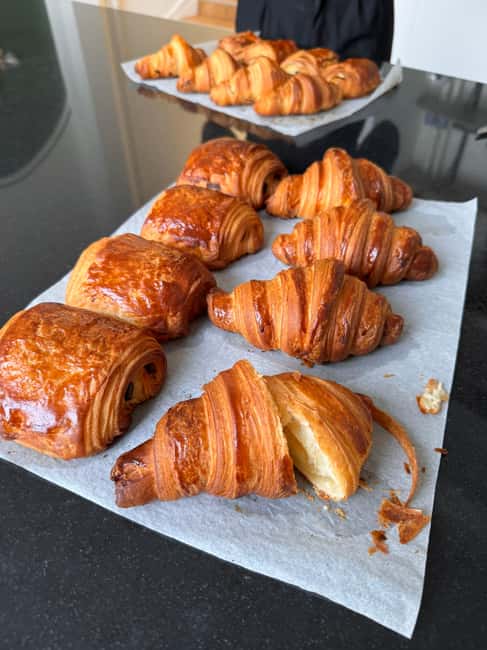
Studio Pâtisserie is where this class starts, and it’s easy to find once you know the landmark: a building with a gray storefront. It’s also set up for public transport, with the nearest options being Metro Line 2 (Rome) and Metro Line 3 (Villiers). In plain terms, this matters because croissant-making classes can feel time-sensitive—getting there smoothly helps you start focused instead of rushing.
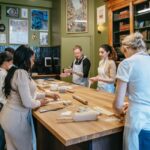
The atmosphere is the kind you want for baking: a proper kitchen workstation, ingredients and tools laid out, and a chef who’s ready to guide. This isn’t the style of class where you watch from a seat while someone else handles the dough. You’re at the table. You’re doing the work.
Group size is limited to 8 participants, which is a big deal in a hands-on bakery setting. Croissant dough doesn’t wait for you to catch up, so having a small class makes it realistic to follow instructions step-by-step and still get help when something feels off.
You can also read our reviews of more cooking classes in Paris
What you actually make in 3 hours
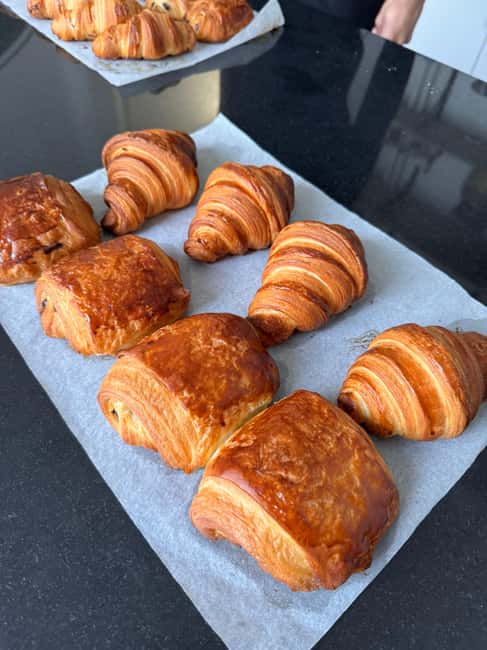
The class runs 3 hours, but the process isn’t nonstop kneading. Croissants require resting and rising time, so you’ll move through the steps in a structured flow: active hands-on work, dough rest, and then more shaping and preparation.
Here’s the core sequence you can expect:
1) Preparing the delicate dough
You start by building the dough and getting it to the right feel before the fold work begins. This is where a chef’s guidance pays off, because croissant dough is not like quick bread dough. The goal is smooth handling and the right texture for later layers.
2) Learning the folding technique for flaky layers
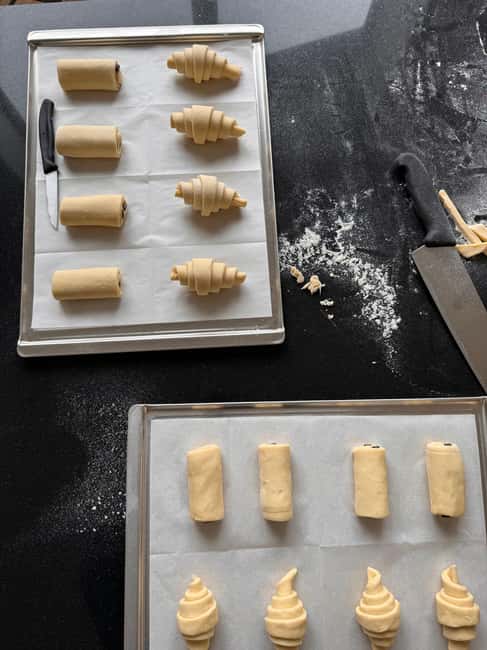
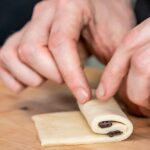
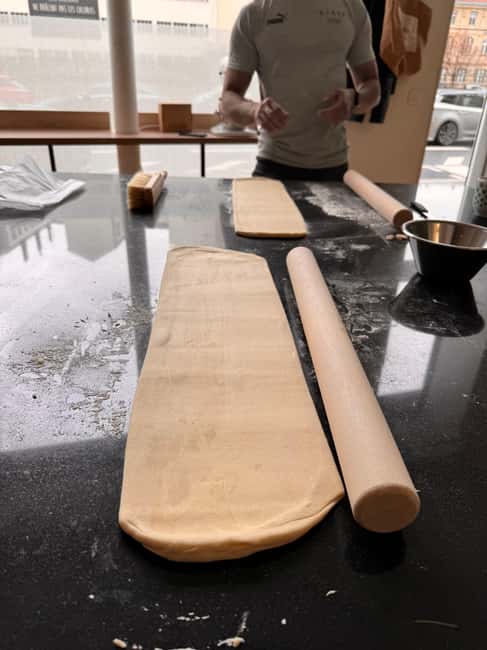
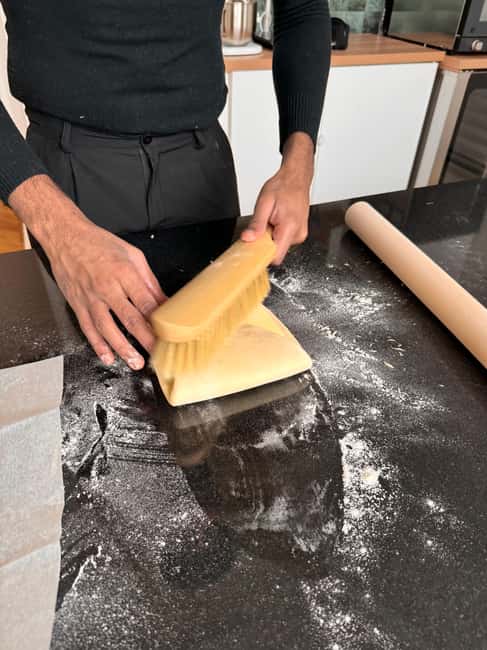
This is the signature move. You’ll practice rolling out and folding carefully, with the chef watching how you handle the dough. Small mistakes matter here: uneven pressure, wrong thickness, or rushing the fold can change how the layers develop.
3) Rest and rise (and the “why” behind it)
While the dough rests, you learn the science that explains what’s happening and why. Butter quality and proofing aren’t just trivia. They affect flavor, texture, and how the croissant bakes.
4) Shaping classic crescents
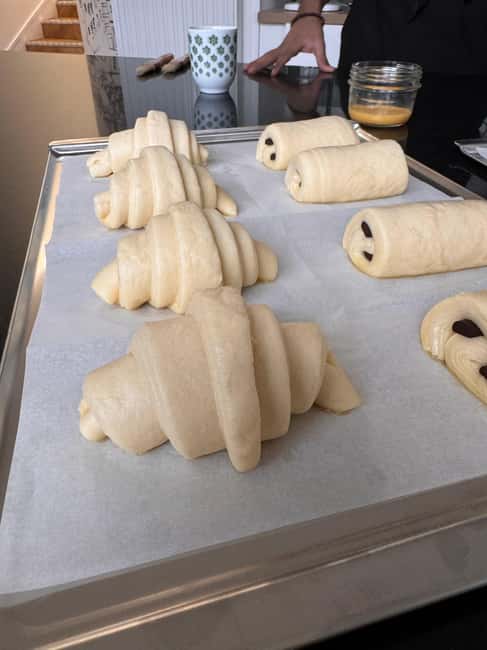
When the dough is ready, you shape. You’ll cut, roll, and form the crescents so each one looks like a proper Paris-style pastry, not a generic roll.
5) Baking and tasting
At the end, you get to enjoy freshly baked croissants from your own batch. The class is designed so you can taste warm results—this isn’t a “make it and hope it turns out later” situation.
One nice part of the overall experience is the pace: you’ll have enough active work to feel accomplished, but you’re not frantic. Resting time is built in so the dough can do its job while you learn and ask questions.
Folding, rolling, and why Chef Léo’s corrections matter
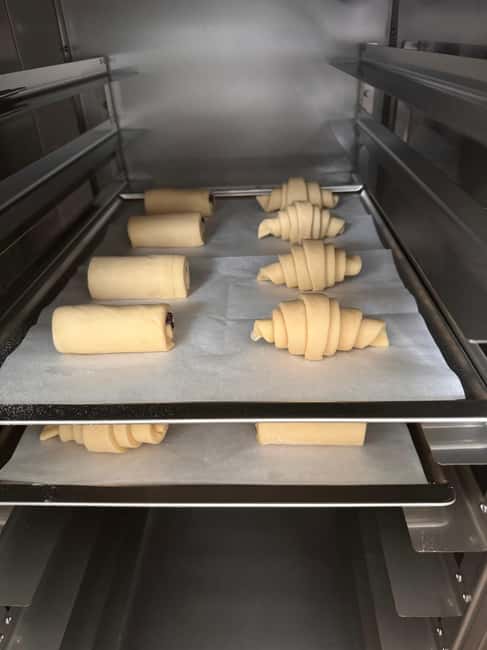
Croissants live or die by technique, especially during the folding and shaping stages. In this class, Chef Léo stays close to the action, offering direct tips and observing your method while your dough is workable.
You’ll learn practical cues like:
- How to roll out the dough with the right thickness so your folds stay consistent
- How to handle the dough gently enough that you keep those layers intact
- How to shape so the crescents bake into the expected size and look
A small class means you get that feedback at the right moment. This is where value shows up: croissants are one of those foods where a tiny adjustment can make a noticeable difference, and you don’t want to guess. The chef’s job here is to prevent the common errors that lead to less flaky layers or uneven results.
The science lesson you’ll actually remember
A lot of cooking classes talk about ingredients. This one also explains the science behind why croissants turn out well.
You’ll pick up insights on:
- Butter quality: what makes good butter behave differently in dough and bake
- Proofing: why timing and conditions affect the final texture and rise
- Why resting isn’t idle time—it’s part of the structure-building
This matters because once you understand what proofing does, you stop treating baking like a magic spell. At home, you’ll be better at judging when dough is ready instead of following a timer blindly.
And you’ll notice how the class connects theory to hands-on action. You aren’t just being told what to do; you’re shown what to do and then given the reason behind it. That’s the difference between collecting a recipe and learning a skill.
Warm sampling plus a take-home recipe
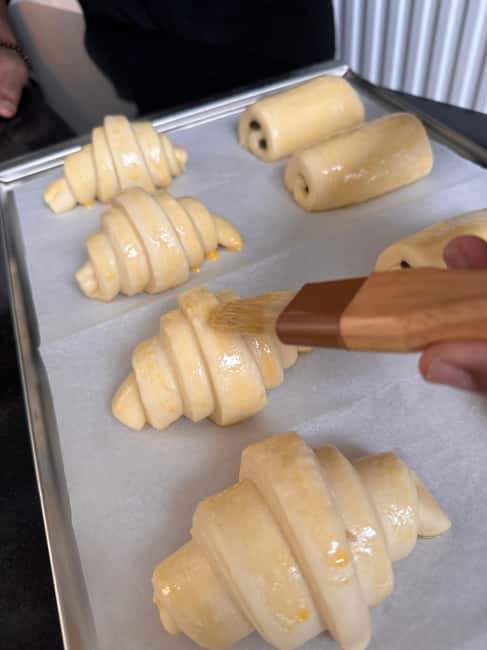
This is a class where you don’t just finish with raw dough and a hope-prayer. You get ample sampling of freshly baked croissants made during the session. That’s a huge confidence builder, because you can see the results of your own folding and shaping immediately.
You also leave with a recipe to take home. That’s the other half of the value equation. One pastry class can be fun and then vanish from memory. This one is set up so you can reproduce the method later and troubleshoot with the guidance you learned.
If you’re planning to bring pastries back, note that the class structure includes enough baked results for tasting and carrying some home in many cases. Even if you don’t take extras, you’ll still get the best part: eating something warm that you made yourself.
A few more Paris tours and experiences worth a look




Bi-color croissants: the fun option on selected days
On selected days, you can choose the Bi-color croissant baking class option. It adds a visual challenge: creating croissants with two colors in the dough.
What you get here is more than decoration. You learn how to incorporate the colored ingredients properly so the dough still works the way it should during folding, resting, and shaping. Color changes can tempt people into rushing the process, but you’ll be guided on maintaining the dough’s structure while working with the extra step.
This option is a great fit if you’ve already done beginner baking before, or if you just want something memorable for your own Paris food story. It also photographs well, without turning the class into a pure gimmick.
Pain au chocolat may join the croissant session
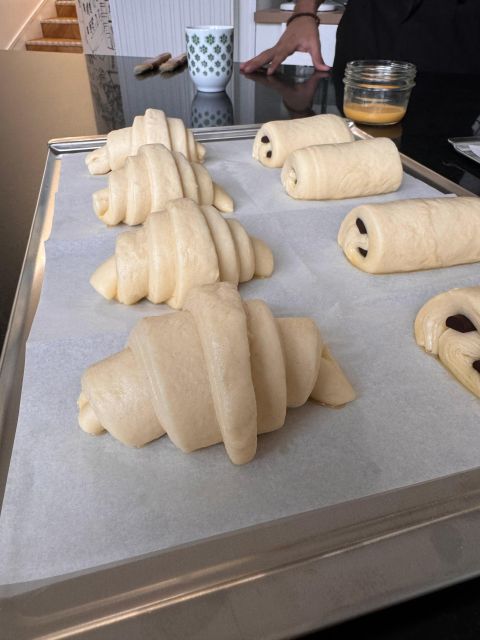
While the class is clearly built around croissants, multiple instances describe Chef Léo also making pain au chocolat as part of the pastry experience. If that matters to you, it’s worth confirming when you book which pastries are included for your specific session.
Either way, you’re getting practical technique. Even if you focus mostly on croissants, the pastry workflow—mix, rest, roll, shape, bake—still connects the skills.
Price and value: is $140 fair for a 3-hour class?
At $140 per person for a 3-hour session, the price isn’t low. But it also isn’t random.
Here’s what you’re paying for:
- Expert chef instruction from Chef Léo
- All necessary ingredients for what you make
- Professional-grade kitchen equipment and tools
- Personalized tips and tricks (important when you’re learning folding, not just mixing)
- A take-home recipe
- Warm sampling of what your group bakes
- History and science context so you understand the method
When you compare this to buying high-end pastries plus learning materials on your own, the class can start to look like a skill purchase. And since the group is capped at 8, you’re not just paying for dough and flour—you’re paying for attention and correction while you’re actively working.
If you want a souvenir that actually improves your cooking, this is one of the better uses of a food budget in Paris.
Who should book this croissant class
This class fits best if you want hands-on pastry learning and don’t mind real work with dough.
You’ll likely enjoy it if:
- You like baking enough to get a little flour on your sleeves
- You want to learn folding and shaping techniques, not just eat pastries
- You’re comfortable asking questions and following step-by-step guidance
- You want a small-group Paris activity with a clear payoff
You might want to skip or consider your expectations carefully if:
- You’re coming with very young kids, since the class is not suitable for children under 15
- You’re worried about strength needed to roll out dough, since physical effort is part of the process
- You’re hoping for a mostly seated, light-touch experience
English instruction is available, which is helpful if you want to understand both the steps and the science.
A quick heads-up on age and physical effort
Croissant-making needs physical strength to roll out the dough. The class notes age requirements: children under 17 must be accompanied by a paying adult, and it’s not suitable for children under 15. Translation: bring your best rolling arm or plan for adult support.
This doesn’t mean it’s only for athletes. It just means you should treat the class as activity-first, not just sightseeing with snacks.
Should you book this Paris croissant class?
I think it’s a strong pick if your goal is practical learning. You get a chef-led, hands-on session with small-group attention, a clear process, warm pastries you helped make, and a recipe you can actually use later.
Book it if:
- You want a real baking skill, especially folding and shaping
- You’d like to bring home more than photos
- You’re okay paying for guided technique rather than DIY trial-and-error
Maybe skip it if:
- You need something kid-friendly for younger children
- You’re looking for a quick tasting event with minimal hands-on work
If you do book, show up with curiosity and a willingness to work the dough. The payoff is eating a pastry that proves you can do it, not just admire it.
FAQ
Where is the meeting point for the croissant class?
Meet at Studio Pâtisserie, the building with a gray-colored storefront. It’s accessible by public transport, with nearby metro options at Metro Line 2 (Rome) and Metro Line 3 (Villiers).
How long is the class?
The duration is 3 hours.
Is the class taught in English?
Yes. The instructor provides instruction in English.
How big is the class?
It’s a small group limited to 8 participants.
What is included in the price?
You get expert guidance from Chef Léo, all necessary ingredients, access to professional-grade equipment and tools, a recipe to take home, ample sampling of freshly baked croissants, and insights into the history and science of croissant-making plus personalized tips and tricks.
Is there a bi-color croissant option?
Yes, a Bi-color Croissant Baking Class option is available on selected days, and it includes bi-color croissant ingredients and the class content for that option.
Are there age requirements?
Croissant making needs physical strength to roll out the dough. Children under 15 years are not suitable. Children under 17 years old must be accompanied by a paying adult.
What does payment look like?
You can reserve your spot and pay later, keeping your travel plans flexible and paying nothing today.