REVIEW · PARIS
Paris: French Macaron Culinary Class with a Chef
Book on GetYourGuide →Operated by Ateliers Parisiens · Bookable on GetYourGuide
Macarons look fancy, but the method is learnable. In this Paris class, you work with a chef to master meringue and ganache, then focus on the texture that makes a macaron worth the calories.
I especially like the small group size—limited to 6—because you get real guidance while you’re piping and assembling. I also like the clear focus on the signature results: a crisp outer shell and a soft, tasty center. One thing to consider: if you’re already an experienced macaron maker, the lesson may feel more like a friendly reset than deep, advanced technique work.
In This Review
- Key moments that make this macaron class worth your time
- Finding Maison Fleuret School and that grey door start
- Small group size (limited to 6) means less waiting
- Meringue is the lesson’s main character
- Crispy shell and soft center: the texture goal you’ll chase
- Ganache-making turns your macarons from sweet to balanced
- What you do during the 150 minutes (and why timing can vary)
- The workshop feel: friendly, social, and actually hands-on
- Take-home box: how to keep macarons from turning into crumbs
- Who this Paris macaron class suits best
- Price and value: why this feels like more than a tasting
- Should you book this macaron class?
- FAQ
- Where is the meeting point?
- How long is the class?
- How big is the group?
- What language is the instructor?
- Is hotel pickup or drop-off included?
- What’s included with the booking?
- Do I pay right away?
- What’s the cancellation policy?
- Is the workshop wheelchair accessible?
- What do I take home at the end?
Key moments that make this macaron class worth your time
- Meet at Maison Fleuret School at the grey door, then jump straight into prep with your group.
- Hands-on meringue practice guided by an English-speaking chef instructor.
- Texture coaching for the shell and center, the part that usually trips people up.
- Ganache-making so your finished macarons taste balanced, not just pretty.
- A take-home box so you can keep snacking like it’s a dessert emergency.
- A social, low-pressure workshop where kids and adults can all produce strong results.
Finding Maison Fleuret School and that grey door start
This class begins at Maison Fleuret School in Ile-de-France. You meet at the time of your reservation in front of the grey door. That sounds simple, but it matters: several small-school workshops in Paris can be easy to miss if there’s no obvious signage.
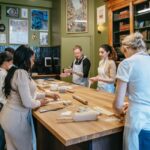
Once you’re in, the experience moves quickly into food mode. You’ll meet the other participants, then the chef leads you step-by-step. You’re not stuck watching from across the room—this is built around doing, so you can ask questions while it’s still relevant.
If you’re the type who hates arriving “late to the fun,” show up a few minutes early. With classes like this, the first minutes set the pace for everything that follows.
A few more Paris tours and experiences worth a look


Small group size (limited to 6) means less waiting
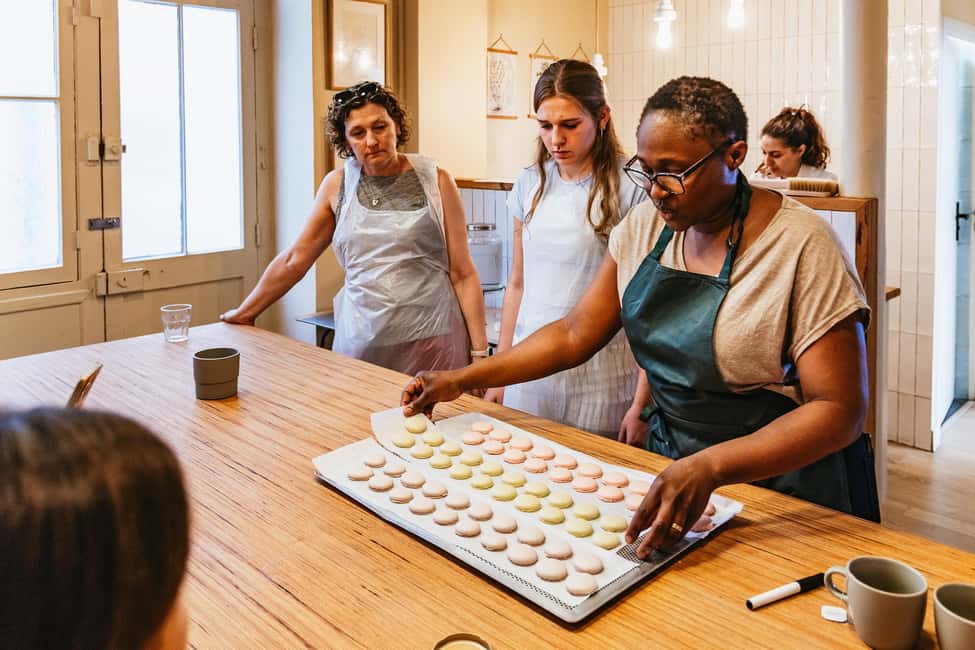
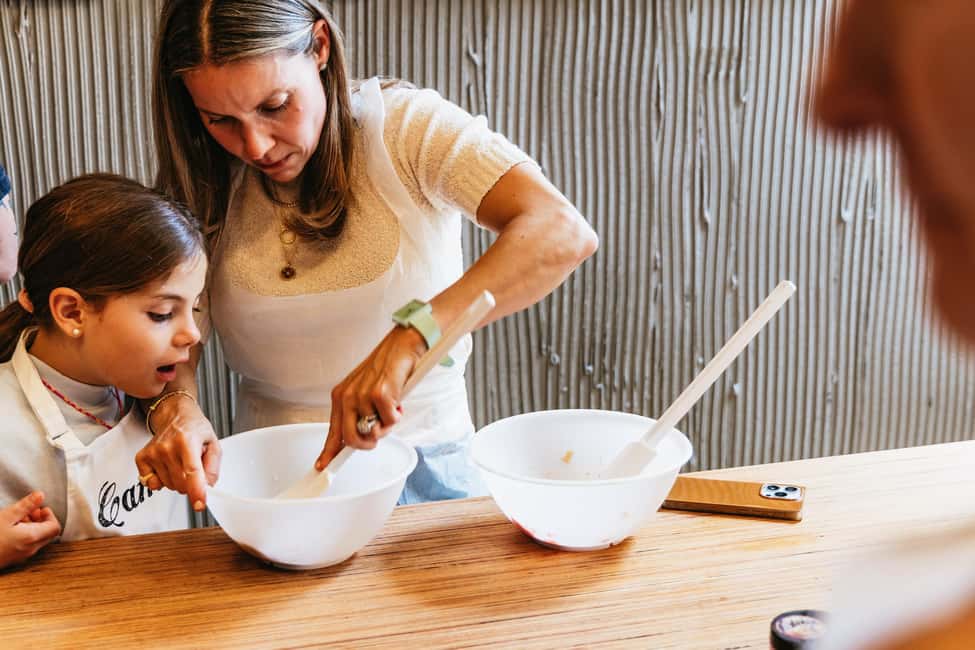
The workshop is capped at 6 participants, and that’s the big quality difference. With fewer people, the chef can check details like consistency, texture, and the way you handle the mixture—things that are almost impossible to correct in a bigger crowd.
This also makes it easier to bring a mix of ages. The class has a family vibe: kids, teens, and adults have all done well here because instruction stays approachable. You can expect the chef to work with you where you are, not just deliver a one-size lecture.
A practical note: because it’s small, the energy is more personal. You’re not competing for attention, and the workshop feels like a group project in the best way.
Meringue is the lesson’s main character
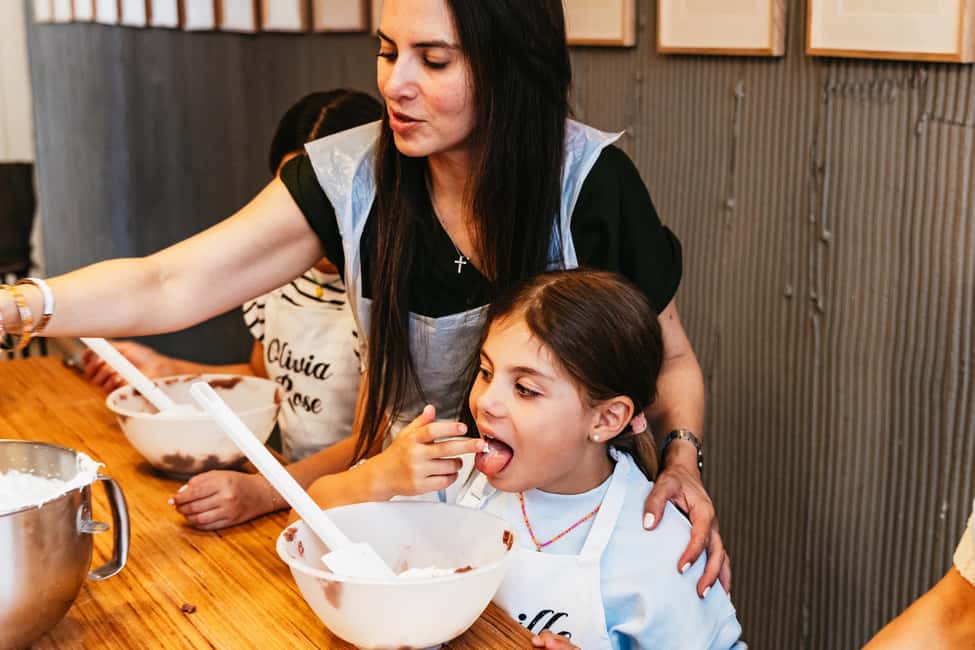
French macarons live or die by the meringue, and that’s exactly where the chef spends time. You’ll learn how to perfect the meringue first, before you move on to the rest of the macaron process.
The value here isn’t just getting a decent result. It’s learning what the chef is watching for—how the mixture behaves and how to adjust as you go. Even if you’ve failed at macarons before, this structure helps because you can trace problems back to a specific step.
You’ll also appreciate that the instruction is in English. Some chefs go beyond that—Delphine, for example, is mentioned as speaking both French and English during instruction. If you’re worried about understanding every nuance, that bilingual support can be a comfort.
Crispy shell and soft center: the texture goal you’ll chase
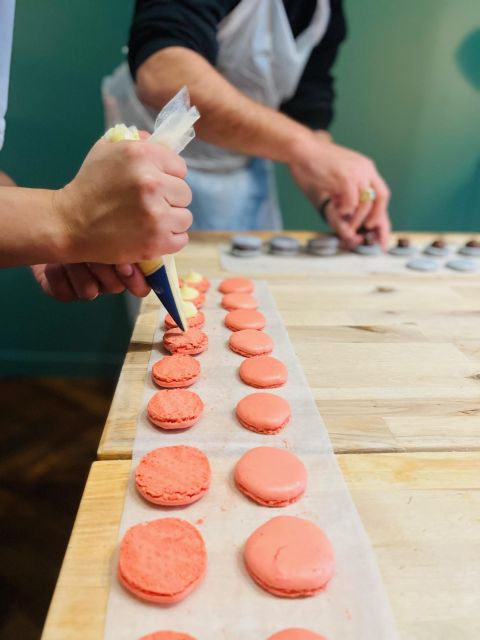
A good macaron has a crisp outer shell and a soft, tasty center. This class is built around that exact target, so you don’t just end up with cookies that look right but eat wrong.
The chef guides the technique needed for that shell. That includes working on the right consistency and handling so the surface develops correctly. It’s the kind of skill that sounds abstract until you’re doing it in front of a teacher who can point out what’s off.
This is also where you feel the advantage of the small group. If your batter is behaving differently, you can correct it faster instead of hoping it will work out in the end. The goal is repeatable results, not luck.
Ganache-making turns your macarons from sweet to balanced
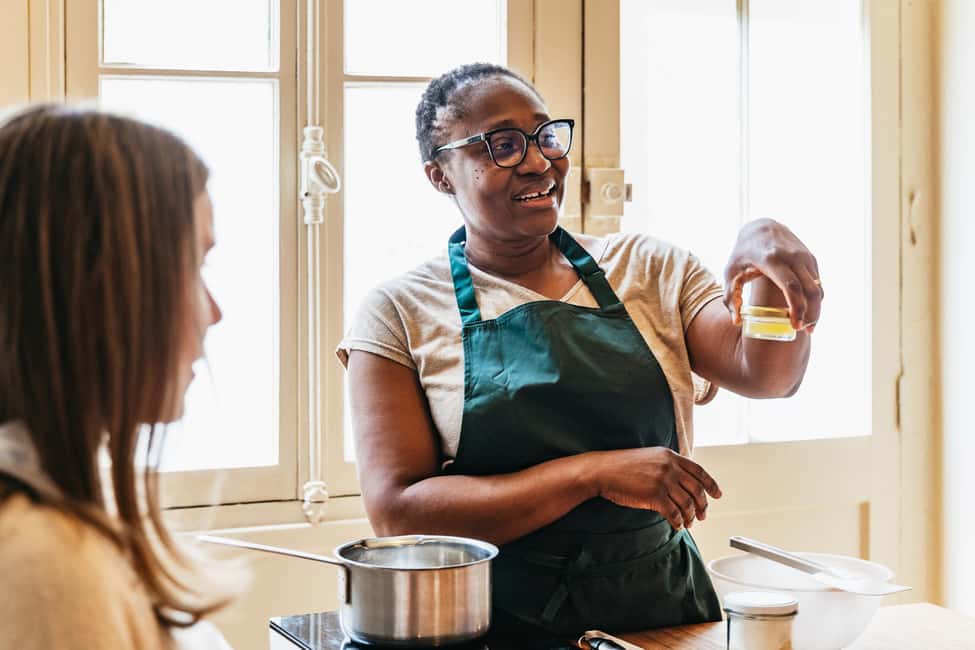
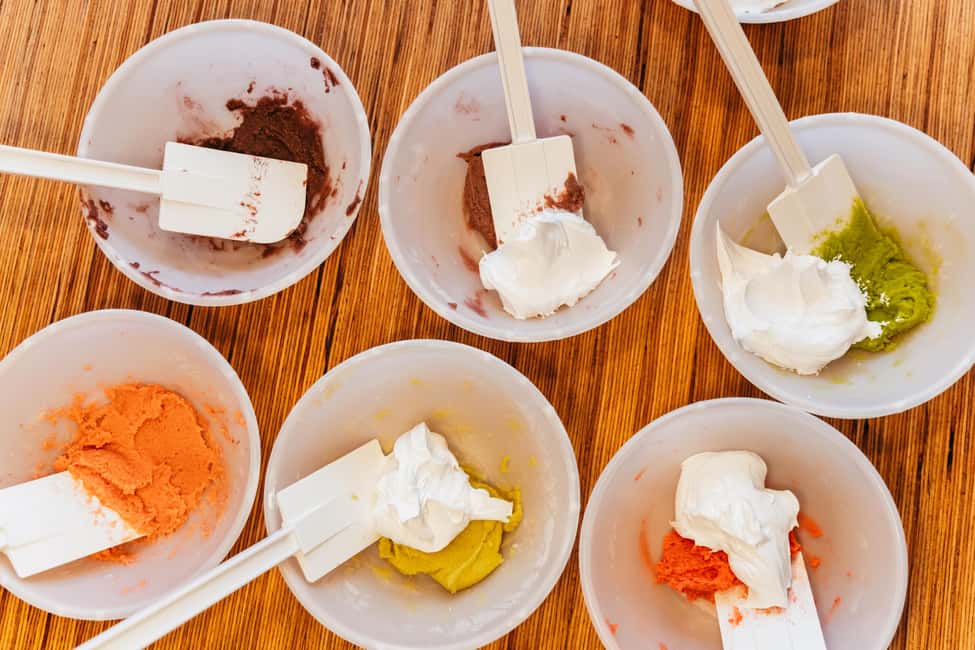
If meringue gets the spotlight, ganache brings the flavor. After the meringue portion, you learn how to make the filling techniques the chef expects for a proper macaron pairing.
Ganache is where macarons stop being “just dessert” and start tasting like a real French pastry. The texture matters too: too runny and your shell suffers; too firm and the bite feels off. The class format helps you land in the middle.
You’ll also likely get to make choices that affect the final look and taste. Several class experiences describe picking flavors and colors, including multi-colored macarons. That’s a fun detail because it turns the lesson into something you can personalize rather than a single fixed outcome.




What you do during the 150 minutes (and why timing can vary)
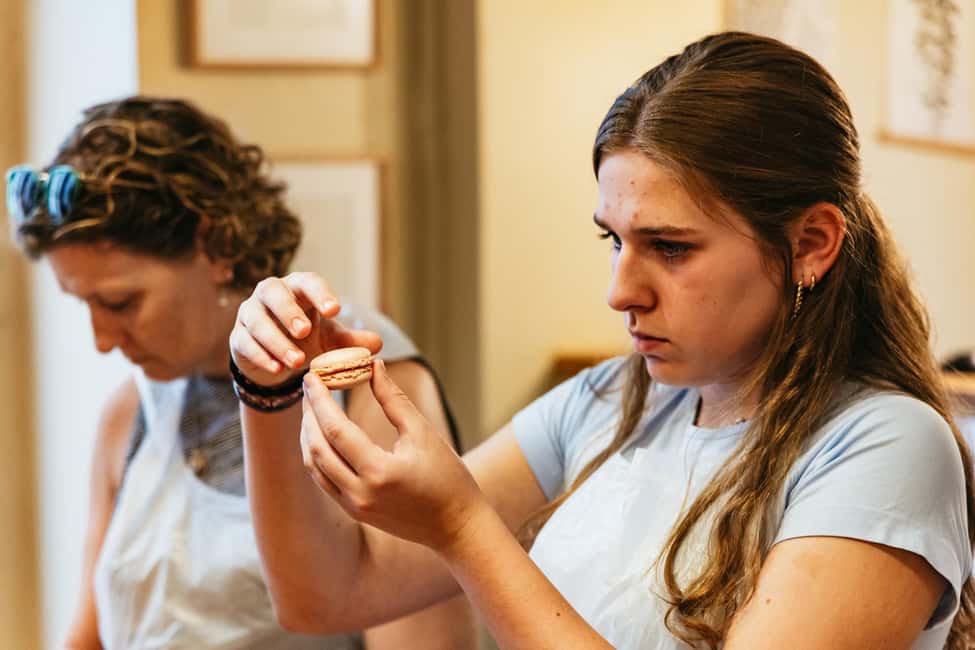
The class duration is listed as 150 minutes, and it typically feels like a full afternoon. You start by meeting the group, then work through the main skill blocks: meringue, shell technique, ganache-making, and final assembly. You finish with macarons packed to take home.
That said, timing can be flexible. One example notes the class finished in about 1 hour 45 minutes instead of the full 2.5 hours listed. That doesn’t mean something went wrong—it can happen with group pace, ingredient flow, and how quickly everyone lands on the right texture.
So plan your day with breathing room. Don’t schedule a tight dinner reservation right after, especially if you want time to cool down and pack the box carefully.
The workshop feel: friendly, social, and actually hands-on
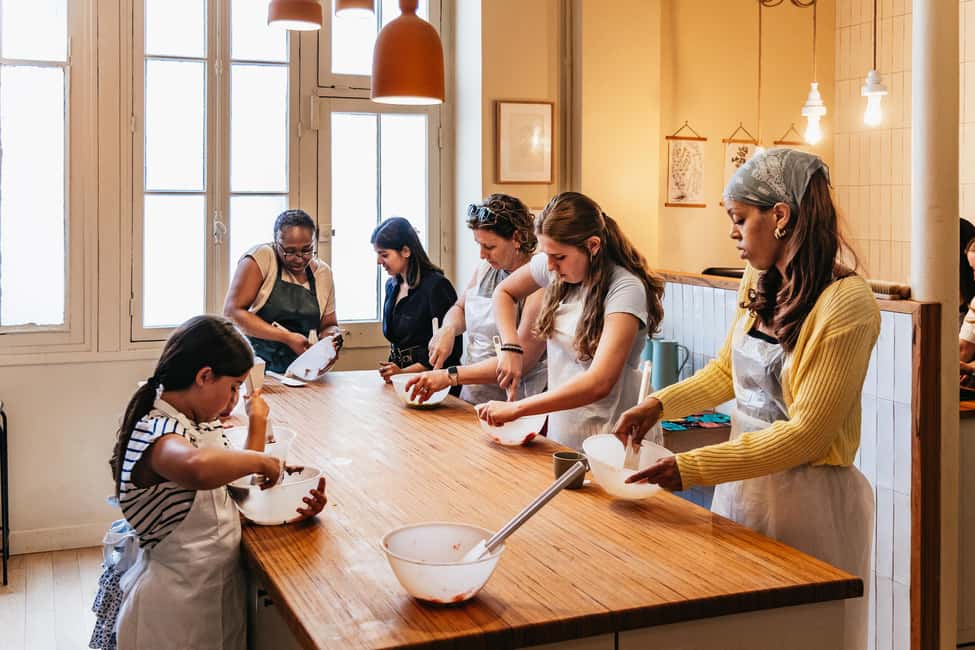
This is one of those Paris food experiences where conversation happens naturally. You work near other participants, share small wins (and the occasional “why is mine doing that?” moment), and end up with a box that proves you participated, not just watched.
Many instructors are described as upbeat and humorous, and that matters. Macarons are picky. When the chef keeps the room light, you’re more likely to correct mistakes without spiraling.
You may also notice a teaching style that includes individual support. Alice is specifically mentioned as being very upbeat and helpful, and William is described as incredible. The common thread: the chef doesn’t just explain once—they check in while you’re actively working.
Take-home box: how to keep macarons from turning into crumbs
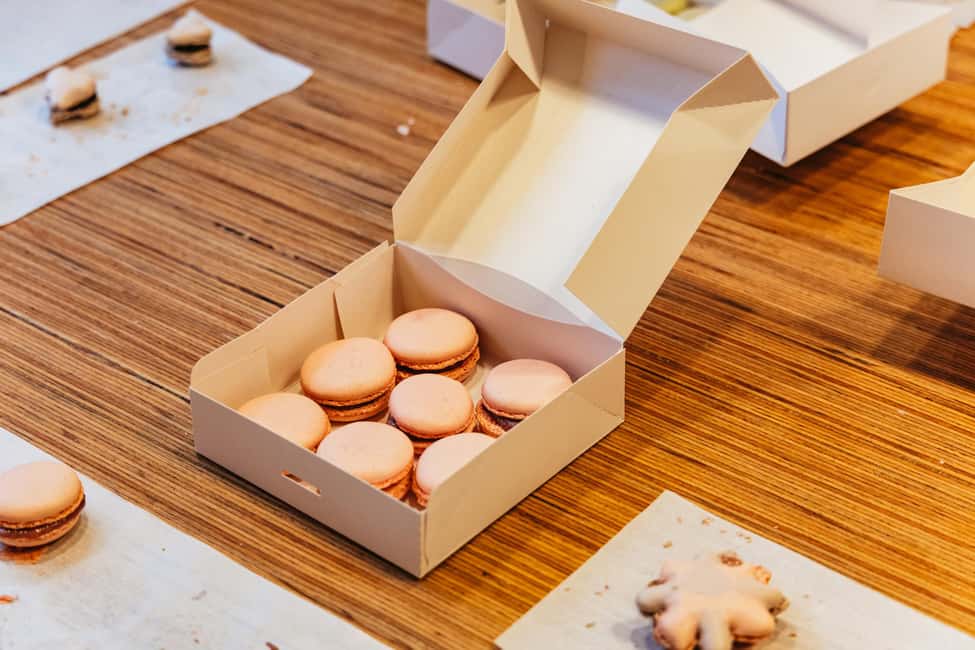
You leave with a box of macarons made during the class. That’s one of the best parts because it transforms the experience into something you can share back at your accommodation—or bring to family later.
Transport is the real-world challenge. There’s a specific mention of getting macarons back to the UK without the box collapsing, while another comment warns about heat, since macarons can soften or melt in warmer conditions. So if you’re sightseeing after class, treat the box like it’s fragile cake, not like it’s a tote bag with snacks.
A simple strategy: keep the box flat, avoid sitting on it, and try not to leave it in hot pockets of your day. If you’re traveling in summer, plan a cooler window for eating the first batch.
Who this Paris macaron class suits best
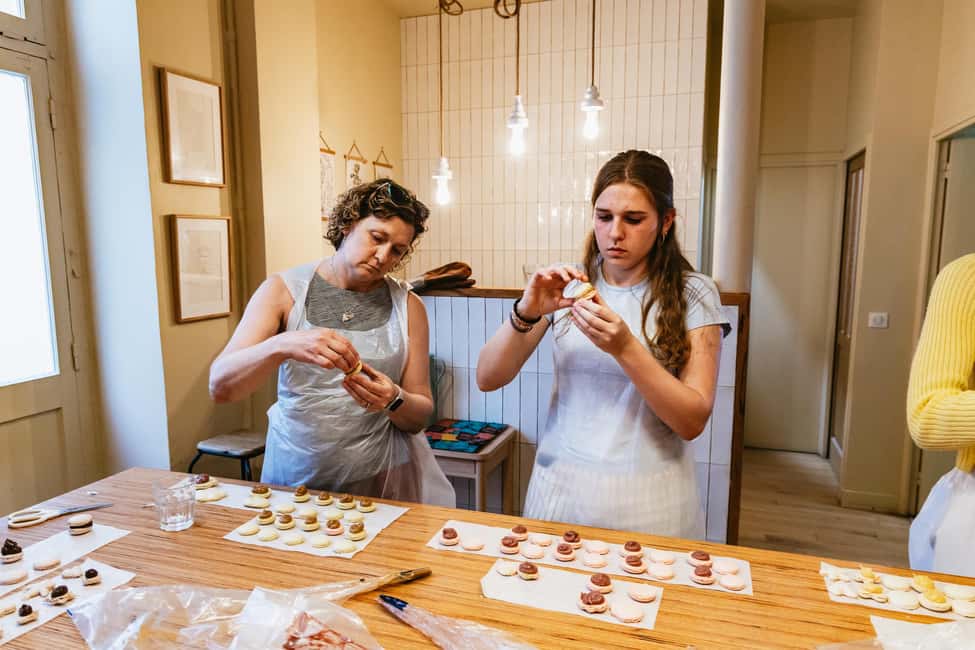
This workshop is a strong fit if you want a fun, focused way to learn classic French technique while you’re in Paris. It’s especially good for people who’ve tried macarons at home and want structure, or for beginners who need a clear path from meringue to filling.
It’s also a solid family activity. Multiple experiences mention kids and teens having a great time, with instructors adjusting attention so everyone can participate. One detailed note mentions kids and adults making macarons that looked impressively similar, which suggests the class avoids a “you’ll watch while the adults do it” setup.
Where it might not be ideal: if you’re already an advanced baker looking for more technical, experimental guidance, one comment says the class didn’t provide enough for that level. In other words, this is best for learning the fundamentals cleanly, then practicing them.
Price and value: why this feels like more than a tasting
Even without exact pricing here, you can judge value by output. Many food experiences in Paris are mostly sampling. This one is different: you learn core steps and then take home a box of macarons you made.
That’s why it’s usually worth it. You’re not only paying for taste. You’re paying for technique that can make your next batch at home far less frustrating. The small group size also supports value, because your chef attention is spread across fewer people.
If you love food crafts—pastry, baking, sauces, anything where precision matters—this class tends to hit the sweet spot between fun and useful.
Should you book this macaron class?
Book it if you want a practical French pastry skill with strong payoff. The combination of small group instruction, clear focus on meringue and texture, and a take-home box makes it feel like a real activity, not just an afternoon sugar stop.
Skip it only if you’re already deep into macaron theory and expecting advanced experimentation. If that’s you, you might find the pace better suited for beginners and intermediate learners.
Finally, treat it like a skill session. Bring curiosity, accept that macarons can be finicky, and enjoy the moment when yours actually lands in the “crisp shell, soft center” zone.
FAQ
Where is the meeting point?
You meet at the time of your reservation in front of the grey door at Maison Fleuret School.
How long is the class?
The duration is 150 minutes.
How big is the group?
The class is limited to a small group of 6 participants.
What language is the instructor?
The instructor teaches in English.
Is hotel pickup or drop-off included?
No. Hotel pickup and drop-off are not included.
What’s included with the booking?
You get the macaron cooking class, a chef instructor, and a box of macarons to take home.
Do I pay right away?
You can reserve now and pay later, with the option to book your spot and pay nothing today.
What’s the cancellation policy?
You can cancel up to 24 hours in advance for a full refund.
Is the workshop wheelchair accessible?
Yes, it is wheelchair accessible.
What do I take home at the end?
You receive a box of macarons carefully crafted during the lesson.