REVIEW · PARIS
Paris Cooking Class: Learn How to Make Macarons
Book on Viator →Operated by Le Foodist · Bookable on Viator
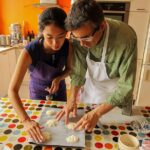
Macarons are finicky, but this class helps. This afternoon Paris baking class at Le Foodist is interesting because you learn by doing in a small group (max four), with step-by-step coaching for making meringue shells and piping buttercream. You also finish with coffee or tea and a box of macarons you made.
One consideration: macarons are undeniably sweet, and that take-home box isn’t magic-proof—if you’ll be flying, think about how you’ll pack them.
Hands-on, small-group class (up to four people)
You make meringue shells from scratch and choose colors
Piping and filling are guided, not guessed
Coffee or tea tasting at the end, plus culture talk
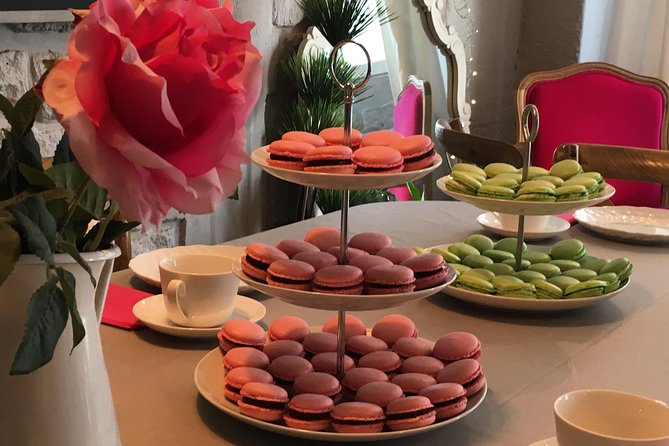
You take home 20 to 30 macarons
English instruction and a welcome drink included
In This Review
- Why this Le Foodist macarons class feels more useful than a pastry show
- Le Foodist location and the 3:00 pm rhythm in Paris (what to plan)
- The welcome drink and instructor check-in: where the class tone gets set
- Making the meringue shells: where macaron magic actually happens
- Buttercream filling and assembling: turning shells into real macarons
- Coffee or tea tasting and the macaron culture moment
- The take-home box: 20 to 30 macarons and how to keep them intact
- Price and value: is $156 worth it for a 3-hour class?
- Who this Paris macarons class suits best (and who should skip it)
- Should you book this Le Foodist macaron class?
- FAQ
- How long is the Paris macarons class at Le Foodist?
- Where does the class start?
- What time does the class begin?
- Is the class offered in English?
- How big is the group?
- Can kids participate?
- Is it suitable for gluten allergies?
- What is included in the ticket price?
Why this Le Foodist macarons class feels more useful than a pastry show
If you’ve ever tried to make macarons at home, you already know the problem: they look simple, but the process is picky. This class is built around the steps that usually trip people up—mixing meringue, getting the batter to the right texture, piping consistently, and learning how the filling assembly changes the final result.
I like that it’s not framed as a one-size-fits-all lecture. You’re working through the method while an instructor watches and corrects what you’re doing. That matters because macaron success often comes down to tiny choices: how you mix, how you pipe, and when you treat the tray as ready versus still too wet.
There’s also a practical payoff. You don’t just taste pastries in a classroom—you leave with a box of 20 to 30 macarons to share (or stash) the same day. That makes the whole experience feel like something you can extend into your trip, not just a ticketed activity.
Le Foodist location and the 3:00 pm rhythm in Paris (what to plan)
This class runs about 3 hours and starts at 3:00 pm, meeting at Le Foodist, 59 Rue du Cardinal Lemoine in Paris (75005). That’s a location that’s easy to reach using public transport, which is a big deal in Paris when you don’t want your schedule to turn into a sprint.
The timing works well if you want a mid-to-late afternoon break from the usual sightseeing loop. You can do a morning of museums or a long walk, then switch gears and spend a few hours learning something hands-on. And because the class ends back at the meeting point, you’re not stuck figuring out how to get home with a bag full of pastries and hope.
Also, it’s offered in English, and you receive a mobile ticket after booking. For planning, that’s the simple stuff you want: clear start time, clear meeting location, and a setup that doesn’t require you to hunt for paperwork.
You can also read our reviews of more cooking classes in Paris
The welcome drink and instructor check-in: where the class tone gets set
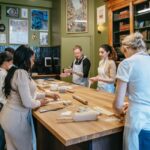
Your afternoon starts when you head to the cookery school and meet your macaron instructor. Before the hands-on work begins, there’s a refreshing drink and a quick introduction. This matters more than it sounds. When you’re learning something as exacting as macarons, you want the first minutes to reduce stress, not add to it.
That pre-class moment also helps you understand what you’re making and how the session will flow. The instructor then guides you step by step through the process. In the past, classes at Le Foodist have been led by pastry instructors like Chef Luc, Chef Paulo, and Chef Stéphane, and the common theme is clear: they teach with humor, and they make sure you don’t feel lost.
You’ll also get equipment and required attire provided. So you can focus on the work rather than showing up with the right tools, measuring gear, and baking instincts. If you’re the type who likes to learn with minimal friction, this setup is a strong fit.
Making the meringue shells: where macaron magic actually happens
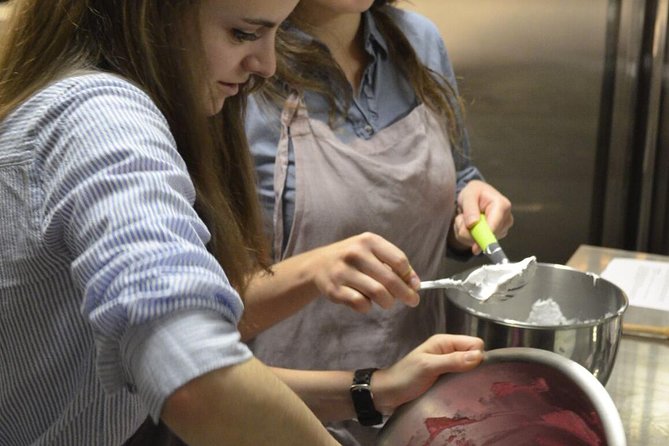
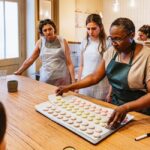
Here’s the real heart of the class: you make your own macaron shells from scratch. The method begins with meringue, and the instructor shows you how to build it correctly so it pipes and bakes into that signature macaron shape.
You’ll choose the colors for your shells. That sounds like a fun detail, but it also forces you to practice the process instead of just following along blindly. You’ll learn what to watch for as you mix and pipe, and you’ll see how color and texture go together.
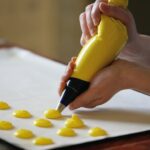
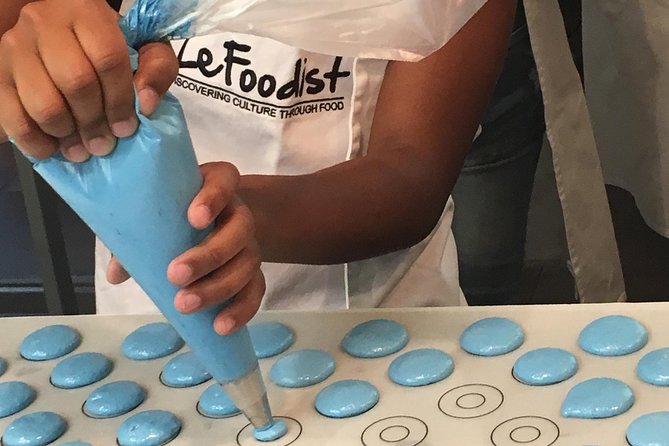
Then comes the part most people dread: the piping and the “will this turn out?” moment. In a hands-on class, you get the chance to practice technique while someone is actively guiding you. Reviews from past students (and the way the class is described) highlight that instructors correct timing, show proper piping habits, and share fail-safe tips so you don’t have to rely on luck.
If you’re new to baking, the value is huge: you’re learning the mechanics that usually stay invisible in online videos. If you’re more experienced, you’ll still benefit because macarons punish small mistakes, and the instructor can spot what you might not notice yet.
Buttercream filling and assembling: turning shells into real macarons
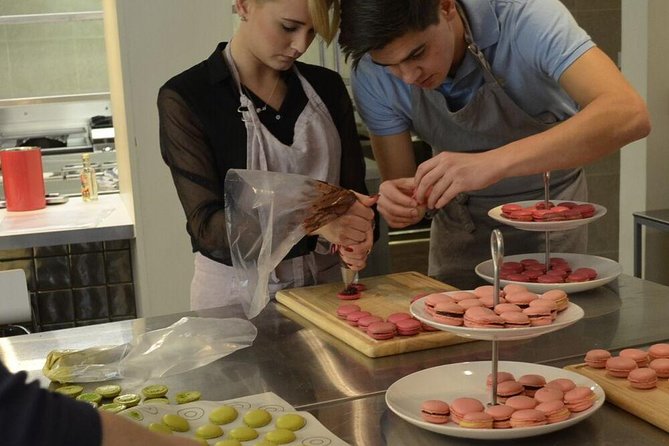
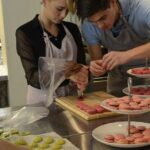
Once your shells are ready, the class moves into the filling stage. You’ll pipe a buttercream filling and assemble your macarons—basically the step that transforms “cookies” into macarons with personality.
This portion is where the class stops feeling like a science experiment and starts feeling like the art form you see in Paris pastry windows. You’ll learn how to pipe the filling so the final sandwich is balanced. And because the class is limited to a maximum of four travelers, you get time for personal guidance rather than rushing to keep up with a crowded kitchen.
It’s also where the class teaching style pays off. Instructors at Le Foodist (such as Chef Fanny and Chef Florence) have a reputation for making the process fun while still keeping the standards high. That combination matters because macarons reward patience, and you don’t want a tense vibe in a task where timing is everything.
If you select the advanced macarons class option, you’ll get extra instruction focused on macaron subtleties. The exact subtleties aren’t listed in detail here, but the intent is clear: you’re not just repeating the basics; you’re refining how you think about the craft.
Coffee or tea tasting and the macaron culture moment
After you’ve baked and assembled, you taste what you made with a cup of tea or coffee. This isn’t just a sugar break. It’s your chance to compare your result to what macarons should feel like—texture, sweetness level, and overall balance.
There’s also a culture component. Your host talks about the macaron’s place in French culture and tradition while you eat. That turns the class from purely technical into something more “Paris-shaped.” You’re not just learning a recipe; you’re learning why the recipe matters.
This also gives you a moment to reset. By the time your macarons are ready, you’re usually tired in a good way—hands dusted with flour, a little sticky from piping, and proud your kitchen work actually turned into something.
A few more Paris tours and experiences worth a look



The take-home box: 20 to 30 macarons and how to keep them intact
You leave with a box of 20 to 30 macarons. That’s a real portion size for a single class. It’s also a practical gift to yourself: you can snack later during your trip, bring some home, or share if you’re traveling with family or friends.
One small drawback to keep in mind is packaging and travel. A past student noted that a flimsy take-home box didn’t survive their journey well. If you’re flying or taking long public transport rides, plan for the possibility that macarons may shift or get crushed. The safest move is to treat the box like something you care about—keep it close with you and avoid tossing it in checked luggage.
Also, macarons are sweet by design. If you’re sensitive to sugary desserts, you may want to pace the tasting rather than eat the whole box immediately. That’s not a flaw in the class—just the nature of the dessert.
Price and value: is $156 worth it for a 3-hour class?
At $156 per person for about 3 hours, the value comes from what’s included and what you gain. You get:
- a hands-on class (not passive watching)
- equipment and attire
- a welcome drink
- coffee or tea
- and a take-home box of 20 to 30 macarons
If you think about the cost of buying macarons in Paris, the math shifts fast. Here you’re paying for the experience and the instruction that leads to a batch you can actually bring home. You’re also paying for instructor time—especially important in a small-group setting where the guidance is targeted.
It’s also a smart choice if you want a memorable Paris activity that isn’t just another walk and a photo. The skills you practice—meringue texture, piping control, assembly—are portable. Even if you don’t bake often at home, you’ll understand what “good macarons” require.
And if you’re considering the advanced option, that’s where the value can go even higher for pastry lovers who want more refinement and technique.
Who this Paris macarons class suits best (and who should skip it)
This class is a great fit if you love pastry, want an active cooking experience, or like learning recipes you can refine at home. The small-group setup is ideal for beginners who need correction and reassurance during tricky steps like piping and batter texture.
It’s also family-friendly in an important way: there’s a minimum age of 12, and no unaccompanied children are accepted. That makes it easier to expect a more guided group experience. Past class experiences have included families and teens, with instructors adjusting their support so students don’t feel left behind.
If you have gluten allergy needs, this class is marked as suitable for those with gluten allergies. That’s a key detail worth taking seriously when you’re choosing food-focused tours in Europe.
Who might not love it? If you’re looking for a quiet, low-effort sightseeing break, a hands-on baking class may feel like work. Also, if you strongly dislike sweet desserts, plan to share or portion your macarons.
Should you book this Le Foodist macaron class?
Yes, if you want a fun, hands-on Paris activity with a clear outcome: you learn the process and you leave with a box of 20 to 30 macarons. The small-group size and step-by-step coaching are the difference between a class where you “watch” and one where you actually improve your technique.
If you’re the type who loves baking, this is also a great “skill day” in Paris—one that stands apart from the usual museum route. Just go in with realistic expectations: macarons are sweet, and for travel, treat the box like something fragile.
If your goal is learning the method behind real French macarons, this is a solid bet.
FAQ
How long is the Paris macarons class at Le Foodist?
The class lasts about 3 hours.
Where does the class start?
The meeting point is Le Foodist, 59 Rue du Cardinal Lemoine, 75005 Paris, France.
What time does the class begin?
The start time is 3:00 pm, and the activity ends back at the meeting point.
Is the class offered in English?
Yes. This experience is offered in English.
How big is the group?
The class has a maximum of 4 travelers.
Can kids participate?
The minimum age is 12 years, and no unaccompanied children are accepted.
Is it suitable for gluten allergies?
Yes, this tour is suitable for those with gluten allergies.
What is included in the ticket price?
The class includes a welcome drink, use of required equipment and attire, coffee or tea, and a box of 20 to 30 macarons to take home (plus an advanced macarons class if that option is selected).