REVIEW · PARIS
Inside Notre Dame Tour with Small Group City Stroll
Book on Viator →Operated by Walks - France · Bookable on Viator
Paris starts on an island. This tour hits Île de la Cité with a Notre-Dame visit plus a guided circuit through the area’s most famous medieval sights. I love the included cathedral entry and the way the guide connects each stop to the people and power that shaped Paris. I also like that the group stays very small, so questions feel welcome. One caution: plan on a lot of walking and stairs, and Notre-Dame interior access can be limited if restoration work is affecting entry.
The payoff is the storytelling. Guides such as Avi and Hugo are praised for making the streets feel readable, not random. If you’ve been to Paris before, this tour helps you see the city’s “why” instead of only the “what.”
Timing works well too. You’ll be out for about 2 hours 30 minutes, meeting at the Statue de Charlemagne et ses leudes on Île de la Cité and ending near Pont Saint-Louis, right in the middle of the action.
In This Review
- Key Things You’ll Notice on This Notre-Dame and Île de la Cité Tour
- Starting on Île de la Cité: Where the Route Makes Sense
- Notre-Dame Cathedral: Included Entry, Plus the 2019 Fire Context
- Sainte-Chapelle: Why This Royal Chapel Hits So Hard
- The Île de la Cité Stroll: Cobblestones, Power Lines, and Big Names
- Conciergerie Outside: Marie Antoinette’s Prison-Era Shadow
- Hotel-Dieu: One of France’s Oldest Still-Operating Hospitals
- Pace, Steps, and Small-Group Comfort (Max 5 People)
- Value for the Price: What $71.38 Buys You in Real Terms
- What You’ll Get Most From This Tour
- Who Should Book This Notre-Dame and Île de la Cité Tour
- Should You Book It?
Key Things You’ll Notice on This Notre-Dame and Île de la Cité Tour
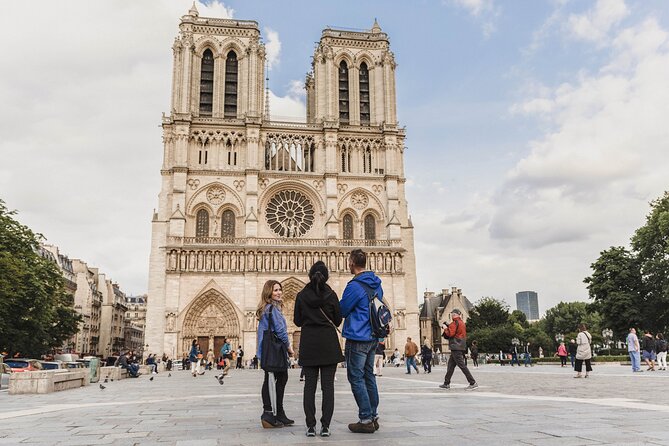
- Small group capped at 5: more personal pace and easier listening
- Notre-Dame admission included: you’re not just looking from the outside
- Sainte-Chapelle with a guide: the stained-glass impact lands harder with context
- Royal power to Revolution in one route: Louis IX to Marie Antoinette without a detour
- Old hospital stop (Hotel-Dieu): a “still working” piece of medieval Paris
Starting on Île de la Cité: Where the Route Makes Sense
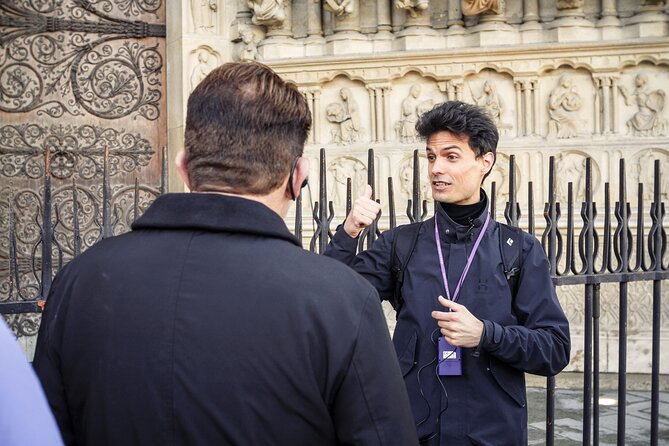
The meeting point is at the Statue de Charlemagne et ses leudes on Île de la Cité. That’s a smart place to start, because you’re already on the island that basically built Paris’s early identity. You don’t waste time crossing neighborhoods to get to the story. You’re in it from minute one.
This is a walking tour with a moderate pace, and it’s designed for people who can handle time on their feet. You’ll also want to wear shoes that can handle cobblestones and stair segments. One review flat-out called out the stairs as part of the experience, and that matches what this area is like: it’s historic, which often means uneven ground and steps.
A practical tip: the meeting point can have other groups nearby. I’d suggest arriving a little early and taking a moment to confirm you’re with the right guide before the tour window closes.
You can also read our reviews of more city tours in Paris



Notre-Dame Cathedral: Included Entry, Plus the 2019 Fire Context
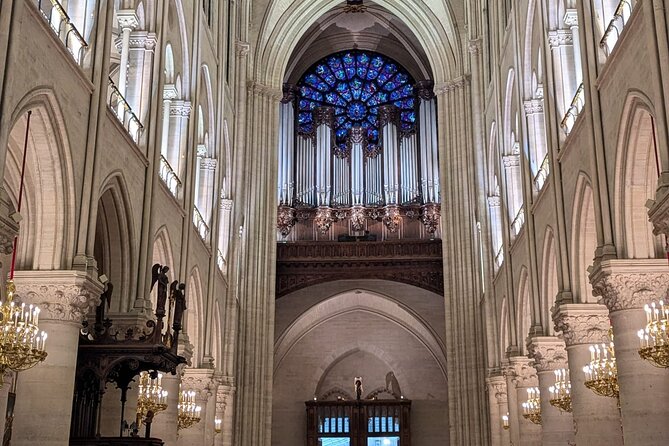
Notre-Dame is the anchor. After a brief introduction, the tour includes time inside the cathedral for a guided visit. The guide sets the scene with how the mighty cathedral relates to the Paris that existed centuries ago, when the city looked very different than it does today.
There’s also a very important modern chapter: the cathedral’s restoration after the 2019 fire. Even if your plan is to see the interiors and the grandeur, the story of what survived, what changed, and what’s being rebuilt gives you a framework for what you’re seeing. It also helps you understand why entry policies can shift.
Here’s the honest consideration: Notre-Dame entry timing isn’t always perfectly predictable on any given day. One participant reported that they couldn’t get inside because restoration access was limited. The tour description indicates entry is included, but Paris is a living city, and major sites can have shifting restrictions. If you’re traveling at a tight schedule, keep a little flexibility so you don’t feel blindsided if you get a different access situation than you expected.
When it works as planned, Notre-Dame feels like the place where scale hits you. The building isn’t subtle. The whole point of having a guide here is that you’ll notice more than just “big and beautiful.” You’ll start picking up the layers: why it matters, how it reflects power and belief, and what restoration is trying to preserve.
Sainte-Chapelle: Why This Royal Chapel Hits So Hard
Sainte-Chapelle is the stop that often sells people on taking the guided approach. It’s a 13th-century royal chapel built by King Louis IX, and it’s widely seen as one of the most beautiful churches in Paris.
With a guide, you’re not just admiring stained glass as decoration. You get the meaning behind it: who commissioned the chapel, why it was such a big deal for royal legitimacy, and how the space was designed to make a theological point through light. That context matters because Sainte-Chapelle can feel overwhelming in a good way, especially if you come in expecting only a quick photo stop.
In fact, multiple guides in this tour’s orbit get praised for bringing the chapel’s story to life, with one review highlighting how the guide linked the building to the broader medieval Paris story. So if you care about architecture and how power shows up in stone and windows, this is the portion you’ll probably remember the longest.
Also, if you’re tempted to go on your own just to save time, the tour angle is practical: the guide helps you navigate the experience so you don’t spend half your time stuck in lines or second-guessing tickets. If your main goal is Sainte-Chapelle, this tour is an efficient way to get there with context attached.
The Île de la Cité Stroll: Cobblestones, Power Lines, and Big Names
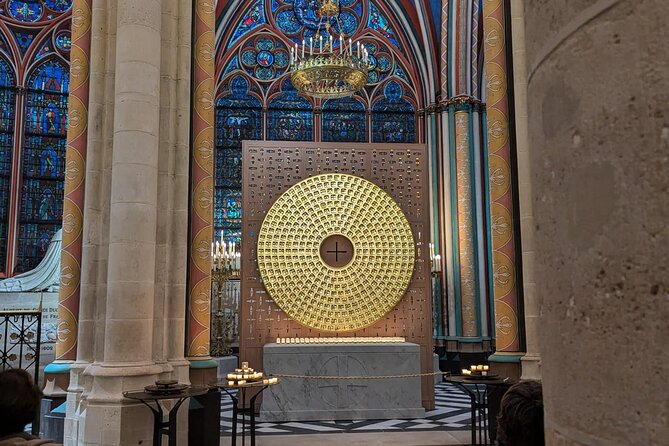
After Notre-Dame, you’ll stroll through the medieval heart of the island. This is where the route becomes more than a checklist. The guide’s job here is to connect the dots: the cobblestone streets, the angle of views, the sense of old Paris, and the people who made the area matter.
You can expect stories that range from poets and philosophers to artists—basically the types of characters who helped earn Paris its reputation as the City of Light. The value isn’t in memorizing dates. It’s in understanding how this area worked as a stage for culture and authority, and how those two forces kept feeding each other.
What I like about this portion is that it gives you breathing space after the intensity of Notre-Dame and before the next big visual moment. It also helps you feel where you are in the geography of the city. After you walk the island with a guide, the landmarks stop being separate attractions and start feeling like one interconnected historic zone.
Conciergerie Outside: Marie Antoinette’s Prison-Era Shadow
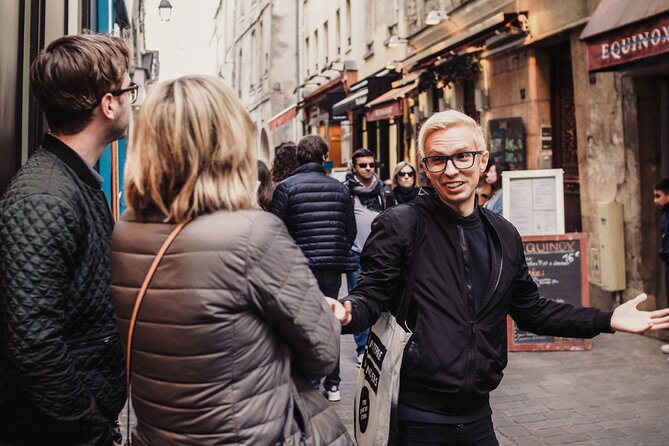
Next comes a pause outside the former royal palace that later became a prison during the French Revolution. This is tied to a specific, very famous name: Marie Antoinette.
Here’s what to expect if you’re walking in with high expectations: this stop is framed around the story of power turning into confinement, but it’s not presented as a long museum-style visit. One review even called the Conciergerie stop something you could skip if you only have limited time. That lines up with the way this route positions it: the main objective is the narrative connection rather than a lengthy inside exploration.
So if you want deep time inside the Conciergerie itself, you may want to plan a separate visit later. But if you like the emotional punch of history—how quickly the same walls can switch from royal life to prison reality—this stop is a strong moment.






Hotel-Dieu: One of France’s Oldest Still-Operating Hospitals
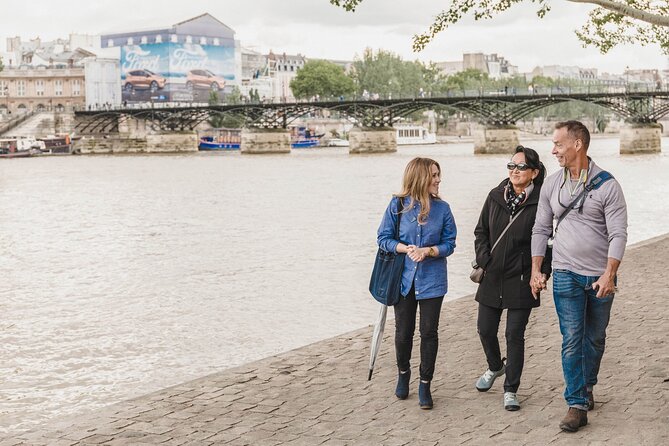
The tour ends with a look at Hotel-Dieu, described as one of the oldest operating hospitals in France, dating back to medieval times. This is a quieter kind of attraction than the cathedral or stained-glass chapel, but it’s a great reminder that Île de la Cité wasn’t only about grand ceremonies and crown politics.
It also adds balance to the route. Sainte-Chapelle and Notre-Dame pull you toward art, theology, and royal ambition. Hotel-Dieu brings you back to everyday life and public need. You’re seeing a part of history that kept functioning instead of turning into a frozen museum piece.
Even if your stop is brief, it helps you understand the island as a living district of major institutions. That’s often what makes the walk feel more authentic than a “see it, move on” sightseeing loop.
Pace, Steps, and Small-Group Comfort (Max 5 People)
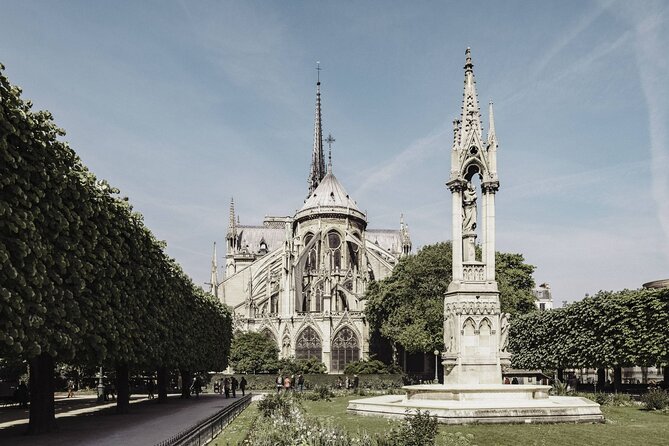
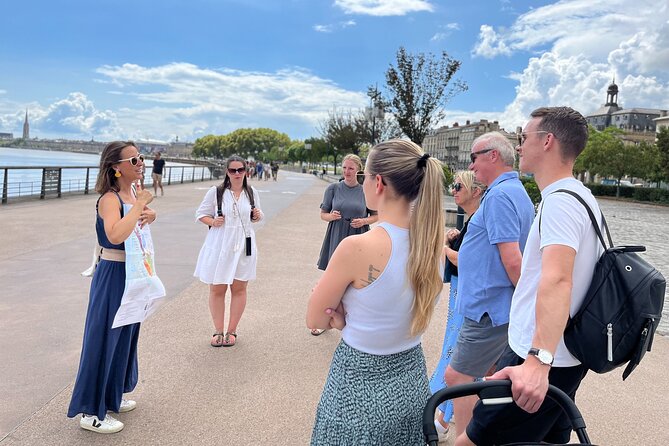
This tour keeps group sizes small, with a maximum of 5 travelers. That matters more than you might think, especially in tight historic spaces where people cluster and sound bounces around.
A small group also tends to make timing more flexible. If someone needs an extra minute to catch up, or you have a question that takes you off-plan by 30 seconds, a tiny group usually handles it better than big crowds do.
Still, you should prepare for a physical experience. Multiple participants mention stairs and the amount of walking. This isn’t the best pick if mobility issues make stairs difficult or exhausting. If you’re comfortable with moderate walking but not long stair sequences, you may want to plan a shorter self-guided outing for the remaining viewpoints.
If you’re traveling in hot weather, bring water. One review specifically suggested water during hot conditions, which is good practical advice for this kind of central Paris walk.
Value for the Price: What $71.38 Buys You in Real Terms
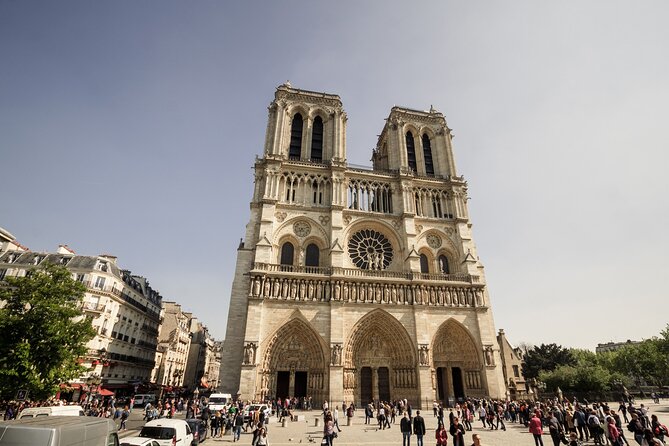
At about $71.38 per person for roughly 2 hours 30 minutes, you’re paying for more than access. You’re paying for three things that add up:
- Included Notre-Dame entry, which turns the experience from “look at the building” into “go inside and understand it.”
- A guided route that connects multiple major sites on the island, so you’re not spending your energy figuring out the best order.
- Small-group attention, so you’re more likely to hear the guide clearly and feel less rushed.
If your time in Paris is limited, this kind of structured walkthrough tends to be good value because you get context at multiple stops. You’re basically buying the ability to understand what you’re seeing while still staying in motion.
One note for value-focused travelers: if Notre-Dame interior access is restricted on your day, you might feel the experience shifts toward exterior/area interpretation. That doesn’t make the tour bad, but it can change how you judge the price. I’d treat Notre-Dame interior access as a best-case plan and keep your expectations flexible.
What You’ll Get Most From This Tour
This tour is strongest if you like history and architecture but don’t want to do it in isolation. You’ll get better results if you enjoy:
- reading buildings through their purpose (royal chapel, cathedral, prison, hospital)
- connecting stories to location rather than chasing facts
- having someone point out what to notice while you walk
It’s also a solid option if you want to hit the island’s highlights without dragging your feet through planning. The route is designed to keep you central and efficient, and the ending near Pont Saint-Louis means you can easily continue wandering after you finish.
Who Should Book This Notre-Dame and Île de la Cité Tour
I’d steer you toward this tour if:
- Sainte-Chapelle is a top priority for you
- you want a guided explanation of why the island mattered
- you prefer small groups and a calm pace over big-bus crowds
You might skip it (or at least consider a different format) if:
- you strongly dislike stairs and extended walking
- you need guaranteed Notre-Dame interior access no matter what restoration policies are doing
- you want deep time inside every site, not brief, narrative-focused stops
Should You Book It?
If Sainte-Chapelle and the medieval heart of Paris are on your list, I think this is a smart booking. The included Notre-Dame entry plus a guide-driven storyline across Île de la Cité gives you real context, not just photo opportunities. Just go in with two practical expectations: wear comfortable shoes and keep some flexibility around Notre-Dame interior access if restoration affects entry.
If your timing allows, book it. If your schedule is tight, still consider it, but plan a small Plan B for what you’ll do if Notre-Dame interior entry isn’t available that day.