REVIEW · BAYEUX
Omaha Sector Half Day Tour from Bayeux
Book on Viator →Operated by HQ Company Tour · Bookable on Viator
Pointe du Hoc gives this short Normandy visit its sharpest edge. You walk among bomb craters and German bunkers, then follow the route of the 2nd US Ranger Battalion up the cliffs to the gun battery that threatened the Allied landings. At Omaha Beach, maps and photographs help turn a broad stretch of sand into a clear account of the fighting.
I like the small group limit of seven, which gives your guide room to answer questions instead of delivering a speech to a crowd. I also like the efficient three-stop plan: Pointe du Hoc, Omaha Beach, and the American Cemetery each show a different part of the battle. The main consideration is time. The tour is advertised at about four hours, but the listed stops and drives add up to roughly five hours, so confirm the exact schedule before booking a tight connection.
In This Review
- Key points
- Three D-Day sites in one focused outing
- Pointe du Hoc and the climb of the Rangers
- Omaha Beach, where maps explain the chaos
- The American Cemetery at Colleville-sur-Mer
- What the small minivan format changes
- A guide can make or break this short visit
- Is $106.81 a fair price?
- Who should book this half-day tour?
- Cancellation and weather details
- FAQ
- Where does the tour begin?
- Where does the tour end?
- How long does the tour last?
- How many people can join the tour?
- Which places are visited?
- Is transportation included?
- Are food and drinks included?
- Should you book it?
Key points
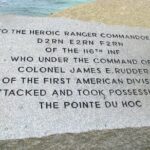
- Pointe du Hoc comes first: Walk through bomb craters, bunkers, and the ground taken by Lieutenant Colonel James E. Rudder’s 2nd US Ranger Battalion.
- Omaha Beach gets a clear battlefield briefing: Maps and photographs explain the German defenses and the danger faced by the first waves.
- The American Cemetery adds a quiet final stop: See the Colleville-sur-Mer cemetery, the resting place of more than 9,000 American service members.
- The group is capped at seven people: This suits you if you want direct access to a guide in a minivan rather than a large coach.
- Sophia and Chloe have earned strong praise: Sophia is noted for thoughtful answers and well-paced stops, while Chloe is praised for clear, lively explanations in French.
- The price buys a focused outing: At $106.81 per person, round-trip transport and a certified guide are included, while food and drinks are not.
Three D-Day sites in one focused outing
This tour is built for you if Bayeux is your base and your schedule leaves only part of a day for the Normandy Beaches. It does not try to cover every landing sector, museum, or memorial. Instead, it concentrates on the American assault at Pointe du Hoc and Omaha Beach, then closes at the American Cemetery.
That narrow focus is useful. D-Day sites can feel spread out, and a first visit can become a blur of names, dates, and battle plans. Here, each stop has a distinct job. Pointe du Hoc shows the physical challenge of the assault. Omaha Beach explains the battle on the sand. The cemetery gives the human cost a quiet, solemn setting.
You travel in an air-conditioned minivan from Place du Québec in central Bayeux. A maximum of seven people makes this a more personal format than a large coach tour, though the small vehicle also means less room for luggage and personal space. The tour ends back at the same meeting point.
You can also read our reviews of more tours and experiences in Bayeux.
Pointe du Hoc and the climb of the Rangers
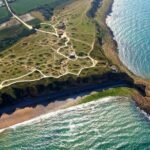
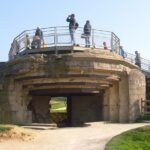
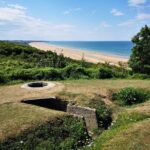
The first drive from Bayeux takes about 30 minutes. Pointe du Hoc is the most rugged stop on this route, and it gives you something no map can provide: a direct sense of the cliffs, open ground, and battered German position the Rangers had to cross.
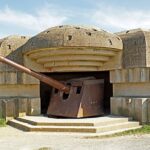
Your guide focuses on the 2nd US Ranger Battalion under Lieutenant Colonel James E. Rudder. The Rangers scaled the cliffs to destroy a German gun battery that threatened the Allied landing operation. The story becomes easier to grasp when you are standing among the bomb craters and concrete defenses rather than hearing about them in a town square.
Plan to spend about an hour here. That is enough time for an explanation, a walk among the craters, and a close look at the bunkers and dugouts. It is not enough for a slow, unhurried visit to every feature, so keep your attention on the guide and use the time well.
The ground itself is part of the lesson. The damaged earth and surviving structures show the force used against the position, while the cliffs explain why the assault was so demanding. You do not need a specialist’s background to follow the story. A good guide can connect the physical site to the battle plan in a few clear steps.
Pointe du Hoc may be the strongest stop for you if you learn best through place. It has more visible battle remains than the open beach, and the setting makes the scale of the operation easier to picture. The drawback is that the visit is exposed and uneven in character, with no promise of a long pause or extensive indoor interpretation during this tour.
Omaha Beach, where maps explain the chaos
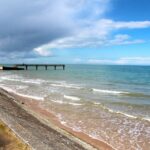
From Pointe du Hoc, the tour continues to Omaha Beach. This is the emotional center of the visit, but it can also be the hardest place to understand without guidance. The beach is broad, and the openness of the shore does not immediately reveal how German defenses shaped the landing.
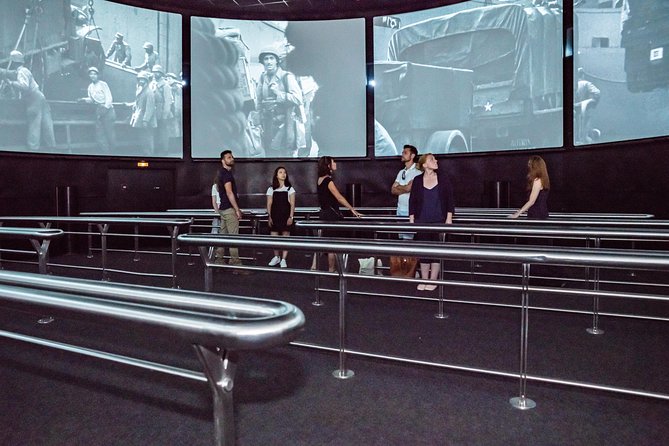
Your guide uses maps and photographs to explain the positions of the 1st and 29th US Infantry Divisions. You hear how the defenses were arranged and what the first waves faced as they came ashore. That visual help matters. It turns a long strip of sand into a sequence of obstacles, exposed approaches, and difficult decisions.
The planned stop lasts about an hour. You should expect a battlefield explanation rather than a long independent beach visit. The point is not simply to look out over the water. It is to understand why Omaha became known as the bloodiest American landing sector of D-Day and how the troops eventually pushed inland.
I like the way this stop links human stories with military layout. A map can explain the plan, while photographs and the guide’s account help you think about the individual soldiers caught in the first waves. The experience is serious, and rightly so. It is not designed as a light sightseeing stop.
You may want to bring a jacket even on a mild day, since the shore can feel exposed. The tour does not include food or drinks, and there is no meal stop built into the four-hour format, so eat beforehand and bring water if you need it.
The American Cemetery at Colleville-sur-Mer
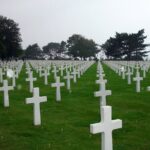
The final stop is the American Cemetery at Colleville-sur-Mer, located behind Omaha Beach. More than 9,000 American service members are buried here, and the site is managed by the American Battle Monuments Commission.
After the exposed battlefield at Omaha, the cemetery changes the pace completely. The rows of graves and carefully maintained grounds offer a quiet place to consider the cost of the operation. Your guide shows you the cemetery, giving the visit context rather than leaving you to treat it as a quick photo stop.
About an hour is assigned here. That gives you time for the guide’s explanation and a personal pause, though your exact free time depends on how the visit is organized on the day. Since this is the most visited D-Day site in Normandy, the stop can feel more formal and structured than Pointe du Hoc.
I consider this an important part of the route, not an optional add-on. Pointe du Hoc explains the assault, Omaha shows the danger, and the cemetery reminds you of the people who did not come home. Leaving it out would make the tour feel incomplete.
The cemetery also helps balance the military detail. If maps, units, and defensive positions begin to run together, this final stop brings the subject back to individual lives. You should treat it as a sacred place and allow yourself a quieter hour.
What the small minivan format changes
The air-conditioned minivan is included in the price, with round-trip transport from central Bayeux. That removes the need to arrange a car, study the road system, or work out how to connect several sites in a short period.
The maximum group size is seven. This is one of the strongest practical reasons to choose the tour. A guide can usually respond to individual questions more easily in a small group, and the ride between sites should feel less anonymous than a full-size bus excursion.
The tradeoff is that the tour follows a set rhythm. You cannot linger for half a day at Pointe du Hoc or spend extra time walking Omaha Beach if that would delay the group. The plan works best when you want a well-organized introduction, not a flexible private day built around your own pace.
The meeting point is Place du Québec in Bayeux, and the activity ends there. That is convenient if you are staying in central Bayeux or connecting the tour with another town visit. Confirmation arrives when you book, and the tour is near public transportation.
The tour states that most people can participate. The information provided does not give detailed accessibility notes for the terrain at Pointe du Hoc, so ask the provider if you have concerns about walking conditions or mobility needs.

A guide can make or break this short visit
A four-hour battlefield tour depends heavily on the guide. There is little spare time for a confusing explanation or a slow start. The guide needs to explain military movements clearly, keep the group moving, and still leave space for questions.
Sophia receives especially strong praise for answering questions and setting the right amount of time at each stop. That is exactly the skill this route needs. A short tour can feel rushed if every stop is treated alike, but careful pacing helps you get the key facts without losing the human side.
Chloe is praised for energetic delivery and clear, precise commentary, supported by good maps and photographs. If you receive that kind of visual explanation, Omaha Beach should be much easier to understand than it would be from a walk along the shore alone.
You cannot choose Sophia or Chloe from the details provided, so guide assignment may vary. Still, the comments about both guides point to the qualities worth valuing here: clear explanations, useful visual material, direct answers, and sensible timing.
The experience is offered in a small group, and the tour provider is HQ Company Tour. The guide is described as experienced and certified. Those details matter more on a battlefield visit than on a simple transfer because the interpretation is the main reason to pay for a guided outing.
Is $106.81 a fair price?
At $106.81 per person, this is not the cheapest way to see the Normandy Beaches. The sites themselves do not charge an admission fee for this outing, so you are mainly paying for transport, guide service, planning, and the chance to connect three important places in one route.
I think the price can make sense if you do not have a car or only have a few hours in Bayeux. Driving yourself still requires route planning, parking, and preparation before you arrive. A guide also helps you understand why each site matters, which is hard to reproduce by simply visiting the viewpoints on your own.
The value is weaker if you already have a rental car, have studied the battle in detail, and want to spend a full day at just one or two locations. In that case, the fixed timing may limit you more than it helps you.
Food and drinks are not included. That is easy to manage, but it affects the real cost. Have something to eat before departure and bring water if needed. Since the excursion is short, there is no reason to expect a full meal break.
One point deserves special attention: the stated duration is approximately four hours, while the listed plan gives one hour at each of three stops plus about 30 minutes driving each way. That schedule totals about five hours. This may reflect rounded timings or an abbreviated stop plan, but you should confirm the expected return time before booking a train, lunch, or another timed activity.
Who should book this half-day tour?
I would choose this tour if you fit one of these profiles:
- You are staying in Bayeux and want a quick introduction to the American sector.
- You do not want to drive in Normandy.
- You value a guide who can explain maps, defenses, and troop movements.
- You prefer a group capped at seven rather than a large coach.
- You want to see both battlefield ground and the American Cemetery.
- You have limited time and do not need a museum-heavy itinerary.
I would look for a longer or more flexible option if you want museums, British and Canadian sectors, Sword Beach, Juno Beach, or Utah Beach. This route is focused on Omaha and Pointe du Hoc. Its strength is concentration, not broad coverage.
It is also a good fit for someone who wants the emotional shape of D-Day explained in a logical order. You begin with the assault on the cliffs, move to the landing beach, and finish among the graves. That sequence gives the half-day a clear arc without trying to cover all of Normandy.
Cancellation and weather details
You can cancel for a full refund up to 24 hours before the experience starts. Changes or cancellations made less than 24 hours before the local start time are not refunded or accepted.
The tour requires good weather. If poor weather causes cancellation, you are offered another date or a full refund. A minimum number of participants is also required, and if that minimum is not met, you are offered another date or experience, or a full refund.
That policy is fairly useful for a short trip, but watch the 24-hour cutoff closely. Normandy plans often shift with weather, so do not assume you can change the booking at the last minute.
FAQ
Where does the tour begin?
The tour begins at Place du Québec, Pl. du Québec, 14400 Bayeux, France.
Where does the tour end?
The activity ends back at the meeting point in Bayeux.
How long does the tour last?
The tour is advertised as approximately four hours. The listed stop and driving times add up to about five hours, so confirm the exact schedule before booking another timed activity.
How many people can join the tour?
The tour has a maximum of seven travelers.
Which places are visited?
The route includes Pointe du Hoc, Omaha Beach, and the American Cemetery at Colleville-sur-Mer.
Is transportation included?
Yes. Round-trip transportation from central Bayeux is provided in an air-conditioned minivan.
Are food and drinks included?
No. Food and drinks are not included.
Should you book it?
Book this tour if you want the clearest short route through the American D-Day sector and value a certified guide, small group, and included transport. Pointe du Hoc, Omaha Beach, and the American Cemetery give you three strong stops, each with a different purpose.
Skip it if you need a full-day Normandy program, extensive museum time, or complete control over how long you spend at each site. Before paying, ask about the actual return time because the published four-hour duration does not perfectly match the listed stop schedule. For a limited visit from Bayeux, though, the focused route and small minivan group offer solid value at $106.81 per person.