REVIEW · BAYEUX
Normandy WW2 British Jeep Tour
Book on Viator →Operated by GoldBeachCompany · Bookable on Viator
Four hours, and Normandy hits hard.
This Normandy WW2 British Jeep Tour turns classic D-Day sites into a lived-in experience, rolling through hedgerows and liberated towns in a wartime-era Jeep while you visit three WW2 locations plus a key British cemetery. It’s set up as a private outing from Bayeux, with English-speaking guidance and time to ask questions without feeling rushed.
I love two things about this tour. First, the ride itself: being in a vintage Jeep feels like a time machine, not a bus ride. Second, the way the guides connect the terrain to the fighting—stories tied to places like Gold Beach and the Rhys/Bazenville area, and explanations of German defenses that help the concrete and trenches make sense.
One thing to consider: the tour is only about 4 hours, so each stop is time-boxed (roughly 20 to 30 minutes), and lunch isn’t included. If you want long museum time or you’re hungry on the road, you’ll need to plan smart.
In This Review
- Key highlights you’ll actually feel
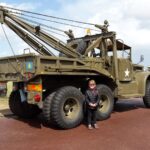
- A vintage Jeep from Bayeux keeps WWII close and human
- Price and logistics: what you’re paying for (and what you’re not)
- Longues-sur-Mer: the German Gun Battery and the weight of geography
- Arromanches Mulberry Port vestiges: how supplies shaped the campaign
- Gold Beach: Green Howards, Sgt Major Stanley Hollis VC, and what you can picture
- Bazenville British Military Cemetery: names, dates, and calm you can’t fake
- The 4-hour flow: how to avoid feeling rushed
- What makes this tour feel different: off-route access and Q&A time
- Who this Normandy WW2 British Jeep Tour is best for
- Should you book it? My take
- FAQ
- How long is the Normandy WW2 British Jeep Tour from Bayeux?
- Is this tour private?
- How many people can be in a group?
- What sites are included on the tour?
- Are admission tickets included for the stops?
- Does the price include lunch?
- Do you get hotel pickup and drop-off?
- Where do you meet for pickup in Bayeux?
- Is the tour offered in English?
- What’s the cancellation policy if weather changes?
Key highlights you’ll actually feel

- Wartime-era Jeep transport for a closer, more personal pace than typical tours
- Longues-sur-Mer German Gun Battery stop tied to a British unit (Devonshire Regiment)
- Arromanches Mulberry Port vestiges (Mulberry Operation) for context beyond the beach
- Gold Beach focus with the Green Howards and Sgt Major Stanley Hollis VC connection
- Bazenville British military cemetery with Commonwealth cemetery immersion
- Private tour pacing so you can linger when something clicks
A vintage Jeep from Bayeux keeps WWII close and human
If you’re trying to understand Normandy in a real way—not just collecting famous names—this format helps. The Jeep isn’t just transportation. It changes how you look. From the driver’s seat height and the slower travel rhythm, you notice the curves in the roads, the distance between key points, and how towns sit in the same geography that shaped 1940s decisions.
From Bayeux, you’re also starting in a good place mentally. It’s close to the action but not stuck inside the loudest tourist loops. That matters when you want the day to feel grounded.
A big theme here is that WWII isn’t only about what happened at the shoreline. You’ll see how the conflict spreads outward—defenses, landing logic, and the aftermath that remains long after the headlines fade. And because it’s private, you can ask the follow-up questions that always pop up once you start seeing the sites as a connected story.
You can also read our reviews of more tours and experiences in Bayeux.
Price and logistics: what you’re paying for (and what you’re not)

The price is $718.96 per group (up to 3) for about 4 hours. On paper, that can look “steep” until you break down what’s bundled: private access, a Jeep, and hotel pickup and drop-off (selected hotels only). For a small group, it can work out more sensibly than you’d think—especially if you’re pairing up with family or friends who want the same pace.
A few practical points that help you avoid stress:
- You’ll use a mobile ticket.
- Pickup isn’t automatic for every hotel. You’ll need to confirm your pickup location in Bayeux a few days before with the provider.
- The day ends back at the meeting point, so you’re not stuck figuring out return transport.
What you should not assume: lunch isn’t included, so factor in a snack plan if you’re the type who gets grumpy without food. Also, the tour depends on weather—so if it’s rainy, plan for wet boots and a slightly slower feel.
Longues-sur-Mer: the German Gun Battery and the weight of geography

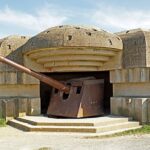
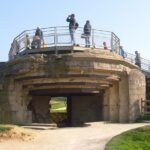
Stop 1 is Longues-sur-Mer, centered on the German Gun Battery tied to the UK Devonshire Regiment.
This is one of those stops where short time can still be meaningful—if your guide gives you the right framing. A gun battery isn’t just a pile of old structures. It’s a view of strategy. You start to understand why certain beaches, roads, and lines of approach mattered so much. Even if you only spend about 30 minutes there, you can still walk away with clearer mental maps: where forces would have been positioned, and why the area’s layout is more than background.
What I like about this stop: it’s a reminder that the war wasn’t one-directional. While many people focus on Allied landings, this stop brings you back to the German side—how defenses looked from the ground and what attackers had to plan around.
Potential drawback: if you’re hoping for a deep museum-style visit, this won’t be that. It’s a concentrated site stop, not a full historical facility day. Still, the Jeep tour format makes up for it by connecting the dots in motion.
Arromanches Mulberry Port vestiges: how supplies shaped the campaign
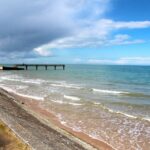
Stop 2 takes you to the Vestiges du Port de Mulberry near Arromanches—linked with the Mulberry Operation.
Mulberry ports are one of those WWII topics that can feel abstract if you only read about them. Here, you see physical remnants and hear the practical logic behind them. Your guide can help you connect the big idea—getting supplies ashore—to the on-the-ground reality of what worked, what was damaged, and what had to be replaced fast.
This is scheduled for about 20 minutes, so the value comes from focus. You’re not trying to memorize everything. You’re getting the key context so the next stop at Gold Beach doesn’t feel random.
Why this stop matters: D-Day wasn’t only about the initial landing. It was about sustaining. Seeing the port vestiges gives you a clearer sense of why timing, engineering, and logistics were as critical as bravery.
Small consideration: if you’re someone who likes to linger with your own reading pace, you’ll have less time than you’d spend on a standalone museum visit. Still, the tour’s advantage is momentum—and you’re collecting meaning, not just scenery.
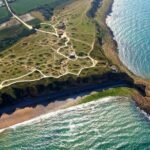
Gold Beach: Green Howards, Sgt Major Stanley Hollis VC, and what you can picture

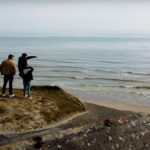
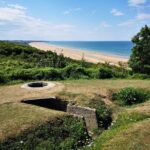
Stop 3 is Gold Beach near Ver-sur-Mer, with connections to the UK Green Howards and Sgt Major Stanley Hollis, who received the Victoria Cross.
Gold Beach often gets compared with other D-Day beaches, but your best bet here is to treat it as its own story. With a good guide, the shoreline turns into a battlefield map in your head. You start noticing how a beach position connects to nearby strongpoints, and how units’ roles might differ depending on where resistance was strongest.
This stop is about 20 minutes. That sounds short, but it’s exactly the kind of timing that works when you’re touring by Jeep: you get enough time to stand, orient yourself, and absorb the key details, then you’re off before the day becomes a blur.
From the experience feedback, guides like Igor and Eric are praised for telling poignant, specific stories here and answering questions patiently. Also, one highlight is the way guides explain defenses in a way that makes the structures feel like a system—not just random leftover pieces of concrete.
What you can do to get the most out of this stop: ask one good question before you move on. Something like what the terrain meant for the first hours, or how the defense would have changed once the landing began. That’s where private pacing actually pays off.

Bazenville British Military Cemetery: names, dates, and calm you can’t fake
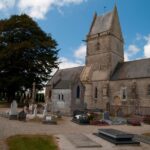
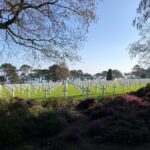
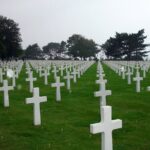
Stop 4 brings you to the Cimetiere Militaire Britannique de Bazenville, part of the broader Commonwealth cemetery experience.
Even if you’ve visited cemeteries before, WWII cemeteries in Normandy land differently. There’s a quiet pressure to slow down. And because the tour is still running, your guide helps you do that without turning it into a distracted stop.
This stop is also around 20 minutes, but this is one of the moments where 20 minutes can feel heavier than an hour. You’re there to connect faces to a place you’ve been riding toward all morning. If you’ve just heard details about Gold Beach and defenses, this is where those stories become personal—through the reality of names and dates.
The guides’ storytelling here is mentioned as especially moving, with attention to figures tied to the Gold Beach/Bazenville area. You’ll leave with a sense that the day isn’t only about tactics. It’s about people.
Practical tip: take your time looking. Don’t just scan. When your guide points something out, give it a real moment. You don’t need to read every stone, but you do want to honor why the cemetery is the final stop.
The 4-hour flow: how to avoid feeling rushed

The schedule is built around short, concentrated stops:
- Longues-sur-Mer: about 30 minutes
- Mulberry port vestiges at Arromanches: about 20 minutes
- Gold Beach: about 20 minutes
- Bazenville cemetery: about 20 minutes
That rhythm is ideal for most people. You get motion, context, and a structured pace without feeling stuck in a single place. It also matches the strength of the Jeep: you’re not just standing around waiting for transport.
If you’re sensitive to tight timing, do one simple thing: show up on time and don’t plan other activities right after. You’ll be glad you gave yourself space to settle your thoughts once you’re back in Bayeux.
Also, bring a small snack or plan to eat before or after. Since lunch isn’t included, your energy level will affect how much you get from each stop.
What makes this tour feel different: off-route access and Q&A time

A lot of WWII tours move fast and keep you at the most obvious vantage points. This one aims for a different outcome: a route that feels like you’re seeing the war from angles you don’t get from standard tours.
Feedback on the experience points to guides who are genuinely engaged with the sites and who keep the conversation going. Names that show up in the guide praise include Igor, Eric, David, and Almandine, with specific mentions of explaining German defenses and connecting stories to what you’re seeing.
For you, that means two things:
- You can dictate pace on a private tour. If you want extra minutes at a viewpoint, you can ask.
- You can ask questions that turn history into understanding—especially if you care about units, medals, and the way different parts of the operation fit together.
And yes, the Jeep ride helps the whole day feel like a family memory, not a checkbox.
Who this Normandy WW2 British Jeep Tour is best for
This tour makes sense if you:
- Want WWII sites in a tight, coherent day from Bayeux
- Like learning from a guide who can connect place names to real details
- Prefer small-group or private pacing over crowd schedules
- Enjoy unique transport—especially if you like the idea of a vintage wartime-era Jeep
It’s also a good pick for families with kids who can handle about four hours with multiple quick stops. One review specifically mentioned children around 12 enjoying the tour, which is a good sign that the guide explanations can work for mixed ages.
If you’re the type who needs a full-day museum plan and long reading time at each site, you might feel the stop durations are short. But if your goal is to understand the storyline across multiple key points, this format is strong.
Should you book it? My take
I’d book this tour if you want a private, story-driven Normandy WWII day with the kind of access that comes from being in a Jeep. It’s not about collecting every site on a list. It’s about seeing a connected set of places—German defenses at Longues-sur-Mer, supply reality at Mulberry port remnants, combat-linked shoreline at Gold Beach, and the human cost at Bazenville—without wasting time.
Do consider this if you:
- Need lunch provided (it isn’t)
- Want long on-site museum time (this is stop-focused)
- Are likely to be frustrated by short windows per location (most people aren’t, but it depends)
If you like guided history that feels grounded in geography, and you’re traveling with up to two others, the pricing can feel fair for what you get: transport + private pacing + multiple major WWII stops in one morning/afternoon window.
FAQ
How long is the Normandy WW2 British Jeep Tour from Bayeux?
It runs for approximately 4 hours.
Is this tour private?
Yes. It’s a private tour/activity, and only your group participates.
How many people can be in a group?
The group size is up to 3.
What sites are included on the tour?
You’ll visit Longues-sur-Mer (German Gun Battery), the Vestiges du Port de Mulberry near Arromanches, Gold Beach near Ver-sur-Mer, and the British Military Cemetery at Bazenville.
Are admission tickets included for the stops?
Admission tickets are listed as free for the stops included in the tour.
Does the price include lunch?
No. Lunch is not included.
Do you get hotel pickup and drop-off?
Hotel pickup and drop-off are included for selected hotels only.
Where do you meet for pickup in Bayeux?
Pickup depends on your confirmed location in Bayeux. You should contact the provider a few days before the tour to confirm your pickup location.
Is the tour offered in English?
Yes, it’s offered in English.
What’s the cancellation policy if weather changes?
You can cancel for free up to 24 hours in advance for a full refund. The experience requires good weather, and if it’s canceled due to poor weather, you’ll be offered a different date or a full refund.