REVIEW · PARIS
Neoclassical Paris Architecture 2-Hour Private Walking Tour
Book on Viator →Operated by Paris in person · Bookable on Viator
Paris becomes easier to read when you stop looking only at famous monuments and start noticing the ideas behind their shapes. This private walk follows Neoclassical Paris, linking the former stock exchange, a royal square, a covered arcade, the Tuileries, and the Palais Royal.
I like the private format, which lets your group ask questions and adjust the discussion to your interests. I also like the art-history approach. Guides including Boris, Mila, Melissa, and Dunya have been praised for making complex subjects clear and tying architecture to politics, art, and daily life. The drawback is the price: $360.48 for up to six people is fair for a small private tour, but expensive for one or two.
In This Review
- Key points to know before booking
- Why this two-hour walk feels different from a standard Paris tour
- Palais Brongniart sets the civic tone
- Place des Victoires and the model of the royal square
- Galerie Vivienne brings commerce into the story
- The Tuileries viewed through classical design
- Palais Royal shows architecture in commercial use
- What the private guide adds
- Is $360.48 a fair price?
- Timing, walking, and practical planning
- Who should book this architecture walk?
- Should you book the Neoclassical Paris tour?
- FAQ
- How long is the Neoclassical Paris architecture tour?
- Where does the tour begin?
- Where does the tour end?
- How many people can join the private tour?
- Is an art historian included?
- Is the tour offered in English?
- Are admission tickets included?
- Is the route suitable for people with limited mobility?
- What is the cancellation policy?
Key points to know before booking
- The route crosses central Paris: You walk from Bourse to the Arc de Triomphe du Carrousel, with five major stops along the way.
- The focus is ideas, not just buildings: Your guide explains how classical design shaped royal spaces, civic buildings, shopping arcades, and gardens.
- You get a private art historian: The discussion can be adjusted to your group, and questions are encouraged.
- The Galerie Vivienne adds variety: This covered arcade shows how architecture moved from royal display toward commercial life.
- The tour is short and focused: Two hours gives you a useful introduction, but not enough time for long interior visits or every nearby landmark.
- The group price works best for several people: At the full six-person capacity, the cost comes to about $60.08 per person.
Why this two-hour walk feels different from a standard Paris tour
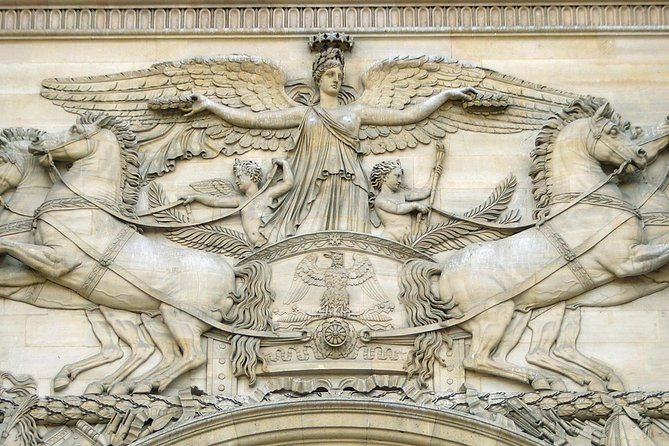
Many Paris walks move quickly from one famous sight to the next. This one asks you to look at the city as a set of design choices. Why does a building use columns? Why does a square feel formal? How did older classical models shape newer civic and commercial spaces?
That approach suits you if you enjoy history, architecture, art, or urban design. It also works for curious families. One father and daughter particularly liked the way Boris explained difficult material in simple terms and asked questions that encouraged them to think rather than simply listen.
The route has a clear shape. It begins at Bourse, in the area around the former stock exchange, then moves through Place des Victoires and Galerie Vivienne. From there, the walk reaches the Tuileries and finishes at the Palais Royal area, ending at the Arc de Triomphe du Carrousel.
The final stop listed for the route is the Palais Royal, while the end point is the Arc de Triomphe du Carrousel. That means you finish near a major central Paris sight, rather than returning to the starting point. Plan your next activity from the Louvre and Tuileries area.
You can also read our reviews of more walking tours in Paris


Palais Brongniart sets the civic tone
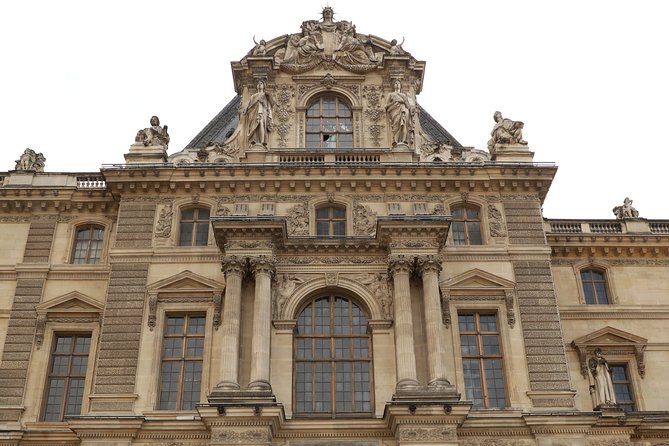
The walk begins at Palais Brongniart, the former stock exchange building. You receive about 30 minutes here, the longest single stop on the route.
That extra time matters. A building tied to finance and public life gives your guide a useful way to explain the values connected with Neoclassical design. The building is presented as both a major example of the style and a marker of its era. The discussion is not limited to surface decoration. You learn how architecture can express order, authority, and civic purpose.
This is likely the most useful stop for anyone who wants historical context. It gives you a framework for the rest of the walk. As you later see royal squares, arcades, gardens, and palace spaces, you can compare how similar classical ideas appear in different settings.
The stop does not include an admission ticket, and the tour is conducted as a walking explanation rather than an indoor visit. If you want extended time inside buildings, ask about that before booking. The advertised experience centers on exterior architecture and public spaces.
Place des Victoires and the model of the royal square
The second stop is Place des Victoires, with about 15 minutes set aside. It is one of Paris’s four royal squares and is used to explain the classical predecessor of later Neoclassical thinking.
This is a compact stop, but it plays an important role. Instead of treating Neoclassical architecture as an isolated style, your guide connects it with earlier classical planning. The square helps you see how geometry, symmetry, royal power, and public space can work together.
You should expect a focused explanation rather than a long visit. Fifteen minutes is enough to discuss the square’s role and examine its form, but it leaves little room for a slow photo session or side conversations. If one member of your group is especially interested in urban planning, this is a good place to ask for extra context.
The private setup helps here. Your guide can spend more time on the parts your group finds useful, within the limits of the two-hour schedule.
Galerie Vivienne brings commerce into the story
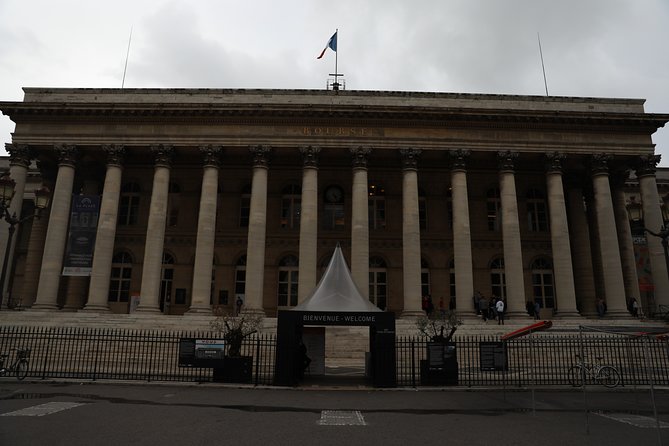
Galerie Vivienne receives about 20 minutes. This covered arcade shows another side of nineteenth-century Paris, one tied to shopping and everyday public life rather than royal display or government power.
The arcade is described as an early ancestor of the modern shopping mall. That comparison makes the stop easy to understand. You are not only studying columns, paving, or decorative details. You are looking at how an architectural form created a controlled, attractive place for commerce.
This change in subject gives the walk welcome variety. Palais Brongniart represents finance and civic authority. Place des Victoires represents royal planning. Galerie Vivienne shows architecture being used to shape the experience of buying, browsing, and moving through a commercial setting.
The 20-minute visit should give you time to look closely while keeping the route moving. The tour does not include food or drinks, so plan a café stop separately. Galerie Vivienne may tempt you to linger, but the guide needs to keep the group on schedule for the remaining gardens and palace spaces.
The Tuileries viewed through classical design
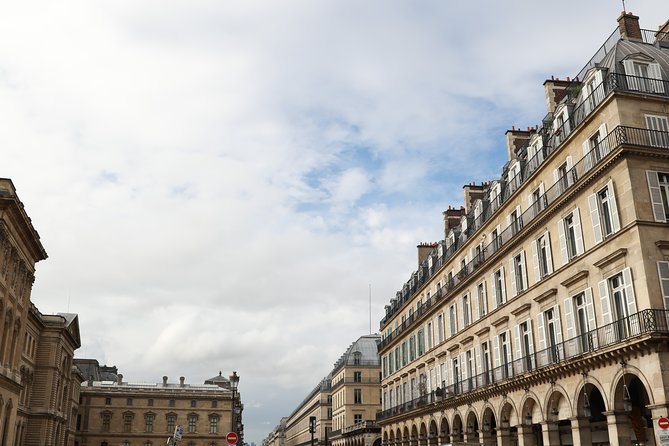
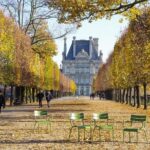
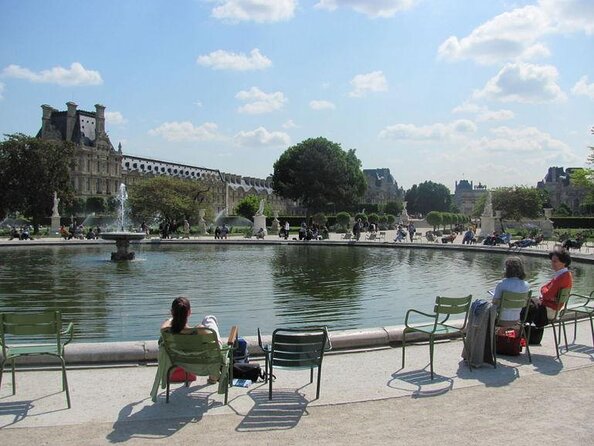
The walk then reaches the Jardin des Tuileries for about 20 minutes. This former royal garden is considered from the viewpoint of Neoclassical style and thought.
For you, the value is in learning to read a garden as architecture. The tour is not simply a stroll through greenery. It treats the garden as a designed space, with order and visual relationships that can be discussed alongside buildings and squares.
This stop also gives the experience a change of pace. After the stock exchange, urban square, and covered arcade, the Tuileries opens the discussion to royal grounds and planned views. The route connects these spaces rather than presenting them as unrelated attractions.
Do not expect a full garden tour in 20 minutes. The focus remains on the Neoclassical perspective, and the tour must continue to the Palais Royal area. If you want time for a relaxed walk through the entire garden, you will need to return on your own.
You can also read our reviews of more private tours in Paris





Palais Royal shows architecture in commercial use
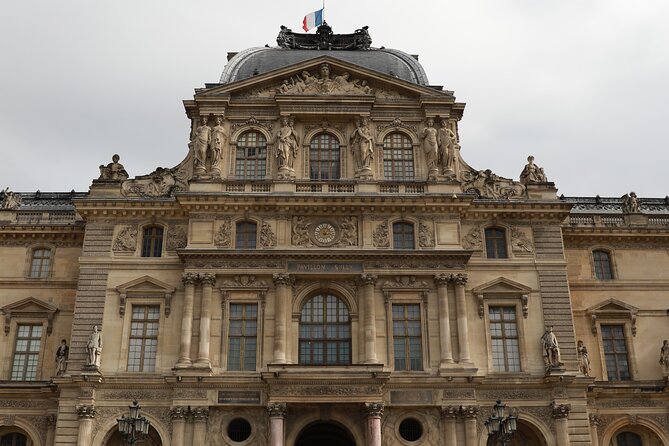
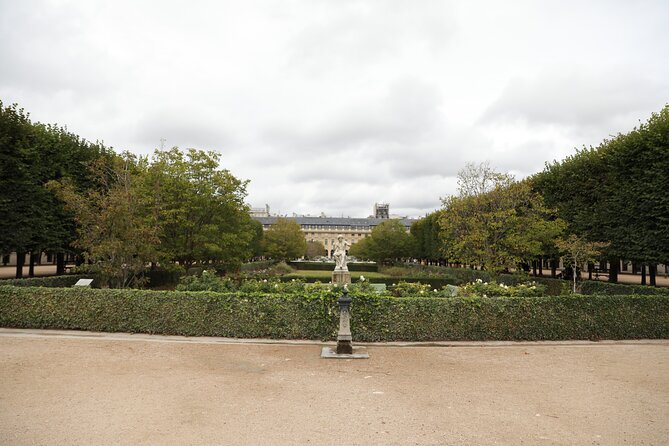
The final major stop is the Domaine National du Palais Royal, with about 20 minutes scheduled. The famous palace complex is examined as a place that was converted into a commercial center.
That detail gives the tour one of its most useful themes: buildings change purpose. A palace complex can become part of commercial life, and the architecture continues to shape how people use the space. Your guide can connect the building’s formal character with its later role as a place of shops and public movement.
This is a strong ending because it brings together several ideas from the route. You have seen civic finance, royal planning, commercial arcades, gardens, and a palace complex. The final discussion helps you compare how classical design works in each setting.
The tour ends at the Arc de Triomphe du Carrousel on Place du Carrousel. That location is practical if you plan to continue around the Louvre or the Tuileries. The supplied details do not promise an interior visit to the Louvre or any other monument, so treat the endpoint as the end of the walking experience.
What the private guide adds
The professional guide is an art historian, and that qualification matters most if you want more than dates and names. The strongest feature of the experience is the connection between architecture, art, history, and culture.
Mila has been described as friendly, clear, and easy to understand. Melissa was praised for placing architecture in its historical and artistic setting. Dunya has been described as having broad command of architecture and art, while Boris used questions to make the material easier to follow. These guides may not all be assigned on every date, so check who is available when you book.
The comments about these guides point to a particular teaching style. You are not expected to arrive with a degree in architecture. The material is explained in plain terms, and your questions can shape the conversation.
The private format also removes the pressure of keeping up with a large group. You can ask why one feature matters, request more art history, or spend less time on a subject that does not interest you. The guide still has to cover the route in two hours, but the experience can be adjusted within that boundary.
The guide may be multilingual, even though the advertised language is English. If English is essential for your group, confirm the language arrangement when booking.
Is $360.48 a fair price?
The listed price is $360.48 per group of up to six people. That works out to about $60.08 each if six people participate. For two people, the cost is about $180.24 per person, and for one person it is the full group price.
The value comes from the private art historian rather than from admissions. All the stops are presented without an admission ticket, and food and drinks are not included. You are paying for the guide’s preparation, interpretation, and exclusive time with your group.
I would consider the price reasonable for a family or group of friends who care about architecture and want a tailored conversation. It is harder to justify for a solo visitor or a pair who mainly want a quick orientation to Paris. A public walking tour would usually make more sense for a lower-cost introduction, but it would not offer the same private format.
This tour is also a better buy if you plan to use the ideas later. After the walk, you may notice classical planning and formal design more clearly at other Paris sites. The experience gives you a way to look, not only a list of places to remember.
Timing, walking, and practical planning
The duration is approximately two hours. The route has five stops and ends in a different area from where it begins, so wear comfortable shoes and plan your next stop near the Carrousel.
A moderate level of physical fitness is recommended. The information provided does not specify the total walking distance, stairs, seating, or restroom access. If anyone in your group has mobility concerns, ask the provider for current route details before booking.
The meeting point is at Bourse, in the 75002 area. The endpoint is Arc de Triomphe du Carrousel, Place du Carrousel, 75001. The route is near public transportation, which makes both the start and finish practical for a day in central Paris.
Service animals are allowed. The tour is private, so only your group participates. Confirmation is normally sent at booking, though reservations made within seven days of the date may receive confirmation within 48 hours, subject to availability.
You can cancel for a full refund up to 24 hours before the start time. Changes or cancellations made inside that 24-hour window are not accepted for a refund.
Who should book this architecture walk?
I would recommend it to you if you enjoy asking why a building looks the way it does. It is a good match for students, families with older children, art and design enthusiasts, and repeat visitors who have already seen the major monuments but want a more focused subject.
It also suits you if you prefer conversation to a fixed script. The guide can respond to questions and adjust the emphasis, which is harder to do on a large group tour.
I would be more cautious if you want interior access, a broad tour of Paris, or a relaxed garden stroll. Two hours passes quickly, and the route covers several stops. You get an informed introduction to a particular architectural idea, not a complete survey of the city.
Should you book the Neoclassical Paris tour?
Book this walk if architecture, art, and the way Paris developed interest you more than simply collecting famous sights. The strongest reasons are the private art historian, the unusual route, and the clear link between royal spaces, civic buildings, gardens, and commerce.
Skip it if you are looking for a cheap overview or if your group would rather spend two hours inside major museums. At $360.48, the experience makes the most sense when shared by several people and when you want the guide’s attention. For the right group, it offers a thoughtful way to see familiar central Paris with sharper eyes.
FAQ
How long is the Neoclassical Paris architecture tour?
The walking tour lasts approximately two hours.
Where does the tour begin?
It begins at Bourse in the 75002 area of Paris.
Where does the tour end?
It ends at the Arc de Triomphe du Carrousel on Place du Carrousel, 75001 Paris.
How many people can join the private tour?
The price covers a private group of up to six people.
Is an art historian included?
Yes. A professional art historian guide is included.
Is the tour offered in English?
English is listed as an available language. The guide may be multilingual.
Are admission tickets included?
The listed stops have no admission ticket included or required as part of the experience. Food and drinks are not included.
Is the route suitable for people with limited mobility?
A moderate level of physical fitness is recommended. Service animals are allowed, and the route is near public transportation. The supplied details do not specify the total distance, stairs, or seating.
What is the cancellation policy?
You can cancel up to 24 hours before the start time for a full refund. Cancellations or changes made less than 24 hours before the start time are not accepted for a refund.