Paris is the star here, and this audio tour gives you a wide-angle introduction to the city. In roughly five hours, you can move from the clock tower at Gare de Lyon to Montmartre, the Eiffel Tower, the Louvre, Sainte-Chapelle, and the towers of Notre-Dame. You set the route and pace, so the experience feels more like an independent city walk than a fixed excursion.
I like two things right away: the 24-stop map makes a sprawling city easier to organize, and the audio links let you choose between listening to one sight at a time or previewing the full route before setting out. You can also split the experience across the six-day validity period. The main drawback is practical: five hours is far too short for proper museum visits, and the audio requires mobile internet, which caused trouble for at least one customer.
In This Review
- Key points at a glance
- What the $9 tour really gives you
- Two simple links, one important limitation
- Gare de Lyon to Place des Vosges
- Palais Garnier, Montmartre, and Parc Monceau
- The Arc de Triomphe and western Paris
- The Eiffel Tower, Quai Branly, and Pont Alexandre III
- Invalides and the Musée Rodin
- Notre-Dame-des-Champs and the Luxembourg Gardens
- Musée d’Orsay, Concorde, and the Orangerie
- Tuileries, the Louvre, and Sainte-Chapelle
- Notre-Dame and the modern library
- Planning a route that will not wear you out
- Who will get the most from this experience?
- Should you book it?
- FAQ
- How long does the Paris self-guided audio tour take?
- How many attractions are included?
- Can I choose where the tour starts and ends?
- Do I have to follow the attractions in the listed order?
- How do I access the audio guide?
- How long do the access links remain valid?
- Do I need internet access?
- Are headphones provided?
- Are museum and attraction entry fees included?
- Is transportation included?
- Is this a private activity?
- Can I cancel or change the booking?
Key points at a glance
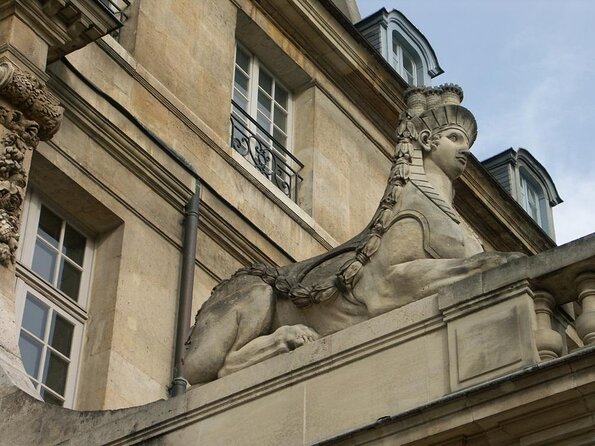
- Twenty-four stops cover a remarkable cross-section of Paris, including major museums, royal chapels, gardens, churches, monuments, and modern architecture.
- The Google My Maps route gives you control, allowing you to start and finish wherever you like instead of meeting a guide at one fixed point.
- SoundCloud supplies the narration, with separate audio for each attraction and a full playlist for planning.
- Five hours means a sampler, not a museum marathon, especially since many stops are spread across Paris.
- Bring headphones, a charged smartphone, and internet access, because audio devices, Wi-Fi, and transport are not included.
- The $9 price is low, but admission fees and getting between sights are extra.
What the $9 tour really gives you
At $9 per person, this is priced as a planning and narration tool, not as an all-inclusive sightseeing day. You receive private access to one audio playlist covering 24 attractions, plus a separate interactive map with links to the individual recordings. The links remain valid for up to six days.
That is good value if you want background information without paying for a live guide. It is especially useful for a first look at Paris, when you may want someone to explain what you are seeing but still prefer to stop for coffee, change direction, or skip a museum.
The low price needs a little context. Entry fees are not included where required, and neither are metro fares, taxis, meals, earphones, or internet access. The total cost can rise if you enter several museums or pay to climb monuments.
You should also treat the advertised five hours as an overview. Each stop is assigned about 10 minutes, with 15 minutes at Notre-Dame-des-Champs. That timing works for a quick audio introduction and a look from outside, but not for the Louvre, Musée d’Orsay, Musée Rodin, or Musée de l’Armée. The smartest approach is to choose a few interior sights and use the rest as exterior stops.
You can also read our reviews of more guided tours in Paris
Two simple links, one important limitation
The setup is straightforward. On your chosen travel date, before your selected start time, you receive an email with two access links.
The first opens the audio through a secure SoundCloud web link. You can select a single attraction or play the full sequence. The second opens a Google My Maps route, where each marked point connects to its matching audio.
This is a sensible system for independent sightseeing. You can listen before arriving, then pull up the relevant stop when you reach it. You can also plan a shorter route rather than trying to visit all 24 locations in the listed order.
The catch is that the audio is online. You need a charged smartphone, earphones, and dependable internet access. The supplied information specifically identifies internet access as something to bring, and offline downloading is not promised. If your phone loses service at a key stop, you may not be able to play the recording when you need it.
I would load the map before leaving your hotel, charge your phone fully, and arrange mobile data in advance. Those small steps matter more here than they would on a conventional guided walk.
Gare de Lyon to Place des Vosges

Gare de Lyon is an energetic place to begin, even though you do not have to start there. The station is known for its clock tower and Le Train Bleu restaurant, giving the opening stop a useful taste of grand Paris before you head into the older quarters.
The next stop, Place des Vosges, offers a sharp change of mood. This planned square is surrounded by elegant 17th-century buildings, with a calm, ordered feel that contrasts with the railway station. Ten minutes is enough to look around and hear the basic story, though you will want longer if you enjoy architecture or want to sit in the square.
The Musée Picasso-Paris follows. It occupies a 17th-century mansion and contains a large collection of Picasso’s work. The audio can help you understand why the museum matters, but the listed 10-minute visit is only an introduction. Admission is not included, so treat this as one of the places where you need to choose between a quick exterior look and a separate museum visit.
Palais Garnier, Montmartre, and Parc Monceau
The Palais Garnier brings theatrical Paris into the route. Its opulent 19th-century interiors are tied to the legend of The Phantom of the Opera, and even a short stop can give you a sense of the building’s scale and decoration. Entry is extra, so check your available time before adding an interior visit.
At the Basilica of Sacré-Coeur, the focus shifts from ornate interiors to one of the city’s best broad views. The white-domed church sits on Montmartre hill, and the audio provides context for the landmark while you look across Paris. The stop itself is free, though the hill affects the pace of a route that already covers a lot of ground.
Parc Monceau is a welcome pause. Its English-style gardens and unusual monuments offer something different from the formal Tuileries and Luxembourg Gardens later in the day. This is one of the free stops that works well as a short walk rather than a rushed photo stop.
The Arc de Triomphe and western Paris
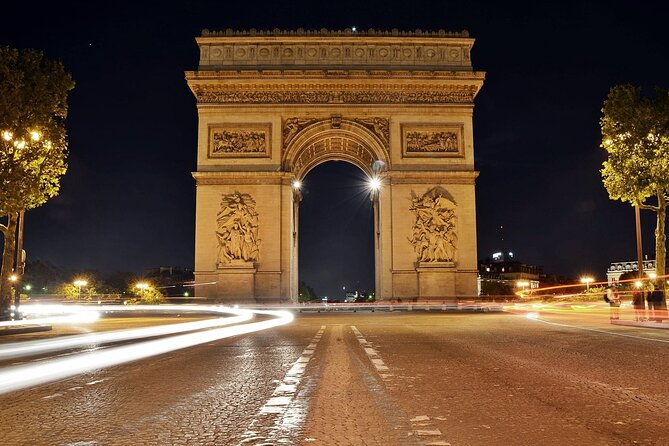
The Arc de Triomphe is one of the route’s strongest landmark stops. It honors those who fought for France and frames the long view along the Champs-Élysées. The audio should help you read the monument as a piece of national history rather than just a giant arch.
Admission is not included. If you climb it, allow more than the suggested 10 minutes. If you are watching the clock, an outside visit still gives you the main visual impact and a good reason to continue.
The Musée Marmottan Monet offers a quieter art stop than the Louvre or Musée d’Orsay. It is known for the world’s largest collection of Claude Monet’s works, according to the tour information, and occupies a more intimate setting. This is a particularly good choice if Monet interests you, but it requires an admission fee and enough time to make the detour worthwhile.
A few more Paris tours and experiences worth a look




The Eiffel Tower, Quai Branly, and Pont Alexandre III
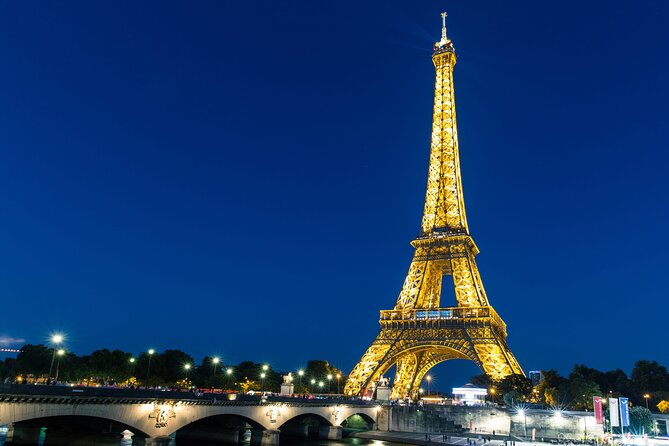
The Eiffel Tower needs no introduction, but the audio can give your visit a sense of place beyond the familiar silhouette. You can admire the engineering and the city symbol from ground level, or pay separately to go up. The suggested 10 minutes is enough for an exterior stop, not a full tower visit.
The Musée du quai Branly, Jacques Chirac, adds an important change in subject. Its collections present Indigenous art from Africa, Asia, Oceania, and the Americas. It gives the itinerary a wider cultural frame, though entry is not included and the museum deserves more time than the schedule provides.
Pont Alexandre III is free and makes an excellent connecting point. The ornate bridge links the Champs-Élysées quarter with the Eiffel Tower quarter, so it is both a sight and a useful place to appreciate how Paris’s grand avenues and river crossings fit together.
Invalides and the Musée Rodin
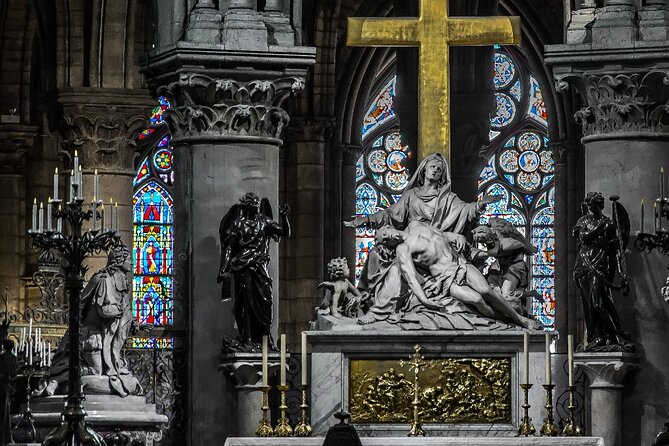
The Musée de l’Armée at Les Invalides takes you into France’s military past, with Napoleon’s tomb located within the complex. This is another stop where the audio can provide a helpful outline, but the museum’s size makes a 10-minute visit only a preview. Admission is extra.
The Musée Rodin is one of the more appealing places to slow down. The gardens contain Rodin’s sculptures, including The Thinker, and the outdoor setting changes the rhythm after several monumental city sights. Entry is not included, so you should choose it deliberately rather than squeeze it between other museums.
The nearby Chapel of Our Lady of the Miraculous Medal is free and offers a quieter religious stop. It is associated with the apparitions of the Miraculous Medal, giving the audio guide a chance to explain a story that is less familiar than the Eiffel Tower or Notre-Dame.
Notre-Dame-des-Champs and the Luxembourg Gardens
Notre-Dame-des-Champs is a lesser-known church in central Paris. The 15-minute allocation gives it slightly more attention than most stops, which is useful because quieter churches often reward a slower look than a quick landmark photograph.
The Luxembourg Gardens provide one of the route’s best breaks. They are a favorite place for Parisians to relax, and the gardens give you room to pause, sit, and reset before the museum-heavy stretch. This is where the self-guided format earns its keep. You do not have to hurry away just because the next audio point is waiting.
Musée d’Orsay, Concorde, and the Orangerie
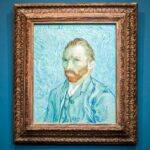
The Musée d’Orsay occupies a converted railway station and is known for Impressionist and Post-Impressionist masterpieces. It is one of the most important art stops on the route, but the schedule marks only 10 minutes. The supplied details list admission as free for this stop, though you should confirm the current entry arrangement before relying on that information.
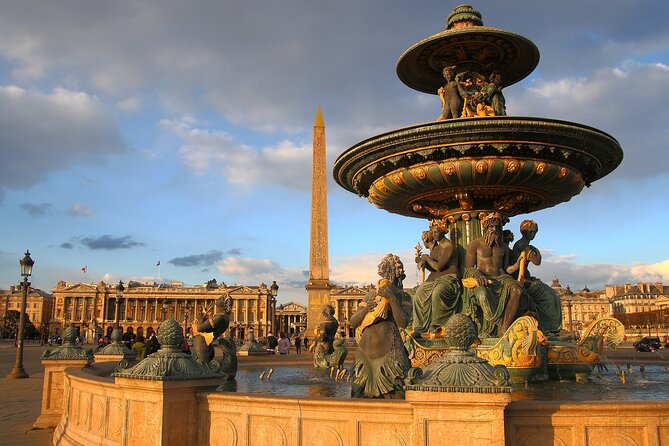
Place de la Concorde is a broad historical setting and one of Paris’s key public squares. The audio can help connect the open space with major events in the city’s past. Since the stop is free and outdoors, it is easy to include even if you skip the museums.
The Musée de l’Orangerie is a natural companion to the Monet material. Its purpose-built galleries are known for Monet’s Water Lilies series. Admission is not included, and this is another place where you will gain more from planning a proper visit than from trying to rush through in 10 minutes.
Tuileries, the Louvre, and Sainte-Chapelle
The Jardin des Tuileries links the Place de la Concorde with the Louvre. Its formal French design gives you a grand, open route through the center of Paris, with plenty to see even without entering a building. It is free, making it an easy stop when your budget or energy is running low.
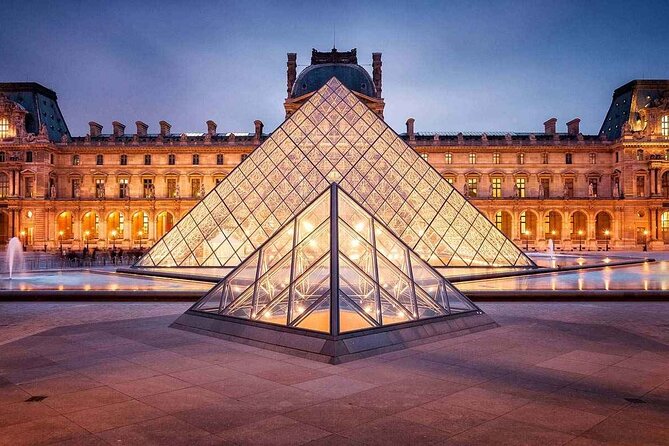
The Louvre is the itinerary’s biggest time trap, in the best possible way. You can hear about its treasures, including the Mona Lisa, but 10 minutes will not do justice to the world’s largest art museum. Entry is not included, and you should consider the Louvre a separate half-day plan rather than a quick stop on this five-hour circuit.
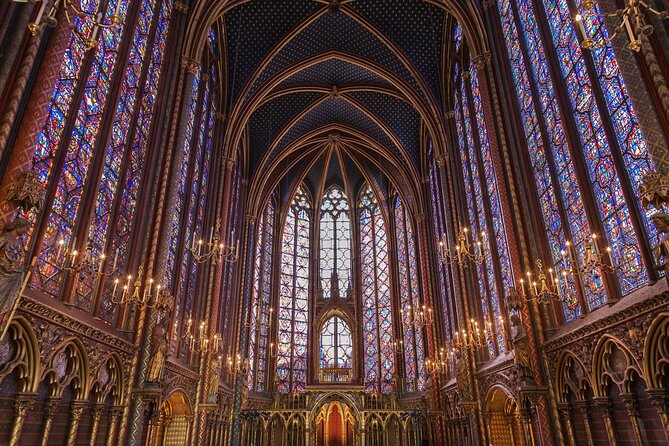
Sainte-Chapelle is smaller but visually intense. Its Gothic stained-glass windows are the reason to visit, and the chapel provides a more focused experience than the Louvre. Admission is extra, and the short schedule works only if you are treating the stop as a brief look rather than a full visit.
Notre-Dame and the modern library
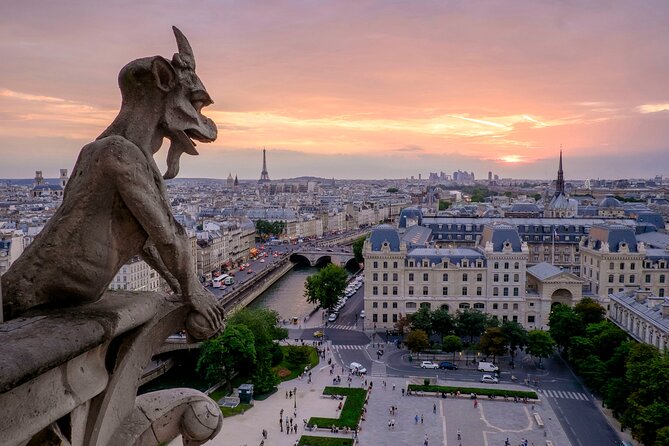
The Towers of Notre-Dame Cathedral close the historic center portion of the route. The suggested visit centers on climbing the towers for gargoyle-level views of Paris, and the stop is listed as free. The tower climb will take more than 10 minutes if access is available and you intend to go up, so plan this as another optional priority.
The final location, the Bibliothèque nationale de France at the François Mitterrand site, changes the visual language completely. Its modern architecture shows a later Paris, away from the medieval streets and grand 19th-century monuments. It is a useful closing note because the tour moves beyond familiar postcards and points toward the city’s newer civic spaces.
Planning a route that will not wear you out
The stops are spread widely. A practical day needs transport between clusters, and transport is not provided. The tour begins and ends wherever you choose, so you can build a route around your hotel, a metro station, or the sight you most want to see first.
I would not follow all 24 points in one continuous sweep unless you are content with short exterior visits. Instead, choose one of these broad approaches:
- Start with eastern Paris at Gare de Lyon, Place des Vosges, and the Picasso museum.
- Focus on western Paris with Parc Monceau, the Arc de Triomphe, the Eiffel Tower, and Pont Alexandre III.
- Spend your time around Invalides, Rodin, the Orangerie, the Tuileries, and the Louvre.
- Use a second day for Notre-Dame, Sainte-Chapelle, the Luxembourg Gardens, and the François Mitterrand library.
Because the links last up to six days, splitting the route is sensible. You can also preview the audio before deciding which stops deserve your admission budget.
Who will get the most from this experience?
I would choose this tour if you like independent sightseeing and want a low-cost layer of explanation while you walk. It suits solo visitors, couples, and private groups who do not want to keep up with a guide or follow a fixed start time.
It also works well for a first visit when you want to understand how the city’s landmarks connect. The route covers art, religion, military history, gardens, architecture, national monuments, and modern design rather than repeating one theme.
I would be cautious if you expect a fully guided tour, offline audio, or included museum tickets. The product is not a live walking tour, and one customer’s main complaint came from being unable to access the audio without Wi-Fi or mobile service. You need to manage the technology yourself.
The experience is private in the sense that only your group participates, but there is no personal guide leading you from stop to stop. Customer support is available for questions about accessing and using the links, yet the sightseeing itself remains self-directed.
Should you book it?
Book it if $9 sounds like a fair price for a flexible audio companion and you already feel comfortable navigating Paris with a phone. The 24-stop map, six-day access, and choice of individual recordings give you useful control, especially if you plan to visit only the sights that match your interests.
Skip it if you need offline listening, included transport, admission tickets, or a guide who can answer questions in person. For the best value, use the audio to select two or three interior attractions, enjoy the free outdoor sights along the way, and keep your phone connected. Also remember that the booking is non-refundable and cannot be changed, so confirm your dates and equipment before paying.
FAQ
How long does the Paris self-guided audio tour take?
The approximate duration is five hours. The schedule allows about 10 minutes at most stops and 15 minutes at Notre-Dame-des-Champs, but museum visits, transport, and tower climbs can make the day longer.
How many attractions are included?
The experience includes audio access for 24 Paris attractions, with a map point and individual audio link for each stop.
Can I choose where the tour starts and ends?
Yes. Because it is self-guided, you can choose your own starting point and ending point in Paris.
Do I have to follow the attractions in the listed order?
No. The interactive map allows you to plan your own route and visit the attractions in any order.
How do I access the audio guide?
You receive a private SoundCloud web link for the audio and a private Google My Maps link showing the 24 attractions. Each map point connects to its matching audio guide.
How long do the access links remain valid?
The private access links are valid for up to six days.
Do I need internet access?
Yes. Internet access is listed as something you need to bring, and the audio is accessed through a web link. Offline downloading is not included.
Are headphones provided?
No. Earphones are not included, so you need to bring your own.
Are museum and attraction entry fees included?
No. Entry fees are not included wherever they are required. The tour price covers the audio guide and map access, not admissions.
Is transportation included?
No. Pick-up, drop-off, and transportation between attractions are not included. You arrange your own movement around Paris.
Is this a private activity?
Yes. Only your group participates, but there is no live guide accompanying you.
Can I cancel or change the booking?
No. The experience is non-refundable and cannot be changed for any reason.