REVIEW · PARIS
Paris Art Nouveau Private Tour
Book on Viator →Operated by Paris in person · Bookable on Viator
Paris Art Nouveau is easiest to appreciate when someone shows you where to look. This private walk links the Eiffel Tower with the ornate façades of Avenue Rapp, turning a familiar corner of Paris into a lesson in Belle Époque design, politics, and changing taste.
I like the private format, which gives you room to ask about architecture rather than follow a fixed script. I also like the chance to see Lavirotte’s extraordinary buildings, including the Ceramic Hotel and the less famous building at 3 Square Rapp. The main consideration is the pace: two hours on foot can feel tiring, especially for older visitors.
In This Review
- Key points to know before booking
- Why Paris Art Nouveau works best on foot
- Meeting at Rue de l’Université
- The Eiffel Tower through a Belle Époque lens
- The American Cathedral and a useful style comparison
- 29 Avenue Rapp and the Ceramic Hotel
- 3 Square Rapp and Lavirotte’s quieter work
- What the guide adds to the two-hour format
- Is $360.48 good value for up to six people?
- Who should book this walk?
- Booking, timing, and cancellation details
- Should you book the Paris Art Nouveau Private Tour?
- FAQ
- How long is the Paris Art Nouveau Private Tour?
- How many people can join the private tour?
- Is the Eiffel Tower entrance included?
- Where does the tour begin?
- Where does the tour end?
- Is transportation included?
- Can I cancel for a full refund?
Key points to know before booking
- Lavirotte’s façades are the visual highlight: 29 Avenue Rapp is a flamboyant Art Nouveau landmark, while 3 Square Rapp offers a quieter second example of the same architect’s work.
- The Eiffel Tower gets a new context: You will hear how the tower fits the Belle Époque and Art Nouveau period, but you will not go inside.
- The guide shapes the experience: Boris, Milica, and Melissa have led this theme, with a style that includes architecture, history, politics, and social customs.
- This is a compact private walk: The tour lasts about two hours and is limited to your group of up to six people.
- Expect steady walking: A moderate level of fitness is advised, with no hotel pickup or transportation between stops.
- The price works best for a small group: At $360.48 per group, the per-person cost drops sharply when six people share it.
Why Paris Art Nouveau works best on foot
Art Nouveau can be easy to miss in Paris. You may pass an unusual doorway or a curling iron balcony and register only that it looks different from the buildings around it. A good guide helps you see the design choices: the plant forms, curved lines, ceramic decoration, sculpted faces, and theatrical use of materials.
This walk is useful because it places those details within a wider story. You are not simply looking at pretty buildings. You are considering how Paris changed around the turn of the twentieth century, when architects experimented with new shapes and decoration while still working within a city known for orderly classical façades.
The tour also compares Art Nouveau with other styles. That makes the American Cathedral especially useful. Its Gothic Revival design gives you a clear contrast before the walk turns toward the more expressive work of Jules Lavirotte.
I would book this for someone who enjoys architecture but does not want a full museum tour. You spend most of the time outside, looking at actual buildings in their neighborhood setting. That gives the subject a practical edge: you can see how one style responds to the streets and structures around it.
The private setup matters here. With only your own group, you can ask why a façade looks so strange, how Gothic Revival differs from Art Nouveau, or what certain decorative elements may have meant at the time. The guide can also adjust the explanation to your interests, rather than aiming at a large mixed group.
You can also read our reviews of more private tours in Paris
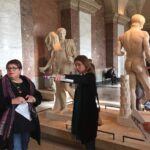


Meeting at Rue de l’Université
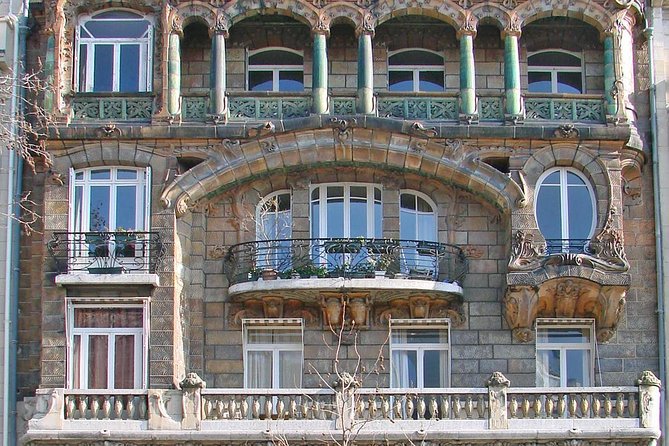
The walk begins at 221 Rue de l’Université in the 7th arrondissement. This is a central Paris location near the Eiffel Tower area, but you should allow time to find the exact meeting point. The tour does not include hotel pickup, and transportation to or from the attractions is not included, so plan to arrive independently.
The guide usually leads the group toward the Eiffel Tower first. Since this is a walking experience, comfortable shoes are sensible. The tour description calls for moderate physical fitness, and that is worth taking seriously if anyone in your party has trouble walking for two hours.
You should also remember that the experience is not an Eiffel Tower admission visit. The tower is viewed and explained from outside. If you want to go up, you will need a separate ticket and a separate block of time.
For a family group, children must be accompanied by an adult. The guide may be multilingual, although the experience is offered in English. If a precise language arrangement matters to you, confirm it when booking.
The Eiffel Tower through a Belle Époque lens
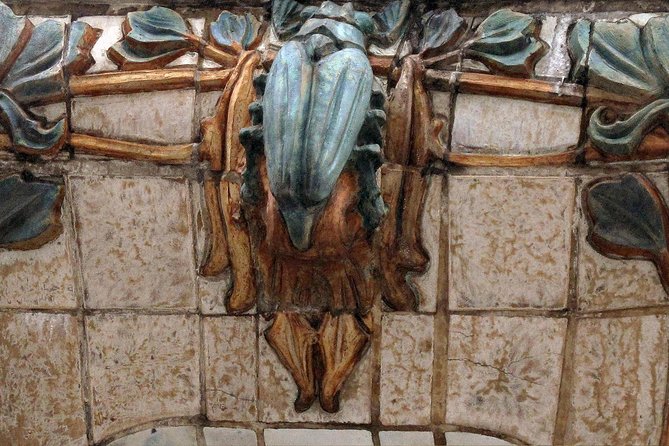
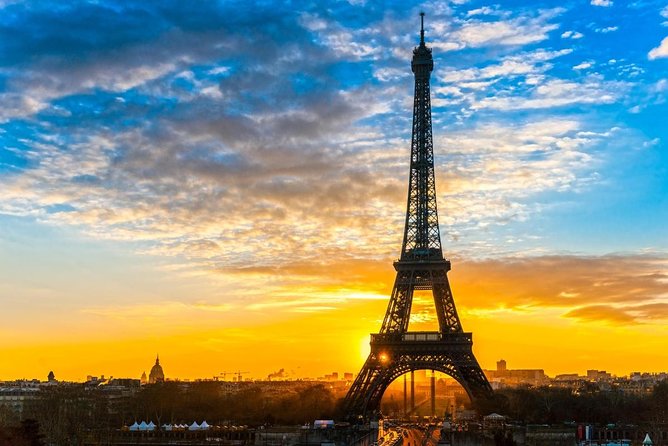
The first stop is the Eiffel Tower, with about 15 minutes devoted to it. You will not need an admission ticket for this part because the tour does not enter the tower.
That may sound brief, but the point is not to cover every fact about the Eiffel Tower. The guide uses it as a way into the period that shaped modern Paris. Viewed through Art Nouveau and Belle Époque design, the tower becomes more than a famous monument. It represents the era’s confidence in engineering, new materials, public spectacle, and bold visual statements.
I like this opening because most people arrive in Paris already carrying a basic story about the Eiffel Tower. A focused guide can connect that familiar landmark to the less familiar buildings you see later. The result is a stronger sense of period, even if the stop itself is short.
The drawback is that anyone expecting a long Eiffel Tower visit may feel rushed. You will not enter, ride the elevators, or explore the tower’s interior. Think of this as an architectural introduction, not a tower tour.
The American Cathedral and a useful style comparison
The next stop is the American Cathedral in Paris, where you spend about five minutes. The building is presented as a fine example of Gothic Revival architecture.
Five minutes is not enough for a detailed visit, and this is not an interior tour. Its value lies in comparison. Gothic Revival looks back to medieval forms, while Art Nouveau sought a more modern visual language, often using flowing lines and organic decoration.
That contrast helps you understand what made Art Nouveau unusual. Instead of treating every ornate building as part of the same general category, you can begin to separate the styles. The guide may also explain how architecture changes in response to taste, technology, and social ideas.
This is a quick stop, so I would not book the walk specifically for the cathedral. It is best understood as a visual bridge between the Eiffel Tower and the Art Nouveau façades on Avenue Rapp.
29 Avenue Rapp and the Ceramic Hotel
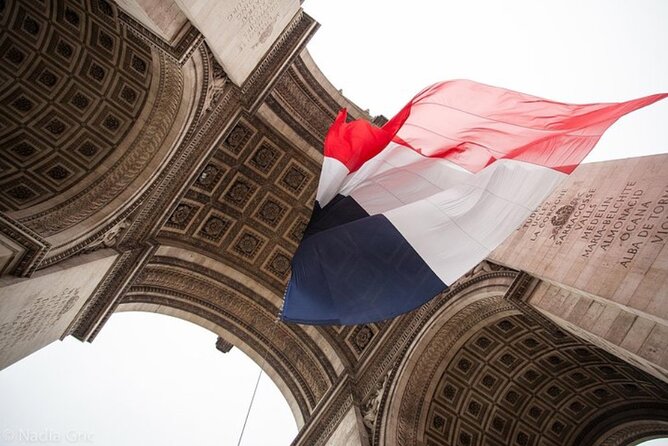
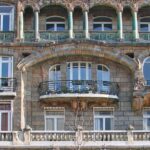
The main architectural payoff arrives at 29 Avenue Rapp, home to the famous Lavirotte house. The stop lasts about 20 minutes, giving the guide enough time to point out the façade’s unusual details rather than simply allowing a quick photograph.
The building is also known as the Ceramic Hotel, a name that hints at its decorative character. Its façade is one of Paris’s best-known Art Nouveau examples, with an exuberant approach that can feel almost theatrical beside the more restrained buildings nearby.
This is where a guide earns the fee. Without context, you may simply see a busy façade covered with decoration. With an art historian, you can consider how the materials, curves, ornament, and sculptural elements work together. You also get a better sense of why Art Nouveau created such a strong break from older architectural habits.
Bring your camera, but do not let the photograph replace the explanation. The building’s impact comes from looking at it closely and then stepping back to see how it fits the street. A private guide can give you time for both.
The stop is outdoors, so the experience depends on being comfortable standing on the street while the guide speaks. The tour information does not promise entry into the Ceramic Hotel. Plan on examining the exterior.





3 Square Rapp and Lavirotte’s quieter work
The walk continues to Immeuble 3 Square Rapp, another Lavirotte building. The visit lasts roughly 20 minutes and provides a useful second look at the architect’s style.
This building is less famous than the Ceramic Hotel, which is part of its appeal. You can compare two related works rather than treating one remarkable façade as an isolated oddity. The guide can point out recurring ideas and differences, helping you understand that Art Nouveau was not one fixed formula.
The tour usually ends at Square Rapp, near the building once known as the Société Théosophique and now associated with a Tour Eiffel theatre. The end point is on Avenue Rapp, not back at the starting address, so plan your next move from there.
This location may suit you well after the walk because you are already in the Eiffel Tower area. Still, the tour does not provide onward transportation. You will need to continue on foot, by taxi, or by public transport on your own.
What the guide adds to the two-hour format
The best part of a private architecture tour is not the number of stops. It is the quality of the explanation between them. The guides connected with this experience include Boris, Milica, and Melissa, and the strongest praise has focused on their clear communication, warmth, and ability to answer questions.
Boris, in particular, has been praised for comparing classical, Gothic, and Art Nouveau styles and explaining how each developed. That approach is useful if you like design but do not have a background in architectural history. You do not need to arrive knowing the difference between Gothic Revival and Art Nouveau.
The discussion can also reach beyond buildings. The tour provider describes these themed walks as covering art history alongside ordinary history, politics, and the social customs of the period. That wider view makes the façades easier to understand. Architecture reflects what people wanted to display, what new materials allowed, and what older styles no longer expressed.
The guide may also adjust the walk to your group’s needs. One party with two mothers in their seventies found the walking tiring, and the guide worked in a break at Ladurée for coffee, tea, and macarons before continuing. That does not mean a refreshment stop is guaranteed, but it shows the value of having a private guide rather than being tied to a rigid group schedule.
A guide also helped that group arrange a taxi at the end. Again, this is not a promised feature, but it is a useful example of the personal attention a private format can allow.
Is $360.48 good value for up to six people?
The listed price is $360.48 per group, with up to six participants. For one person, that is expensive for a two-hour walk. For six people, it works out to about $60.08 each, before any additional costs.
That price includes a professional art historian guide. It does not include Eiffel Tower admission, hotel pickup, transportation, food, or drinks. Since the tour is built around outdoor viewing, you are paying mainly for interpretation and the private setting.
I see the value most clearly for a family or group of friends who already plan to explore the Eiffel Tower area. You can share the fee, ask personal questions, and avoid spending time on a general sightseeing walk that may not match your interests.
For a couple, the cost is harder to justify unless Art Nouveau is a real priority. You could still value the focused teaching, but the per-person price is high compared with a larger group tour.
The experience also has a practical advantage for repeat visitors. If you have already seen the main Paris sights, this walk gives you a more specific subject and takes you to façades you might otherwise pass without noticing.
Who should book this walk?
I would recommend it most strongly to:
- Architecture and design fans who want to see buildings rather than only museum displays.
- First-time visitors who want a fresh way to understand the Eiffel Tower area.
- Families and friends who can divide the group price.
- Adults who prefer a private guide and plenty of time for questions.
- Visitors who enjoy history, politics, and social context alongside visual details.
- People looking for a short, focused activity rather than a full-day excursion.
It is less suitable if you want to enter the Eiffel Tower, visit several interiors, or avoid walking. It may also disappoint anyone expecting a broad survey of all Paris architecture. The route focuses on a small group of nearby examples, with the greatest attention given to Lavirotte’s work.
Older visitors can still enjoy it, but plan for breaks. The two-hour length is manageable for many people, yet the pace and standing may be tiring. A private guide gives you some flexibility, but the basic activity remains a walking tour.
Booking, timing, and cancellation details
This experience is often booked about 30 days ahead, which suggests that planning early is sensible if your Paris dates are fixed. Confirmation normally arrives at booking. If you book within seven days of the tour, confirmation may take up to 48 hours and depends on availability.
The tour is offered in English, though the guide may be multilingual. It is a private activity, so only your group participates.
Free cancellation is available if you cancel at least 24 hours before the start time. Changes or cancellations made less than 24 hours before the start time are not accepted for a refund. The cut-off follows local Paris time, so check the clock carefully if your plans change.
Should you book the Paris Art Nouveau Private Tour?
Book it if you want an informed look at Paris façades and can share the $360.48 cost with a small group. The combination of the Eiffel Tower, the American Cathedral, the Ceramic Hotel, and 3 Square Rapp gives the walk a clear story, moving from familiar landmark to striking architectural details.
I especially recommend it if you enjoy asking questions. Guides such as Boris, Milica, and Melissa have been praised for making the subject approachable and adapting their style to the group. That personal attention is the real reason to choose this experience.
Skip it if your main goal is going inside the Eiffel Tower or covering many major sights. This is a compact, outdoor architecture lesson, not a standard Paris highlights tour. For the right audience, though, it can change the way you see an entire neighborhood.
FAQ
How long is the Paris Art Nouveau Private Tour?
The tour lasts approximately two hours.
How many people can join the private tour?
The price covers one private group of up to six people.
Is the Eiffel Tower entrance included?
No. The tour discusses and views the Eiffel Tower from outside, but admission to the tower is not included.
Where does the tour begin?
The meeting point is 221 Rue de l’Université, 75007 Paris, France.
Where does the tour end?
The tour usually ends at Square Rapp on Avenue Rapp, near the building formerly known as the Société Théosophique, now associated with a Tour Eiffel theatre.
Is transportation included?
No. Hotel pickup, hotel drop-off, and transportation to or from the attractions are not included.
Can I cancel for a full refund?
Yes, if you cancel at least 24 hours before the experience start time. Cancellations or changes made less than 24 hours before the start time are not accepted for a refund.