REVIEW · PARIS
Le Marais Private Walking Tour
Book on Viator →Operated by Paris in person · Bookable on Viator
Le Marais is Paris in several different moods at once. On this private walk, you move from the old market district at Les Halles to Jewish bakeries and landmarks on Rue des Rosiers, grand aristocratic mansions, modern art, and the broad sweep of Place de la Bastille. The guide connects these places instead of treating them as isolated photo stops.
I especially like the private format, which lets you ask questions and request extra attention to architecture, art, or local history. I also like the art historian guides, including Boris, Mila, Stephanie, and Isidora, whose academic and personal interests help turn ordinary doorways and courtyards into meaningful sights. The main consideration is time: two hours goes quickly, and most stops are viewed from the outside.
In This Review
- Key points to know before booking
- Why Le Marais works so well as a walking tour
- Starting at Les Halles and the old center of Paris
- Hotel-de-Ville and the city’s administrative heart
- Centre Pompidou and the modern face of Le Marais
- Rue des Rosiers and the Pletzel
- Hôtel de Sully and the world of aristocratic Paris
- Place des Vosges, the royal square
- Ending at Place de la Bastille
- What the private guide adds
- Price, timing, and practical value
- Who should book this Le Marais walk
- Should you book it?
- FAQ
- How long is the Le Marais Private Walking Tour?
- How much does the tour cost?
- Is the price charged per person?
- Where does the tour begin?
- Where does the tour end?
- Is the tour private?
- Which sights are included on the route?
- Is admission to Centre Pompidou included?
- Are food and drinks included?
- What level of fitness is required?
- Are service animals allowed?
- Is the tour near public transportation?
- When will I receive confirmation?
- Can I cancel for a refund?
Key points to know before booking

- The tour crosses several versions of Paris: You see former royal and aristocratic spaces, the Pletzel Jewish quarter, modern cultural institutions, and the historic route toward Bastille.
- You get a private guide for up to six people: The price is $403.34 per group, not per person, so the value improves considerably with a small group.
- Art and architecture guide the walk: The Centre Pompidou is discussed as part of the neighborhood’s change, while the Hôtel de Sully and Place des Vosges show older Paris at its most polished.
- The walk begins near Les Halles: Meet at 14 Rue de Turbigo in the 1st arrondissement and finish at Place de la Bastille.
- The Pletzel and Rue des Rosiers add cultural depth: This is more than a mansion-and-shopping walk. The Jewish quarter is an important part of Le Marais today and in the past.
- You need a moderate level of fitness: There is no entrance fee for the listed stops, but you will be on foot for about two hours.
Why Le Marais works so well as a walking tour

Le Marais rewards slow travel. Its appeal is not one grand monument, but the way one street can shift from medieval Paris to royal Paris, then to modern galleries, fashion shops, cafés, and community landmarks within a few minutes.
The district has served very different roles over time. It was once a preferred address for nobility, later included a working-class population and areas in decline, and became known for its Jewish community and cultural life. Today, it is one of Paris’s most fashionable districts, but its older layers remain visible in courtyards, façades, street plans, and institutional buildings.
That mixture gives the guide plenty to work with. Instead of simply telling you where to take photographs, the walk explains why the neighborhood changed and what those changes meant for the people who lived and worked there.
The private setup matters here. You are not trying to hear a guide over a large group on a narrow street. You can ask why a mansion has a particular design, how the neighborhood’s Jewish identity developed, or how the arrival of modern art affected Le Marais. If your group includes both serious history fans and casual sightseers, a private guide can adjust the balance.
The tour lasts about two hours. That is enough time for a clear introduction to the district, but not enough for every lane, museum, and courtyard. Think of it as a strong orientation walk, not a full-day survey.
You can also read our reviews of more walking tours in Paris



Starting at Les Halles and the old center of Paris

The walk begins at 14 Rue de Turbigo, near Les Halles. This is a useful starting point because Les Halles connects the older center of Paris with the streets leading into Le Marais.
You spend about 20 minutes here. The district is one of the oldest sections of the city and has long been tied to trade, food, work, and daily urban life. Its importance gives the opening of the tour a practical tone. Paris was not built only by kings and artists. It was also shaped by markets, shopkeepers, laborers, and the constant movement of goods.
I like beginning here because it sets up a contrast with the grand hôtels particuliers later in the walk. The aristocratic residences of Le Marais make more sense after you have considered the commercial life that surrounded them.
Do not expect a market visit or a food tasting. Food and drinks are not included, and the tour focuses on history and architecture. You are looking at the district as a city, not stopping for a meal.
Hotel-de-Ville and the city’s administrative heart
The next stop is the 4th arrondissement and Hôtel-de-Ville, with about 15 minutes devoted to the area. The description emphasizes its role as the administrative center of the city, so this part of the walk helps explain how Paris is governed and organized.
For you, the value is less about entering a building and more about understanding the civic setting around it. The guide uses the area to show how public power fits into the story of the neighborhood.
This is also a good point to ask questions. If you are interested in how the arrondissements work, how Paris developed its central institutions, or why this part of the city became so important, the private format gives you room to steer the conversation.
Because the tour moves through public streets and squares, admission tickets are not needed for this stop. The walk remains straightforward and outdoors.
Centre Pompidou and the modern face of Le Marais

The Centre Pompidou receives about 20 minutes, but only from the outside. That distinction is important. This is not a museum visit, and admission is not included.
The building is used to explain the modern changes in Le Marais, particularly the cultural and economic shifts that helped make the area fashionable. Its bold exterior provides a sharp contrast to the older stone façades and aristocratic residences that appear later.
I find this one of the more useful stops because it prevents the tour from becoming a nostalgic look at old Paris. Le Marais is not a preserved stage set. It has changed through redevelopment, new cultural institutions, art, retail, and rising interest from visitors and residents.
If you want to see the museum’s collections, you will need a separate visit. The walk gives you context for the building and its role in the neighborhood, but it does not take you inside.
Rue des Rosiers and the Pletzel

The walk then reaches Rue des Rosiers, the center of Paris’s Jewish community and one of the oldest streets in the area. About 10 minutes are planned here, making this a shorter stop, but its subject is important.
This part of Le Marais is often called the Pletzel, a Yiddish term for a small square or neighborhood. The street adds a human and cultural dimension to the tour. You are no longer looking only at royal residences and formal architecture. You are also considering the community that has shaped this corner of Paris.
The guide can help you notice details you might otherwise pass without understanding. The tour’s strongest theme is its effort to connect visible streets with the people and traditions behind them.
Ten minutes is not a long time for such a significant subject. If the Pletzel is a major reason you want to book, mention that interest when arranging the tour. One advantage of a private walk is the possibility of making your priorities clear from the start.
You can also read our reviews of more private tours in Paris





Hôtel de Sully and the world of aristocratic Paris

The Cour et jardin de l’Hôtel de Sully takes about 15 minutes. This is a fine example of the hôtel particulier, the type of private urban mansion associated with 17th-century Parisian aristocracy.
The key word here is private. These were not ordinary townhouses. They were large residences designed to give powerful families a formal address in the city, often with an entrance court facing the street and a garden or more private space behind it.
The courtyard and garden arrangement helps you read the architecture. From the street, you might see a controlled and dignified façade. Inside, the layout reveals how status, privacy, and movement were managed.
This is where an art historian guide can add real value. A casual walk might point out an attractive doorway. A specialist can explain how the building fits a wider pattern of Parisian design and why these residences mattered to the district’s identity.
The stop is free, but it remains a viewing stop rather than a full interior tour. If you expect grand rooms, paintings, or a long visit inside the mansion, this experience will feel limited. If you enjoy architecture and urban history, 15 focused minutes can be very worthwhile.
Place des Vosges, the royal square

Place des Vosges receives about 20 minutes and is one of the main rewards of the walk. Formerly known as Place Royale, it is a carefully planned square surrounded by harmonious façades and arcades.
Local pride is strong here. The square is often called the most beautiful in the world by people who live in or love the neighborhood. You can decide for yourself, but it is easy to understand the affection. Its proportions and repeated architecture create a calm sense of order after the tighter streets around it.
The guide places the square within the story of royal and aristocratic Paris. That historical context changes the way you look at the buildings. Instead of seeing only a pleasant public space, you begin to understand it as a statement about power, planning, and urban taste.
This is also a useful place to slow down. Two hours is a compact schedule, and several stops have only 10 or 15 minutes. Place des Vosges gives you one of the better chances to absorb the setting and ask about the people who lived around it.
It is free to visit, and you do not need a museum ticket to appreciate the square. Still, the tour does not promise extended time for every nearby attraction, so keep your expectations focused on the square and its place in Le Marais.
Ending at Place de la Bastille

The final stop is Place de la Bastille, with about 10 minutes planned for the area. The tour ends here, at the boundary between the Marais and one of the most important political sites in French history.
The Bastille is remembered above all for the French Revolution. Even without entering a museum or monument, the square gives the walk a strong ending. You have moved through royal privilege, civic government, religious and cultural identity, urban change, and revolutionary memory.
Ending at Bastille is practical as well as historical. It gives you a clear place from which to continue exploring Paris, though the tour itself does not include onward transportation.
The final 10 minutes are brief. If you want a long explanation of the Revolution or more time at the square, you may need to ask for that focus early. The tour’s broader purpose is to show how Le Marais connects to the city’s larger story.
What the private guide adds
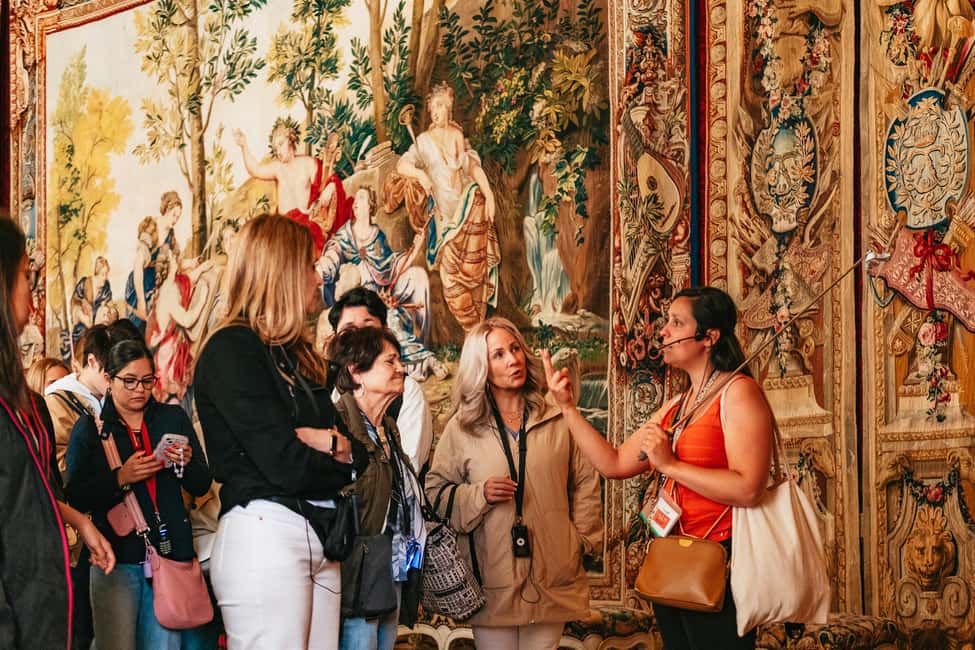
The guide is the heart of this experience. The available guides include Boris, Mila, Stephanie, and Isidora. Their approaches may vary, but the tour is built around art, architecture, anecdotes, and neighborhood history.
Boris has been praised for adjusting the walk to specific points of interest and for handling detailed questions. Mila is described as friendly and attentive to a group’s needs. Stephanie brings stories connected to the sites and relates some subjects to her own life.
Isidora has a particularly strong academic connection to the subject. She holds a doctorate in art history focused on the Marais and its cultural heritage. If her availability matches your date, that background may appeal to you if architecture and cultural history are central interests.
One useful piece of advice is to ask for a short orientation at the beginning. A map or simple explanation of the route can help you understand how Les Halles, the Pletzel, Place des Vosges, and Bastille fit together. The walk covers several themes quickly, so knowing the shape of the route helps you keep track.
The private arrangement also makes this a good choice for families, couples, or friends with different interests. You can spend more time on art, Jewish Paris, aristocratic architecture, or political history instead of following a fixed lecture.
Price, timing, and practical value
The price is $403.34 per group of up to six people. That is a substantial cost for a two-hour walk if you are alone or traveling as a pair. Split six ways, however, it becomes much more reasonable for a family or small group seeking a private guide.
The value rests on the guide rather than included admissions. There are no food or drink provisions, and the Centre Pompidou is seen from outside. You are paying for personal attention, a specialist’s interpretation, and the chance to shape the conversation.
The tour is booked, on average, 32 days ahead. That suggests you should reserve well before your Paris visit, particularly if you want a specific guide or travel during a busy period.
Wear comfortable shoes and expect steady walking for about two hours. A moderate level of physical fitness is required. The route is near public transportation, and service animals are allowed.
Confirmation is normally sent at booking. If you book within seven days of the date, confirmation may arrive within 48 hours and depends on availability. Free cancellation is available up to 24 hours before the start time. After that point, the amount paid is not refunded, and changes are not accepted.
Who should book this Le Marais walk
I would choose this tour if you want a clear introduction to Le Marais and prefer conversation over a large group presentation. It suits you especially well if architecture, art, Jewish Paris, aristocratic history, or urban change interests you.
It is also a smart first-day or early-trip activity. The route gives you a mental map of a district you can later revisit for shopping, food, museums, or a slower look at the streets.
You may want something else if you need museum admission, a food tour, or a full-day exploration. Two hours allows a satisfying overview, but it cannot provide long visits inside several sites. You should also consider the price carefully if your group has only one or two people.
Should you book it?
Book this private walk if you value a strong guide and want Le Marais explained through its buildings, communities, and political past. The best parts are the variety of the route, the art history focus, and the ability to ask for the subjects that matter most to you.
Before booking, confirm your preferred emphasis and ask for a brief route orientation at the start. If you are comfortable paying for a private experience and want context rather than simple sightseeing, this is a worthwhile way to meet Le Marais.
FAQ
How long is the Le Marais Private Walking Tour?
The tour lasts approximately two hours.
How much does the tour cost?
The price is $403.34 per group of up to six people.
Is the price charged per person?
No. The listed price is per private group, with up to six people participating.
Where does the tour begin?
The tour begins at 14 Rue de Turbigo, 75001 Paris, France.
Where does the tour end?
The tour ends at Place de la Bastille, Place de la Bastille, 75004 Paris.
Is the tour private?
Yes. Only your group participates in the activity.
Which sights are included on the route?
The route includes Les Halles, the 4th arrondissement and Hôtel-de-Ville, Centre Pompidou from the outside, Rue des Rosiers and the Pletzel, the Hôtel de Sully courtyard and garden, Place des Vosges, and Place de la Bastille.
Is admission to Centre Pompidou included?
No. The Centre Pompidou is discussed and viewed from outside. Museum admission is not included.
Are food and drinks included?
No. Food and drinks are not included in the tour price.
What level of fitness is required?
A moderate level of physical fitness is recommended because the experience is a walking tour lasting about two hours.
Are service animals allowed?
Yes. Service animals are allowed.
Is the tour near public transportation?
Yes. The experience is located near public transportation.
When will I receive confirmation?
Confirmation is normally received at the time of booking. If you book within seven days of travel, confirmation is sent within 48 hours, subject to availability.
Can I cancel for a refund?
Yes. You can cancel up to 24 hours before the experience begins for a full refund. Cancellations or changes made less than 24 hours before the start time are not accepted for a refund.