REVIEW · PARIS
Paris Behind the Scenes Macaron Baking Class
Book on Viator →Operated by ExperienceFirst · Bookable on Viator
Macarons are small, but the lesson is big. This Paris behind-the-scenes class at Chez Manon has you mixing, piping, and baking macarons with a professional patissier, plus learning the treat’s story as you go. I especially like how the class stays hands-on and unhurried in a small group size, and how instructors like Jess and Pierre explain the process clearly enough that even non-bakers can feel confident.
For a lot of people, the best part is leaving with a box of your own macarons and a guided tasting while it’s all still fresh. One possible drawback: you can customize flavors and colors, but you’re still working from a set recipe, so you can’t count on swapping in whatever filling you want.
At Chez Manon on Rue de Bretagne, the experience is built around practical steps: mixing the batter, piping consistent shells, and baking them properly. I also like the “story while you work” approach—so you’re not just doing cookie tasks, you’re understanding why macarons behave the way they do. The small group setup means more chances to ask questions and get fixes early, before things go wrong.
One consideration to keep in mind is planning around the fixed structure of the session: the macarons use both dairy and almond powder, and the bakery doesn’t allow ingredient substitutions beyond the options in the class. If you have very specific flavor requests, or dietary rules that go beyond what’s stated, read closely and ask ahead if anything’s unclear.
In This Review
- Key things I’d circle before you book
- Chez Manon on Rue de Bretagne: the setting and timing that matter
- Meet the patissier and learn macarons in clear, doable steps
- What you actually make: shells, fillings, and the flavor choices you get
- The tasting moment: why it’s more than a snack
- Gluten-free in name, not in the building: plan for allergies carefully
- Price and value: what $120.48 buys in real terms
- Who should do this macaron class (and who might not)
- A practical heads-up: limited substitutions and occasional cancellation risk
- Should you book this macaron baking class at Chez Manon?
- FAQ
- How long is the Paris Behind the Scenes Macaron Baking Class?
- How many people are in the group?
- Where is the meeting point?
- Is the class offered in English?
- Do I get to take macarons home?
- Can children join the class?
- Are the macarons gluten-free?
Key things I’d circle before you book

- Small group (max 8) keeps the instructor close and Q&A realistic.
- Hands-on baking means you’ll mix, pipe, and bake your own macarons.
- Customize flavors and colors within a set recipe—fun, but not unlimited choice.
- Guided tasting plus refreshments so you learn what “right” looks and tastes like.
- Take-home box of personalized macarons makes the class feel like more than a demo.
Chez Manon on Rue de Bretagne: the setting and timing that matter

You meet at Chez Manon, 25 Rue de Bretagne in Paris 75003. It’s a central spot where you’ll likely find public transport options nearby, which is helpful since this class is short and starts on time. This is not a “drop in whenever” experience—plan to arrive about 15 minutes early because the session begins promptly and late arrivals may miss out.
The class runs about 2 hours, which is a sweet length for a hands-on food activity. You get enough time to actually work through the key steps, but it doesn’t drag into an all-day commitment. And because the group max is 8 travelers, you’re not stuck waiting your turn while the instructor handles everyone else first.
You’ll also want to be ready for a standing-required experience. The info says you need to be able to stand for an extended period of time, so if that’s a challenge, plan ahead.
You can also read our reviews of more cooking classes in Paris
Meet the patissier and learn macarons in clear, doable steps
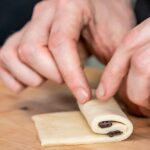
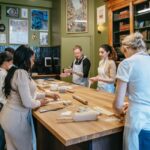
The core of this tour is simple: you learn macaron technique from a local pâtisserie expert. In practice, that means you’re not just watching from the sidelines. You’re following professional guidance while you mix, pipe, and bake macarons, with the chance to ask questions along the way.
From what you’ll experience in the room, two things drive the success: tight instruction and repeated practice. In a small group, the instructor can spot common issues early—like batter consistency and piping control—before you’re too far down the line.
I also like that this isn’t taught like a lab lecture. People in the instructor roles, including Jess and Pierre, are described as welcoming, patient, and able to make the steps easy to follow. That matters because macarons can feel intimidating from a distance. Up close, with a teacher next to you, it becomes a sequence of tasks you can actually manage.
During the class, you’ll hear the story behind this iconic Paris treat. The history isn’t tacked on as a lecture segment; it’s woven into the workflow. That structure is useful because it keeps your attention on both the how and the why.
What you actually make: shells, fillings, and the flavor choices you get

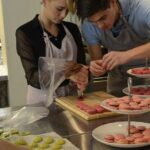
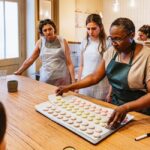
This is a true hands-on baking session. You’ll work your way through the key moments that define macarons: mixing the batter, piping the shells, and baking them. The class also includes customizing flavors and colors to your liking—so it doesn’t feel like you’re producing the exact same cookie as everyone else.
At the same time, you need to understand the boundary: the class follows a set recipe. That means you can’t make ingredient swaps or request totally different fillings beyond what the class offers. One useful detail is that the ganache options aren’t infinitely flexible—so if you’re hoping for a specific type of chocolate or filling, the session may not accommodate it.
You also should plan for the ingredient reality. The macarons use dairy and almond powder. And while they are described as gluten-free, the bakery itself is not a gluten-free facility (more on that below). So if you’re sensitive or managing strict dietary needs, don’t assume this is a controlled-allergen environment.
The payoff is that you don’t just sample a finished product. You build your own batch, learn the process, and then get a final box to take home. That box is personalized—so even if the shells aren’t identical, the result feels like your work, not a souvenir platter.
The tasting moment: why it’s more than a snack

The experience wraps up with a guided macaron tasting and refreshments. This part is surprisingly important, because it turns the class from making food into learning how to judge it.
In a good macaron, the texture and look are specific. You’ll get a chance to taste what you made and compare it to what the instructor expects. That makes you better at judging future macarons—whether you’re buying them later in Paris or trying your luck at home.
The guided tasting also helps with confidence. If your shells browned differently or your piping wasn’t perfectly uniform, you’ll still leave knowing what to aim for next time. And because the class includes a take-home box, you can keep tasting and reflecting once you’re back in your own kitchen.
Gluten-free in name, not in the building: plan for allergies carefully

Here’s the part I’d read twice. The info states the macarons are gluten-free, but the bakery is not gluten-free and uses wheat in other products. In other words: you can’t treat this as a fully gluten-free facility.
If you’re gluten-free for lifestyle reasons, you may be comfortable with that risk level. If you’re managing a serious medical sensitivity, you should think carefully. Almond powder and dairy are part of the recipe, and the bakery’s broader use of wheat means cross-contact could be possible.
Also note: the class offers no substitutions. So if you’re hoping the instructor can adjust ingredients to meet a strict restriction, the answer is likely no. This doesn’t mean the class is useless—it means you should go in with accurate expectations and decide based on your own risk tolerance.
A few more Paris tours and experiences worth a look




Price and value: what $120.48 buys in real terms

At $120.48 per person for about two hours, this isn’t a bargain-basement food activity. But it also isn’t a short demo where you leave without a result.
You’re paying for several things that add up:
- A professional patissier guiding your hands during mixing, piping, and baking
- A small group experience (max 8), which matters when instruction is personal
- A tasting session plus refreshments
- A box of personalized macarons to take home
If you compare it to buying a nice box of macarons in Paris, the price is in the same conversation—but this is different. You’re not just consuming. You’re getting a repeatable recipe concept and practical technique you can use later.
That’s why I think this class is good value for the right person. If you love cooking, food science, or learning by doing, the cost becomes more reasonable. If you mostly want to eat and don’t care about technique, you might feel like you paid for an activity you didn’t fully use.
Who should do this macaron class (and who might not)

This class fits best for people who want a fun, creative food project with expert coaching.
It’s described as kid friendly. Families can make a solid trip out of it because it’s interactive, and the small group structure helps kids stay engaged. There’s also a clear rule: children are allowed but must be accompanied by an adult. Kids under age 5 can join for free, but they won’t be able to participate in the hands-on baking due to safety concerns.
It also works well for teens. One example from the experience is that a teen and a parent found it memorable and manageable even without advanced baking skills.
Where it might not fit:
- If you can’t stand for an extended period
- If you need strict ingredient substitutions
- If you have medical-level dietary requirements beyond what’s explicitly stated (gluten-free macarons, but not a gluten-free bakery)
A practical heads-up: limited substitutions and occasional cancellation risk

Two things are worth planning around.
First, the class uses a set recipe. You can customize flavors and colors, but you can’t assume you’ll get every flavor combination you might imagine. If you’re traveling with very specific preferences, mentally switch from wish-list thinking to “choose from what’s offered.”
Second, there’s a rare but real scheduling risk. One account described a class canceled on the day and a late notice after the person had already arrived. The standard process should be to notify people in advance, and the company’s response stated that they can help when this happens. Still, if you’re in Paris on a tight schedule with no backup plan, consider building some flexibility into your day.
Should you book this macaron baking class at Chez Manon?
If you want a hands-on Paris food experience that leaves you with something edible you made yourself, this is a strong pick. I especially like that instruction is built for small groups and that the class combines technique with tasting, so you walk away understanding what works.
Book it if:
- You like baking or want to learn by doing
- You’re traveling with family or teens
- You want a take-home box that’s more personal than a store-bought souvenir
- You can stand comfortably for the session length
Skip or reconsider if:
- You need guaranteed ingredient substitutions
- You have serious gluten-related medical needs and need a fully gluten-free facility
- You’re looking for a quick eat-and-go activity rather than a lesson
If you book, arrive early, keep your expectations aligned with the set recipe, and treat the tasting as part of the learning—not just the finale.
FAQ
How long is the Paris Behind the Scenes Macaron Baking Class?
The class runs about 2 hours (approx.).
How many people are in the group?
This experience has a maximum of 8 travelers.
Where is the meeting point?
You meet at Chez Manon, 25 Rue de Bretagne, 75003 Paris, France. The activity ends back at the meeting point.
Is the class offered in English?
Yes, the class is offered in English.
Do I get to take macarons home?
Yes. You’ll receive a box of your personalized macarons to take home, plus a guided tasting and refreshments during the experience.
Can children join the class?
Children are allowed but must be accompanied by an adult. Kids under age 5 can join for free, but they won’t be able to participate in the hands-on baking due to safety concerns.
Are the macarons gluten-free?
The macarons are gluten-free, but the bakery is not a gluten-free facility and uses wheat in other products.