REVIEW · BAYEUX
Half Day Omaha Beach & Pointe du Hoc DDay Tour from Bayeux
Book on Viator →Operated by Destination Normandy - Dominique Fiquet · Bookable on Viator
Pointe du Hoc gives you the clearest sense of the physical danger faced on D-Day. You walk among the enormous bomb craters and broken German positions where American Rangers scaled 100-foot cliffs under fire. I like that this tour then connects that dramatic site with Omaha Beach and the graves at Colleville-sur-Mer, giving you both the battlefield and its human cost.
I also like the private format. Your group of up to eight travels with a guide rather than following a large crowd, and you can request which Omaha Beach stop suits you best. Guide Yves is especially strong at making the past understandable, using maps, photographs, and relics while encouraging questions. The drawback is the firm four-hour limit: you get the essential American D-Day sites, but not Utah Beach, Sainte-Mère-Église, or the German battery at Longues-sur-Mer.
In This Review
- Key points
- Why this four-hour route works from Bayeux
- Pointe du Hoc and the 100-foot climb
- Omaha Beach from three possible viewpoints
- Colleville-sur-Mer and the American Cemetery
- Yves and the value of a private guide
- Is $1,012.70 good value for a group?
- Pickup, timing, and practical limits
- Who should choose this D-Day tour?
- Should you book it?
- FAQ
- Where does the tour begin?
- How long does the tour last?
- Which sites are included?
- How much time is planned at Pointe du Hoc?
- How many Omaha Beach stops are included?
- Can I request a specific Omaha Beach stop?
- How much time is planned at the American Cemetery?
- What is included in the price?
- How many people can join the private tour?
Key points
- Pointe du Hoc comes first: Spend about 80 minutes on the cliff-top battlefield, monument, and cratered ground.
- Omaha Beach is flexible: You may stop at Vierville-sur-Mer, Saint-Laurent-sur-Mer, or Colleville-sur-Mer, with one or two beach visits depending on conditions.
- The cemetery gives the tour its emotional weight: Allow about 90 minutes at the American Cemetery in Colleville-sur-Mer.
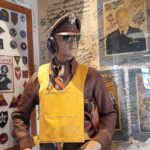
- Yves brings visual aids: Maps, photographs, and relics help turn military movements into a story you can follow.
- Private transport keeps the morning or afternoon simple: Pickup is offered from your Bayeux hotel, B&B, or another location in the Bayeux area.
- The cost works best for a small group: At $1,012.70 per group of up to eight, the price becomes more reasonable when shared by several people.
Why this four-hour route works from Bayeux
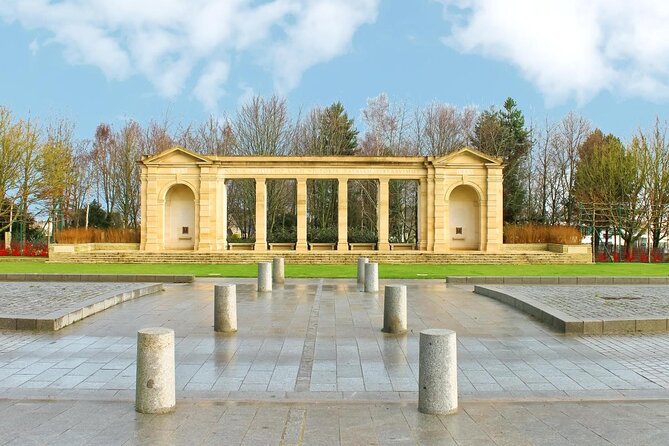
This is a tightly focused American D-Day tour. In roughly four hours, you visit three places that tell different parts of the June 6, 1944 story: the assault on the cliffs at Pointe du Hoc, the deadly landings at Omaha Beach, and the long list of names and graves at the American Cemetery.
The order makes sense. Pointe du Hoc gives you the military problem first. Omaha shows how exposed the infantry was at sea level. The cemetery slows the pace and lets the scale of the losses sink in.
The stated stop times add up to about three hours and 50 minutes: 80 minutes at Pointe du Hoc, one hour at Omaha Beach, and 90 minutes at the cemetery. The remaining minutes allow for driving and transitions, so this is not a tour with much spare time. I would treat it as a clear introduction rather than a complete study of the Normandy campaign.
Because the tour is private, you do not have to match your interests to a busload of strangers. If your group wants more time for questions at Pointe du Hoc, or a quieter visit at the cemetery, you can speak directly with the guide. The schedule still has limits, but the format is more personal than a large organized excursion.
You can also read our reviews of more tours and experiences in Bayeux.
Pointe du Hoc and the 100-foot climb
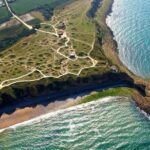
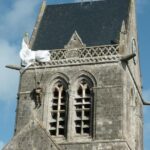
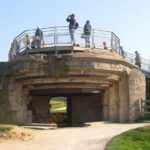
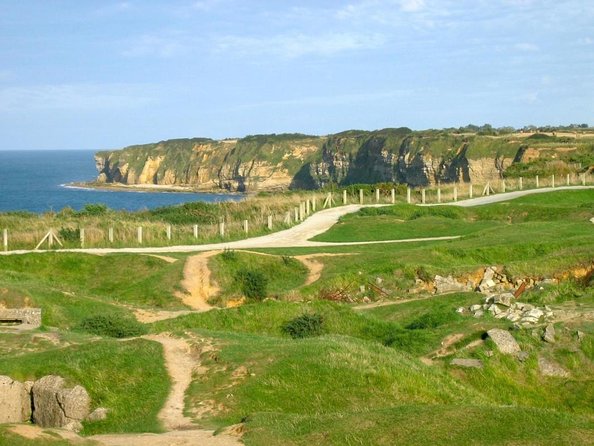
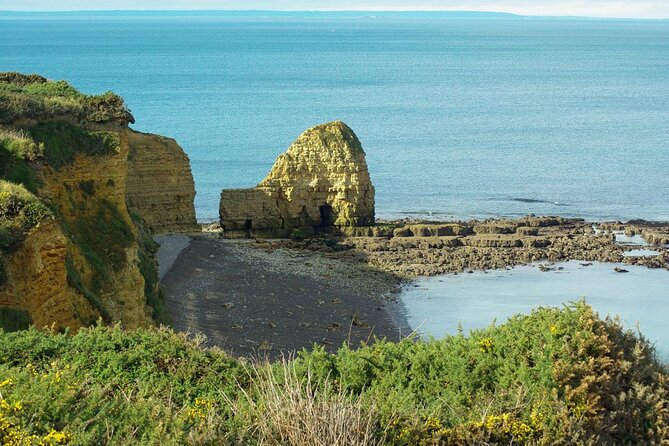
Pointe du Hoc is the most visually dramatic stop. The site sits on a cliff about eight miles west of the American Cemetery and looks over the stretch of coast connected with Omaha Beach. The monument honors the men of the American Second Ranger Battalion commanded by Lieutenant Colonel James E. Rudder.
The Rangers had to scale cliffs roughly 100 feet high to reach German artillery positions. Those guns could have fired on American troops landing at Omaha and Utah beaches. The Rangers captured the position, then held it against German counterattacks at a high cost in lives.
You do not need a military background to grasp the challenge here. The steep cliffs, open ground, and bomb craters make the setting itself part of the explanation. Yves can use maps and photographs to show how the assault fitted into the larger operation, while the ground beneath your feet makes the scale more immediate.
Plan on walking over uneven ground and standing outside for much of this stop. The tour requires a moderate level of physical fitness, and that matters most here. The time is generous enough to look around, listen, and ask questions, but you should wear sensible shoes and be prepared for exposed conditions.
Pointe du Hoc is also a place where a guide adds real value. Without context, you might see a monument and a field of craters. With a clear explanation, you can understand why this position mattered and why the Rangers were sent there despite the obvious danger.
Omaha Beach from three possible viewpoints
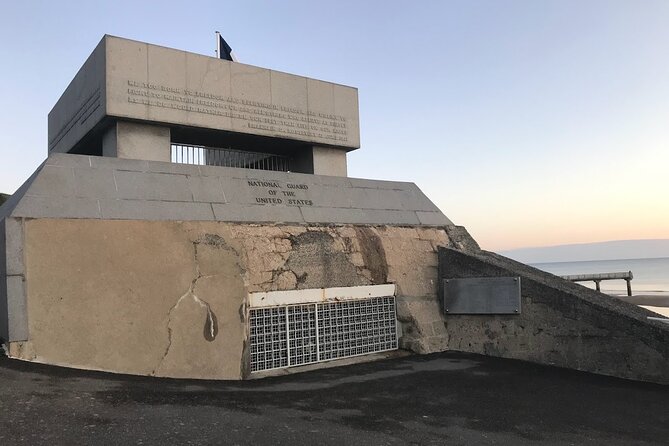
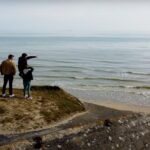
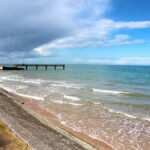
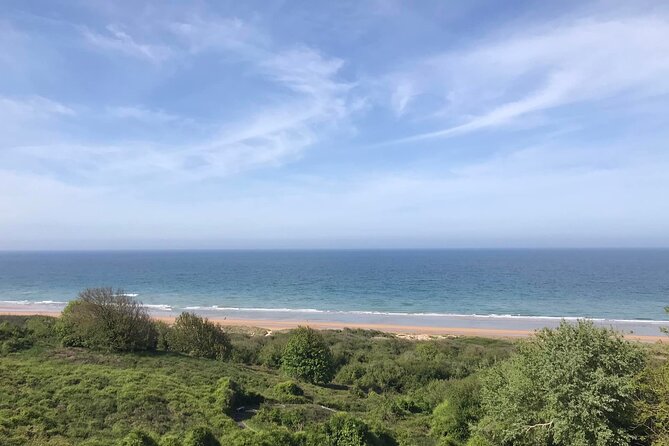
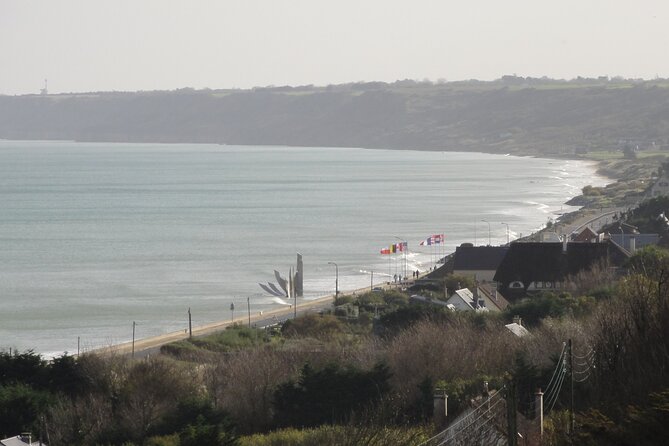
Omaha Beach is the part of the tour that most directly confronts the difficulty of the landings. The beaches were a trap for soldiers of the American 1st and 29th Infantry Divisions. The wide shore and the cliffs beyond it can look calm now, which makes the events of June 6 especially hard to picture without help.
You will have one or two stops along Omaha Beach. The possible locations are Vierville-sur-Mer, Saint-Laurent-sur-Mer, or Colleville-sur-Mer. The exact choice depends on circumstances, and you can send a message before the tour if you have a preference.
That flexibility is useful. If one part of the beach matters to you because of family history, a particular unit, or your interest in the opening assault, tell the provider in advance. The tour does not promise every Omaha location, so a request is best understood as a preference, not a guarantee.
Expect about an hour at the beach. That is enough to hear the basic story, take in the shore, and ask questions, but it is not enough for a long walk across several sections. The beach is broad, and the experience changes depending on where you stop. Your guide can help connect the physical setting with the movements of the divisions that landed there.
I like having Omaha in the middle of the route. After the steep military story at Pointe du Hoc, the beach shows the problem from the viewpoint of troops coming ashore. You then have the cemetery ahead, where names and graves replace battlefield positions.
Colleville-sur-Mer and the American Cemetery
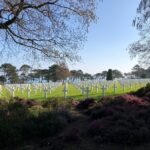
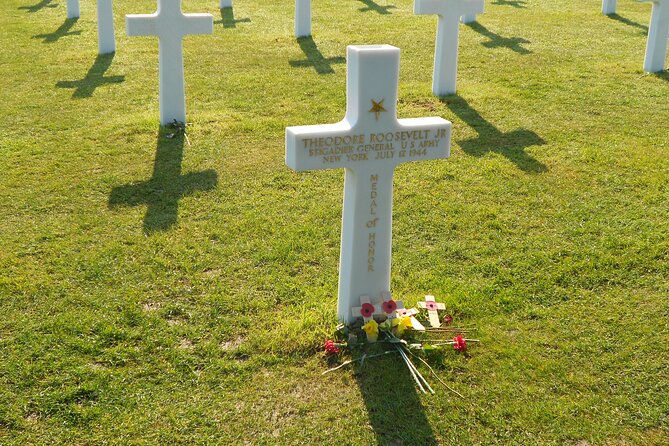
The American Cemetery is the quietest and most solemn part of the tour. Its grounds cover 172.5 acres at the end of a half-mile access road, and the site contains the graves of more than 9,380 American military dead. Most died during the D-Day landings and the operations that followed.
The cemetery also has a semicircular garden with the Walls of the Missing. There, 1,557 names are inscribed. These figures are not just background facts. They explain why the visit feels different from a stop at a fortification or beach. The battlefield shows what happened. The cemetery shows what it cost.
The allotted 90 minutes is the longest stop, and that is appropriate. You have time to walk through the grounds, see the memorial areas, and listen without rushing from one photo stop to the next. I would resist treating this as a quick final attraction. Give it the full time if you can.
A private guide can be helpful here, but the tone should remain respectful. Yves is described as personable and engaging, with a genuine interest in World War II. His approach includes questions and conversation, which suits people who want to understand rather than simply receive a stream of dates.
The cemetery is also the tour’s best point for reflection. After hearing about artillery, cliffs, and infantry divisions, you encounter individual names. That change in scale is what makes the half-day route feel complete even though it covers only a small part of Normandy.
Yves and the value of a private guide
The guide can make or break a history tour, especially when the sites themselves are open outdoor spaces rather than museums filled with labels. Yves receives the strongest praise in the supplied feedback, and the details are useful: he uses maps, photographs, and relics, keeps the conversation open, and explains the subject with clear personal enthusiasm.
That combination should appeal to you if you like asking why events unfolded as they did. You can raise questions about the Rangers, the beach landings, or the cemetery rather than waiting for a standard script to finish. Yves is also described as friendly and good at keeping a group engaged, which matters during a long history explanation.
His enthusiasm is a plus, but it also means this tour is best for people who want history at the center of the outing. If you only want scenic views and a few quick photographs, a private guide may be more than you need. The subject is serious, and the experience asks for attention.
The private setup allows up to eight people from your own group to participate. That makes the price easier to justify for a family or group of friends, particularly if several people are already planning a Bayeux base. You are paying for the vehicle, guide, and direct access to a focused route rather than for an inexpensive shared transfer.

Is $1,012.70 good value for a group?
The listed cost is $1,012.70 per group of up to eight people. That works out to about $126.59 per person if eight people share the full price. For four people, the equivalent is about $253.18 each, so group size makes a major difference.
The fee includes private transportation, an air-conditioned vehicle, bottled water, and a private guide. Admission to the three listed stops is free, so the price is mainly for the guide’s time, transport, planning, and the convenience of a private pickup.
I see the strongest value for a group of six to eight people staying in Bayeux. You avoid arranging your own route and have someone explain the sites as you go. The value is less obvious for one or two people, especially if you are comfortable driving and reading about the battle on your own.
Still, self-guided touring has limits. Pointe du Hoc and Omaha Beach do not explain themselves in full, and the cemetery’s scale can be hard to interpret without historical context. If your priority is understanding what you are seeing, the private format earns more of its cost.
The four-hour length also helps keep the price and physical demand under control. You are not committing to an entire day of military sites. The tradeoff is that you must accept a selective route, with no room for several extra stops.
Pickup, timing, and practical limits
Pickup is offered from your hotel, B&B, or another location in the Bayeux area. If your address does not appear on the booking map, you can send a message to arrange the details. That is useful when you are staying outside the most obvious hotel zone.
The vehicle is air-conditioned, and bottled water is included. Those are small details, but outdoor sites and summer conditions can make them welcome. The tour is offered in English.
You should plan for walking and outdoor time. The moderate physical fitness requirement is especially relevant at Pointe du Hoc, where the terrain is uneven and the cliffs are central to the story. The information provided does not promise wheelchair access or a specific level of mobility assistance, so ask before booking if that is important for your group.
The tour is non-refundable and cannot be changed for any reason. That is the biggest booking risk. Only reserve once your Bayeux plans are firm, and check your pickup details carefully.
The experience is confirmed at booking, and only your group participates. You should still send your Omaha Beach preference ahead of time if Vierville-sur-Mer, Saint-Laurent-sur-Mer, or Colleville-sur-Mer matters to you.
Who should choose this D-Day tour?
I would choose this tour if you have one half-day in Bayeux and want the main American sites explained by a dedicated guide. It is particularly suitable for families, small groups, and anyone who wants to ask questions without feeling lost in a large tour party.
It also works well for first-time visitors who want a strong foundation before visiting other Normandy sites. Pointe du Hoc, Omaha Beach, and the American Cemetery give you three distinct ways to understand the invasion.
You may want a longer or different tour if you want to see Utah Beach, Sainte-Mère-Église, British and Canadian sectors, or additional German defenses. This route does not attempt to cover all of Normandy, and its value comes from focus.
I would also think twice if your group dislikes solemn sites or prefers a relaxed sightseeing outing. The cemetery is a serious place, and the subject is the human cost of war. That is not a flaw, but it is central to the experience.
Should you book it?
Book this tour if you want an efficient, private introduction to the American D-Day story and can share the cost with a small group. Yves brings maps, photographs, relics, and an inviting way of explaining the sites, while the route moves from military action at Pointe du Hoc to the losses recorded at Colleville-sur-Mer.
Skip it if you need a lower per-person price, a full-day Normandy program, or a flexible cancellation policy. For a group of up to eight with limited time in Bayeux, though, this is a focused and emotionally weighty way to visit the places where the invasion took shape.
FAQ
Where does the tour begin?
Pickup is offered from your hotel, B&B, or another location in the Bayeux area. If your location is not shown on the map, you can send a message to the provider.
How long does the tour last?
The tour lasts approximately four hours.
Which sites are included?
The tour includes Pointe du Hoc, Omaha Beach, and the American Cemetery at Colleville-sur-Mer.
How much time is planned at Pointe du Hoc?
You spend about one hour and 20 minutes at Pointe du Hoc.
How many Omaha Beach stops are included?
The tour includes one or two stops at Omaha Beach. The stop may be in Vierville-sur-Mer, Saint-Laurent-sur-Mer, or Colleville-sur-Mer, depending on circumstances.
Can I request a specific Omaha Beach stop?
Yes. You can send a message before the tour if you have a preference for the Omaha Beach location.
How much time is planned at the American Cemetery?
You spend about one hour and 30 minutes at the American Cemetery in Colleville-sur-Mer.
What is included in the price?
The price includes private transportation, an air-conditioned vehicle, bottled water, and a private tour guide.
How many people can join the private tour?
The price covers a group of up to eight people, and only your group participates.