REVIEW · DIJON
Dijon City Tour : Highlights Tour with Gourmet Break
Book on GetYourGuide →Operated by ACTIVE TOURS / BOURGOGNE EVASION · Bookable on GetYourGuide
One street turn and Dijon feels medieval again. This guided bike tour threads you through the historic center with Dukes of Burgundy storytelling, then caps it with a gourmet break that actually tastes like the city.
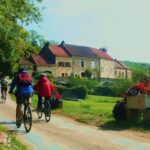
I love how the ride stays friendly: about 10 km on easy, flat terrain with a guide who keeps you moving safely through real streets. I also like the pacing—big landmarks like Place Darcy and Place de la Libération, plus the mysterious Owl, are mixed with a relaxed stop by Lake Kir.
One possible drawback: it runs rain or shine, and you need to know how to ride a bicycle already. Also, because it’s small-group style, if two groups get merged in practice, the vibe can feel a bit less personal than you expect.
In This Review
- Key Highlights You’ll Care About
- Getting Started at 78 Rue Monge and Choosing the Right Setup
- Why This Ride Feels Smooth: Flat Route, Real Streets, Safe Guidance
- Place Darcy and Place de la Libération: Dijon’s Public Rooms
- The Owl: How to Learn Dijon Without a Guidebook Fight
- Private Mansions and Medieval Power: Reading the City as You Ride
- Lake Kir: That Shared Drink Moment That Breaks Up the History
- The Burgundy Canal: A Different Angle on Dijon’s Space
- The Gourmet Break: Dijon Nonette and a Local Beverage
- Price and Value: Is $66 Worth 2.5 Hours?
- Who Should Book This Dijon City Tour (and Who Might Want Another Option)
- Should You Book It? My Practical Recommendation
- FAQ
- How long is the Dijon city bike tour with gourmet break?
- Where does the tour start and end?
- How far will we ride?
- What’s included in the price?
- What languages are offered?
- Does the tour run in bad weather?
- Do I need to know how to ride a bicycle?
- What should I bring?
Key Highlights You’ll Care About

- Kir Lake drink stop: a shared drink moment built into the route
- Duke-era storytelling: the city’s power history comes alive while you ride
- The mysterious Owl: you’ll learn what it means and why it matters here
- Easy 10 km loop: flat terrain for all ages and skill levels, as long as you can bike
- Guides who handle questions: multiple guides focus on answering you on the spot
- Dijon nonette gourmet pause: the sweet ending is part of the “value” of the tour
Getting Started at 78 Rue Monge and Choosing the Right Setup

The tour begins at 78 Rue Monge, a simple, easy-to-find starting point in Dijon. You’ll be on a bike (and you’ll get a helmet), so you’re not juggling rentals or gear before you even get moving. That matters because Dijon’s historic center is the kind of place where you don’t want to waste the first hour figuring out logistics.
Before you go, plan on dressing for cycling weather. The tour is designed for real movement—comfortable shoes, sunglasses, sunscreen, and water are the smart combo. Skip sandals or flip-flops. If you show up in those, the tour stops being fun fast, because your feet will feel every effort.
One practical note I’d take seriously: you ride rain or shine. So if you’re the type who thinks rain is a reason to cancel, this isn’t that kind of activity. Bring gear appropriate to the day—light layers help, and you’ll appreciate having water even if the sky looks questionable.
You can also read our reviews of more city tours in Dijon


Why This Ride Feels Smooth: Flat Route, Real Streets, Safe Guidance

This is a 2.5-hour guided bike tour covering about 10 km. That distance isn’t about endurance; it’s about giving you enough time to actually see Dijon without rushing. Because the terrain is easy and flat, it’s a strong fit if you’re confident on a bike but not interested in a workout.
What makes the ride feel comfortable is the way the guide manages street time. In particular, you’ll get navigation through the historic center plus explanations of bike road rules along the way. That’s not just safety talk for safety talk’s sake—it helps you understand how to behave on streets you might not otherwise feel sure about.
The experience is also built for small groups, limited to 10 participants. That size is ideal for getting answers when you’re curious. A guide can actually notice if you missed something, and you can ask questions without feeling like you’re interrupting a parade.
If you’re sensitive to distraction, keep in mind one caution that came up: there can be moments where a guide has to handle operational issues (like calls) during the tour. In the moment, that may slightly reduce the flow. Still, most of the experience is designed to keep you moving and informed, and the best part is how often guides engage and respond.
Place Darcy and Place de la Libération: Dijon’s Public Rooms

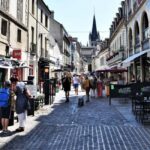
Early on, you’ll work your way through iconic squares such as Place Darcy and Place de la Libération. I like this part because it gives your brain a reference point. Before you hit the smaller lanes and quieter corners, you see the city’s more public-facing spaces, which helps you understand where everything sits.
The guide isn’t just naming spots. They’re connecting those locations to the bigger story—how Dijon functioned and how the Dukes of Burgundy shaped its identity. When you understand that, a city stops being a set of photos and becomes a place with momentum.
What’s valuable here is the order. You get context early, then the historic details later land better. If you’re the type who likes history but hates lectures, this approach works because it’s delivered while you’re riding past the real visual cues.
The Owl: How to Learn Dijon Without a Guidebook Fight

Then comes the star of the show in a different way: the mysterious Owl and the secrets tied to the Duke’s city. This is the kind of stop that makes you feel like you discovered something rather than just got a fact.
Even if you’re not a “symbol person,” you’ll enjoy the way the guide explains the Owl’s significance in local storytelling. It’s not treated like a random curiosity. It’s presented as a clue—part of how Dijon signals its medieval personality and political identity.
A good guide makes you look closer. You’ll start noticing details you would normally skate past on foot: shapes, themes, and patterns that connect the city’s past to what you see today. That’s one of the tour’s biggest strengths: it trains your eyes for the whole city, not just the one stop.
Private Mansions and Medieval Power: Reading the City as You Ride

As you continue, you’ll pass Dijon’s private mansions and other historic spots. I like this part because private homes tell you something public monuments don’t: power shows up in how people built, lived, and displayed status.
The tour’s medieval framing does the heavy lifting here. You’re “transported back” to the era of the Dukes of Burgundy, not through theatrical silliness, but through guided narration that helps you interpret what you’re seeing. When you move through the neighborhood lanes on a bike, the scale feels different than it does on a walking tour. The city reads fast, but in a useful way.
If you enjoy asking questions, this is where your curiosity pays off. Multiple guides on this tour style themselves as active conversation partners. One guide, Batist, stood out for answering questions and guiding safely through streets with clear bike road rule explanations. Another, Mathieu, was praised for bringing fresh views and staying entertaining while fielding questions. Even if your guide isn’t one of these names, it’s a good sign that the role is taken seriously.


Lake Kir: That Shared Drink Moment That Breaks Up the History

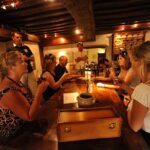
Eventually, you hit Lake Kir, and this is where the tour changes gear. The highlight here isn’t just the scenery; it’s the human pause—sharing a drink on the Kir Lake. For me, this kind of stop is more than “a perk.” It gives your day rhythm.
After you’ve been absorbing medieval stories and city details, you need a reset. A drink stop does that in a way that doesn’t feel like you’re leaving the experience. You’re still in the same tour flow; you’re just letting your brain breathe.
One of the practical wins of cycling tours is that a calm stop is easier than it sounds—you’ve already built the day around movement, so sitting for a bit doesn’t feel like wasted time. It feels like part of the plan.
The Burgundy Canal: A Different Angle on Dijon’s Space

From Lake Kir, you’ll also see the Burgundy Canal as part of the route. This is a helpful contrast point. Historic centers can blur together visually. A canal gives you a sense of the city’s layout and how Dijon opens out beyond the densest old streets.
Even without getting into deep technical explanations, the canal section helps you “map” the city mentally. Once you’ve seen the canal in motion—rather than from a single viewpoint—you’ll have an easier time returning later on your own.
If you like photos, this is also the section where your camera will do work. If you don’t, it still serves as a palate cleanser between the most story-heavy parts of the tour.
The Gourmet Break: Dijon Nonette and a Local Beverage

All the work gets rewarded with a gourmet break at the end. This is one of the easiest reasons to pick this tour over a pure sightseeing option.
You’ll savor the famous Dijon nonette, paired with its renowned local beverage. Even if you’re not a dessert person, the nonette is the kind of local specialty that makes the tour feel like you actually ate Dijon, not just looked at it.
What I like about ending with food is that it seals the experience. While you’re walking around later, you’ll remember the stories more clearly because you associate them with a satisfying moment, not just information.
One caution: taste preferences vary. The tour’s finale is built around this specific local sweet. If you can’t eat dessert or have dietary needs, you should consider whether this structure fits you. The tour data confirms the nonette and beverage are part of the included gourmet pause.
Price and Value: Is $66 Worth 2.5 Hours?

At $66 per person for about 150 minutes, you’re paying for more than a guide with a script. You get a bike, helmet, a live guide, and the gourmet break. That’s a solid value bundle for a short, high-impact format.
Here’s the key way I’d think about it: you’re buying time-saving + local navigation + a built-in tasting moment. You don’t have to line up bike rental, plan a route, and then figure out where to go for a local specialty at the end. In Dijon, that kind of structure is worth something.
The small group cap (limited to 10) also matters. It keeps the tour interactive enough that you can ask questions and get specific answers rather than just hearing a broadcast.
The only real value-risk is the one operational consideration mentioned earlier: if tours combine and a guide is dealing with things like calls, the flow can feel less tight and a few stops might feel packed. Still, the overall design—easy ride, major sights, Owl/Duke focus, Lake Kir drink, and Dijon nonette—remains the same.
Who Should Book This Dijon City Tour (and Who Might Want Another Option)
This tour fits best if you:
- want to see Dijon’s historic core without spending hours planning your own cycling route
- like history stories that are delivered while moving through real streets
- enjoy local food as part of the experience, not as an afterthought
- want a gentle cycling challenge: easy and flat, around 10 km
It might be less ideal if:
- you don’t ride bikes confidently already (the tour requires you to know)
- you strongly dislike being outdoors in rain (it runs rain or shine)
- you prefer a purely silent, no-stops sightseeing style (because the drink and gourmet pause are built in)
If you’re traveling with kids or multigenerational group members, the all-skill-levels-on-flat-terrain approach can work well. The best scenario is a group that’s comfortable on bikes but wants the guide to handle route and storytelling.
Should You Book It? My Practical Recommendation
Yes, I think you should book this tour if you want a quick but meaningful first look at Dijon. The combination of Duke-era storytelling, the Owl mystery, a scenic break at Lake Kir, and the included Dijon nonette gives you a complete arc: see, understand, and taste.
Book it especially if:
- it’s your first day in Dijon and you want to get oriented fast
- you like asking questions and expect your guide to respond
- you’re after an experience that feels local, not just checklist tourism
I’d only hesitate if your group can’t handle cycling, or if rain-on-rails would ruin your day. Otherwise, this is a smart value for 2.5 hours of guided context plus an actual Dijon payoff at the end.
FAQ
How long is the Dijon city bike tour with gourmet break?
The tour lasts 150 minutes, or about 2.5 hours.
Where does the tour start and end?
The meeting point is at 78 rue Monge in Dijon, and you return there at the end.
How far will we ride?
You’ll cover approximately 10 km on easy and flat terrain.
What’s included in the price?
The tour includes a bike, a helmet, a live guide, and a gourmet break (Dijon nonette with its renowned local beverage).
What languages are offered?
The live guide speaks French, English, and Spanish.
Does the tour run in bad weather?
Yes. The tour takes place rain or shine.
Do I need to know how to ride a bicycle?
Yes. All participants must know how to ride a bicycle.
What should I bring?
Bring comfortable shoes, sunglasses, sunscreen, and water. You’ll also want cycling-appropriate clothing for the weather.