REVIEW · SETE
Sète by Miniboat Guided Ecotour
Book on Viator →Operated by MINI BOAT Sète · Bookable on Viator
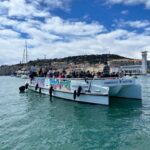
Sète’s canals are made for a slow, close-up tour, and this one lets you pilot your own miniboat instead of sitting back on a larger sightseeing vessel. You move quietly along the Royal Canal, past working fishing boats, the fish market, St Louis Mole, and the Consular Palace while a guide explains how the city grew around the sea.
I like two things right away: the boats are silent and carbon-free, and the group limit of five keeps the outing personal. You also get the fun of learning to steer, which gives this short tour more purpose than a simple canal ride. The main drawback is time. At about 40 minutes, it offers a lively introduction rather than a full tour of Sète.
In This Review
- Key points to know before booking
- Why a miniboat is a good way to see Sète
- Starting at Pont de la Civette
- Steering along the Royal Canal
- Seeing the fishing port and La Criée
- Learning about St Louis Mole
- Passing the Consular Palace
- What the 40-minute length means
- Is $58.15 per person good value?
- Who will enjoy this canal tour most?
- Timing, weather, and cancellation details
- My advice on booking this Sète experience
- FAQ
- Where does the Sète by Miniboat Guided Ecotour start?
- Where does the activity end?
- How long does the miniboat tour last?
- How many people can join the tour?
- Do I drive the boat?
- Does the tour leave the canals of Sète?
- What sights are included along the route?
- Is the tour carbon-free?
- Is public transportation available near the meeting point?
- What happens if bad weather cancels the tour?
Key points to know before booking
- You take the controls: The experience is built around learning to steer your own miniboat, with guidance from the staff.
- The route stays on Sète’s canals: You do not head out to sea. The tour focuses on the Royal Canal, the fishing port, and nearby waterways.
- Working Sète is part of the view: You pass fishing boats and the fish market known as La Criée.
- The group is very small: A maximum of five people makes it easier to hear the guide and ask questions.
- The ride lasts about 40 minutes: It fits neatly into a day of sightseeing, but it will not cover every corner of the city.
- Bad weather can cancel the outing: You can receive a new date or a full refund if conditions are unsuitable.
Why a miniboat is a good way to see Sète
Sète is often called the Venice of Languedoc because water cuts through the city and gives its streets a strong working-port character. From land, you see bridges, quays, and boats. From a miniboat, you get a lower view and a closer sense of how the canals connect the city to its harbor.
The appeal is not speed. This is slow tourism, with an electric boat that makes little noise and produces no carbon emissions during the ride. That matters here. A quiet boat lets you watch the port without adding another loud engine to the scene.
You are not simply a passenger. After a short explanation, you learn how to guide the boat. The staff stays with you and helps you manage the controls, so the driving feels like part of the tour rather than an extra skill you must already know.
That setup works well for couples, families, and friends who want a small shared activity. It also adds a little humor and teamwork. One person may take the controls while the others watch the guide and point out the boats and buildings along the canal.
The guide is described as friendly, patient, smiling, and good at explaining things clearly. The owner also brings an outgoing personality to the experience. Since the group can be no larger than five, you should have a real chance to ask about Sète, its port, and the route.
You can also read our reviews of more guided tours in Sete

Starting at Pont de la Civette
The meeting point is Pont de la Civette, at 34200 Sète. The tour begins near public transportation, which makes it practical if you are exploring the city without a car.
From there, the fleet heads onto the Royal Canal toward St Louis Mole. The starting location puts you close to the water right away. You do not spend the first part of the activity walking to a distant dock or waiting for a long transfer.
The small group size is especially useful at the start. You can pay attention to the steering instructions and get comfortable with the boat before reaching the more active parts of the port. The tour returns to the same meeting point at the end, so you can plan the rest of your day from a familiar location.
A moderate level of physical fitness is requested. The available information does not give exact details about boarding steps, seating, or storage, so ask the provider if you have mobility concerns or need a precise description of the boat.
Steering along the Royal Canal
The Royal Canal is the main thread of the experience. As you guide the miniboat, the guide gives you an introduction to Sète and points out the city’s connection with the sea.
This portion is valuable because you are learning the basic rhythm of the boat while also getting an overview of the city. You are not rushing from one landmark to another. Instead, you have time to notice how the canal functions as part of Sète’s daily life.
The miniboat’s quiet operation helps here. You can hear the guide more easily, and the slower pace gives you a better chance to look around. If you are used to sightseeing from a bus or a large boat, the difference is clear: the experience feels more hands-on and less like a moving lecture.
The route is entirely on the canals. That is both a strength and a limit. You get a safe, sheltered way to see the port area, but this is not an open-water cruise and does not provide a broad view of the Mediterranean.
Seeing the fishing port and La Criée
The route continues toward Sète’s fishing port, where you can see the boats that support the city’s maritime life. The fish market, La Criée, is another main point of interest.
This is one of the strongest parts of the tour because it gives the outing a working-city focus. Sète is not presented only as a pretty canal town. You see the port as a place tied to fishing, trade, and local jobs.
The guide discusses the connection between the sea and the birth of the city. That context helps the canals make sense. They are not just scenic waterways added for visitors. They are part of the reason Sète developed where it did.
The fish market may not be operating at full activity during every departure, and the supplied details do not promise access inside La Criée. You should think of this stop as a chance to view the fishing port and discuss its role, not as a guaranteed market visit or tasting.
For a short tour, this is a smart choice of subject. You get something more specific than a general city introduction, and the boats give you a useful view of the port from the water.
Learning about St Louis Mole
At the foot of the famous St Louis Mole, the guide explains the birth and history of Sète. This section ties the physical harbor to the city’s development.
A mole is a breakwater that protects a harbor, and St Louis Mole is closely linked to Sète’s maritime setting. From the water, you can see how the port is shaped and why this area has mattered to the city.
The stop also gives the guide a natural place to explain Sète’s relationship with the sea. That is likely to be most useful if you want more than photographs. The city’s identity comes through its canals, fishing boats, and harbor structures, and this part of the route connects those pieces.
Because the ride is only around 40 minutes, the talk here will necessarily be compact. You should expect a clear introduction rather than a long historical lecture. If you want detailed history, museums or a longer walking tour would still be worth adding to your day.


Passing the Consular Palace
On the return journey up the Royal Canal, the boat passes the Consular Palace. This building is classified as a historic monument and is presented as a symbol of Sète’s commercial port activity.
It gives the tour an architectural point of focus after the more practical sights of fishing boats and the market. You see how the city’s business life was represented in a formal building, while the port around it continued its everyday work.
The view is from the canal, so you should not expect an interior visit. The value is in seeing the building from the water and hearing why it matters. The low position of the miniboat can offer a different angle than a normal street-level walk.
This final section also completes the story of the outing. You begin with the canal, move toward the fishing port and the sea, then return past a building linked to commerce. It is a compact route, but it has a clear shape.
What the 40-minute length means
Forty minutes is enough to give you a taste of Sète’s waterways without taking over your day. You could fit it between a meal, a museum, a market visit, or a walk through the city.
I would choose this length if you want an activity that is easy to add to a larger itinerary. It is also a good option for anyone who may lose interest during a long guided tour. The boat controls keep the experience active, and the route has several distinct subjects.
The short duration also sets a fair expectation. You will not see all of Sète, hear every detail of its past, or spend a long time at each stop. The guide has to keep the boat moving and cover the route within the scheduled time.
If you are choosing between this and a longer cruise, ask yourself what you value. Pick the miniboat if you want participation, a very small group, and a quiet canal ride. Choose a longer sightseeing option if you want a broad route with more commentary and more time on the water.
Is $58.15 per person good value?
At $58.15 per person, this is not the cheapest way to see Sète. The value comes from the unusual format rather than the length. You are paying for a guided experience, a small electric boat, instruction at the controls, and a route that combines scenery with port history.
For two people, the cost buys more than a standard ride because both of you can take part in steering. For a family or group of friends, the five-person limit may make the price easier to justify if you prefer a private-feeling activity.
The value is weaker if your main goal is a long tour or a complete overview of the city. Forty minutes passes quickly, and the experience stays within the canals. You should also budget time and money for other Sète sights if you want a fuller picture.
The fact that the activity has been booked more than five times in the past week suggests steady interest, but that alone should not decide your choice. The better question is whether you want a hands-on, small-group activity. If so, the price is easier to defend.
Who will enjoy this canal tour most?
I would recommend it to you if you enjoy unusual ways of seeing a city and do not mind taking simple controls under instruction. It suits couples looking for a shared activity, families wanting something more active than a walking tour, and friends who like a little participation.
It is also a good match for anyone interested in working ports. The fishing boats, La Criée, St Louis Mole, and the Consular Palace give the tour a clear connection to Sète’s maritime and commercial life.
The experience may be less suitable if you want a quiet, fully passive ride. You will be asked to help pilot the boat, so the outing has an active element. It may also disappoint if you expect to leave the canals or cruise in the open sea.
The requested fitness level is moderate. Since exact boarding arrangements are not provided, contact MINI BOAT Sète before booking if you have concerns about stepping into the boat or remaining seated during the ride.
Timing, weather, and cancellation details
You receive confirmation when you book, and the activity ends where it starts at Pont de la Civette. It is near public transportation, which simplifies arrival in central Sète.
Weather matters. If poor conditions force a cancellation, you can choose another date or receive a full refund. You can also cancel for a full refund if you do so at least 24 hours before the local start time.
Inside the 24-hour window, the amount paid is not refunded, and changes are not accepted. Plan carefully if your schedule depends on a train, a port call, or another timed activity.
Because the boat stays on the canals, the route is more sheltered than an open-water outing, but the provider still requires good weather. Keep some flexibility in your Sète plans if this is an important part of your day.
My advice on booking this Sète experience
Book this tour if you want to drive a small, quiet boat and see Sète through its working canals rather than from a standard sightseeing seat. The five-person limit, friendly instruction, and focus on the fishing port make it feel personal and specific.
Skip it if you want a long historical tour, open-water views, or a full-day activity. At 40 minutes, it is best used as a compact highlight within a larger visit to Sète.
For most visitors, the strongest reason to choose it is simple: you get to be part of the ride. The route is short, but piloting the miniboat gives you a story to remember after the canal, port, and landmarks have slipped behind you.
FAQ
Where does the Sète by Miniboat Guided Ecotour start?
The tour starts at Pont de la Civette, 34200 Sète, France.
Where does the activity end?
The activity ends back at the meeting point at Pont de la Civette.
How long does the miniboat tour last?
The experience lasts approximately 40 minutes.
How many people can join the tour?
The tour has a maximum of five participants.
Do I drive the boat?
Yes. The experience allows you to be your own captain, with guidance and instruction from the staff.
Does the tour leave the canals of Sète?
No. The entire activity takes place while navigating Sète’s canals.
What sights are included along the route?
The route includes the Royal Canal, the fishing port, the boats, La Criée fish market, St Louis Mole, and the Consular Palace.
Is the tour carbon-free?
Yes. The experience is described as completely carbon-free, silent, and respectful of the environment.
Is public transportation available near the meeting point?
Yes. The meeting point is near public transportation.
What happens if bad weather cancels the tour?
You will be offered a different date or a full refund if the activity is canceled because of poor weather.