REVIEW · SETE
Montpellier : half-day trip walking tour in Sète and oysters
Book on GetYourGuide →Operated by Destination Occitanie · Bookable on GetYourGuide
Sète saves its best stories for the water. This half-day trip takes you from Montpellier to the Bassin de Thau, then into the fishing district of Pointe Courte and an oyster farmhouse for fresh Bouzigue oysters and a generous serving of brasucade, mussels cooked over a barbecue.
I like the small group of up to seven and the way the outing connects a short town walk with the people who work the lagoon. I also like that lunch is not an afterthought: it includes oysters, mussels, local snacks, and food from the region. The main drawback is the tight five-hour schedule, with about two hours spent in the van, and the walk is not suitable for people with mobility impairments.
In This Review
- Key points to know before booking
- Why the Bassin de Thau makes this trip different
- Leaving Montpellier in a group of seven
- Walking through Pointe Courte
- From the town walk to the oyster farmhouse
- What you will eat: Bouzigue oysters and brasucade
- The return by boat and minibus
- Is $152 a fair price?
- Who will enjoy this half-day in Sète?
- What to bring and how to prepare
- Should you book this Sète oyster tour?
- FAQ
- Where does the tour start?
- How early should I arrive?
- How long does the activity last?
- How many people can join the group?
- Which languages are available?
- Is lunch included?
- What food will be served?
- Is transportation from Montpellier included?
- What should I bring?
- Is the tour suitable for people with mobility impairments?
- What happens if the weather is bad?
Key points to know before booking
- Pointe Courte gives you a close look at fishing life: The one-hour walk focuses on a local district rather than a long list of major sights.
- The meal is the heart of the outing: Expect Bouzigue oysters, brasucade, and a full lunch at or near an oyster farmhouse.
- You meet an oyster farmer: This adds a working, local point of view to the visit.
- The Bassin de Thau supplies the setting: You get broad lagoon views and a taste of the region’s shellfish culture.
- Small-group transport keeps the trip personal: The group is limited to seven, with pickup and drop-off in Montpellier.
- Weather matters: The activity does not run in bad weather, so keep your plans flexible.
Why the Bassin de Thau makes this trip different
Many day trips from Montpellier point you toward a famous monument or a grand old town. This one follows food. The Bassin de Thau is the largest lagoon in Occitanie, and its calm waters support the oyster farms and mussel production that shape daily life around Sète.
That matters because you are not simply tasting seafood in a restaurant. You are seeing the setting where the food comes from and hearing about production from an oyster farmer. If you enjoy knowing how a local dish reaches the table, this adds real value.
The lagoon also gives the trip a strong sense of place. From Pointe Courte, you can look across the water and see why fishing and shellfish farming are central here. The outing does not promise a long cultural tour of all Sète. Instead, it gives you one focused view of the town and its waterfront economy.
I think that focus works well for a half-day. You get enough context to understand the food, but you do not spend the morning racing between unrelated stops.
You can also read our reviews of more walking tours in Sete
Leaving Montpellier in a group of seven
The day begins at 9 am in Montpellier. The advertised pickup is at Place de l’Europe, with meeting options that can include 22 Quai d’Alger and O’Sullivans Pub Montpellier. Since the meeting point may depend on the option you book, check your confirmation carefully and arrive 10 minutes early.
That early arrival is practical. The guide needs time to provide your equipment, and a small vehicle cannot afford a slow departure. Water bottles are included, so you do not need to start the morning carrying a large supply, though sunglasses, a hat, sunscreen, and comfortable clothes are sensible.
The drive to Sète takes about 45 minutes. This is a useful transfer, not a sightseeing ride with scheduled stops. You are trading some time in the vehicle for a guided visit and a meal that would take more planning to arrange on your own.
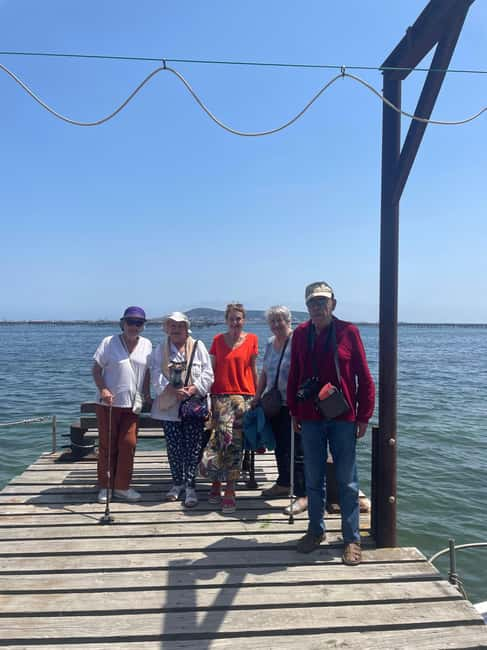
With a maximum of seven people, you should have a better chance to hear the guide and ask questions than you would on a large coach outing. The guide speaks English and French. Brenda is one guide associated with the experience, and one particularly positive account described her as an excellent match for the visit.
Walking through Pointe Courte
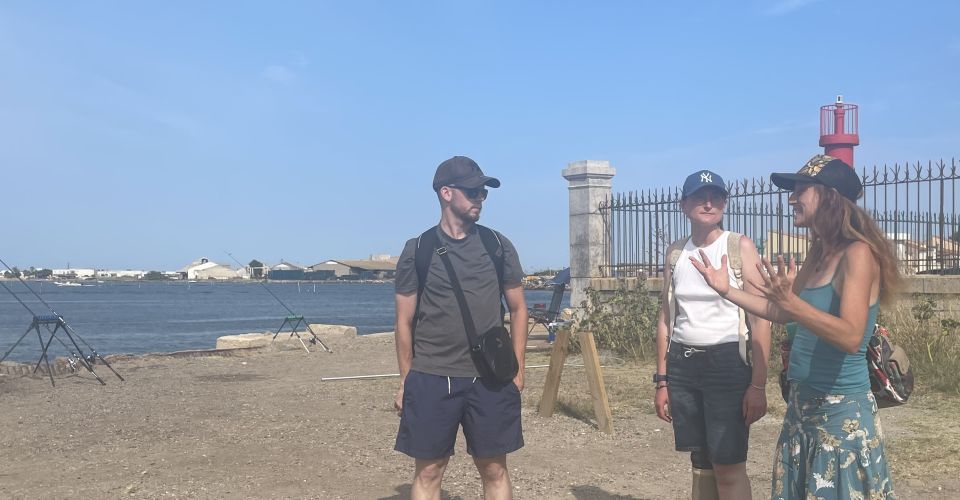
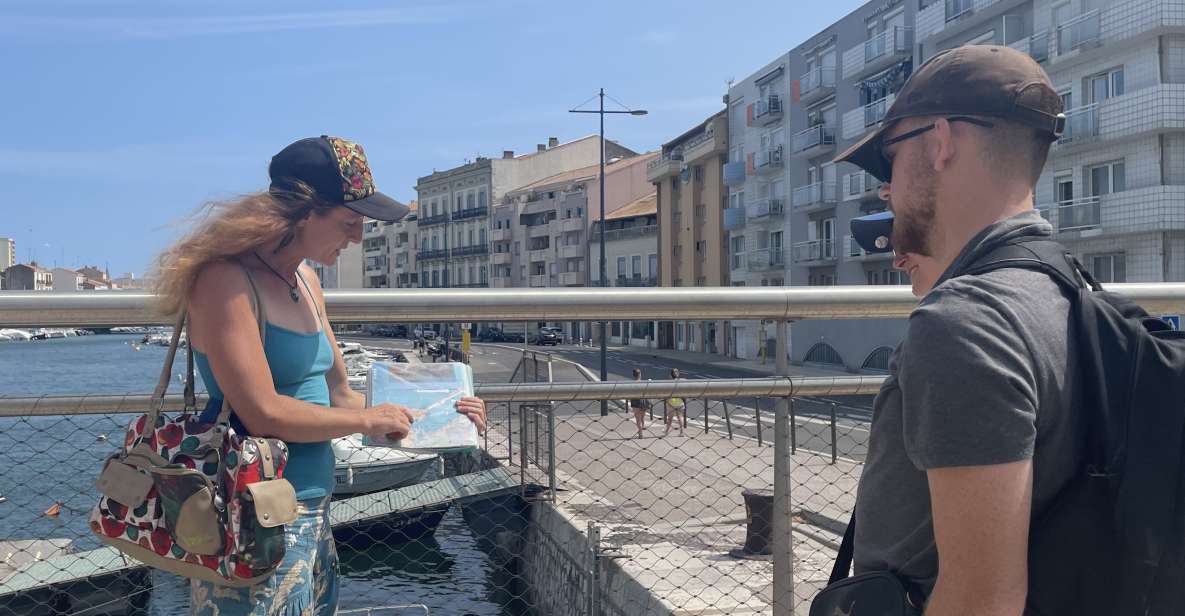
The first main stop is Sète, where the guided visit lasts about an hour and a half in the overall schedule. The featured walk through Pointe Courte takes about one hour and centers on this typical fishing district.
Pointe Courte is the kind of place that makes sense on foot. Its value is not a single must-see building. It is the chance to notice the relationship between homes, boats, the lagoon, and the people who make their living from the water.
Your guide will explain local life and fishing culture as you walk. One useful detail from the experience is that the Sète portion covers the old part of town as well as the fishing district. That gives you a little more town context before the meal, without turning the morning into a formal history lecture.
The lagoon views are another reason to pay attention. Bring your sunglasses and hat, especially if the weather is bright. The walk is only about an hour, but the route is not designed for people with mobility impairments, so this is not the right choice if uneven walking or standing for extended periods may be difficult.
Keep your expectations in the right place. You are not getting a full city tour of Sète, and there is no indication of extended free time for independent shopping. The walk is a compact introduction, designed to lead naturally into the food portion.
From the town walk to the oyster farmhouse
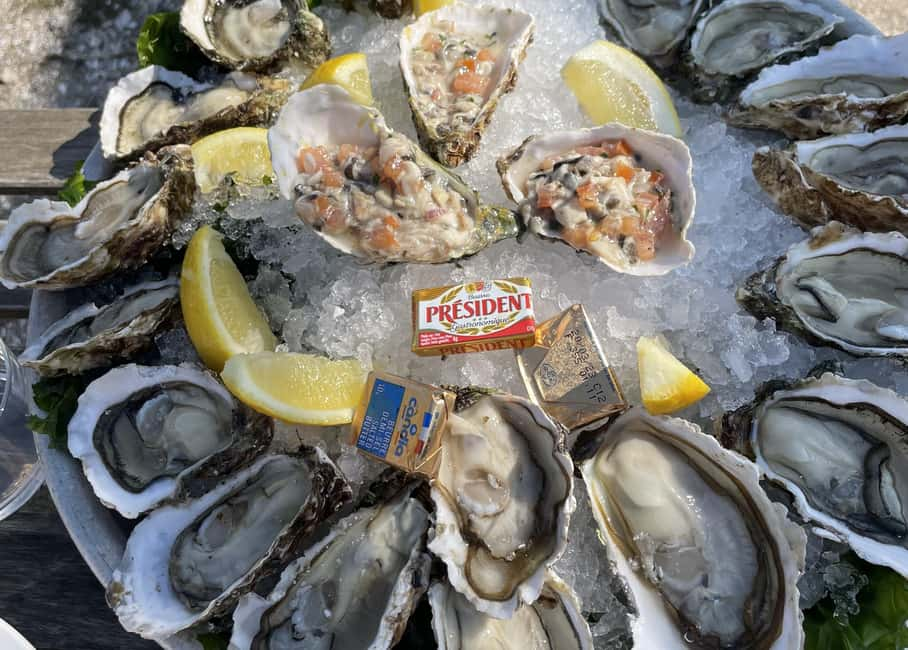
After the Sète visit, the group continues by van for roughly 30 minutes toward the fishing village and lunch stop. This change of setting is important. The first part shows you local life in town; the second puts you closer to the lagoon’s working food culture.
At the oyster farmhouse, an oyster farmer explains the production process and shares the secrets of the trade. The exact farming details can vary with the season and the person leading the visit, but the central benefit is clear: you get direct contact with someone involved in producing the shellfish you are about to eat.
That personal explanation gives the meal more meaning. You can ask questions, connect the oysters to the lagoon, and understand why this part of southern France is known for shellfish. It is also a more grounded experience than simply ordering oysters from a menu without knowing their local connection.
The timing here is about an hour for lunch, local snacks, and tasting. That is long enough for the meal to be the main event, but not so long that the entire half-day turns into a leisurely afternoon. If you prefer slow meals with plenty of time between courses, the schedule may feel brisk.
What you will eat: Bouzigue oysters and brasucade
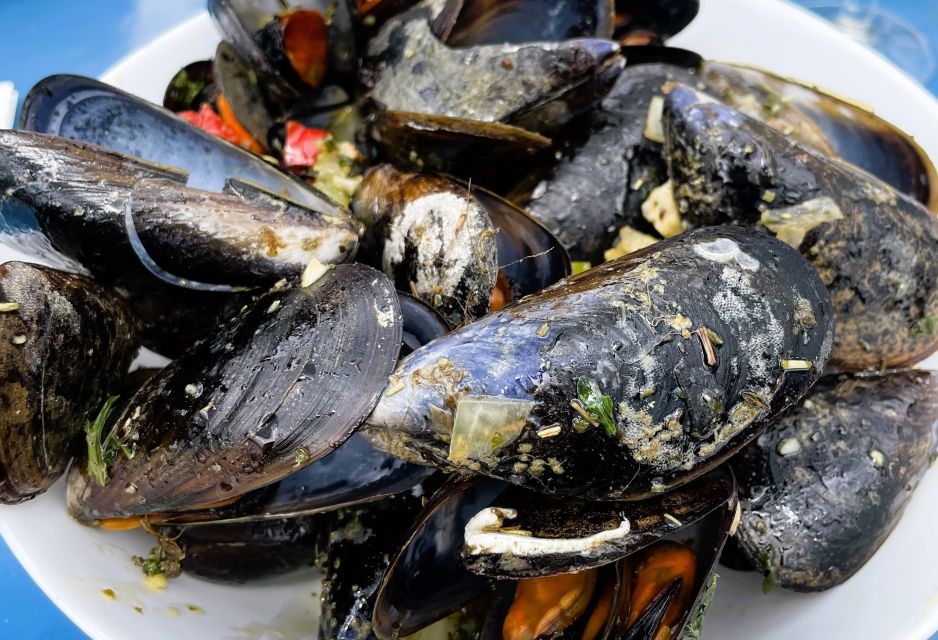
The meal includes the famous Bouzigue oysters and brasucade, a regional preparation of mussels cooked over a barbecue. The combination gives you two different tastes of the lagoon: raw oysters with their clean sea flavor, followed by hot, smoky mussels.
A glass of Picpoul de Pinet has also been included with the meal in the experience described by one participant. Picpoul is a local white wine often paired with seafood, and it makes practical sense here. If you enjoy regional food and wine pairings, this is one of the strongest parts of the trip.
The word full meal matters. This is not just a quick oyster sample followed by another restaurant stop. Lunch, local snacks, and regional food are included, so the $152 price should be judged partly against what you would otherwise spend on transport, a guide, and a seafood meal.
Personal shopping is not included, so plan to pay separately for anything you decide to buy. The food is the focus, not a market visit or a shopping stop.
If you are unsure about oysters, this outing may still work if you enjoy mussels and regional cooking. But oysters are a central feature, not a minor extra. People who dislike shellfish will miss the main culinary reason for booking.
A few more Sete tours and experiences worth a look

The return by boat and minibus
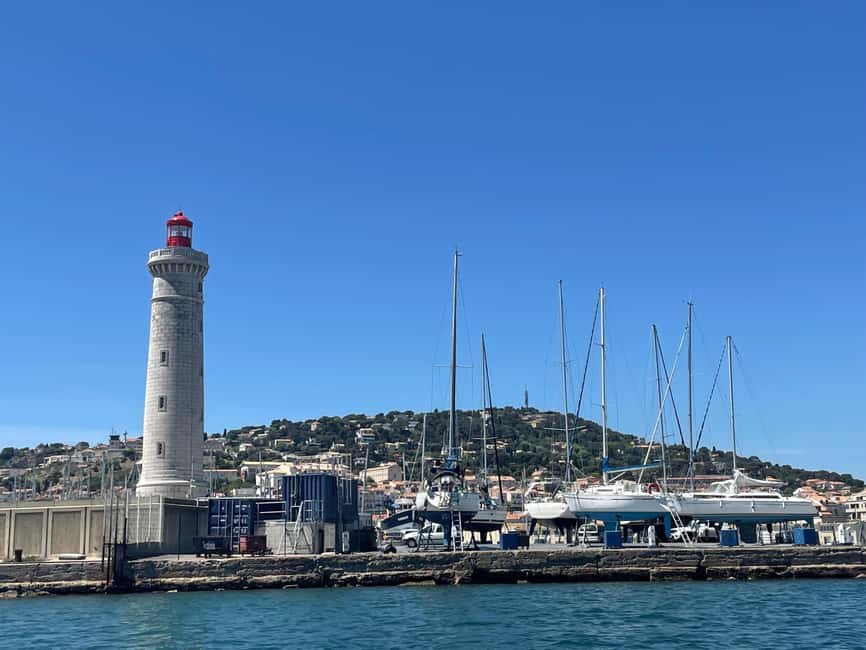
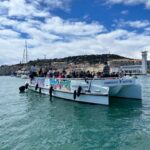
The return journey includes a boat ride to the departure port, followed by the minibus trip back toward Montpellier. This adds another angle on the lagoon and breaks up the road travel.
The listed schedule allows roughly 45 minutes for the final drive back to Montpellier. Taken together, the van transfers total about two hours, so you should think of this as a compact regional outing rather than a walking tour based entirely in Sète.
The boat return is a pleasant part of the plan because it lets you see the area from the water after learning about fishing and oyster production. Exact boat arrangements can depend on conditions, and the activity will not take place in bad weather. Pack sun protection, but also keep a light layer handy if you are sensitive to wind on the water.
Drop-off is available at the Montpellier meeting locations, including O’Sullivans Pub Montpellier and 22 Quai d’Alger. Confirm your selected option before the morning begins.
Is $152 a fair price?
At $152 per person, this is not the cheapest way to reach Sète. You are paying for more than transport, though. The cost includes pickup and drop-off from Montpellier, water, a live guide, the visit, the boat element, and lunch with a substantial seafood focus.
I see the value most clearly if you want three things in one booking: a guided introduction to Sète, direct contact with an oyster farmer, and a regional seafood meal. Arranging all three independently would require research, transport planning, and a reservation at a suitable oyster farmhouse.
The small group also matters. A limit of seven gives the outing a more personal feel and makes conversation with the guide or producer more realistic. That is especially useful during the oyster-farming explanation, where your questions can shape what you learn.
The price is harder to justify if you mainly want free time in Sète or a long, relaxed lunch. You will have a set route, limited time, and no personal shopping included. The trip pays off best when you value organization and local food knowledge over independence.
The current rating is 4.9 from six reviews, with particularly strong praise for the guide, the Sète fishing culture, and the meal. One account singled out Brenda’s guiding and a waterfront lunch of oysters, mussels, and local wine. Another praised the program and lunch, while a third highlighted the fresh oysters, mussels, and Picpoul de Pinet at the oyster farm.
That pattern tells you where the experience succeeds: the human side of the walk and the quality of the meal. It does not promise a broad survey of Sète, so book it for the food and local connection first.
Who will enjoy this half-day in Sète?
I would recommend this outing to you if you enjoy regional food, working waterfronts, and small-group tours. It is also a good fit if you are staying in Montpellier and want an easy way to reach Sète without arranging a car or sorting out several separate bookings.
Seafood lovers get the clearest benefit. You will taste oysters and mussels in the area where they are produced, rather than treating them as generic restaurant dishes. The inclusion of local wine in the meal described above makes the food side even more appealing.
The tour also suits people who prefer a guide to explain what they are seeing. Pointe Courte may be attractive on its own, but the fishing culture and oyster production become more meaningful when someone local connects the details.
I would hesitate if you need a fully accessible route, dislike shellfish, or want a slow day with plenty of unscheduled time. The activity is specifically listed as unsuitable for people with mobility impairments, and the five-hour schedule includes several transfers.
The weather rule is worth taking seriously. Since the outing does not operate in bad weather, avoid building a tightly connected plan around it. Free cancellation up to 24 hours before departure and the option to reserve now and pay later make it easier to keep your schedule flexible.
What to bring and how to prepare
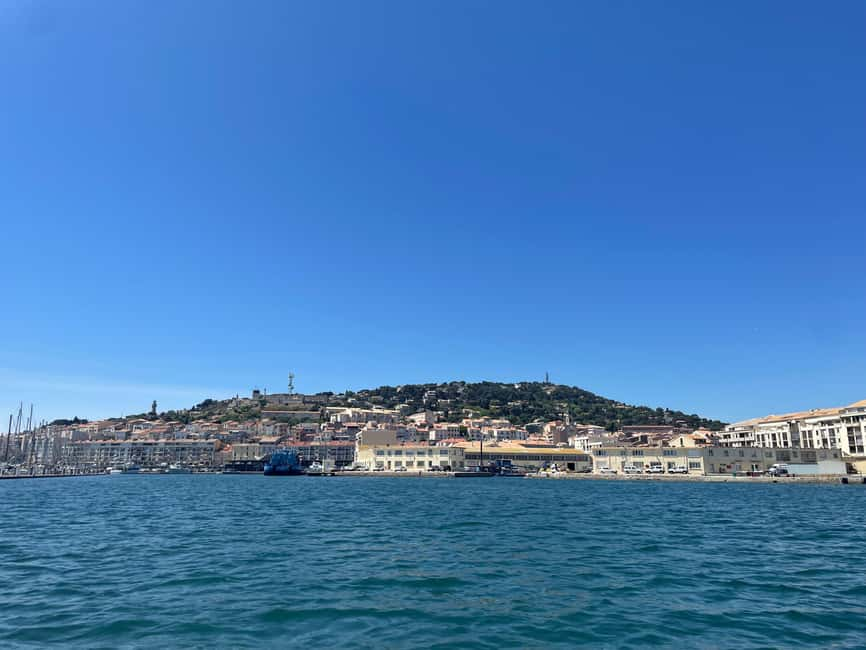
Wear comfortable clothes and shoes suitable for a walking tour. Add sunglasses, a hat, and sunscreen because the route includes open waterfront areas and a boat ride.
Arrive 10 minutes before the stated 9 am departure. You need to be at the correct meeting point, and the guide needs time to hand out equipment. Because the meeting point can vary by booking option, do not rely only on a general map pin.
Bring an appetite for shellfish and an interest in local production. The meal is not a side stop. It is the payoff for the morning’s visit to the lagoon and fishing district.
The languages are English and French. If you book in one of those languages, you can expect the live guide to lead the visit and explain the local setting.
Should you book this Sète oyster tour?
Book it if you want an organized, food-centered morning from Montpellier, especially if fresh oysters, barbecued mussels, and the working life of the Bassin de Thau sound more appealing than a standard sightseeing circuit.
I like the balance of a short walk, a producer visit, a proper seafood lunch, and a boat return. The small group and pickup service make the $152 price easier to accept, while the strong praise for Brenda, the fishing-culture explanation, and the meal points to the parts most likely to make the morning worthwhile.
Skip it if you want extensive free time in Sète, dislike shellfish, or cannot manage the walking and transfers. For the right eater, though, this is a practical way to connect Montpellier with one of the region’s most distinctive foods.
FAQ
Where does the tour start?
The main departure information gives Place de l’Europe in Montpellier at 9 am. Depending on the option booked, the meeting point may be 22 Quai d’Alger or O’Sullivans Pub Montpellier, so check the selected option carefully.
How early should I arrive?
Arrive 10 minutes before departure. The guide needs time to provide your equipment before the group leaves.
How long does the activity last?
The activity lasts five hours.
How many people can join the group?
The group is limited to seven participants.
Which languages are available?
The live tour guide speaks English and French.
Is lunch included?
Yes. Lunch, local snacks, regional food, and the visit are included.
What food will be served?
The experience includes Bouzigue oysters and brasucade, which is a preparation of barbecued mussels. A review of the meal also describes a glass of Picpoul de Pinet.
Is transportation from Montpellier included?
Yes. Pickup and drop-off in Montpellier are included, with van transfers between the stops. The return journey also includes a boat ride to the departure port before the minibus return.
What should I bring?
Bring sunglasses, a hat, sunscreen, and comfortable clothes. Water bottles are included.
Is the tour suitable for people with mobility impairments?
No. The activity is listed as unsuitable for people with mobility impairments.
What happens if the weather is bad?
The activity will not take place in bad weather. You can cancel up to 24 hours in advance for a full refund, and a reserve-now, pay-later option is available.