REVIEW · BAYEUX
2- to 6-hour sidecar excursion on the D-Day Landing Beaches
Book on Viator →Operated by RETRO TOUR NORMANDY · Bookable on Viator
Sidecars make D-Day feel real. I love the vintage sidecar setup and how your gentleman sider builds the story with real-world stops and photo pauses.
I also like the rain-gear-and-helmet approach, because it turns a cold coast ride into something you can actually enjoy. The main consideration is timing and weather: the ride depends on conditions, and the American cemetery can miss you if you’re on a later schedule.
In This Review
- Key Highlights You’ll Actually Care About
- Riding to the D-Day Beaches the Way Normandy Really Reads
- Bayeux Pickup and Gear-Up: From Museum Area to the Coast
- Arromanches-les-Bains and the Mulberry Harbor: Why This Beach Matters
- Longues-sur-Mer Atlantic Wall Battery: Four Guns and a Hard Lesson
- Port-en-Bessin-Huppain and the Fuel Pipeline Story
- Omaha Beach on Foot: Sand, Memorials, and Quiet Weight
- The Normandy American Cemetery: Timing, Viewpoints, and a 2026 Update
- Pointe du Hoc for the Full 6-Hour Day: Artillery and Steep Resolve
- Price and What $169.31 Buys You (Besides a Ride)
- What to Pack and How to Stay Comfortable on a Sidecar
- Who This Tour Fits Best
- Should You Book This Sidecar D-Day Excursion?
Key Highlights You’ll Actually Care About
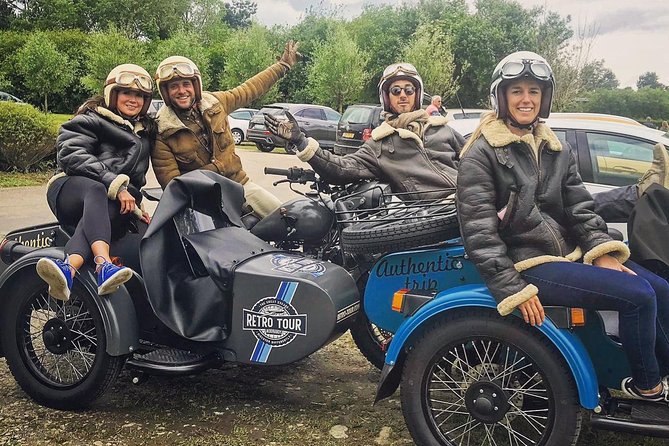
- Vintage sidecars, helmets, gloves, and retro goggles make this feel like a period experience, not a bus tour.
- Photo and break stops are part of the plan, so you’re not just staring through a windshield.
- Bayeux to the beaches via quieter roads means more countryside, not only the main tourist corridors.
- D-Day history beyond the shoreline, including the Mulberry harbor and fuel pipelines, not just Omaha speeches.
- Small private groups (up to six per booking, with more by request) keep it more personal.
Riding to the D-Day Beaches the Way Normandy Really Reads
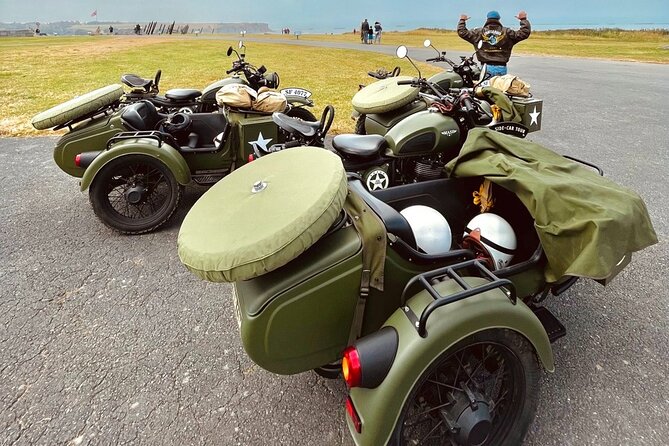
If you want Normandy WWII history, you can do it the standard way: van, bus, and a few marked stops. This format changes the feel right away. You’re rolling in a vintage sidecar, geared up properly, with a guide driving you between coastal towns and battle sites, while the narrative clicks into place.
I also like the pacing. You get enough time at the iconic places to look, walk a bit, and take it in, but you’re not stuck for hours staring at one plaque. The whole plan is built around the idea that the land matters: beaches, cliffs, roads, and the small towns that sit between them.
The guides running these rides (I’ve seen a lot of praise for Rémi and Philippe, with others like Jack and Remy showing up too) tend to mix clear explanations with human details. That matters on a somber day, because facts land better when you can picture the people and decisions behind them.
You can also read our reviews of more tours and experiences in Bayeux.
Bayeux Pickup and Gear-Up: From Museum Area to the Coast
Most departures start in Bayeux, with pickup at a place you choose. You can also meet at the parking area near the Bayeux Battle of Normandy Museum or at the Bayeux bus station, depending on what’s easiest for your day.
Before you roll, your sider helps you gear up with:
- helmets
- gloves
- retro goggles
- rain gear (when needed)
Then you settle into the sidecar and set off with a few built-in stops for photos and breaks. Those short pauses sound small, but they make a big difference. Normandy can be windy and change fast, and it’s nice to know you’ll have a chance to regroup before you continue along the coast.
This early portion is also where the guide typically sets expectations. You’ll understand what you’re seeing next—how one sector connects to the next—so later stops don’t feel like separate history checkpoints.
Arromanches-les-Bains and the Mulberry Harbor: Why This Beach Matters
Arromanches-les-Bains is part of the British sector track. Even though it sits in the landing zone area, it was spared the worst of the fighting on June 6, 1944. That alone is an interesting contrast: the most famous invasion day gets a quieter chapter here.
What makes Arromanches special is the logistics story. Shortly after D-Day, the Allies built Mulberry B, a temporary artificial harbor designed to bring heavy equipment ashore without waiting for deep-water ports like Le Havre or Cherbourg. It was a huge engineering effort with tight constraints: they needed the beach protected and communication routes preserved so the harbor could actually work.
Your guide will connect the dots: British troops landed farther east between Asnelles and Ver-sur-Mer, liberated Arromanches by land on the evening of June 6, and had the harbor in service by June 14.
For you, this stop is worth it because it explains what many people miss when they focus only on the first hours. The invasion wasn’t only bravery; it was supply math, engineering, and timing. Arromanches helps you see that side.
Longues-sur-Mer Atlantic Wall Battery: Four Guns and a Hard Lesson
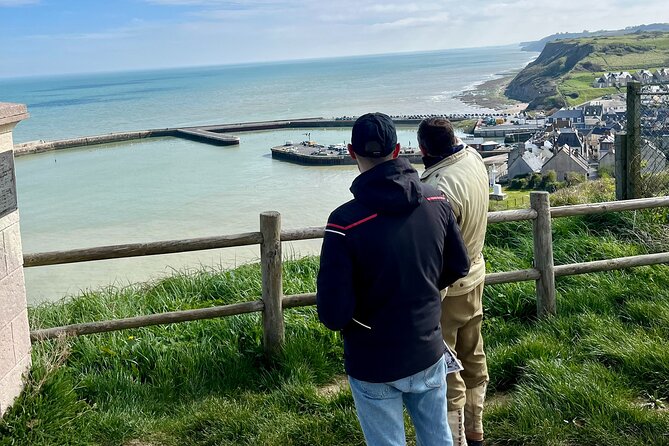
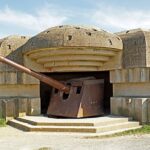
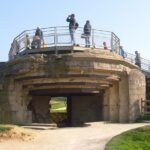
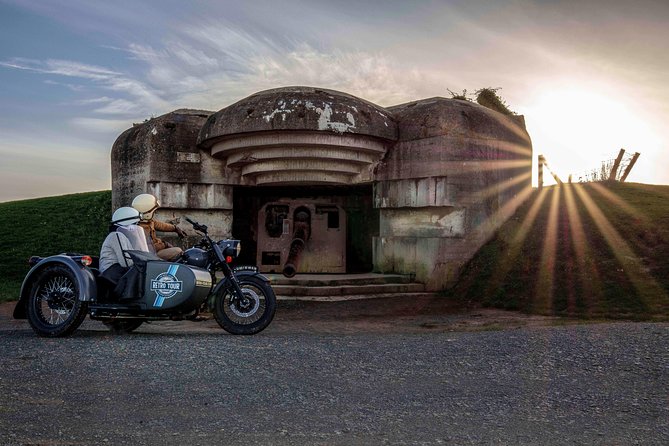
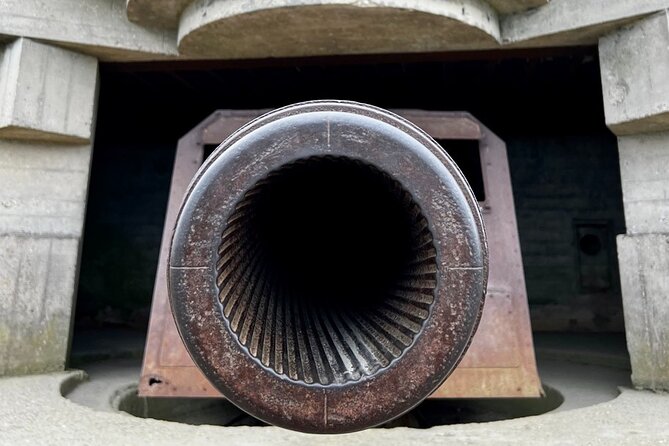
Next comes Longues-sur-Mer, another British-sector stop. This site is part of the Atlantic Wall: a fortified battery with four long-range 150 mm naval guns, each protected inside a reinforced concrete casemate, plus supporting installations.
On D-Day, intense Allied aerial and naval bombardment prevented the battery from fully engaging. Then, the following day, it was captured by British troops. That sequence helps you understand why certain targets mattered—and why timing and surprise were so important.
The site is listed as a Historic Monument and is well preserved, so you’re not just looking at vague ruins. It’s developed for visitors, which makes it a strong stop for first-time D-Day travelers who want something concrete to see.
One practical note: this kind of coastal fortification area can feel cold and exposed, especially near the water. If you tend to get chilled, plan to layer up and keep your scarf or neck protection handy. You’ll thank yourself before you start reading the explanations.
Port-en-Bessin-Huppain and the Fuel Pipeline Story
If you’re on the American sector track, one key stop is Port-en-Bessin-Huppain. It became, as early as June 16, the central hub of a pipeline network—around 120 km—built to supply Allied armies with fuel. That’s a striking detail because it shows the invasion as a long game, not a single landing moment.
You’ll hear how Port-en-Bessin was liberated on June 8, 1944 during Operation Overlord, connected to the 47th Royal Marines Commando. And then the story expands: by the end of August 1944, the system grew through Operation PLUTO, involving underwater pipelines laid between the Isle of Wight and the area of Querqueville near Cherbourg.
This stop is shorter (about 30 minutes), so it works best if you treat it like a key chapter rather than a full museum visit. You’re catching the big idea: even after the beaches were breached, armies still depended on fuel moving reliably.
If you like history that connects strategy to daily survival, this is a highlight.


Omaha Beach on Foot: Sand, Memorials, and Quiet Weight
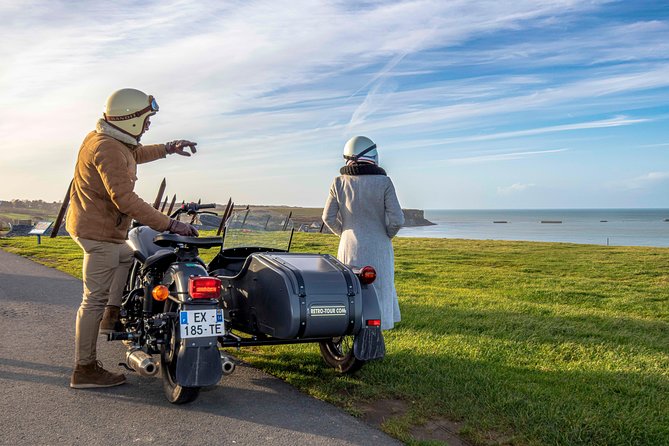
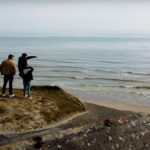
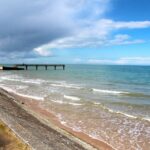
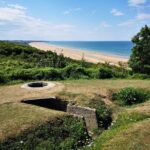
Omaha Beach is the stop many people come for, and it delivers. It’s also one of the fastest segments time-wise (about 30 minutes), so you’ll want to be ready to focus when you arrive.
Your guide will share moving accounts about the challenges American soldiers faced under intense gunfire and artillery bombardment. Then you walk along the beach while you’re pointed toward memorials for a respectful moment.
This part of the tour is emotionally heavier than the engineering stops. That’s normal. Omaha doesn’t let you stay abstract. You’re literally on the ground where thousands landed, and the scale can feel overwhelming even in a short walk.
Practical tip: wear grippy shoes and plan for wind. Omaha can be a test for hats and light layers, and you’ll get more out of it if you’re comfortable enough to linger when your guide pauses for key explanations.
The Normandy American Cemetery: Timing, Viewpoints, and a 2026 Update
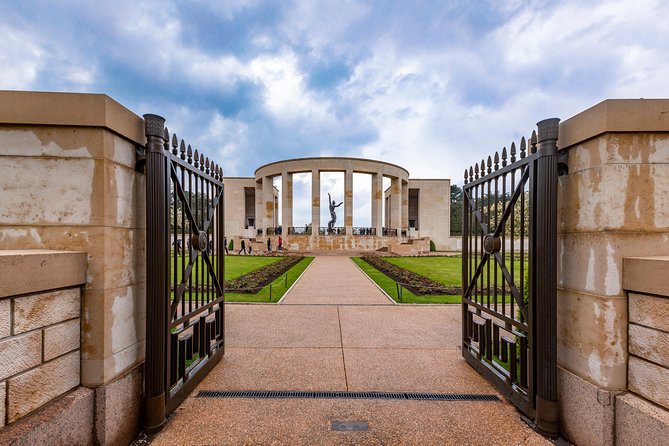
If your schedule includes it, the Normandy American Cemetery and Memorial in Colleville-sur-Mer is one of the most meaningful stops on the whole trip. It sits on a cliff overlooking Omaha Beach, so you get the visual connection between where the troops landed and where they’re remembered.
You’ll walk among rows of white marble crosses and Stars of David. Your guide shares stories about individuals buried there, which is what makes this stop feel personal rather than purely symbolic.
There are two timing realities you should plan around:
- Low season can mean earlier closing hours, so you might not reach the cemetery if it’s late in the day.
- If your tour starts at 4:00 PM, the itinerary may not include the cemetery visit.
And there’s a future planning note: starting in 2026, the Omaha cemetery visit cannot be guaranteed and may be replaced by a visit to WN60.
So here’s the practical advice: if the cemetery is your top priority, choose an earlier start time when you can.
Pointe du Hoc for the Full 6-Hour Day: Artillery and Steep Resolve
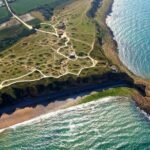
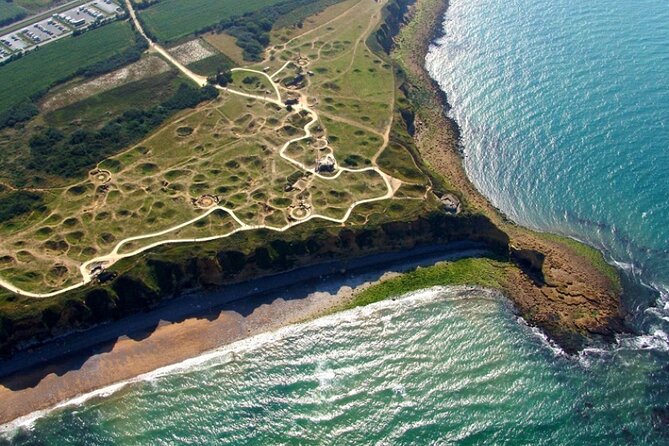
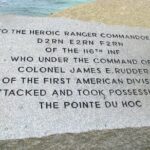
For the 6-hour option, you add Pointe du Hoc. This promontory sat between Utah Beach (west) and Omaha Beach (east) and was fiercely fortified by the Germans. Allied aerial reconnaissance found long-range artillery pieces there that could threaten neighboring beaches, and neutralizing that threat was considered essential for the landings to succeed.
This is the kind of stop that rewards curiosity. You’ll walk the site and hear how courage and strategy played out in practice, not just in broad terms.
Expect it to feel physical. Promontories and coastal defenses can involve uneven ground and wind. If you want photos, plan your camera time without rushing your walk—your guide will usually pause at the points that explain the tactical story.
Price and What $169.31 Buys You (Besides a Ride)
At $169.31 per person, this sidecar excursion can feel like a splurge until you look at what’s bundled into the day.
You’re paying for:
- private guiding (your group only)
- transportation by sidecar through the countryside
- safety gear (helmets, gloves, retro goggles, rain gear)
- free admission tickets for the stops listed in the plan
- a tight historical narrative tied to what you’re seeing in front of you
It’s also timed well. In as little as 2 hours, you can hit major sites with context; in longer options, you expand to additional sectors and locations. If you’re trying to do D-Day history without spending half your vacation on driving and logistics, this is where the value shows up.
And the comfort side matters too. The sidecar ride is surprisingly spacious for many people, and the guides aim for safe, confident driving. That helps you get more out of the day because you’re not thinking about how to survive the vehicle. You’re thinking about the places.
What to Pack and How to Stay Comfortable on a Sidecar
This is not a “bring nothing” day. The gear is provided, but your comfort depends on your layers.
Bring:
- warm clothing for coastal wind
- a scarf or neck protection (especially if you’re sensitive to chills)
- closed-toe shoes
Even with rain gear included, weather can still affect how you feel outside. The company notes that the experience requires good weather, so if conditions are poor, you’ll be offered a different date or a refund.
Also, this is built for mixed ages and groups. The minimum age is 4 years old, and service animals are allowed. It’s set up for most travelers, but you’ll get the best experience if you’re comfortable riding for stretches with wind exposure.
Who This Tour Fits Best
This sidecar D-Day ride is a strong match if you want history with movement. You’ll like it if you:
- enjoy getting out of the car and walking short segments
- want your guide to connect the dots between sectors
- like scenic countryside roads, not only a checklist of sites
- want a smaller, private group setting
It may be less ideal if you need very long, slow walking time at a single museum site, since the stops are designed as a route with multiple chapters. It’s also less comfortable if you’re extremely heat- or cold-sensitive, since wind off the coast is part of the experience.
Should You Book This Sidecar D-Day Excursion?
I’d book it if you want D-Day history that feels real, not distant. The sidecar format adds energy, and the guide-led storytelling keeps the day from becoming a set of random landmarks.
Book the longer option if you have the time, because it adds key sites like Pointe du Hoc and gives you more room to process what each location represents. If the American cemetery matters most to you, aim for an earlier start so you have the best chance to include it, especially since late tours and seasonal hours can cut it short.
If you’re coming to Normandy for one unforgettable day and you like a mix of countryside riding plus serious WW2 context, this is a smart use of your time.