REVIEW · PARIS
Unique Guided Walking Tour of Great Women in Parisian History
Book on Viator →Operated by Women of Paris · Bookable on Viator
Women run the story of Paris. This guided walking tour links key places to the women who shaped the city.
You get a mobile ticket and an English-speaking guide, with morning or afternoon start times so you can fit it around your day.
Two things I like most are the pace and the storytelling. The walk keeps you outdoors, so you’re absorbing Paris street life as you learn, and stops are short enough that the group stays together without feeling rushed. Also, guides such as Pam, Pat, Emily, and Wassily have been called out for answering questions and shaping the facts into something you can actually follow.
One consideration: if you want lots of deep detail on every century, you may feel the emphasis leans more toward an overview than a heavy 20th-century focus, and a couple of the big interiors (like the Pantheon and the Curie museum area) require separate entry. It’s still a great format, just not a long-form museum day.
In This Review
- Key highlights worth building your plan around
- A women-first route through Paris, on walkable streets
- Value check: how $54.42 becomes more than a few photos
- Before you go: meeting point, timing, and rain-proof expectations
- Stop 1: Luxembourg Gardens and the story behind the commission
- Stop 2: Quartier Latin, early Paris, and a woman who saved the city
- Stop 3: Passing the Curie Institute and why 1920 still matters
- Stop 4: Montagne Sainte-Geneviève views toward Notre-Dame and the Eiffel Tower
- Stop 5: The Pantheon finish and the first woman buried inside
- Guide style: when facts become a story you can retell
- Who this tour fits best (and who should plan differently)
- Should you book Great Women in Parisian History? My take
- FAQ
- How long is the walking tour?
- What does it cost?
- Is the tour offered in English?
- Where do I meet, and where does it end?
- Are tickets included for the attractions?
- Does it run in bad weather?
Key highlights worth building your plan around

- Luxembourg Gardens connections: you learn who commissioned the gardens and about the queens and notable women remembered there
- Quartier Latin street history: you connect the neighborhood’s origins with a dramatic moment where a woman helped save the city
- Curie Institute context: you pass the research center Marie Curie opened in 1920, with a museum component you can access separately
- Views from Montagne Sainte-Geneviève: you look down at major landmarks from the Latin Quarter hill
- Pantheon finale: you wrap up by learning the story behind the first woman buried there
A women-first route through Paris, on walkable streets
This tour is exactly what it sounds like: a guided walking route that keeps women in the spotlight while you move through classic Paris scenes. Instead of treating Paris as a parade of monuments, you get a story line—who these women were, what they dealt with, and how their influence lasted. It’s a smart approach because Paris can feel like a lot of marble and dates. Here, those facts come with names, motivations, and consequences.
The route is also practical. You’re covering multiple neighborhoods on foot in about two hours, which makes this easy to slot into a busy itinerary. You’ll finish near the Panthéon, with clear help on where to head next, so the tour doesn’t leave you stranded in the middle of nowhere—or at least, not in this part of Paris.
Finally, you get a small group cap (up to 20 people). That matters more than you’d think. Smaller groups usually mean you can ask questions without hearing your guide’s answer turn into a whisper for the back row.
You can also read our reviews of more walking tours in Paris



Value check: how $54.42 becomes more than a few photos
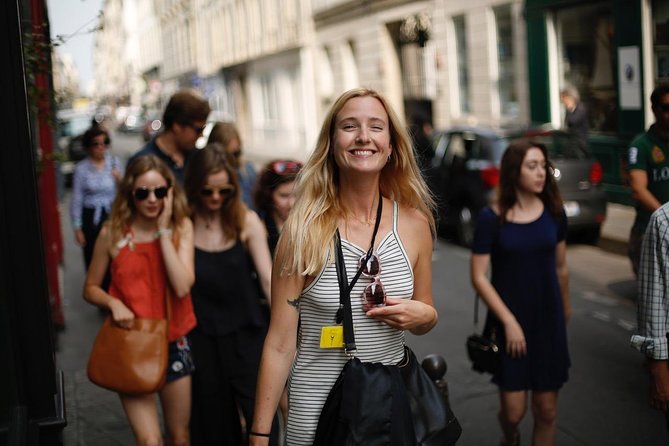
Price is $54.42 per person for roughly two hours with a local guide. That sounds reasonable for a guided experience in central Paris, and the value improves because most stops don’t require paying for sights at that moment.
Here’s how the “value math” shakes out:
- Some places you’re meant to see from the outside or via free entry access, including Luxembourg Gardens and the view point near Notre-Dame
- A couple of stops have attractions where entry is not included, notably the Curie museum area and the Pantheon
- You’re paying mainly for the guide’s context—how to connect each location to the woman (or women) tied to it
If you’re the type who reads plaques but still wants someone to connect the dots, this is a strong match. If you’re the type who wants to spend an hour inside every major building, you might feel the walking tour format is a little light. The good news is you can always add independent time later.
Also, this tour is booked fairly far ahead (on average about 39 days). If your dates are fixed, don’t wait until the last week and hope the schedule holds.
Before you go: meeting point, timing, and rain-proof expectations
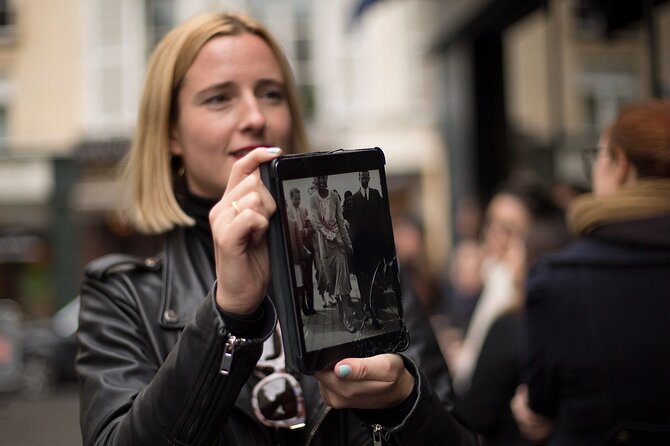
You’ll meet at Treize au Jardin, 5 Rue de Médicis, 75006 Paris. The tour ends on Place Sainte-Geneviève in front of Saint Étienne du Mont church, just behind the Panthéon area (75005). You’ll get directions for getting to your next stop, which is genuinely helpful on a day when you’ve already got a lot to juggle.
Wear comfortable shoes. This is a walking tour and it matters because the tour stays on a tight schedule. Also, it operates in all weather conditions. Paris rain can be light, sideways, or both. If you’ve got a rain layer and shoes that handle wet stone, you’ll feel better the entire time.
Language is English, and you’ll receive confirmation at booking. Service animals are allowed, and children must be accompanied by an adult. If you’re traveling as a family, this is a good pick: the subject matter works for teens and adults because it connects politics, culture, science, and everyday power.
Stop 1: Luxembourg Gardens and the story behind the commission
The tour starts in Luxembourg Gardens, a place that looks like it belongs in a postcard, but you’ll learn it’s also loaded with politics and remembrance. You’ll walk through the palace gardens and hear about the woman who commissioned them—then you’ll move into the bigger theme: the queens and illustrious women remembered here.
Why this stop works: gardens can be hard to make educational without turning it into a lecture. Here, the guide ties the setting to power and memory. It’s one of those moments where you’ll notice details you’d otherwise skip, like how carefully the space is designed to make status visible.
Timing is about 40 minutes, and admission is free for the gardens. That means you’re not spending your budget here. You’re using your time, and you’re getting the best kind of value: learning while you’re already in a beautiful public space.
Possible drawback: because the focus includes multiple historical figures, there’s a lot to absorb in one place. If you like taking photos, you’ll want to pause less and listen more.
Stop 2: Quartier Latin, early Paris, and a woman who saved the city
Next you head into the Quartier Latin, often called the cradle of Paris. This stop is shorter (about 30 minutes), but it’s where the tour adds drama. You’ll learn about early Paris and how a woman came to save the city from the threat of attack.
This is a good example of how the tour uses storytelling to turn a neighborhood into a timeline. The Quartier Latin today is full of student life and bookish energy, but the guide pulls you back to the earlier stakes: who had power, who faced danger, and who acted when it mattered.
Admission is free for this part, and since it’s mostly walking, you’ll feel like you’re moving through the city rather than standing in one spot reading facts. If you want to understand how Paris became what it is, this stop is a strong bridge between “place” and “meaning.”
A consideration: because it’s a neighborhood segment, the tour’s story pace depends on your guide and your group’s questions. If you’re the type to ask a lot, be ready that you might end up with slightly less time at the later stops.
You can also read our reviews of more guided tours in Paris






Stop 3: Passing the Curie Institute and why 1920 still matters
At the Musee Curie / Curie Institute area, you get a quick but meaningful science-and-people connection. You’ll stroll past the Curie Institute, a center of scientific study and research opened by Marie Curie in 1920, and you’ll learn that it also has a museum component devoted to her life and contributions.
This is only about 10 minutes on the tour schedule, and admission isn’t included. Translation: you’re getting the context and the orientation, not a full museum visit. If you’re curious, you can plan a separate stop later and spend more time inside.
Why it’s worth having even as a quick pass: it stops the tour from becoming only political and royal. You get science, persistence, and a kind of influence that doesn’t always announce itself with a statue. It also sets up the last portion of the walk, where monuments and memory take center stage again.
Stop 4: Montagne Sainte-Geneviève views toward Notre-Dame and the Eiffel Tower
From the hill of the Latin Quarter, Montagne de Sainte Geneviève, you get a short scenic moment (around 5 minutes) that feels like a reward after walking. You’ll look down on landmarks including Notre-Dame Cathedral and the Eiffel Tower.
This matters because it changes how you experience the tour. Up to this point, you’re mostly learning and walking. This viewpoint gives you a breath of scale. You start to see how the Latin Quarter connects to the city’s bigger landmarks, and you understand why people built where they built.
Admission is free for this viewing. The main limitation is time. If you want to linger, bring patience and save your lingering for after the tour ends, when you can control your schedule.
Stop 5: The Pantheon finish and the first woman buried inside
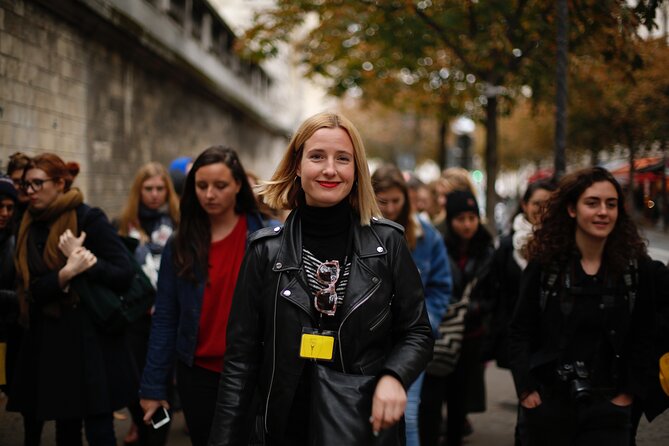
The tour ends with a visit to the Pantheon area, with about 10 minutes on the site. You’ll gaze in wonder and learn the story of the first woman to be buried inside.
Admission isn’t included here either, so you’re learning from the outside (or from a limited tour moment), not doing a full Pantheon walkthrough as part of the ticket. Still, this is a strong finish because it’s a place designed for remembrance. After a tour about women’s impact, seeing how that impact is recognized in stone is the right final note.
If you want more than the tour offers, you can add independent time at the Pantheon after you finish. The tour’s ending location also makes that easy to tack on, since you’re already nearby.
Guide style: when facts become a story you can retell
The best part of this kind of tour is the guide. In this case, the standout theme from guide feedback is how well they connect the historical dots and keep you engaged through questions.
Guides like Pam, Pat, Emily, and Wassily have been described as knowledgeable and enthusiastic, but what you really benefit from is the way they answer questions patiently and bring the subject matter alive. One guide was also praised for being flexible in rain, which matters because Paris weather doesn’t ask for your itinerary.
You’ll hear about challenges women faced over the centuries and how they overcame obstacles up to the present day. Even if some time periods get less airtime than you personally want, the overall structure helps you notice patterns: power, access, education, public recognition, and who gets remembered.
Who this tour fits best (and who should plan differently)
This tour is a great fit if you:
- Want a high-impact, low-stress way to learn Paris through themes, not random facts
- Like walking with a guide rather than bouncing between museums alone
- Travel with teens or families and want something that’s both interesting and not overly technical
It’s a softer fit if you:
- Want a long, museum-heavy schedule with lots of paid interiors
- Need a very deep dive into one specific era (like only 20th-century women)
- Prefer unstructured time to roam freely without a set route
The good compromise is to do this walking tour first as your foundation, then choose one or two optional add-ons based on what you found most compelling.
Should you book Great Women in Parisian History? My take
Yes, you should book it if you want an efficient and thoughtful way to see Paris while learning how women shaped the city’s story. The price feels fair because you’re buying guidance, not just sightseeing, and several parts are free to access right away. The route is also short enough to keep energy up, and the small group size helps you actually interact instead of sitting through a one-way lecture.
I’d skip it only if your top priority is entering major buildings for long periods. This tour is built around walking, viewpoints, and context, with optional entry (like parts tied to the Curie museum area and the Pantheon) left for you to decide.
If you’re planning your first or second trip to Paris and you want something smarter than another photo loop, this one belongs on your list.
FAQ
How long is the walking tour?
It runs for about 2 hours.
What does it cost?
The price is $54.42 per person.
Is the tour offered in English?
Yes, it’s offered in English.
Where do I meet, and where does it end?
You meet at Treize au Jardin, 5 Rue de Médicis, 75006 Paris, and you finish at Place Sainte-Geneviève in front of Église Saint-Étienne-du-Mont, just behind the Panthéon (75005).
Are tickets included for the attractions?
Admission is free for Luxembourg Gardens and the viewing portion near Notre-Dame. Admission is not included for the Musee Curie stop and for the Pantheon.
Does it run in bad weather?
Yes. The tour operates in all weather conditions, so dress appropriately and wear comfortable shoes.