REVIEW · FRANCE
Guided tour of Albi at the time of the cathedrals
Book on Viator →Operated by Epok'Tour · Bookable on Viator
Albi’s story comes alive through Perette, a 14th-century craftworker’s wife who guides you through the city in period costume. Instead of simply listing dates and monuments, this theatrical walk presents Albi during a turning point, as Sainte-Cécile Cathedral nears completion and the bishop’s power shapes the town.
I like the mix of big political events and ordinary daily life, from the plague and the stalled conflict with the English to the frank way Perette discusses her city. I also like the compact route, which links the cathedral area, the Berbie Palace courtyard, the Combes district, and the Saint Salvi cloister in 90 minutes.
The main consideration is that this is a character-led walking tour for adults and children over seven, not a full cathedral or museum visit. If you want detailed architectural access inside Sainte-Cécile, you may need to add that separately.
In This Review
- Key points about Albi at the time of the cathedrals
- Why Perette is a better guide than a list of dates
- Starting near Sainte-Cécile Cathedral
- The Berbie Palace courtyard and episcopal power
- Through the Combes district
- Saint Salvi cloister: a quiet medieval finish
- What the 90-minute format means for you
- A close look at the price and value
- Who will enjoy Perette’s Albi?
- Practical points before you book
- Should you book this Albi history walk?
- FAQ
- Where does the Albi tour begin?
- Where does the activity finish?
- How long does the experience last?
- Is the tour conducted in period costume?
- Who is the tour designed for?
- What places are included in the route?
- How much time is spent at each part of the route?
- Is cathedral admission included?
- How many people can join the tour?
- Can I cancel for a full refund?
Key points about Albi at the time of the cathedrals
- Perette leads in period costume: Meet a 14th-century craftworker’s wife rather than a standard modern guide.
- Sainte-Cécile Cathedral anchors the story: The walk begins near the cathedral, a symbol of the bishop’s authority.
- Medieval Albi comes with hard realities: The route covers plague, war with the English, and the pressures of daily life.
- Four distinct settings fit into 90 minutes: Expect the cathedral area, Berbie Palace courtyard, Combes district, and Saint Salvi cloister.
- The visit suits families with older children: Participation is intended for adults and children over seven.
- The price is modest for a short guided walk: At $14.23 per person, the tour offers a low-cost way to put Albi’s monuments into context.
Why Perette is a better guide than a list of dates
The clever idea here is to let you meet Albi through one person’s life. Perette is presented as the wife of a 14th-century craftsman, so the city is not treated only as a collection of grand religious buildings. You get a view of work, neighborhoods, illness, conflict, and the everyday concerns of people living beneath episcopal power.
That viewpoint matters in Albi. The cathedral represents authority on a huge scale, but Perette gives the city a human voice. Her character is direct and outspoken, with a reputation for not keeping her opinions to herself. That should give the walk some wit as well as historical information.
The tour is theatrical, but it is still built around real places. You are not watching a stage performance in one spot. You move through the old city while the character connects what you see with the upheavals of the late Middle Ages.
One published comment describes the guide as excellent and praises the playful way facts and anecdotes are presented. That is the clearest clue to the tone: expect history delivered through stories and personality, not a formal lecture. If you learn best through memorable characters and short anecdotes, this approach should suit you.
You can also read our reviews of more guided tours in France

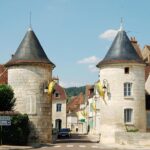

Starting near Sainte-Cécile Cathedral
The walk begins at 42 Rue Mariès, near Sainte-Cécile Cathedral. The cathedral is introduced as a symbol of the bishop’s power, and that framing gives the opening real purpose. You are not simply beginning beside Albi’s most famous building. You are starting at the center of the political and religious world that shaped the city.
The period is 1390, when the cathedral’s construction is nearing completion. That date places you in a city being physically and politically remade. The building is not just a place of worship. It expresses the reach of the bishop and the importance of Albi during a troubled period.
You should pay attention to how Perette’s personal viewpoint contrasts with the scale of the cathedral. The building represents institutional power, while her story brings the focus back to the people who lived and worked around it. That contrast is likely to be one of the walk’s most useful ideas.
The information provided does not promise entry into Sainte-Cécile Cathedral. Treat the cathedral as the starting setting and visual focus of the tour, rather than assuming that an interior visit is included. If going inside is important to you, check separately before booking.
The first portion of the walk lasts about 1 hour and 10 minutes. That is enough time for several locations without turning the outing into an all-day commitment. You can fit it into a larger Albi visit, though you should allow enough time before the start to find 42 Rue Mariès.
The Berbie Palace courtyard and episcopal power
From the cathedral area, the route continues into the courtyard of the Palais de la Berbie. The courtyard helps extend the story of authority beyond the cathedral itself. Here, Perette can place the bishop’s influence in a broader setting and show how religious power affected the city.
The stop is valuable because it keeps the tour from becoming a single-monument talk. You move from the cathedral’s religious symbolism to a palace connected with the same powerful institution. The route lets you compare the different roles these places played in medieval Albi.
The courtyard is also a practical middle point in the walk. You are still close to the main historic core, but the change of setting gives the narrative room to shift. The story can move from construction and authority toward the pressures faced by the wider population.
Do not expect a long architectural survey of the palace from the information available. The emphasis is on the courtyard as part of the route and on its role in the story. Perette’s commentary is likely to matter more here than a detailed inventory of building features.
Through the Combes district
The Combes district brings the walk into a more local, lived-in part of Albi. This is where the tour’s promise of lively neighborhoods becomes most useful. Rather than keeping you beside the city’s grandest monuments, the route shows how the medieval story extended into streets where ordinary life took place.
The district is tied to the tour’s wider themes: plague, war, work, and daily routines. These subjects help you see the city as more than a backdrop for church power. Perette’s position as a craftworker’s wife makes this part especially important, since her character is connected to the working population.
The plague epidemic gives the walk a serious edge. Medieval life was shaped by disease in ways that affected families, work, movement, and city life. The tour also covers the conflict with the English and its stalemate, adding another layer of uncertainty. Together, these subjects show a city dealing with forces it could not easily control.
The character approach should keep these difficult topics approachable for families, but this is still a history tour about disease and conflict. Parents should use their judgment for children over seven. The age guidance indicates that younger children may not be the intended audience.
Saint Salvi cloister: a quiet medieval finish
The final part of the walk takes about 20 minutes at the Cloître de la Collégiale Saint-Salvy. The cloister is described as a witness to Albi’s medieval past, so it offers a fitting close to a route focused on the city’s transformation.
After the cathedral area, palace courtyard, and neighborhood streets, the cloister changes the pace. It gives Perette a final setting in which to connect the visible remains of medieval Albi with the lives and beliefs of the people who used them.
The cloister is not presented as a long standalone visit. You should expect roughly 20 minutes here before returning to the original meeting point. That shorter final section works well if you want a clear ending without adding another major stop.
The activity ends back at the meeting point. That makes the route simple to combine with other plans in central Albi. You will not need to arrange a separate pickup or work out where the walk finishes.






What the 90-minute format means for you
The total duration is about 1 hour and 30 minutes. I see that as one of the tour’s strongest practical features. It is long enough to cover several settings and a serious range of history, but short enough to fit around a cathedral visit, a meal, or independent sightseeing.
The route is divided naturally between the first 70 minutes and the final 20 minutes. Most of the time is spent around Albi, the Berbie Palace courtyard, and the Combes district. The Saint Salvi cloister then provides the closing section before you return to the start.
A short theatrical walk requires a certain amount of focus. You will get the best value if you stay with the story as you move between locations. This is not designed as a drop-in monument visit where you can wander away and rejoin later.
The group can have a maximum of 25 people. That is not a private tour, but it places a limit on the size of the audience around Perette. A group of that size should still allow the character-led format to work, though the experience will not have the intimacy of a one-to-one guide.
The tour is supplied with a mobile ticket, and confirmation is received at booking. Service animals are allowed, and the meeting point is near public transportation. Those details make the activity relatively easy to add to a day in Albi, especially if you are not arriving by car.
A close look at the price and value
At $14.23 per person, this is an inexpensive way to add structure and context to an Albi visit. You are paying for a guided, character-led walk lasting about 90 minutes, with several historic settings included in the route.
The value comes less from the number of monuments and more from the way the places are connected. A free walk around the cathedral area might show you the same streets and courtyards, but it would not necessarily explain how construction, episcopal authority, plague, war, and working life fit together.
The price is also low enough that the tour can work as an introduction rather than your only historic experience in town. You could use it to understand the city’s medieval story, then return independently to the places that interested you most.
There are limits. The information does not say that admission to the cathedral or other paid attractions is included, and the route is only 90 minutes. If you want extensive architectural detail, interior access, or a full-day examination of Albi, this will feel too brief.
For a visitor who wants an engaging orientation at a modest cost, though, the balance is favorable. The theatrical format gives the price more personality than a basic point-to-point walking tour.
Who will enjoy Perette’s Albi?
I would recommend this for adults who prefer history with a human angle. The character of Perette should make the political and religious story easier to remember, especially if you enjoy anecdotes more than long explanations of dates and dynasties.
Families with children over seven are another natural audience. The visit is specifically designed for adults and children above that age. The theatrical format and direct personality may hold a child’s attention better than a conventional lecture, though the plague and war topics deserve a little preparation.
This also suits first-time visitors who want to understand the old city before exploring on their own. The route gives you a framework for reading the cathedral, palace courtyard, district, and cloister as parts of one medieval city.
You may want a different experience if you mainly care about art, architecture, or cathedral interiors. No detailed interior visit is promised, and the walk’s central figure is a craftworker’s wife rather than an architectural specialist.
It is also not the best match if you dislike theatrical guiding. Perette speaks as a person from the period, and her outspoken manner is central to the appeal. If you prefer a quiet, strictly chronological tour, the character approach may feel less comfortable.
Practical points before you book
The meeting point is 42 Rue Mariès, 81000 Albi, France. Since the walk starts near Sainte-Cécile Cathedral but the listed address is on Rue Mariès, use the exact meeting details supplied with your mobile ticket rather than simply waiting at the cathedral entrance.
The activity is near public transportation, and service animals are permitted. Most people can take part, though the experience is a walking tour through several parts of the city, so you should be comfortable moving between stops for about 90 minutes.
The group limit is 25 people. That cap is worth noting if you want a smaller, more personal experience. It is still a guided group walk, not a private appointment.
Free cancellation is available up to 24 hours before the local start time for a full refund. Inside that 24-hour window, cancellations and changes are not accepted for a refund. The activity also requires a minimum number of participants, so a cancellation by the operator for that reason results in an alternative date or experience, or a full refund.
Should you book this Albi history walk?
Book it if you want a short, affordable introduction to medieval Albi that mixes major monuments with the daily concerns of ordinary people. Perette’s character, the 1390 setting, and the route through the Combes district give the visit more life than a standard monument checklist.
I especially like it for families with children over seven, first-time visitors, and anyone who enjoys history told through a strong personality. The 5 out of 5 rating from 15 published ratings and the full recommendation rate support the idea that the guide’s playful delivery is a major strength.
Skip it if your priority is entry to Sainte-Cécile Cathedral, detailed art analysis, or a private guide. Those needs are not covered by the information provided. For most people looking for a lively 90-minute introduction at $14.23, however, this is a sensible addition to an Albi itinerary.
FAQ
Where does the Albi tour begin?
The tour begins at 42 Rue Mariès, 81000 Albi, France.
Where does the activity finish?
The walk ends back at the original meeting point.
How long does the experience last?
The activity lasts approximately 1 hour and 30 minutes.
Is the tour conducted in period costume?
Yes. The visit is led theatrically by Perette, the wife of a 14th-century craftsman, in period costume.
Who is the tour designed for?
The experience is intended for adults and children over seven years old.
What places are included in the route?
The route includes the area near Sainte-Cécile Cathedral, the courtyard of the Palais de la Berbie, the Combes district, and the Saint Salvi cloister.
How much time is spent at each part of the route?
The main Albi portion takes about 1 hour and 10 minutes. The Saint Salvi cloister section takes about 20 minutes.
Is cathedral admission included?
The provided information does not state that entry into Sainte-Cécile Cathedral is included. The walk begins near the cathedral.
How many people can join the tour?
The activity accepts a maximum of 25 participants.
Can I cancel for a full refund?
Yes. You can cancel at least 24 hours before the local start time for a full refund. Cancellations or changes made within 24 hours are not refunded.