REVIEW · PARIS
Solex Guided Tour of Intellectual Paris
Book on GetYourGuide →Operated by Le French Way · Bookable on GetYourGuide
Paris feels different from the seat of a vintage Solex. This small French e-moped gives you a quick, breezy look at the Left Bank, where writers, artists, philosophers, and revolutionaries left their mark. You’ll cover more ground than on foot without the effort of a standard bicycle.
I like the recycled, retrofitted electric bikes, which add old-school charm without exhaust fumes. I also like the small cap of 10 people, since it gives your guide a fair chance to point out details and share the city’s anecdotes. The main drawback is that traffic, weather, and a moving viewpoint can make some sights feel more like a quick look than a long visit.
In This Review
- Key points to know
- Why a Solex changes the way you see Paris
- Starting near Père Lachaise Cemetery
- Riding toward the intellectual Left Bank
- Notre-Dame and the Seine riverbanks
- The Panthéon and Paris’s intellectual side
- Les Invalides and the golden dome
- The Eiffel Tower from a moving seat
- Musée d’Orsay and Place de la Bastille
- What the small group and guide add
- Is $90 a fair price?
- Practical details before you book
- Who should book the electric Solex tour?
- FAQ
- How much does the Solex guided tour cost?
- How long does the tour last?
- What language is the tour conducted in?
- Where does the tour begin?
- Where does the tour finish?
- What is included in the price?
- Can I cancel or pay later?
Key points to know
- Vintage Solex ride: Travel by a distinctive French e-moped with electric assistance and a nostalgic feel.
- Left Bank focus: See the cultural and intellectual side of Paris, including the Panthéon, Musée d’Orsay, and Seine riverbanks.
- Major sights in one ride: The route includes Notre-Dame, Les Invalides, the Eiffel Tower, and Place de la Bastille.
- Small group size: A maximum of 10 people keeps the outing more personal than a large coach tour.
- Short city orientation: Allow 2 to 3 hours for a lively overview rather than deep visits inside museums or monuments.
- Adult-only activity: The tour is listed for participants aged 18 and older.
Why a Solex changes the way you see Paris
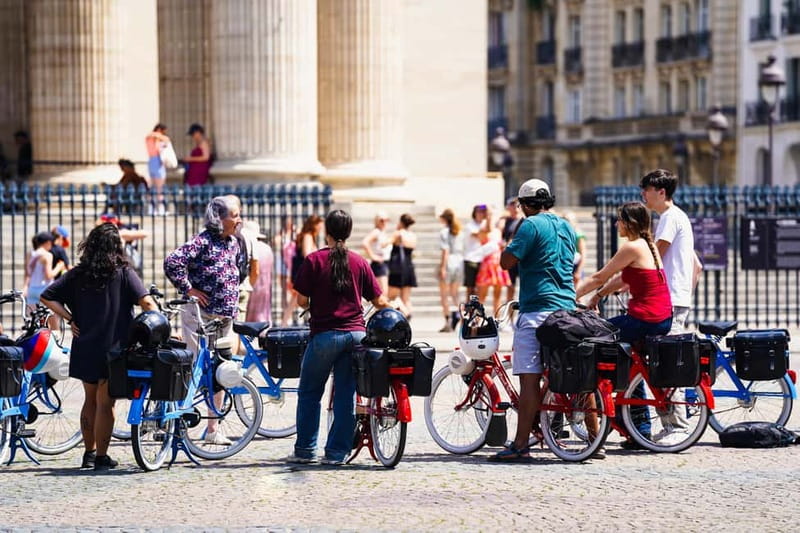
The Solex is part bicycle, part moped, and unmistakably French. On this tour, you ride an electric version that has been recycled and retrofitted, so you get the look and character of a vintage machine with a quieter, easier ride.
That matters in Paris. Walking between Notre-Dame, the Eiffel Tower, Les Invalides, and Place de la Bastille would take much of a day. The Solex lets you connect these places in a single outing, while still keeping you close to the street.
I like the sense of motion here. You are not sealed behind glass, and you are not moving so slowly that every block feels like a chore. The breeze, the sound of the city, and the changing views give the tour a playful quality. One especially fitting detail from the experience is the feeling of discovering Paris with your hair in the wind.
This is not a rental with a map. A guide leads the way in English or French and adds context to the streets and buildings you pass. The most useful part of that format is the local commentary. Paris can look like a series of handsome facades until someone explains why a square, church, or riverbank matters.
You can also read our reviews of more guided tours in Paris



Starting near Père Lachaise Cemetery
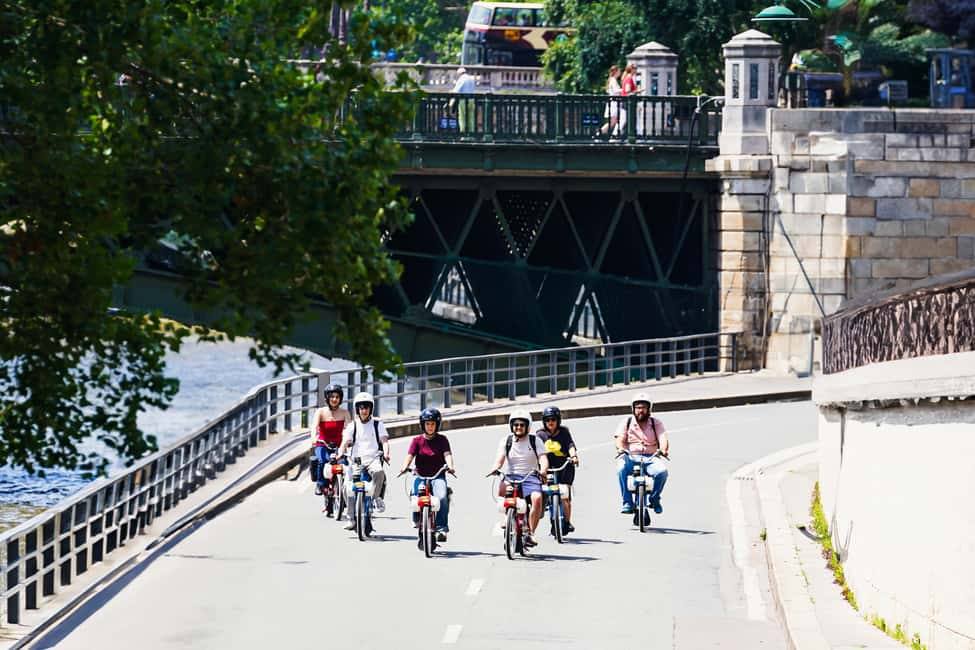
The meeting point is at 18 Rue Soleillet in the 20th arrondissement, only a few meters from Père Lachaise Cemetery. Your guide will be there from 15 minutes before departure, and the activity ends back at the same address.
This starting point is not beside the Eiffel Tower or the Seine, so allow time to reach it. The location gives the outing a local beginning rather than a start in the center of the usual sightseeing zone. If you are staying near the central monuments, check your route before booking a tight connection.
Arrive promptly. The guide needs to prepare the group and get everyone moving together, and a delayed start can affect the whole route. Wear comfortable clothes and shoes. Breathable layers make sense in summer, while cooler months call for warm, waterproof clothing.
The Solex and helmet are included. You do not need to bring special equipment, but you should dress for the day’s weather. Paris can feel much cooler when you are moving than when you are standing on a sunny pavement.
Riding toward the intellectual Left Bank
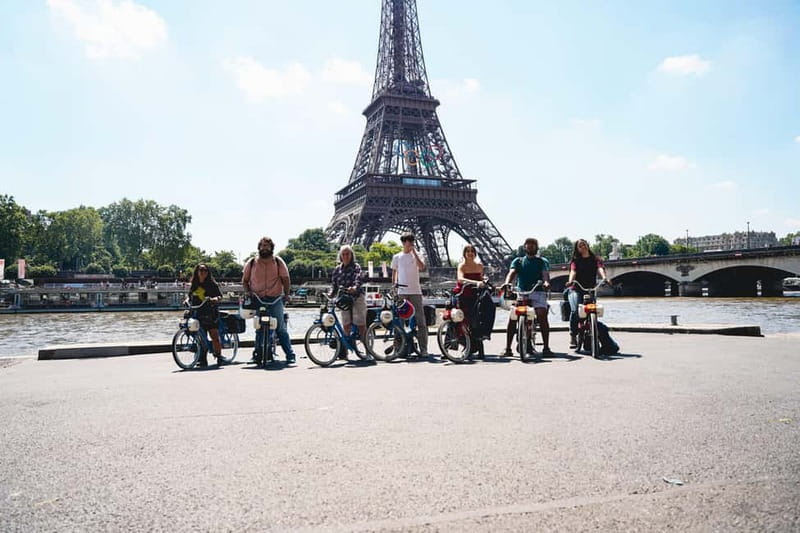
The heart of the outing is the Left Bank, Paris’s long-standing center of learning, art, literature, and public debate. The route connects famous sights with the streets and river views that give this part of the city its character.
You will not experience the Left Bank as a museum display. You see it from street level, with the city unfolding around you. That makes the tour useful early in a Paris visit, when you want to get your bearings and decide which places deserve a longer return visit.
The guide’s stories are important because the tour moves at a steady pace. The published experience promises anecdotes about the writers, philosophers, and artists associated with Paris. You might pass a building in seconds, but a well-timed explanation can make that building easier to remember later.
The route also brings together different sides of Paris. Notre-Dame represents medieval religious architecture. The Panthéon points to national memory and France’s celebrated figures. Les Invalides carries military history beneath its famous golden dome. The Eiffel Tower supplies the instantly recognizable Paris view. The Seine ties the whole ride together.
Notre-Dame and the Seine riverbanks
Notre-Dame is one of the tour’s major stops and remains one of the clearest symbols of Paris. From the Solex, you can appreciate the cathedral as part of the city around it, rather than viewing it only as an isolated attraction.
The tour description identifies Notre-Dame as a Gothic masterpiece, but the value here is also its place in the wider route. You see how the cathedral relates to the Seine and the historic core of the city. If you want an interior visit or a close architectural study, plan separate time outside this tour. A moving sightseeing route is best for orientation and exterior views.
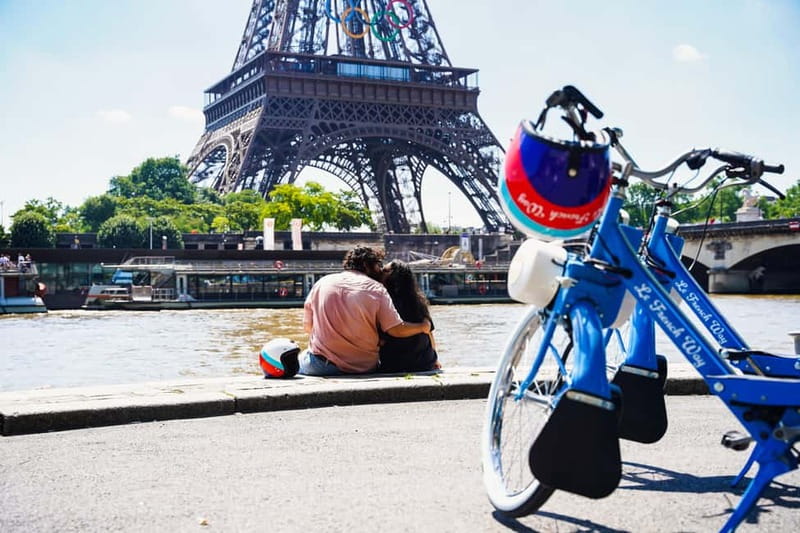
The Seine riverbanks add a welcome change of pace. They are recognized as a UNESCO World Heritage site, and riding beside the water gives you open views after the tighter streets of central Paris. The river also helps you understand the city’s layout. Instead of treating each monument as a separate stop, you see them as parts of one connected urban story.
This is one place where weather matters. On a mild day, the river ride should feel airy and relaxed. In rain or cold wind, the same open stretch can be less pleasant, so proper clothing is more than a minor suggestion.
The Panthéon and Paris’s intellectual side
The Panthéon is a natural fit for a tour about intellectual Paris. It is the resting place of many of France’s great figures, and its presence gives the Left Bank a serious, reflective counterpoint to the Eiffel Tower’s visual drama.
The Solex is particularly useful around this part of the city because it lets you link the Panthéon to nearby streets without spending the whole afternoon climbing hills on foot. The ride is not designed as a formal lecture or a long interior visit. Instead, you get a concise explanation, a strong exterior impression, and a sense of why this area drew thinkers and artists.
I would treat the Panthéon as a place to mark for a later return if you want time inside. The tour gives you the setting and context, while a separate visit lets you study the building at your own pace.






Les Invalides and the golden dome
Les Invalides provides one of the route’s most striking views. Its golden dome is easy to recognize and gives the ride a grand, ceremonial moment after the more academic feel of the Panthéon.
From the road, you can take in the scale and shape of the complex without committing to a long museum stop. That is useful if you are short on time or want a broad first look at Paris before choosing individual attractions.
The tradeoff is simple: the tour shows you the monument, but it does not replace a full visit. Anyone interested in military collections, Napoleon, or the building’s interior should set aside additional time. For everyone else, the dome makes an excellent visual marker and a memorable part of the ride.
The Eiffel Tower from a moving seat

No Paris tour can avoid the Eiffel Tower, and this one includes it without making the entire outing revolve around the monument. That balance is welcome. You get the city’s best-known symbol as part of a wider look at Paris rather than spending the whole tour waiting in a ticket line.
The Solex gives you a street-level approach and a chance to see how the tower fits into its surrounding neighborhoods. The experience is more about the view and the sense of place than climbing the tower or entering it.
If you want photographs, be ready to take them quickly. This is a guided ride, not a long photo session, and the exact pause time is not specified. Keep your phone secure and follow the guide’s instructions around traffic. The best value comes from enjoying the sequence of sights, not expecting every stop to function like a private photo call.
Musée d’Orsay and Place de la Bastille
The Musée d’Orsay occupies a former Beaux-Arts palace on the Seine. Even if you do not enter, the building itself adds another layer to the tour. It reflects Paris’s ability to turn grand public architecture into cultural space, and its riverfront setting makes it especially appealing from a moving route.
Art lovers should see this stop as a preview. The tour can tell you where the museum fits in the city, but it cannot offer the time needed for its collections. If Impressionist painting is high on your list, return later with several hours available.
Place de la Bastille brings a different mood. It is tied to the French Revolution and remains a strong symbol of political change. The square also reminds you that Paris is not only a city of palaces and museums. Its streets have been shaped by protest, upheaval, and public life.
Including Bastille with the Left Bank sights makes the route broader than a standard monument loop. You move from religion and national memory to art and revolution, all in one compact ride. That range is a major reason to choose this experience over a simple e-bike rental.
What the small group and guide add
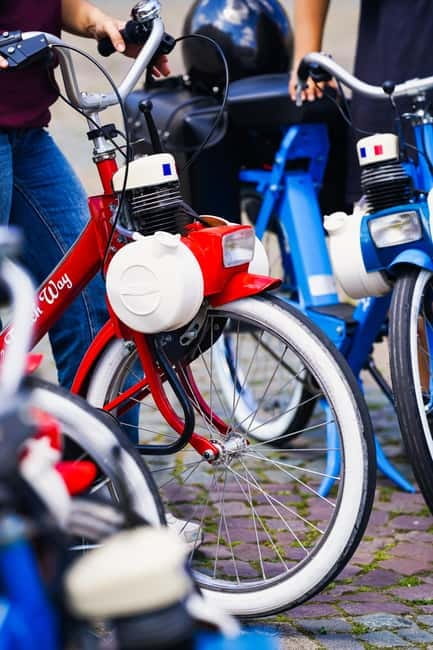
The group limit is 10 people. That is small enough to feel more personal, while still keeping the social energy of a shared outing. You are not paying for a private tour, but you should have a better chance of hearing the guide than you would in a large group.
The guide leads in English or French. The published information does not provide a guide’s name, so you should not book expecting a specific person. What you can expect is a live guide who explains the sights and adds city anecdotes as you go.
The guide’s role matters most between the headline stops. Anyone can recognize the Eiffel Tower. The useful commentary comes when you learn why the Left Bank matters, how the Seine shaped Paris, or which figures are linked to the Panthéon and the city’s intellectual life.
The experience has earned a perfect rating from four submitted reviews, with repeated praise for the guide, the fun format, the anecdotes, and the eco-friendly setup. I would place the strongest emphasis on the combination of clear guiding and easy riding. The Solex is amusing on its own, but the stories turn it into a real city tour rather than a novelty vehicle outing.
Is $90 a fair price?
At $90 per person, this is not the cheapest way to see Paris. You can walk along the Seine for free, and public transport costs far less. The question is what you value.
You are paying for the Solex, helmet, live guide, route planning, and the ability to connect major sights in 2 to 3 hours. If your time in Paris is limited, that can be good value. You get an overview without the physical effort of walking across the city or the impersonal feel of a bus.
The price makes less sense if you want long stops, museum entry, or detailed time inside each monument. This is a sampler and orientation ride. It helps you see the shape of Paris and choose where to return.
I think the experience is strongest for a first or second day in the city. You can use the ride to mark the Panthéon, Musée d’Orsay, Notre-Dame, or the Seine for later visits. It also suits repeat visitors who want to see familiar Paris in a fresh, slightly playful way.
Practical details before you book
The outing lasts 2 to 3 hours, with starting times based on availability. Since the exact departure schedule is not provided here, check the available time before planning dinner, museum tickets, or another tour.
Cancellation is flexible up to 24 hours before departure for a full refund. You can also reserve now and pay later, which helps if your Paris plans are still shifting.
The activity is listed for adults aged 18 and older. The general information also refers to minors following safety rules and being accompanied by an adult, but the specific booking restriction says the experience is not suitable for children under 18. Treat it as an adult-only tour when making your plans.
Follow traffic laws and the guide’s directions. Comfortable clothes, suitable shoes, and weather-ready layers will do more for your enjoyment than extra luggage or special cycling gear.
Who should book the electric Solex tour?
I would book this if you want a lively introduction to Paris, enjoy unusual transport, and like hearing short stories as you move through the city. It is especially useful for couples, friends, and solo adults who want a shared outing that feels more personal than a coach tour.
It is also a good choice if you want to see the Left Bank, the Seine, and the major monuments in one compact experience. The small group and electric assist make it easier than a standard bicycle tour, while the open-air design keeps you connected to the streets.
I would hesitate if you dislike riding in city traffic, need long uninterrupted time at each sight, or are visiting mainly for museum interiors. Weather can affect the experience, and the route cannot give every landmark the attention it deserves.
For most adults who want a fun, informative way to get oriented, I think the $90 price is reasonable. Book it near the start of your Paris stay, wear practical clothes, and treat it as a fast-moving introduction to the city rather than a substitute for full monument visits.
FAQ
How much does the Solex guided tour cost?
The tour costs $90 per person.
How long does the tour last?
The tour lasts between 2 and 3 hours. Starting times depend on availability.
What language is the tour conducted in?
The live guide conducts the tour in English or French.
Where does the tour begin?
The meeting point is 18 Rue Soleillet, 75020 Paris, a few meters from Père Lachaise Cemetery.
Where does the tour finish?
The activity ends back at the meeting point on Rue Soleillet.
What is included in the price?
The price includes the tour guide, an electric Solex bike, and a helmet. The group is limited to a maximum of 10 participants.
Can I cancel or pay later?
You can cancel up to 24 hours in advance for a full refund. The tour also offers a reserve-now, pay-later option.