REVIEW · PARIS
Private Walking Tour of Montmartre and Sacré-Cœur Visit
Book on Viator →Operated by Astra Via Tours · Bookable on Viator
One of Paris’s most storied hills is Montmartre. This walk pairs classic art spots with a breezy, learn-as-you-go pace, ending at Sacré-Cœur for big skyline views. I especially like how the stops feel like you’re moving through an artist’s imagination, not just checking boxes. There’s a lot to love here, but the route is mostly uphill, so plan for the climb.
I love the way the guide makes the neighborhood connect: cabaret legend, Van Gogh-era streets, and the maker culture around Place du Tertre all tie together. I also like the photo opportunities built into the route, including the I love you wall in multiple languages and the visual punch of iconic Montmartre landmarks. The main drawback is the Sacré-Cœur dome isn’t included—basilica entry is free, but the dome has an extra fee.
If you want a straightforward, art-focused Montmartre tour that finishes with a view, this is a strong fit. Just go in with moderate stamina and keep a few euros ready if you want the dome.
In This Review
- Quick Hits You’ll Notice on This Walk
- How This 2-Hour Montmartre and Sacré-Cœur Walk Fits Together
- Starting at Pl. Blanche: Where the Tour Finds Its Rhythm
- The Belle Époque Cabaret Stop: Paris Glam, Without the Museum Tone
- Van Gogh-Era Streets and the Café-and-Shop Experience
- Art Nouveau Details and the Metro Entrance Moment
- The Je t’aime Wall: 250 Languages, Quick Magic
- Le Bateau-Lavoir: Where Modern Art Got Its Push
- Le Moulin de la Galette: Artists, Windmills, and a Famous Painting Link
- Le Passe-Muraille Optical Illusion: A Quick Reality Check
- Place Dalida: A Quiet Stop With a Good-Luck Legend
- La Petite Maison Rose de Montmartre: The Pink Building Worth Looking Up At
- Place du Tertre and the Daily Painters Scene
- Sacré-Cœur Final Approach: Big Views, White Stone, and Calm Energy
- Price and Value: What $118.63 Is Paying For
- Who This Montmartre Walk Suits Best
- Should You Book This Tour?
- FAQ
- Is the Sacré-Cœur Basilica entrance fee included?
- How long is the tour?
- Where does the tour start and end?
- Is this a private tour?
- What’s included in the price?
- What is not included?
- What should I bring for comfort?
Quick Hits You’ll Notice on This Walk
- Sacré-Cœur panoramic payoff at the top, with basilica entry free and the dome costing extra
- Art and illusion stops like Le Bateau-Lavoir and Le Passe-Muraille, sized for an easy stop-and-look pace
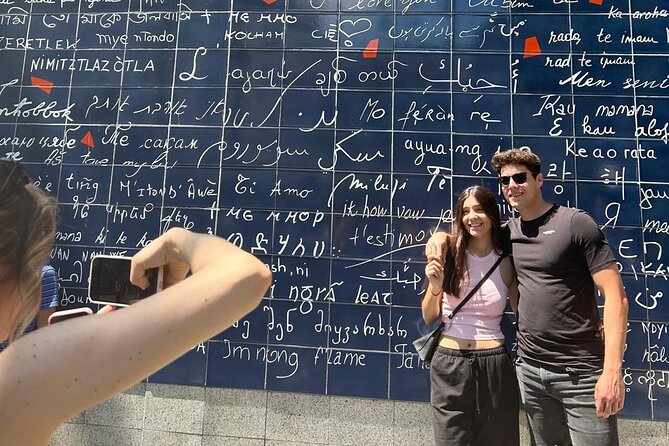
- Je t’aime in 250 languages: a romantic, photo-friendly installation that takes minutes and makes memories
- Artist hangouts and studio lore tied to Picasso, Modigliani, Renoir, and more
- Real neighborhood details such as historic cafés, bistros, and an Art Nouveau metro entrance feel
- Optional wine upgrade if you’d rather finish with a sip than just a sunset view
How This 2-Hour Montmartre and Sacré-Cœur Walk Fits Together
This tour runs about 2 hours and keeps things moving without rushing you from stop to stop. You’ll start near 5 Pl. Blanche (75009) and work your way up through Montmartre’s streets, with a planned finish at Sacré-Cœur. It’s labeled as private, meaning it’s set up for your group rather than being mixed into a random crowd.
The way the route is designed matters. Montmartre can feel chaotic if you wander on your own. This plan acts like a map in human form: the guide points out what you’d otherwise miss, then gives you just enough time at each spot to take photos, read the scene, and keep going.
Pace-wise, there’s a key point: you’re going uphill. The tour is marked as requiring moderate physical fitness, and it can get steep in places. If you’re the type who stops to admire doorways and street corners, you’ll love this—just don’t expect a flat stroll.
You can also read our reviews of more walking tours in Paris



Starting at Pl. Blanche: Where the Tour Finds Its Rhythm
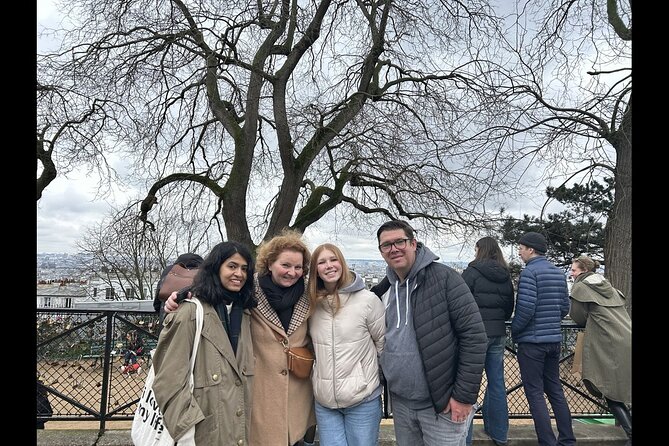
You’ll meet at 5 Pl. Blanche, which is a solid starting point because it places you close to Montmartre’s entertainment and old-street energy. From there, the guide typically sets the tone early, helping you understand what makes this area different from “regular Paris sightseeing.”
Expect a tour that feels like a guided walk through layers of time. You’ll get context right away, including how the neighborhood’s reputation as an arts-and-nightlife hub grew over the decades. The early part of the walk also sets up your later stops—so when you reach the artists’ spots, it makes more sense why they mattered.
One practical note: bring a camera you actually want to use. The route is packed with viewpoints and corners that are made for quick photos, and the guide will naturally time you around the most readable angles.
The Belle Époque Cabaret Stop: Paris Glam, Without the Museum Tone
The first major stop is a famous Belle Époque cabaret connection, the kind of place that turned nights into legend. You’ll hear about the artists, dancers, and the bohemian spirit that kept the area in the spotlight for more than a century. This isn’t just “who performed here”—you get the sense of why Montmartre attracted people with big ideas and bigger personalities.
Why this works for you: it gives your Montmartre walk a personality. Paris has plenty of grand sights, but this is the side of Paris that feels lived-in—loud, creative, and slightly rebellious. You’ll also see how cabaret culture connects to later art stops, so your brain starts labeling what you’re seeing.
If you’re traveling with art lovers, this is where the trip starts feeling personal fast.
Van Gogh-Era Streets and the Café-and-Shop Experience
Next, you’ll move into a charming, winding street lined with the everyday stuff that keeps Montmartre from becoming a theme park. This is the part of the tour that makes you slow down without even trying. You’ll pass historic cafés, bakeries, and shops—and you’ll get the added touch that Vincent Van Gogh once lived in the area.
I like this section because it’s not just “look at the building.” It’s how people move through the neighborhood: where the locals grab a bite, where the storefronts pull you in, and how the street shape changes your perspective as you walk. If you’re trying to understand Montmartre as a real place (not just a postcard), this helps.
Watch your footing here if it’s wet, and remember: you’re still building toward the bigger climb.
Art Nouveau Details and the Metro Entrance Moment
One of Montmartre’s most fun surprises is the mix of old Paris beauty with practical street life—especially around the Art Nouveau metro entrance. You’ll stop where the design is eye-catching, then the guide ties it back into the neighborhood’s identity as a place where aesthetics and everyday life co-exist.
This stop is brief by design, which I appreciate. You get the story, you see the detail, and then you move on while the neighborhood still feels exciting rather than “spent.”
Photo tip: take one shot straight-on and one angled. Art Nouveau details look different depending on how you frame them, especially with stairs and street lines around you.
You can also read our reviews of more private tours in Paris
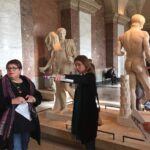





The Je t’aime Wall: 250 Languages, Quick Magic
A short walk later, you’ll reach a romantic installation: I love you written in over 250 languages. This is one of those stops you might not plan for if you’re going purely by landmarks, which is exactly why it’s on this route.
Here’s why it’s valuable for you: it’s not just pretty. It’s a conversation starter. You’ll likely find yourself pointing out words, laughing at how some scripts look, and taking photos that actually feel like you made a stop, not just walked by.
If you want a little breathing space in the tour, this is it. It’s quick, meaningful, and easy to enjoy even if you’re a bit tired from the climb.
Le Bateau-Lavoir: Where Modern Art Got Its Push
Then you get into the serious art story at Le Bateau-Lavoir, the legendary artists’ residence where Picasso, Modigliani, and others lived and worked. The building may look humble, but the impact is huge. You’ll also hear that Picasso painted Les Demoiselles d’Avignon there—a detail that instantly raises the stakes of what you’re looking at.
Why this stop is worth the time: it shows you that revolutionary art didn’t always happen in polished, museum-like spaces. It happened in working spaces, in cramped corners, in places where artists shared ideas and everyday chaos.
Expect this stop to be more about the guide’s connections than about reading plaques. This is where a strong guide can make the “why” stick.
Admission note: you may need to plan around any ticket needs for this specific site, since it’s described as an area where an admission ticket isn’t included.
Le Moulin de la Galette: Artists, Windmills, and a Famous Painting Link
At Le Moulin de la Galette, you step into a lively spot with strong artist associations. This area was once a gathering place for artists and Parisians, and it even inspired Renoir’s painting Bal du moulin de la Galette.
This is a great stop if you like art references that actually help you see the place. You’ll look at the neighborhood and think about how painters would frame light, movement, and crowds. Even if you’re not an art-history person, the guide can help you spot the logic behind the painting.
Admission isn’t included here either, so don’t build your expectations around entering anything ticketed—treat it as a learn-and-look stop.
Le Passe-Muraille Optical Illusion: A Quick Reality Check
Next comes Le Passe-Muraille, the optical illusion sculpture: the man passing through the wall. It’s inspired by a story by Marcel Aymé, which adds a little narrative spice to what could have been just a fun photo spot.
I like this because it gives your brain a break. You’ve been tracking artists and architecture; now you get playful, visual storytelling. This is also a good moment to reset your energy before the later walking stretches.
Time-efficient too: it’s only a few minutes in the plan, which keeps the tour smooth and prevents “standing around” fatigue.
Place Dalida: A Quiet Stop With a Good-Luck Legend
Place Dalida is a tucked-away square dedicated to the beloved French-Italian singer. You’ll see her statue here, and there’s a legend that touching her bronze bust brings good luck.
This stop works well if you like Parisian oddities and local culture. It’s not the loudest place on the hill, but it’s memorable because the tour slows down enough for you to notice the atmosphere of a small square tucked into the larger scenery.
It’s also a nice contrast after the bigger art stops—this one feels more personal, like a local shrine.
La Petite Maison Rose de Montmartre: The Pink Building Worth Looking Up At
You’ll also admire La Petite Maison Rose de Montmartre, a charming pink building connected to artist life since 1920. The guide ties it to artists such as Picasso and Modigliani, so you’re not just seeing a pretty façade—you’re seeing a place linked to the creative world that made Montmartre famous.
Why it’s a good stop: color matters. Montmartre is full of stone and gray unless you know where to look. This pink building gives you a visual anchor you’ll remember later.
Admission isn’t included, so enjoy it like a street photo stop and a story moment.
Place du Tertre and the Daily Painters Scene
The tour then reaches Montmartre’s most famous square for painters setting up their easels daily. This is where the neighborhood’s artistic legacy becomes visible on the sidewalk.
I recommend treating this as a “watch and decide” area. You can look at painters, check out what they’re working on, and browse without committing to anything right away. The square can get busy, so your best move is to step back for a minute, let the chaos settle, and then pick your angle.
Photo tip: stand where you can capture both the easel crowd and the surrounding streets. It helps your photos tell the full Montmartre story.
Sacré-Cœur Final Approach: Big Views, White Stone, and Calm Energy
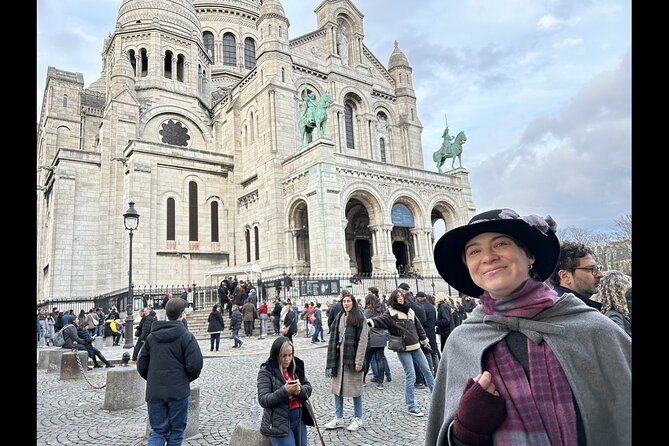
At the end, you’ll reach Basilique du Sacré-Cœur de Montmartre. It sits high above the neighborhood, and it delivers one of the most recognizable Paris panoramas. The basilica is described as offering a view that feels like a payoff for the climb—white stone, open space, and a skyline spread you’ll want to linger over.
The basilica itself has a practical advantage: entry is free. But if you want the best vertical view inside the dome area, you’ll need to plan for the extra €7.00 dome access fee per person.
This ending is also emotionally smart. After street art, illusion sculptures, and artist lore, Sacré-Cœur gives you a sense of scale. It’s not just another stop; it changes your perspective on the entire neighborhood.
Price and Value: What $118.63 Is Paying For
At $118.63 per person, you’re paying for a guide-led walk with structured stops, expert context, and access to Sacré-Cœur (with the dome fee separate). You’re also getting a private setup for your group and a mobile ticket.
Is it a deal? It can be, depending on what you want from Montmartre. If you’d otherwise spend time trying to piece together artists’ locations and explanations on your own, this saves effort. And if you care about storytelling—why the neighborhood became what it became—an organized walk usually pays off.
Two upgrades help tailor the value:
- You can upgrade to include a private tour component.
- You can also add an exclusive French wine tasting experience.
If you enjoy art and you want a guide who handles photos patiently, this format tends to land well. One highlight you should care about: named guides like Ifi and Benedict are described as helping the tour feel like it makes sense, not like a rapid list.
One more reality check: there’s a reported incident where the guide didn’t show up because a booked group was canceled and removed from the system. In that case, the company processed a full refund and apologized. That doesn’t mean it will happen to you, but it’s a good reminder to keep an eye on your day-of confirmation.
Who This Montmartre Walk Suits Best
This is ideal if you want:
- a tight 2-hour route through the most meaningful corners of Montmartre,
- strong art and culture connections tied to real places,
- lots of stops that are easy to photograph,
- a guide who can answer questions and work at your pace.
It’s especially good for couples and small groups who want the romantic Je t’aime moment plus the big view at Sacré-Cœur without spending the whole day.
It might be less ideal if:
- you struggle with steep uphill walking, since the climb is part of the deal,
- you want every stop to include optional museum-style entrance tickets (some entries aren’t included),
- you’re looking for a purely flat, minimal-stairs route.
Should You Book This Tour?
I’d book it if you want Montmartre to feel guided and purposeful—cabaret legend, artist hangouts, a clever illusion, the I love you wall, then Sacré-Cœur’s view. The combination is what makes the experience land: it’s small-scale walking with big-picture context.
I’d also book it if you like having a plan when Paris gets complicated. A good guide helps you see what matters and gives you photo beats without turning the day into chaos.
I’d hesitate only if steep walking is a deal-breaker for you, or if dome access is a must-have and you’d rather know the cost upfront. Otherwise, it’s an efficient, art-and-neighborhood way to experience one of the most famous areas in Paris.
FAQ
Is the Sacré-Cœur Basilica entrance fee included?
Basilica entry is free, but you’ll need to pay an additional fee to access the dome (listed as €7.00 per person).
How long is the tour?
The tour is listed as about 2 hours.
Where does the tour start and end?
It starts at 5 Pl. Blanche, 75009 Paris, and ends at the Sacré-Cœur Basilica in Montmartre.
Is this a private tour?
Yes. It’s described as a private tour/activity, with only your group participating.
What’s included in the price?
The tour includes a walking tour of Montmartre, an expert guide, recommendations for local attractions and hidden gems, a visit to Sacré-Cœur Basilica, and photo opportunities. An optional wine tasting may also be available as an upgrade.
What is not included?
Tips for the guide are not included. Dome access fee for Sacré-Cœur is not included. Admission tickets for some other stops may also not be included.
What should I bring for comfort?
You should have moderate physical fitness for the uphill sections. Wear comfortable shoes since the route includes steep parts, and bring what you need for photos.
If you tell me your group size and whether dome access matters to you, I can help you decide if the upgrade is worth it.