REVIEW · LYON
Storytelling tour of Old Lyon
Book on Viator →Operated by Cybèle · Bookable on Viator
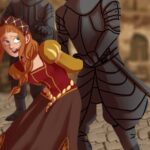
Old Lyon becomes a stage on this lively walk through the Renaissance. You follow Catherine, a female printer and publisher, as trouble threatens her family business and King Henry II prepares to arrive. The story leads you through Vieux Lyon’s covered traboules, turning narrow passageways and old buildings into scenes from a historical drama.
I like the way the tour gives you real human stakes instead of a string of dates. I also like its family appeal: children as young as 4 have been captivated, while older children and adults still get useful details about Lyon’s past. The main drawback is simple: the tour lasts only 1 hour 15 minutes, and it is offered only in French.
In This Review
- Key points to know before booking
- Why the Catherine story changes Old Lyon
- Starting at 6 Av. du Doyenné
- Walking through UNESCO-listed Vieux Lyon
- The traboules are part of the story
- A theatrical performance, not a standard lecture
- Why the French-only format matters
- Seventy-five minutes and a $22.93 price
- What the tour does especially well
- What to consider before you go
- Who should book this Old Lyon walk
- Should you book the Storytelling Tour of Old Lyon?
- FAQ
- How much does the Storytelling Tour of Old Lyon cost?
- How long does the tour last?
- What language is the tour offered in?
- Where does the tour begin?
- What time does the tour start?
- Where does the tour end?
- How many people can join the tour?
- Can I cancel for a full refund?
Key points to know before booking
- A Renaissance family drama: Follow Catherine, a printer and publisher, as she tries to protect her family business.
- Old Lyon’s traboules: Walk through the covered silk passages that make this district unlike any other part of the city.
- A theatrical guide: Professional storytellers such as Olivier, Chloé, and other Cybèle performers bring the tale to life.
- Strong choice for families: The format has worked well for children from about 4 years old through the early teen years, as well as adults.
- Small group format: The maximum group size is 15 people, which helps keep the performance personal.
- French only: You need enough French to follow a spoken story, not just read signs or hear simple directions.
Why the Catherine story changes Old Lyon
A standard walking tour gives you buildings, dates, and architectural terms. This one gives you a person to follow. Catherine’s work as a printer and publisher places you inside the practical world of 16th-century Lyon, where a family business can be threatened by political events, royal arrivals, and ordinary survival.
That focus is useful because printing was not an abstract craft. It involved a workplace, family responsibilities, customers, and risk. As Catherine tries to save the business, the district becomes more than a collection of handsome facades. You are encouraged to notice where people lived, worked, moved, and hid.
The story is designed to give you chills, but it is not presented as a grim lecture. The tone is lively, rhythmic, and theatrical. The performer may change depending on the date. Guides identified in the supplied information include Olivier, Chloé, and Agent L, all associated with Cybèle. The quality of the experience depends heavily on the storyteller’s energy, so expect an actor-led performance rather than a quiet, academic walk.
The story also mixes a larger plot with smaller observations and anecdotes. That balance matters. You get the sweep of Renaissance Lyon, but you also pause for the kind of detail that helps you picture daily life.
You can also read our reviews of more tours and experiences in Lyon.



Starting at 6 Av. du Doyenné
The tour begins at 6 Av. du Doyenné in Vieux Lyon at 10:30 a.m. This puts you directly in the historic district rather than beginning with a bus ride or a long orientation away from the main sights.
Arrive ready to walk. The supplied information does not give a detailed accessibility description or a full list of streets, so you should expect the normal uneven surfaces and confined spaces associated with an old pedestrian district and its passageways. Service animals are allowed, and the meeting area is near public transportation.
The morning start is practical for families. Children often have more patience for a story before a full day of sightseeing, and the 75-minute length avoids the fatigue of a long historical walk. It also leaves time afterward for lunch, the Gadagne museums, or a second look at the streets you have just encountered.
Because this is a small group with a maximum of 15 people, you should have a better chance of seeing and hearing the performer than you would in a large city tour. That is especially important when the guide is acting, changing tone, or directing your attention toward a particular doorway or passage.
Walking through UNESCO-listed Vieux Lyon
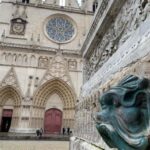
Vieux Lyon is a UNESCO World Heritage district and one of Europe’s largest Renaissance areas. The supplied description places it second in size only to Venice’s Renaissance complex. You do not need to know every architectural term to appreciate the setting. The value here is the concentration of old streets, courtyards, and buildings within a compact area.
The storytelling format helps you look at familiar sights in a different way. Instead of stopping only for a facade or church, you are drawn into the lives of the people who occupied the district in the 16th century. The guide’s job is to make you observe the setting while following the plot.
That is why this experience can work well as an introduction to Old Lyon. You get a basic sense of the district’s past without spending two hours on a formal architectural lecture. If you later take a traditional history tour, you will already have a mental picture of the streets and a few human stories to attach to the facts.
There is a tradeoff. The tour has one broad stop listed, Vieux Lyon, rather than a long sequence of named monuments. If your goal is a complete survey of Lyon’s churches, courtyards, museums, and architectural details, choose a conventional city tour instead or add one afterward. This experience is built around atmosphere, action, and observation.
The traboules are part of the story
The covered passageways known as traboules are one of the main reasons to choose this walk. These routes pass through or beneath buildings, linking streets and courtyards. In Lyon, they are closely tied to the city’s silk-working past and to the physical structure of Old Lyon.
Here, the traboules are not treated as a quick photo stop. They become part of the movement of the tale. You follow the performer through spaces that feel more enclosed and secretive than the open streets, which suits a story involving danger, family pressure, and a threatened business.
The passages also reward attention. Look up, look around, and listen for directions from the storyteller. The tour’s family format encourages children to observe monuments and details rather than simply trail behind an adult. That can make the walk more engaging for younger participants.
Access to individual traboules can vary, and the supplied information does not promise a fixed list of passageways. Think of them as a central feature of the route, not as a guarantee of a particular famous doorway. The important point is that you explore Old Lyon from the inside as well as from its main streets.
A theatrical performance, not a standard lecture
The professional storyteller is the heart of the experience. The guide does not simply deliver facts and point toward buildings. The performer carries a character-driven plot, uses rhythm and expression, and keeps the group moving through the district.
That approach has several advantages. A good story gives children a reason to pay attention, and it gives adults an emotional thread to follow. Several of the supplied comments describe the performances as lively, captivating, funny, and well paced. One child was still singing songs connected with the visit weeks later, which tells you how strongly the theatrical side can land with younger visitors.
The experience also appears to work across age groups. Children aged 4 and 7 were described as fitting a version designed for very young children, while grandchildren aged 10 and 12 were deeply engaged with another performance. An 11-year-old also enjoyed the printer-focused story. These details suggest that the format is not limited to toddlers, though the exact level of the performance may depend on the scheduled version.
Adults should not assume this is only a children’s activity. The story includes historical information, observations about life in Old Lyon, and small anecdotes woven into the action. The tone is playful, but the subject is not empty entertainment.
Still, you need to understand the format before booking. If you prefer a guide who pauses for extensive questions, dates, and architectural explanation, the theatrical style may feel light. If you want your family to remember Lyon through a character and a plot, it is a strong fit.


Why the French-only format matters
This tour is available only in French. That is the most important booking point, because the experience depends on understanding spoken dialogue, jokes, suspense, and historical explanation.
You do not need perfect French to enjoy every visual detail, but you should be able to follow a narrated story. Families with children who understand French will get much more from the performance than families relying on gestures or occasional translation. A French learner may also enjoy the clear setting and repeated story elements, but the tour should not be treated as a beginner language lesson.
The language adds authenticity to the theatrical style, yet it limits the audience. English-speaking visitors should choose another Old Lyon walk if they want a full explanation of the history. Booking this one without enough French could leave you with the movement and acting but not the plot that holds the experience together.
Seventy-five minutes and a $22.93 price
At $22.93 per person, the tour is priced as a short specialty experience rather than a full-day activity. You are paying for a compact performance, a professional storyteller, and a guided look at one of Lyon’s most historic districts.
I find the value strongest for families. A 75-minute tour is long enough to create a real sense of place but short enough to fit around meals, naps, museum visits, or a larger Lyon itinerary. The small group limit of 15 also matters because a theatrical guide is easier to follow when the audience is not huge.
The value is less clear if you want extensive sightseeing. The tour covers Vieux Lyon and the traboules through a single narrative route, but it does not promise admission to a museum or a long list of formal attractions. Admission for the Vieux Lyon stop is listed as free, so the fee is for the guided storytelling experience rather than entry tickets.
The booking pattern suggests you should reserve ahead during busy periods, since the activity is booked an average of 25 days in advance. That is not a guarantee of availability on every date, but it is a useful warning for a family planning around fixed school holidays or a short stay.
What the tour does especially well
The strongest feature is its ability to make a familiar historic district feel personal. Catherine’s struggle gives the walk a clear purpose, and the Renaissance setting supplies suspense without requiring you to memorize a long list of facts.
The pacing also receives repeated praise in the supplied material. The performance is described as rhythmic, lively, and quick-moving, with time passing fast. That is a real benefit in a city tour, especially with children who may lose interest during long explanations.
Another strength is the mix of large and small stories. You get the main drama of the printing business, then smaller anecdotes that help fill out the world around it. The result is more engaging than either a bare historical lecture or a performance with no useful local information.
The tour’s flexibility across ages is worth noting. Children are a clear target audience, but adults can enjoy the acting and learn about Old Lyon at the same time. The experience also seems to encourage repeat visits to Cybèle’s other themed walks, including a separate Croix-Rousse story, though that is not part of this booking.
What to consider before you go
First, confirm that everyone in your group can follow French. This is not a minor detail. Language is central to the experience.
Second, keep the short duration in mind. One participant found the 1 hour 15 minutes too brief after comparing it with a traditional office-of-tourism visit. If you want more monuments, more historical context, or a longer route, this should be one part of your Old Lyon plans rather than the entire visit.
Third, expect some fiction within the historical setting. The story is described as told and dramatized, so Catherine’s adventure is a narrative vehicle for exploring 16th-century Lyon. That is different from a strictly factual biography or archival history lesson.
Finally, dress for the conditions. The supplied comments include praise for the performer’s enthusiasm in freezing weather and even rotten weather. The show continues outdoors, so the experience is better when you are prepared for Lyon’s temperature and rain.
You receive booking confirmation at the time of reservation, and free cancellation is available up to 24 hours before the start time. Cancellations or changes made less than 24 hours before the 10:30 a.m. start are not refunded or accepted under the stated policy.
Who should book this Old Lyon walk
I would choose this for families who want history delivered through action and character. It is particularly suitable if your children enjoy stories, theater, or solving the question of what happens next.
It also suits adults who have already seen Old Lyon and want a fresh way to read the district. The performance can add meaning to passageways and streets that might otherwise blur together during a standard stroll.
I would be more cautious if you speak little or no French, if you want a quiet architectural tour, or if you have only one chance to cover every major sight in Vieux Lyon. In those cases, a conventional guided tour may give you more factual coverage.
Should you book the Storytelling Tour of Old Lyon?
Book it if you want a short, lively, French-language performance that turns Renaissance Lyon into a family story. The traboules, small group size, and strong storytelling focus make it a memorable way to begin exploring Vieux Lyon.
Skip it if you need English, want a long historical survey, or dislike dramatized tours. For the right audience, $22.93 buys more than a walk through old streets: it gives you a character, a conflict, and a reason to look closely at Lyon’s most atmospheric district.
FAQ
How much does the Storytelling Tour of Old Lyon cost?
The listed price is $22.93 per person.
How long does the tour last?
The tour lasts approximately 1 hour 15 minutes.
What language is the tour offered in?
The tour is available only in French.
Where does the tour begin?
The meeting point is 6 Av. du Doyenné, 69005 Lyon, France.
What time does the tour start?
The stated start time is 10:30 a.m.
Where does the tour end?
The tour ends at Musée d’histoire de Lyon, Gadagne, 1 Pl. du Petit Collège, 69005 Lyon, France.
How many people can join the tour?
The activity has a maximum group size of 15 people.
Can I cancel for a full refund?
Yes. You can cancel up to 24 hours before the experience start time for a full refund. Cancellations or changes made less than 24 hours in advance are not accepted and are not refunded.