REVIEW · PARIS
Louvre Late Opening Guided Tiny Group Tour
Book on Viator →Operated by Toorers · Bookable on Viator
Evening hours at the Louvre change the whole vibe. This late-opening guided tiny-group tour targets big masterpieces while keeping you in the Louvre’s calmer evening rhythm.
What I really like is the small group size (max 6), which makes it easier to ask questions and get a more human, tailored route. I also like that the guide’s focus hits the Louvre’s headline eras—Egypt and Greece antiquities, French and Italian painting, and yes, the Mona Lisa—without turning it into a frantic sprint.
The one watch-out: 2 hours is still short for a museum that’s practically a city. If you want deep time in just one department, you’ll need to plan follow-up stops on your own.
In This Review
- Key highlights worth knowing before you go
- Why the Louvre late opening feels smarter than a daytime visit
- Your start point: Le Kiosque des noctambules near Place Colette
- The pre-Louvre stops that help you orient fast
- Stop 1: The Louvre route that spans medieval, Egypt, and Greece
- What to watch for in this part
- Sculptures to paintings: how the tour handles the Mona Lisa pressure
- A practical note on the Mona Lisa
- The value of a guide-led route (and what it can’t do)
- What’s included in the price, and what’s not
- Timing and group size: why max 6 makes a difference
- Where this tour shines most (and who should book it)
- Tips to make your 2 hours count
- Should you book this Louvre Late Opening tiny-group tour?
- FAQ
- How long is the Louvre Late Opening guided tiny group tour?
- Is the tour in English?
- How many people are in the group?
- Is the museum entrance ticket included?
- Where do I meet the guide?
- Where does the tour end?
- What is the tour price?
- What’s not included in the price?
- Do I need to buy a mobile ticket?
- Is free admission available for some visitors?
- What if my plans change?
Key highlights worth knowing before you go
- Maximum 6 travelers: More attention, more questions, less waiting around.
- English-speaking guide with an art-historian focus: You get context fast, not random facts.
- Evening pacing: You tour during quieter hours, which can make the classics feel less stressful.
- Must-see sculptural run: Venus de Milo and Samotrace’s Victory are part of the conversation.
- Mona Lisa included in the flow: You don’t have to navigate to it blind.
- Entrance ticket included (adults): The tour price includes the €22 admission ticket.
Why the Louvre late opening feels smarter than a daytime visit
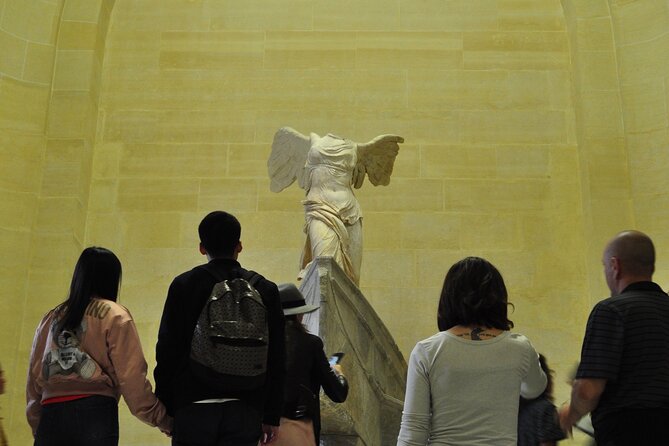
The Louvre is one of those places where the lines, crowds, and noise can turn your museum time into crowd management. An evening entry helps in a practical way: the museum doesn’t feel like everyone is there for the exact same photo in the exact same minute.
This tour is built around that reality. You’re not just “going to the Louvre.” You’re getting a guided route that aims to show you the most important parts while you’re more likely to think clearly, look longer, and actually read what’s in front of you.
And since it’s a tiny-group format, you’re less likely to get stuck behind people who stop at every single wall label. The guide can keep the group moving, then slow down when something matters—like a famous sculpture’s pose or why a painting sits where it does in the larger collection.
You can also read our reviews of more guided tours in Paris



Your start point: Le Kiosque des noctambules near Place Colette

The meeting point is Le Kiosque des noctambules, 12 Pl. Colette, 75001 Paris, and the tour ends back there. That round-trip setup is a small detail, but it matters in Paris. It means you’re not hunting for where the guide “wraps up” or figuring out a complicated transfer.
It also helps that the experience is described as near public transportation. For you, that usually means fewer headaches on arrival. You can take the train, walk a few minutes, and start focused rather than rushed.
Since the start is fixed and the tour is only about 2 hours, I recommend arriving a few minutes early. Even a short delay can eat into the time you’d rather spend inside the museum.
The pre-Louvre stops that help you orient fast
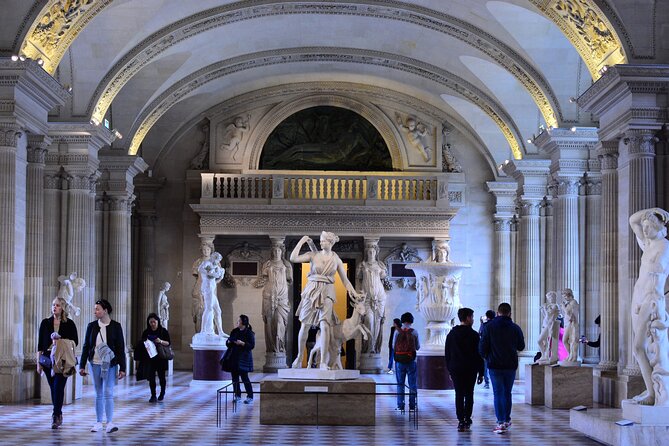
Before you even reach the main galleries, the tour includes quick orientation stops.
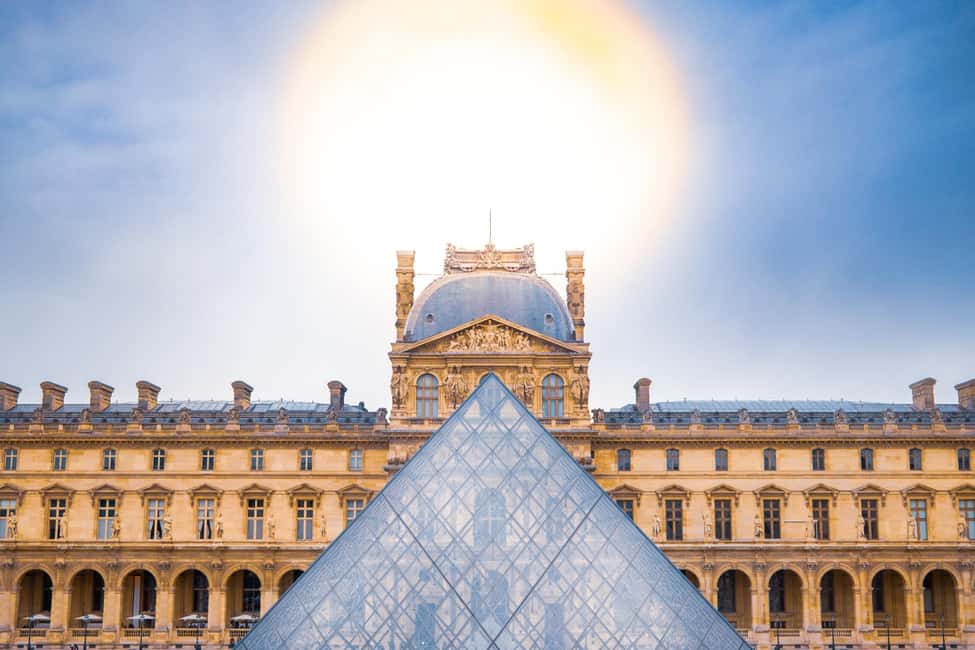
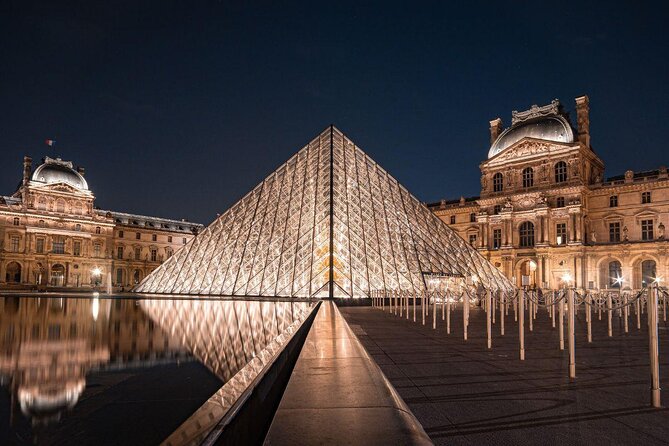
One stop is about a modern architectural feature inside the Louvre premises—the kind of landmark you can’t really miss. Another stop starts your tour at a notable metro station that’s basically an icon on its own. These two elements do more than fill time. They help you get your bearings and mentally switch gears from city Paris into Louvre Paris.
Think of this as your warm-up: you see the museum’s modern face and you start from a transit-aware location. Then, when you step into the collection spaces, your brain is ready to switch into “art looking mode,” not “where are we?” mode.
Stop 1: The Louvre route that spans medieval, Egypt, and Greece
Once you’re in the museum, you’re with an experienced art historian guide. The biggest value here is how the guide connects objects across time. The Louvre isn’t one continuous story—it’s a pile of centuries—so having someone stitch the story for you is how this kind of tour earns its place.
The route is also flexible in a good way. Since you’re in a reduced group, you can ask for adjustments based on what you want to prioritize. You might not control everything, but you can steer enough to keep the experience from feeling like a rigid checklist.
The route includes the medieval times, plus Egypt and Greece Antiquities. That’s where you get the heavy-hitters that many first-time Louvre visitors seek out anyway, but with context you won’t get if you wander alone.
Notable stops in this portion include:
- Venus de Milo
- Samotrace’s Victory
Those names carry weight for a reason. Seeing them as part of a guided storyline helps you notice more than the silhouette. You start paying attention to things like form, movement, and what the sculpture signals about the culture that produced it—rather than only thinking, I’ve seen this in textbooks.
What to watch for in this part
In this segment, I’d pay attention to:
- How the guide explains why these works became famous
- How they’re placed within the Louvre’s larger collection logic
- Any comparisons the guide makes between eras and styles
Even if you only catch part of a long explanation, it usually changes how you see the next room.






Sculptures to paintings: how the tour handles the Mona Lisa pressure
The Louvre can turn into a sprint toward the Mona Lisa because everyone knows it’s there. This tour keeps you from approaching it like a scavenger hunt.
After the antiquities and major sculptural moments, the tour continues through great French and Italian paintings—and it doesn’t skip the Mona Lisa. That sequencing helps you in two ways.
First, you’re not mentally exhausted by the time you reach it. You’ve already built a rhythm: look, learn, move, repeat. Second, the guide can frame the Mona Lisa within the broader painting story, which gives you something to think about besides the crowd and the selfie game.
A practical note on the Mona Lisa
Even at a quieter time of day, the Mona Lisa area is popular. The guide’s value is not magical crowd control—it’s helping you process what you’re seeing in the real museum setting.
If you tend to rush when something is famous, this is where a guide can slow you down. If you like to study, it can help you focus on a few key details without getting lost in information overload.
The value of a guide-led route (and what it can’t do)
A good guided Louvre tour gives you focus. It helps you avoid the trap of seeing “a lot” but remembering very little.
This one aims to do that by covering major eras and icons in a tight 2-hour plan. You’ll leave with a clearer map of where the Louvre’s collections sit in your mind. You also get a sense of the museum’s themes, not just isolated masterpieces.
But here’s the trade. A 2-hour guided tour can’t replace the satisfaction of returning later and spending 90 minutes in one wing. It’s a first-step experience, not a last word.
So I’d treat this as:
- a strong orientation
- a smart sampler of the Louvre’s biggest visual stories
- a way to decide what you want to see again on your own
What’s included in the price, and what’s not
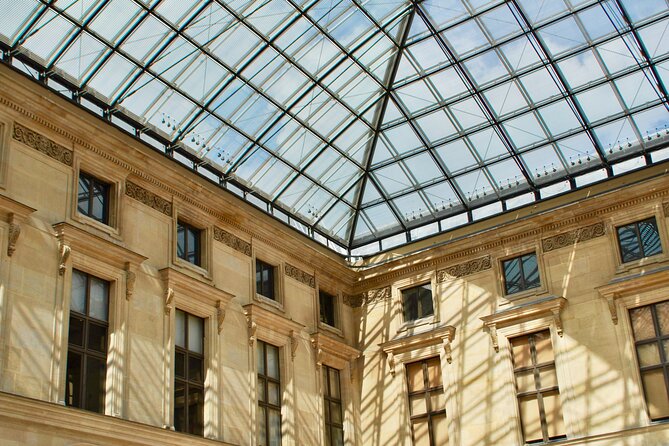
This tour costs $215.32 per person for about 2 hours. For you, the key value piece is that the tour price includes the museum admission ticket for adults: €22 entrance ticket included.
That means you’re paying for more than access. You’re paying for:
- guided interpretation from an art historian–style guide
- a tiny-group experience (max 6)
- a route designed to hit big-name sections during quieter evening hours
What isn’t included is also straightforward: coffee/tea, bottled water, and private transportation. So if you want a drink, plan on grabbing it before or after. In a museum setting, small needs pop up fast, and having to scramble later can break your flow.
Given the focus on guided time, I think the pricing makes sense for first-timers who want structure. If you’re already the type who can self-navigate confidently and don’t care about context, you might find a cheaper option. But if you want the guide’s interpretation and a calmer visit, this is a strong value play.
Timing and group size: why max 6 makes a difference
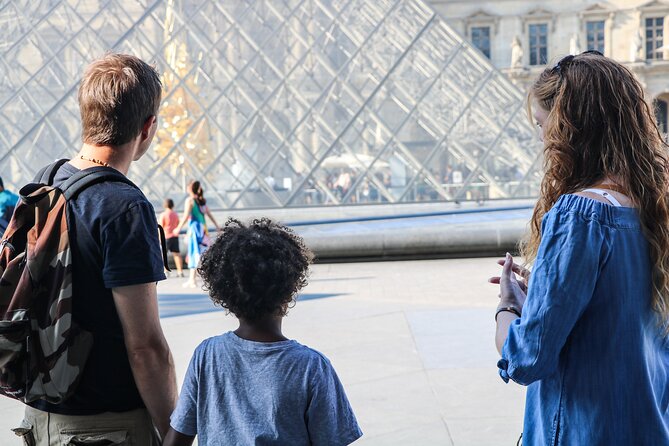
You’re capped at 6 travelers, and that’s not just a comfort perk. It changes the whole mechanics of the experience.
In larger groups, guides often speak at the pace of the slowest walker, and you get less room for questions. With a tiny group, the guide can pause and respond. The group can also stay together without turning the tour into a constant regrouping moment.
This matters especially at the Louvre, where the distance between major objects can be longer than people expect. Staying coherent as a group keeps you from losing time—and helps you see more with less stress.
The tour is offered in English, and you should receive confirmation at booking. Also, the experience notes that free admission can apply to visitors under 18 and EEA residents under 26 with valid ID and proof of residency. That’s worth planning for if you’re traveling with teens or young adults.
Where this tour shines most (and who should book it)
This is best for:
- Art enthusiasts who want a concentrated “greatest hits” route with context
- First-time Louvre visitors who feel overwhelmed by the museum’s scale
- Anyone who wants the classics—Egypt and Greece antiquities, French and Italian painting, Mona Lisa—without building a route from scratch
You might skip it if:
- you already have a very specific study goal that needs hours in one collection
- you prefer total independence and don’t want a timed itinerary
It also works well if you like a calm approach. Late opening plus a tiny group tends to be a better match for people who get tired of big crowds quickly.
Tips to make your 2 hours count
Because the tour is short, a little prep makes you get more out of it.
- Wear comfortable shoes you can walk in for a solid 2 hours. The Louvre is not a sit-down museum for most of the time.
- Have your priorities in mind before you arrive. You’ll likely see medieval, Egypt, Greece antiquities, major sculptures like Venus de Milo and Samotrace’s Victory, then French and Italian painting with the Mona Lisa.
- Bring a bottle of water yourself. Bottled water isn’t included, and you’ll feel better if you’re not stuck looking for a shop mid-tour.
- If you want adjustments, ask early. The format supports adapting the itinerary to the group’s wishes.
Should you book this Louvre Late Opening tiny-group tour?
Yes—if you want a structured, art-focused introduction without fighting crowds.
This tour gives you three big wins: a tiny group size for attention, a late-opening pace meant to feel calmer, and a guided route that covers the Louvre’s heavy-hitters from antiquities to the Mona Lisa. The included admission ticket for adults also helps the price feel less “extra.”
I’d book it if you’re short on time in Paris or you don’t want to spend your first Louvre afternoon building your own plan. If you’re the type who likes to wander for hours with a phone guide and zero structure, you might enjoy a DIY visit more. But for most people who want to leave the Louvre with clear highlights and a better understanding of what you saw, this is a smart choice.
FAQ
How long is the Louvre Late Opening guided tiny group tour?
It runs for about 2 hours.
Is the tour in English?
Yes, the tour is offered in English.
How many people are in the group?
The tour has a maximum of 6 travelers.
Is the museum entrance ticket included?
Yes. The adult entrance ticket (€22) is included.
Where do I meet the guide?
You meet at Le Kiosque des noctambules, 12 Pl. Colette, 75001 Paris, France.
Where does the tour end?
The tour ends back at the meeting point.
What is the tour price?
The price is $215.32 per person.
What’s not included in the price?
Coffee and/or tea, bottled water, and private transportation are not included.
Do I need to buy a mobile ticket?
A mobile ticket is part of the experience.
Is free admission available for some visitors?
Yes. Free admission applies to visitors under 18 and EEA residents under 26, with valid ID and proof of residency.
What if my plans change?
You can cancel for a full refund if you cancel at least 24 hours before the experience’s start time.