REVIEW · LYON
Vieux Lyon Cultural & Historical Walking Guided Tour (English)
Book on Viator →Operated by Free Tour Lyon · Bookable on Viator
Lyon has secret tunnels and silk secrets. This English walking tour ties traboules and silk weaving together, with Paul turning Lyon’s landmarks into stories in about two hours.
I love two things most: entry fees included as you move from Cathedrale Saint-Jean to the Hôtel-Dieu area, and the small-group pacing that keeps the history human instead of textbook.
One possible drawback: access can vary by opening hours. If your day lines up badly, you may not get the inside time exactly as described, so think of it as a great walk first and a bonus for interiors.
In This Review
- Key highlights to look for
- A two-hour route that links silk, secrets, and WWII
- Why it feels like good value at $6.05
- Start at Place Saint-Jean, then finish inside Hôtel-Dieu
- Cathedrale Saint-Jean-Baptiste: the astronomical clock stop
- Traboules du Vieux Lyon: secret passageways you can use
- Miniatures at the Musée du Cinéma et de la Miniature
- Tour Rose and the Maison du Crible architecture moment
- Brochier Soieries: live silkworms and jacquard-world tech
- Courthouses and the trial of Klaus Barbie
- Théâtre des Célestins: façade now, modern art below
- The main shopping street and Hôtel-Dieu’s transformation
- Practical tips so you can actually enjoy the walk
- Should you book this Vieux Lyon walking tour?
- FAQ
- How long is the Vieux Lyon Cultural & Historical Walking Guided Tour?
- Where does the tour start and end?
- Is the tour offered in English?
- What is included in the price?
- What is not included?
- What’s the group size?
- Can most people participate, and are service animals allowed?
- Can I cancel for a full refund?
Key highlights to look for
- Paul’s storytelling style in clear English that makes Lyon feel personal, not lecture-y
- Cathedrale Saint-Jean’s astronomical clock at the start, setting the tone fast
- Traboules du Vieux Lyon, the hidden passageways that connect streets and buildings
- Tour Rose (Maison du Crible), one of Vieux Lyon’s most recognizable twists of architecture
- Brochier Soieries silk stop, including live silkworms during the silk season and a look at the jacquard loom model
- Courthouses tied to Klaus Barbie and the Théâtre des Célestins façade with a chance to see modern art below the square
A two-hour route that links silk, secrets, and WWII

This tour is built for getting oriented fast. In just about two hours, you’re walking through the parts of Lyon that explain why the city mattered: silk money, medieval street life, and even wartime escape routes. It’s not trying to do everything in Lyon. It’s trying to show you the most Lyon parts, in the most practical way.
I especially like that the story changes as you walk. You start with a big civic-religious landmark, then you slip into the hidden traboules (those covered passageways), then you end in the transformed space of Hôtel-Dieu, where history now lives inside shops and food.
You can also read our reviews of more walking tours in Lyon
Why it feels like good value at $6.05
At $6.05 per person, the price looks almost too small. The real win is that the tour folds in all fees and taxes, and the route includes ticketed stops like Saint-Jean and several key sights. So you’re paying for a guided experience, not a scavenger hunt where you keep spending again and again on entry.
You also get a guide who actually shares local know-how. Paul’s style is part facts, part humor, and part practical advice. You’ll come away knowing what to do next: where to grab coffee, where to eat, and what museums are worth your time.
And you’re not stuck in a huge herd. The tour caps out at 18 travelers, which helps you hear the guide better and move smoothly through narrow old streets.
Start at Place Saint-Jean, then finish inside Hôtel-Dieu
You meet at Place Saint-Jean (Pl. Saint-Jean, 69005). The tour begins at 10:00 am. It ends at Place de l’Hôpital (69002), and the finish happens inside the Hôtel-Dieu complex.
That finish matters. Hôtel-Dieu sits in the heart of Vieux Lyon’s evolution: an old hospital turned into spaces for shopping, a luxury hotel, and a food court. Ending there means you’re not just dropped in a random street. You’re placed somewhere you can immediately use.
One practical tip: if you’re standing around hoping the right group appears, look for Paul. He’s easy to spot because he’s quite tall, and you may even notice him holding a sign for the Lyon Free Tours style of meetup.
Cathedrale Saint-Jean-Baptiste: the astronomical clock stop
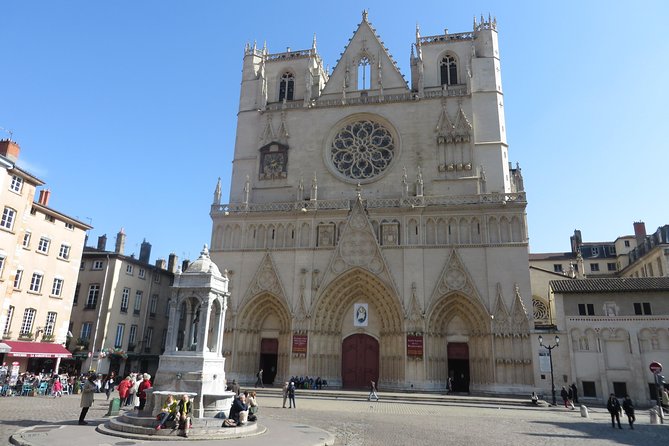
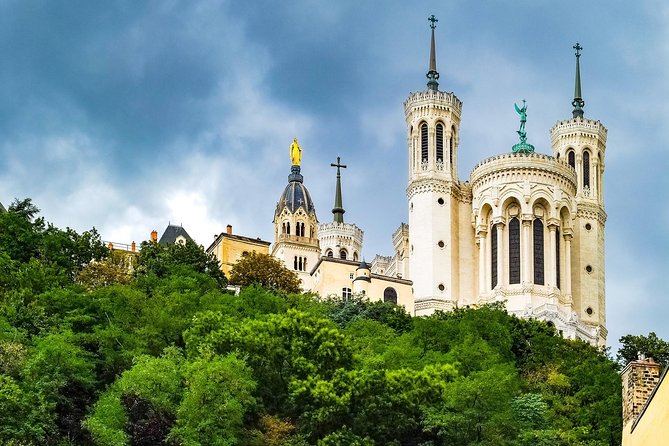
The route opens at Cathedrale Saint-Jean-Baptiste de Lyon. Expect a quick but focused visit—about 15 minutes—including the cathedral area and its astronomical clock.
This is a great first stop because it gives you a reference point. Once you’ve seen the cathedral and understood how Lyon framed time and faith here, the later history makes more sense. Medieval cities didn’t just build churches. They built systems—social systems, economic systems, and ways to measure the world.
If you’re traveling on a day when the cathedral is closed, you might end up with less interior access than you hoped. Plan for that possibility and treat the exterior and the surrounding square still as part of the payoff.
Traboules du Vieux Lyon: secret passageways you can use
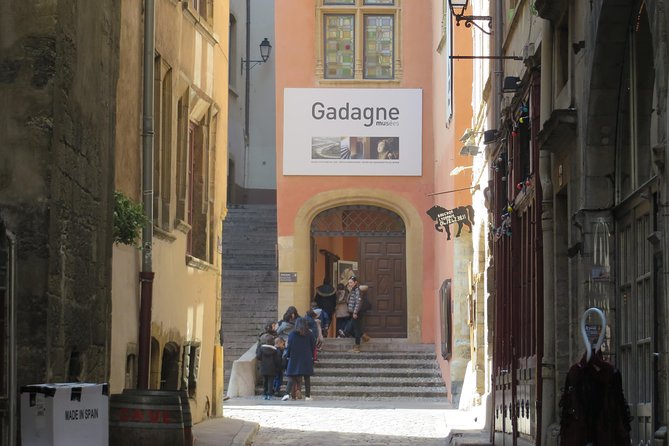
Then you go for the thing Lyon is famous for: traboules—hidden passageways connecting buildings and streets. You’ll spend about 15 minutes here, visiting a few of the most interesting routes in Vieux Lyon.
Here’s what makes this stop more than a photo moment. Traboules weren’t built just for mystery. They were practical. They helped people move through dense areas quickly, sheltered them from weather, and in later history they became part of survival and resistance planning.
So when Paul points out what you’re looking at, pay attention to the details on how these passageways line up between facades. After this, you’ll start noticing traboules everywhere, even when you’re walking on your own.
You can also read our reviews of more guided tours in Lyon





Miniatures at the Musée du Cinéma et de la Miniature
Next up is the Musée du Cinéma et de la Miniature. You get a short look—about 10 minutes—in the free courtyard area.
This stop works best if you like small-scale craftsmanship and clever design. Miniatures train your eye to notice proportions and details quickly. In a walking tour packed with big monuments, this is a nice reset.
One consideration: even when the plan suggests access to that miniature portion, actual entry can be restricted depending on the day. If that happens, you’ll still get value from the rest of the route—this is a bonus stop, not the core.
Tour Rose and the Maison du Crible architecture moment
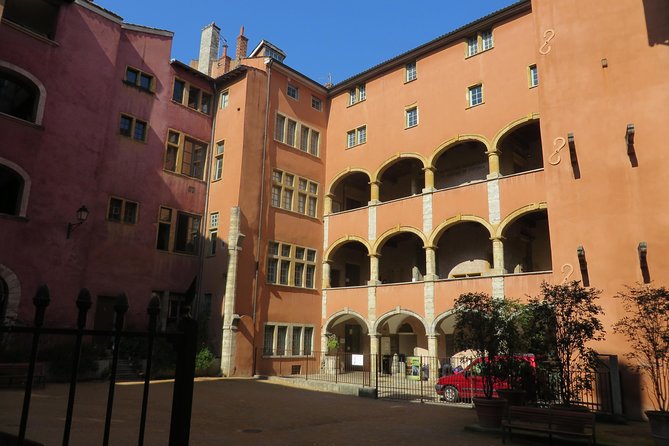
You get a quick architectural hit at Maison du Crible – Tour Rose (about 5 minutes). This is where the tour gives you one of Vieux Lyon’s most iconic shapes: Tour Rose.
Short stop, big impact. In old towns, you can walk past buildings like this every day without knowing why they matter. Here, you’re given a reason before you move on—so the tower starts to feel like a landmark, not just a pretty facade.
Brochier Soieries: live silkworms and jacquard-world tech
A highlight for many people is the silk stop at Brochier Soieries Vieux Lyon. You’ll spend about 5 minutes here, and the experience changes with the season.
During silk season, you may see live silkworms, and you may also get a look at a model of the jacquard loom. Even if you only catch part of the demonstration, the takeaway is clear: Lyon’s silk story wasn’t only about fashion. It was about technology, labor, and how a city built wealth through skilled work.
If you want to understand why Lyon has such a dense old-town layout, silk factories and workshops shaped how streets, buildings, and neighborhoods developed. This stop helps you connect the geography to the industry.
Courthouses and the trial of Klaus Barbie
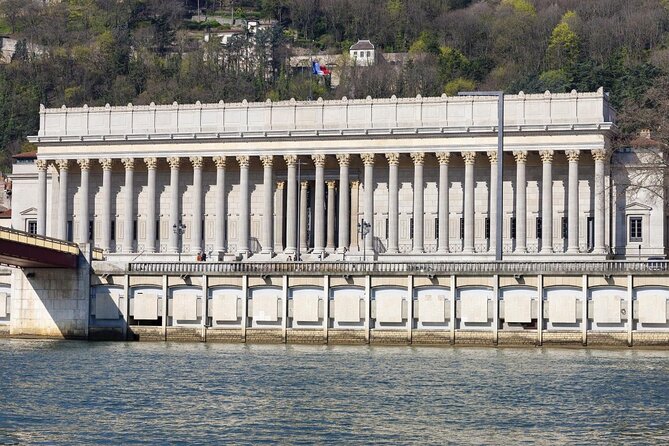
Later, you’ll see Lyon’s courthouses, including the connection to the trial of Klaus Barbie. This stop shifts the mood. It’s a reminder that Lyon’s streets weren’t just for commerce and crafts. They were also part of major historical events tied to World War II resistance and aftermath.
You don’t need to be a history buff to appreciate this. It gives weight to the walk. When you’ve already seen the traboules, the story of wartime movement and hiding fits naturally into the route’s logic.
Théâtre des Célestins: façade now, modern art below
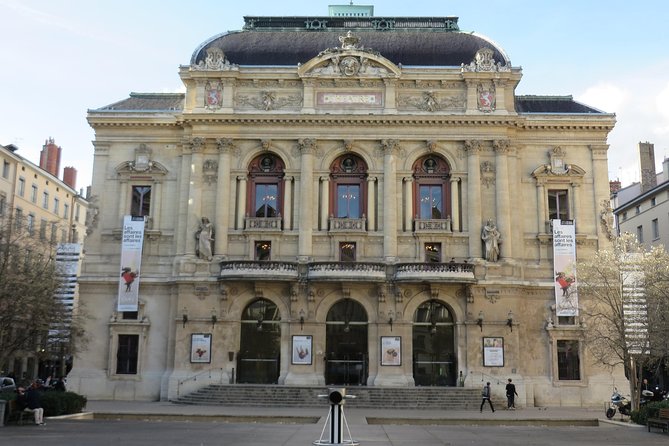
At Théâtre des Celestins, you’ll spend about 10 minutes. You’ll see the façade and possibly go down to view modern artwork that’s hidden underneath the square.
This stop is a nice example of how Lyon blends layers. Old architecture sits above newer ideas. So the tour doesn’t freeze the city in time. It shows you that Vieux Lyon isn’t just preserved—it’s still used and still changing.
The main shopping street and Hôtel-Dieu’s transformation
After the big landmark stops, you’ll walk past Lyon’s main shopping street—a practical pause before the grand finale.
Then you finish at Grand Hôtel Dieu. You’ll visit Hôtel Dieu, the old hospital space that’s been transformed into a mix of a shopping center, luxury hotel, and food court. You’ll spend about 10 minutes here.
This is a smart end point because it’s instantly useful. Once you’re inside, you can grab a snack, recharge, and plan what you want to do next without searching for your next address.
It also lands emotionally. You started with a cathedral tied to order and time. You end in a hospital turned into everyday life. That arc helps the whole route feel coherent.
Practical tips so you can actually enjoy the walk
- Stay close early. Some walking tours are loud at the front and hard at the back. If you drift away, you might miss parts of what Paul is saying.
- Wear good shoes. This is old-city walking, with tight turns and uneven stone common in Vieux Lyon.
- Bring a little patience for closures. Opening hours can shift, and some interior access may not happen exactly as planned on certain days (especially around weekly schedules).
- Watch for shelter if it rains. On rainy days, Paul knows where to pause and shelter while still explaining what you’re looking at.
- Start day-one if you can. If you’re short on time, this tour is a strong first stop. You’ll get enough orientation and food tips to guide the rest of your stay.
Should you book this Vieux Lyon walking tour?
If you want a fast, story-driven overview of Vieux Lyon—silk history, secret passageways, major landmark sites, plus a WWII thread—this tour is an excellent fit. The price is low enough that you’re not taking a huge risk, and the included fees make it feel fair rather than gimmicky.
I’d especially recommend it if you:
- like guided walks more than reading plaques on your own
- want help picking what to do next in Lyon
- enjoy hidden architecture like traboules and distinctive buildings like Tour Rose
I’d skip it or at least lower expectations if you’re arriving with a strict checklist of interior access every time. The tour is strong even as a walking story, but openings can affect how much you get inside certain stops.
FAQ
How long is the Vieux Lyon Cultural & Historical Walking Guided Tour?
It lasts about 2 hours.
Where does the tour start and end?
It starts at Place Saint-Jean (Pl. Saint-Jean, 69005 Lyon) and ends at Place de l’Hôpital (Pl. de l’Hôpital, 69002 Lyon), finishing inside the Hôtel Dieu.
Is the tour offered in English?
Yes, the tour is offered in English.
What is included in the price?
The tour includes all fees and taxes, with entry fees covered for the ticketed stops on the route.
What is not included?
Pick-up is not included, and breakfast is not included.
What’s the group size?
The tour has a maximum of 18 travelers.
Can most people participate, and are service animals allowed?
Most travelers can participate, and service animals are allowed.
Can I cancel for a full refund?
Yes. You can cancel up to 24 hours in advance for a full refund.