Lyon hides stories in plain sight. This 2-hour English walking tour with guide Paul strings together Lyon’s silk past in Croix-Rousse with what you’ll actually see on the street. I love how the tour starts with an easy meetup at the Museum of Fine Arts area and sets you up to understand the city fast.
I love the traboules portion in Vieux Lyon, where the route turns into a real puzzle you’ll want to solve with your own feet. One thing to consider: this walk involves a lot of stairs, so pack comfy shoes and go in at a steady pace.
In This Review
- Key Things I’d Note Before You Go
- A Silk-and-Secrets Walk Through Lyon in Two Hours
- Meeting at the Museum of Fine Arts: Easy Start, Good Orientation
- Place des Terreaux and the Beaux-Arts Courtyard Stop
- Croix-Rousse: Silk History You Can Actually See
- Traboules in Vieux Lyon: Hidden Passageways With Real Payoff
- Passage Thiaffait and the Village des Createurs
- Roman Amphitheatre Viewpoints: Where Photos Become Meaningful
- Fresque des Lyonnais: Art With Names, Not Just Color
- Eglise Saint-Paul and the Old Jewish Quarter Courtyards
- Rue Saint-Jean, Hidden Courtyards, and the Final Walk Into Old Lyon
- Pace, Stairs, and What to Wear (This Tour Is Not a Couch-to-Courtyard Day)
- Guide Paul: The Real Reason Many People Rebook Lyon Tours
- Value for $6.05: Why This Pricing Makes Sense
- Should You Book This Lyon Walking Tour?
- FAQ
- How long is the Lyon guided walking tour?
- Where does the tour start and end?
- Is the tour offered in English?
- What’s included in the tour?
- What sights will we see?
- Is lunch included?
- What’s the cancellation policy?
Key Things I’d Note Before You Go

- Meet at the Museum of Fine Arts (10:00am) and end in the heart of Vieux Lyon, so you can keep exploring right after.
- Croix-Rousse silk history gives context to the neighborhood you’re walking through, not just random photo stops.
- Traboules included (a few of the hidden passageways) so you don’t miss the fun part.
- Village des Createurs at Passage Thiaffait adds a modern twist to old-city wandering.
- Paul’s storytelling style is funny, clear, and very practical, with food-and-drink tips at the end.
- Roman viewpoints and the Fresque des Lyonnais make the “quick stops” feel worth it.
A Silk-and-Secrets Walk Through Lyon in Two Hours
If Lyon is new to you, this is a smart first morning kind of tour. It’s short enough that you’re not stuck in “tour fatigue,” but long enough to cover the big flavors of the city: old squares, hidden passages, church stops, and viewpoints.
What makes it work is the way the route is themed. You’re not just checking boxes. You’re learning why certain streets, neighborhoods, and passageways matter. And with guide Paul leading the way, the walk has a lively rhythm—moving forward, explaining what you’re looking at, then pointing you toward what to try next once you’re free on your own.
You can also read our reviews of more walking tours in Lyon

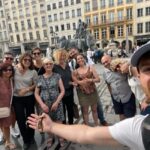
Meeting at the Museum of Fine Arts: Easy Start, Good Orientation
The meetup is at the Museum of Fine Arts of Lyon, at 20 Pl. des Terreaux (right by the Place des Terreaux area). The start time is 10:00am, and the end point is Place du Gouvernement, which is in the middle of Vieux Lyon.
That matters more than you might think. A lot of walking tours start awkwardly—wrong place, confusing directions, dead ends. Here, the start is clear and central. From there, you immediately hit Place des Terreaux, which acts like a “reset button.” It’s your first big reference point, so later, when you’re in smaller alleyways and courtyards, you’ll have a mental map instead of guesswork.
The tour also runs small, with a maximum of 18 travelers. That keeps it feel more like a guided walk than a crowded shuffle, and it helps your guide keep track of the group.
Place des Terreaux and the Beaux-Arts Courtyard Stop
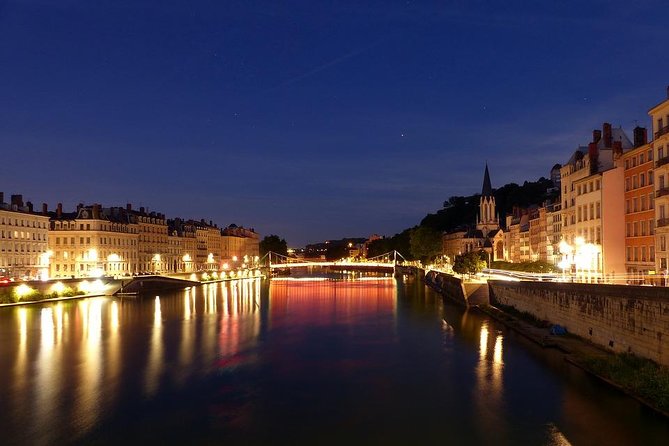
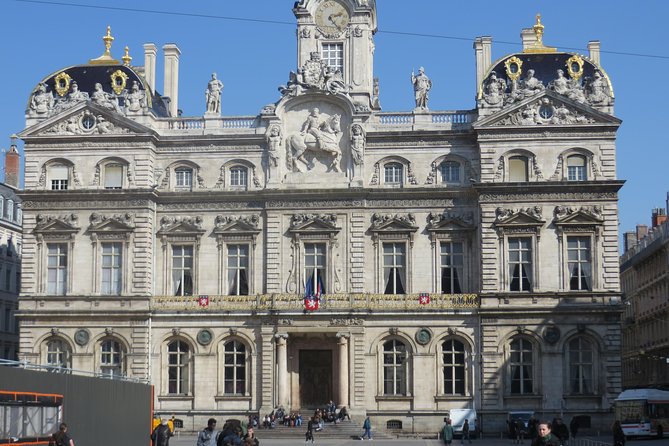
Your first stop is Place des Terreaux, the main town square of Lyon. It’s a quick introduction, about 10 minutes, and admission is free. Think of this as the place where your guide can frame the city: what you’re about to see, and how Lyon tends to reveal its layers.
Next is the Musée des Beaux-Arts de Lyon. The plan is to take a look at the courtyard if it’s open. This is only about 5 minutes, so don’t expect a full museum visit. But those small pauses are useful. They give you a breather and a sightline to architecture you’ll keep seeing again as the walk moves toward older neighborhoods.
If you’re someone who likes to connect the dots—street layout, building style, neighborhood vibe—this kind of quick “look here” stop helps a lot.
Croix-Rousse: Silk History You Can Actually See
Then you move into La Croix-Rousse, a historic neighborhood that’s strongly tied to Lyon’s silk history. The stop lasts about 15 minutes, with no admission required.
Here’s what I like about this portion: it gives context to what you’re already surrounded by. Instead of treating Croix-Rousse like a backdrop, the tour explains the story behind it, so the neighborhood feels more meaningful while you walk through it.
Croix-Rousse is also a nice contrast to the open square start. You go from a wide, public space to a more “neighborhood” feel. You’ll start noticing how the area’s character shapes routes and sightlines.
Traboules in Vieux Lyon: Hidden Passageways With Real Payoff
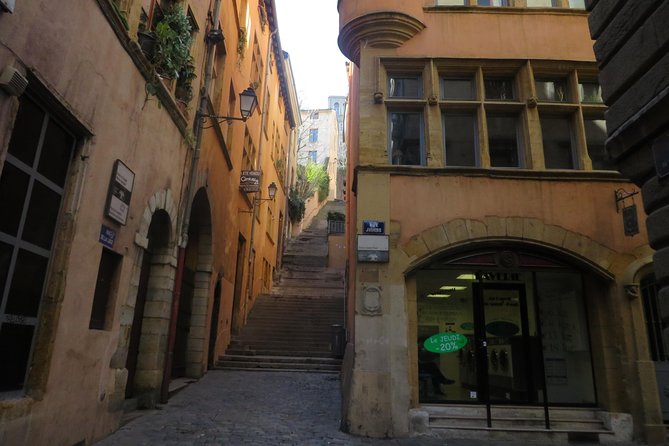
Now we get to the part most people come for: the traboules, those hidden passageways in Vieux Lyon. The tour includes a visit to a few of them, and this stop is about 15 minutes.
This is where your feet do the learning. You’ll see how Lyon creates shortcuts through buildings and courtyards—ways to move between streets that aren’t obvious if you’ve only ever walked “normally” along the street grid.
This is also the most “wow, I didn’t know that existed” segment of the walk. You’re not just hearing that Lyon has hidden passageways—you’re walking through a few of them with your guide explaining what you’re looking at.
One practical thought: since traboules often involve tight spaces and stair steps, don’t plan on this being the easiest part. Go slowly, hold onto railings where available, and let the guide set the pace.
You can also read our reviews of more guided tours in Lyon





Passage Thiaffait and the Village des Createurs

After the old-city passageways, you’ll see a different kind of use for space at Passage Thiaffait, about 10 minutes. Inside the passageway is the Village des Createurs, described as a creative business incubator.
This stop is a good reminder that Vieux Lyon isn’t frozen in time. It can hold work and ideas inside older structures. The tour won’t turn this into a long detour; it’s quick. But you’ll likely appreciate it if you enjoy seeing how cities adapt rather than only preserve.
Admission for this part is free, and it’s a nice “modern break” right when you might start thinking you’ve seen enough old stone.
Roman Amphitheatre Viewpoints: Where Photos Become Meaningful
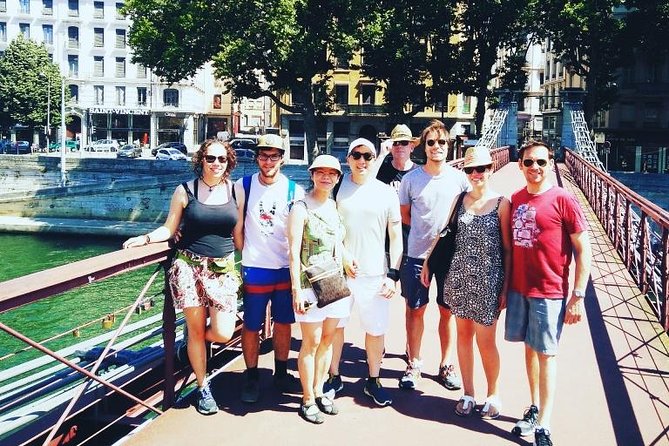
Next up is the Amphitheater of the Three Gauls. You only spend about 5 minutes, but it’s described as one of the nicest viewpoints in the city, overlooking the old amphitheatre.
Even short stops can be high value when the guide makes them land. A viewpoint like this is different from a typical “stand and take a picture” moment. It helps you connect what’s underground or gone with what you can see from street level now.
If you like understanding a city’s timeline, this is a quick way to do it without a full archaeological outing.
Fresque des Lyonnais: Art With Names, Not Just Color
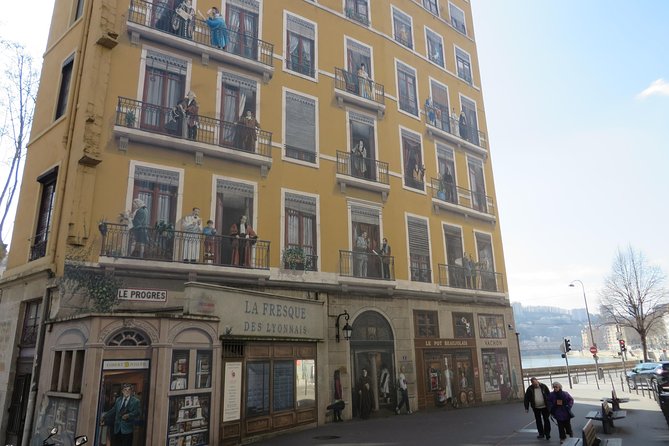
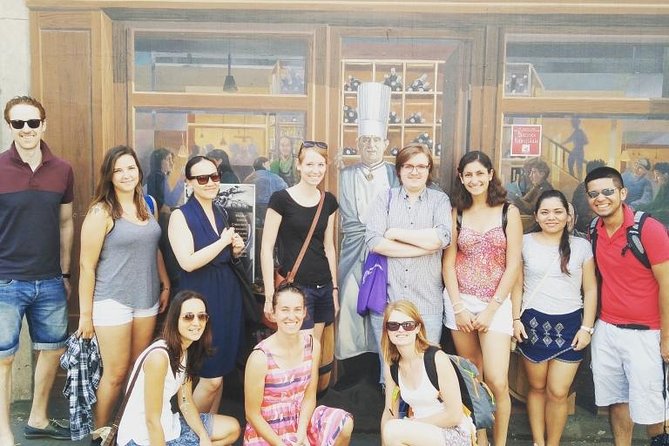
You’ll then see the Fresque des Lyonnais, a fresco painting featuring famous people born in Lyon. This is another short stop, about 5 minutes, and it’s free.
This kind of art stop works well on a guided walk because the guide can explain why the fresco matters—who’s represented and what it’s trying to communicate about local pride. It’s also a friendly pause. After history and architecture, you’re allowed to enjoy color and faces.
If you’re a photographer, this is one of those stops where you’ll want your phone ready. It’s not a long site visit, so you’ll want to capture it quickly, then keep moving.
Eglise Saint-Paul and the Old Jewish Quarter Courtyards
The tour passes by Eglise Saint-Paul, described as a lovely gothic church. It’s only about 3 minutes, but a church exterior still gives you a lot of clues about time periods and style.
Then comes Vieux Lyon itself, including the old Jewish quarter with its lovely courtyards. That’s about 10 minutes, with free admission.
Courtyards are a big part of Lyon’s charm. They change the feel of a street, making it feel more intimate and surprising. Even if you’ve seen old towns before, these courtyards tend to feel different because you can’t easily predict them from the street.
This is another place where the guide’s pacing matters. If someone tries to rush you, you miss the subtle payoff. If they slow down even slightly, you notice the textures, the angles, and the little transitions between open streets and enclosed spaces.
Rue Saint-Jean, Hidden Courtyards, and the Final Walk Into Old Lyon
Later, you’ll visit Rue Saint-Jean, described as the busy main street of Vieux Lyon, plus some hidden courtyards connected to it. That part runs about 10 minutes.
This is a good ending segment because it drops you right into the zone where you can keep exploring after the tour. You end at Place du Gouvernement, and from there you’re positioned to wander freely, pick a café, or go hunting for more of the kinds of spaces you saw with your guide.
There’s also a stop at the Musée d’Histoire de Lyon’s courtyard if it’s open. It’s only about 5 minutes, admission free, so it’s more of a quick peek than a museum plan.
Pace, Stairs, and What to Wear (This Tour Is Not a Couch-to-Courtyard Day)
Here’s the honest deal: it’s a walking tour, and it includes many stairs. One of the most repeated points from people who did it is that the pace stays lively while the route keeps climbing.
So I’d plan for:
- Comfortable shoes you trust on uneven stone
- A water bottle, since you’re moving for about 2 hours
- Going slow on stair sections rather than trying to keep up like a race
The good news is that the tour “keeps it moving.” Guide Paul is described as funny and knowledgeable while also staying organized. People also mention that he’s helpful if you’re running late—you can join the group with ease. That’s a real comfort if your day in Lyon is already packed.
Also: the tour is in English, uses a mobile ticket, and is near public transportation. Service animals are allowed. Small practical wins like that make the day smoother.
Guide Paul: The Real Reason Many People Rebook Lyon Tours
A lot of “good tour” reviews basically say the same thing: Paul tells stories in a way that makes Lyon make sense. People mention his clear English and a loud voice that carries, which helps if you’re in a group.
They also mention photos and props. That’s more than entertainment. When your guide uses images to explain what you’re about to see, it reduces the guesswork and makes the route feel guided rather than just narrated.
And Paul’s advice doesn’t stop at history. People call out that he shares helpful food and drink suggestions afterward, plus tips for what to do next and how to get around. That’s how a walking tour earns its place as more than a checklist.
Value for $6.05: Why This Pricing Makes Sense
On paper, $6.05 per person sounds almost too low for a guided walk. The catch—and the value—is that you’re paying for a focused orientation and a route you couldn’t easily stitch together alone.
You get:
- A central start and a structured route
- Short stops at major highlights and a few “only locals know this” bits
- The traboules segment included
- Guide time for about 2 hours
Even if you end up spending more later on museums or meals, starting with this kind of guided map-building often saves time. You’ll know what neighborhoods matter to you and where to look next.
One more pricing nuance from the guide model: some people describe it as a free walking tour format where you tip the guide. If you’re using cash for tips, it’s a nice way to support the person doing the work of making Lyon click for you. (Just follow the guidance you see during booking and pay in the way the tour provides.)
Should You Book This Lyon Walking Tour?
I think you should book it if:
- You want a 2-hour introduction to Lyon that covers more than the obvious sights
- You care about hidden passageways and want to see at least a few traboules
- You’re happy with a walk that includes stairs and a steady pace
- You like guides who share practical follow-up tips, not just lectures
Skip it (or choose another style) if:
- Stairs and uneven, old-town walking are a no-go
- You’re looking for a long museum or food tour instead of a guided stroll
If you’re visiting Lyon for the first time, this is an efficient way to get your bearings fast and leave with ideas for your next steps. And if Paul is your guide, there’s a good chance you’ll leave smiling at how much Lyon can fit into just a morning’s worth of walking.
FAQ
How long is the Lyon guided walking tour?
It runs for about 2 hours.
Where does the tour start and end?
It starts at the Museum of Fine Arts of Lyon, 20 Pl. des Terreaux, 69001 Lyon. It ends at Place du Gouvernement, Pl. du Gouvernement, 69005 Lyon, in the heart of Vieux Lyon.
Is the tour offered in English?
Yes, it’s offered in English.
What’s included in the tour?
The tour includes all fees and taxes, and the traboules stop is included. Lunch is not included.
What sights will we see?
You’ll pass or visit key stops such as Place des Terreaux, La Croix-Rousse, a few traboules in Vieux Lyon, Passage Thiaffait (with the Village des Createurs inside), the Amphitheatre of the Three Gauls viewpoint, Fresque des Lyonnais, Eglise Saint-Paul, Vieux Lyon courtyards (including the old Jewish quarter), and more courtyard peeks if open.
Is lunch included?
No, lunch is not included.
What’s the cancellation policy?
Free cancellation is available up to 24 hours in advance for a full refund. If you cancel less than 24 hours before the start time, the amount paid won’t be refunded.