REVIEW · LYON
Discorver Lyon in a Private tour with your driver
Book on Viator →Operated by TeleportaLyon · Bookable on Viator
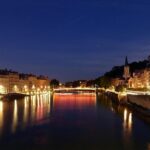
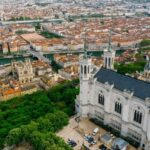
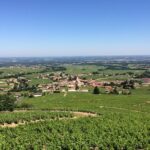
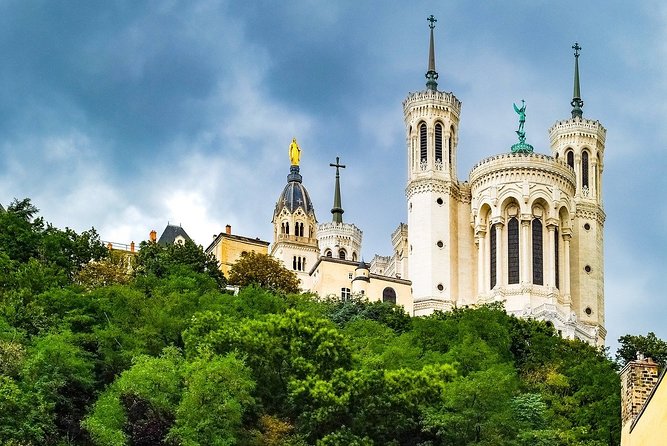
Lyon reveals itself quickly from a car, especially from Fourvière Hill, where the basilica looks over the Rhône, Saône, and the city below. This private tour then links Roman ruins, silk-worker murals, grand squares, river islands, and food landmarks in about three hours. I like the efficient route and the personal service from Mickael, also referred to as Mika, who drives a clean Tesla and offers local suggestions. The main drawback is simple: the stops are brief, so this is an overview rather than a slow visit inside Lyon’s sights.
I especially like two things here. Your group has the vehicle to itself, which makes the tour useful for up to three people who want a flexible introduction without joining a large bus. I also like the mix of famous sights and less obvious city corners, from Île Barbe to the Mur des Canuts. You should know that admission tickets are not included as a feature because the listed stops are viewed from outside, and the tour is designed around seeing many places rather than extended museum time.
In This Review
- Key points at a glance
- Why this private drive works well in three hours
- Fourvière Basilica and Lyon from above
- Roman theaters of Lugdunum
- Île Barbe and the quieter Saône
- Paul Bocuse’s restaurant and the city’s food identity
- Fresque des Lyonnais and the city on a wall
- Mur des Canuts and the silk workers of Croix-Rousse
- Opera, Place des Terreaux, and City Hall
- Place des Jacobins and Grand Hôtel Dieu
- What the private Tesla adds
- Who should book it
- Should you book this Lyon tour?
- FAQ
- How long is the private Lyon tour?
- Where does the tour start?
- Where does the tour end?
- How many people can join the private tour?
- Is pickup available?
- Are admission tickets included?
- Can I cancel for a full refund?
Key points at a glance
- Private Tesla tour for up to three people: The price covers the group, not each passenger, so the value improves when three people share it.
- Fourvière gives you Lyon in one look: The basilica and hilltop viewpoint provide the clearest orientation at the start.
- Roman Lyon appears beside modern Lyon: The ancient theaters of Lugdunum sit close to the basilica and make a useful first history stop.
- Silk-worker history gets a large-scale mural: The Mur des Canuts brings Croix-Rousse’s working past into the open air.
- Food is part of the route: A short stop at Paul Bocuse’s restaurant connects Lyon with one of France’s best-known chefs.
- You return to Bellecour: Pickup and drop-off are arranged around Lyon’s central Place Bellecour.
Why this private drive works well in three hours
This is a city orientation by car, not a walking tour or a museum visit. That distinction matters. Lyon is spread across hills, riverbanks, the Presqu’île, and the Croix-Rousse area. In three hours, a driver can connect places that would take much longer on foot.
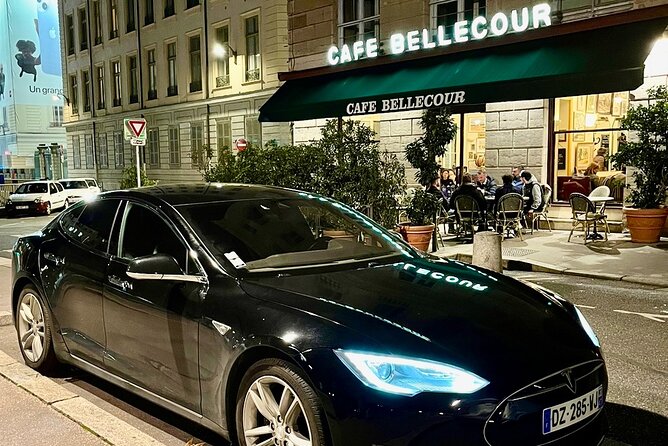
You begin at Lyon Bellecour, in the 2nd arrondissement, and finish back at the same meeting point. Pickup is offered, and the activity is private, so only your party participates. That gives you a more relaxed setup than a fixed group tour. You do not have to keep pace with strangers, and you can ask Mickael for suggestions during the ride.
The tour is best used early in your stay. It gives you a broad map of Lyon before you return later to places that deserve more time. I would not book it as your only sightseeing activity if you want interiors, detailed Roman archaeology, or long café breaks. I would book it when you want to see the city’s main pieces quickly and decide where to spend the rest of your visit.
The price is $372.34 per group of up to three. For one person, that is a costly three-hour introduction. For three people, it works out to about $124.11 each, which makes the private car and personal driver easier to justify. You are paying for convenience, privacy, and coverage rather than entry tickets or a long guided walk.
You can also read our reviews of more private tours in Lyon
Fourvière Basilica and Lyon from above
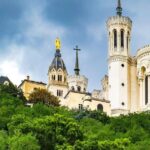
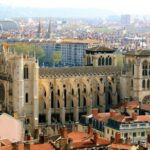
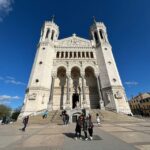
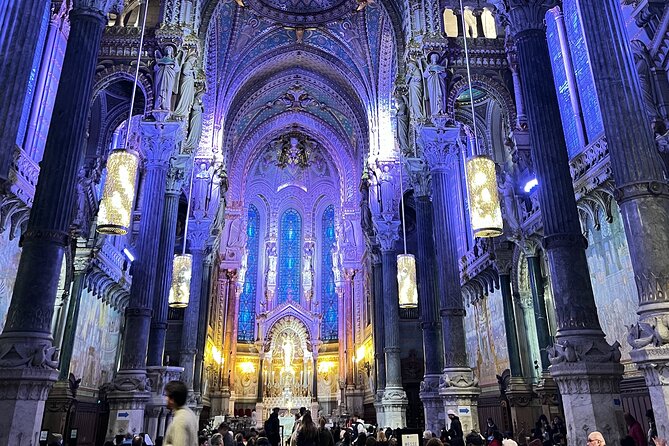
The first stop is Basilique Notre Dame de Fourvière, with about 15 minutes for the panoramic view. This is the strongest viewpoint on the route and one of the best places to understand Lyon’s shape.
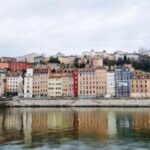
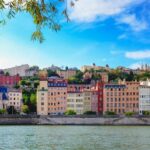
From the hill, you can see the city spread below and begin to separate its main areas. The Rhône and Saône are central to Lyon’s identity, and the elevated position helps you understand how the two rivers frame the city. The basilica itself is also one of Lyon’s most recognizable monuments.
Fifteen minutes is enough for photographs and a quick look around the viewpoint. It is not enough for a leisurely visit inside the basilica. If the view is especially important to you, keep the time limit in mind and arrive ready to move rather than expecting a long stop.
I like beginning here because it puts the rest of the drive in context. Later, when you pass the Presqu’île, Croix-Rousse, and the riverbanks, you will have a better sense of where those districts sit.
Roman theaters of Lugdunum
A short distance away, the Theatres Romains de Fourvière provide a second 15-minute stop. These ancient theaters are among the clearest Roman monuments visible in Lyon and connect the modern city with its earlier life as Lugdunum.
The value here is visual. You can see the scale and position of the ruins without setting aside half a day for a museum visit. Theaters also make the Roman past easier to picture than a small collection of stones in a case.
Again, 15 minutes gives you an overview, not a full archaeological visit. The listed admission is free, but this tour does not promise a long indoor or guided interpretation. If you want detailed information about the Roman site, you will need to allow extra time outside this experience.
Together, Fourvière Basilica and the Roman theaters make a strong opening pair. One shows Lyon’s later religious identity and modern view; the other reaches back to the city’s Roman foundations.
Île Barbe and the quieter Saône
The route also includes Île Barbe, a river island in the Saône that has been part of Lyon since 1963. It is a different kind of stop from the formal monuments. Instead of a grand square or famous façade, you get a place shaped by the river and by centuries of religious retreat.
The island first attracted hermits seeking solitude. An abbey was created there as early as the fifth century, making it one of the oldest in France. That detail gives the stop real weight, even if the tour does not list a separate timed admission visit.
Île Barbe helps break up the monument-to-monument rhythm. You see another side of Lyon, one tied to water, isolation, and early religious life. The information provided does not specify how long you stop there or whether you leave the vehicle, so treat it as a scenic and historical part of the drive rather than a guaranteed extended visit.
For me, this is one of the route’s more distinctive choices. Many quick city tours stay with the obvious center. Adding Île Barbe gives the tour a wider sense of Lyon.
Paul Bocuse’s restaurant and the city’s food identity
The five-minute stop at Restaurant Paul Bocuse is brief, but it points to a major part of Lyon’s public identity: food. Paul Bocuse is presented as one of the world’s best-known chefs, and his restaurant is an important name connected with the city.
You should think of this as an exterior landmark and photo stop. The timing does not allow for a meal, and the tour does not include dining. Still, it gives you a useful lead if Lyon’s restaurants are part of your plans.
The driver’s local suggestions add value here. Mickael is praised for recommending restaurants and activities for the rest of a stay, so this is a good moment to ask practical questions about where to eat after the tour. The advice is not a formal food tour, but it can help turn a quick landmark into a useful part of your Lyon planning.
A few more Lyon tours and experiences worth a look
Fresque des Lyonnais and the city on a wall
The Fresque des Lyonnais receives about five minutes. This large mural on the banks of the Rhône presents important Lyon figures and is one of the city’s most appealing open-air artworks.
Five minutes is enough to stop, take in the composition, and photograph the façade. It is not enough to study every person shown or hear a long explanation. If you enjoy public art, note the location and return later at your own pace.
I like this stop because it gives the tour some local character. A grand basilica and Roman ruin could belong to many European cities. A mural devoted to Lyon’s own figures feels more specific to the place and works well as a quick introduction.
Mur des Canuts and the silk workers of Croix-Rousse
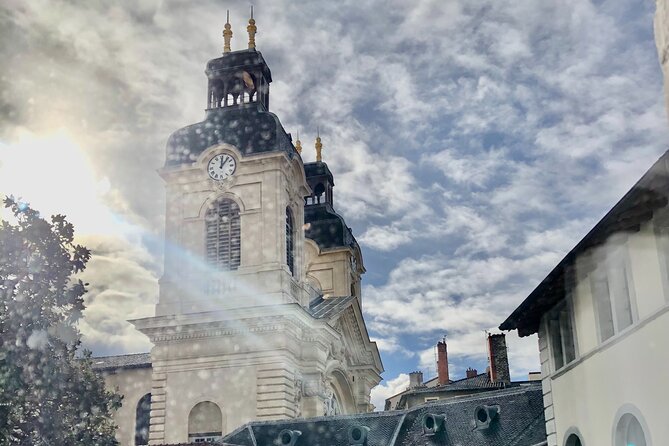
The Mur des Canuts is another large fresco, this time tied to the Croix-Rousse neighborhood and its silk workers. The mural recalls the workers’ difficult conditions and their nineteenth-century rebellions.
This is more than a colorful wall. It gives you a quick way to understand why Croix-Rousse matters. Lyon’s silk industry shaped the district, its slopes, and its working communities. The mural turns that past into something you can see at street level.
The stop lasts about five minutes, so you will not explore the neighborhood in depth. That is the trade-off of the car format. You get a broad sample of Lyon’s history, but you may want to return to Croix-Rousse for a longer walk after learning why the area deserves attention.
The two murals also add welcome variety. They show the city through its people and work, not only through churches, monuments, and wealthy civic buildings.
Opera, Place des Terreaux, and City Hall
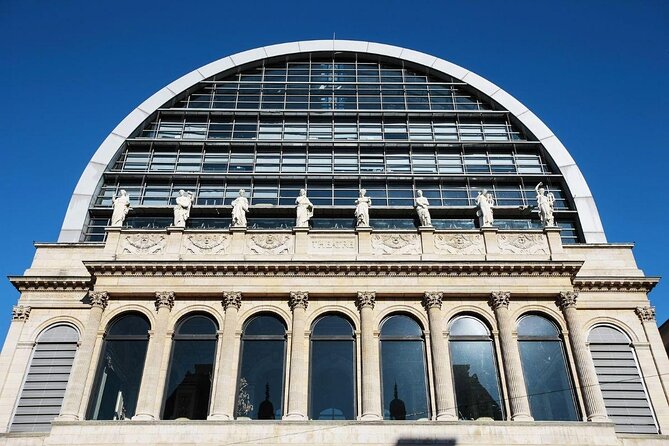
The drive continues along the Saône near the foot of Croix-Rousse, where you see the National Opera of Lyon. The route then brings you to Place des Terreaux, a major square surrounded by pubs, restaurants, and notable architecture.
The opera and the square help show Lyon’s cultural and civic side. Place des Terreaux is not just a photo point. It is a useful area for getting a feel for the center and spotting places you may want to revisit on foot.
Nearby, you also see Lyon City Hall. The tour does not provide a separate duration for these stops, so expect them to fit into the moving city circuit rather than a long walk inside the buildings. The advantage is coverage. The limitation is that you will not have much time to examine façades or settle into a café.
I find this portion especially useful for first-time visitors because it connects several central landmarks in one sweep. You can later return to the area with a clearer idea of how the opera, square, restaurants, and City Hall relate to one another.
Place des Jacobins and Grand Hôtel Dieu
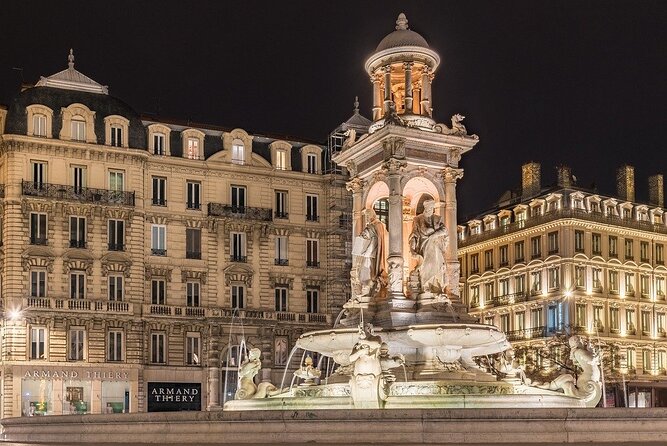
Before returning to Bellecour, the route includes the fountain at Place des Jacobins, in the heart of the Presqu’île. This is a central urban stop with a decorative landmark and a good sense of Lyon’s city-center scale.
The fountain is a quick visual pause, but its location matters. The Presqu’île is the central strip between Lyon’s two rivers, and seeing it near the end of the tour helps connect the river viewpoints with the main shopping and dining districts.
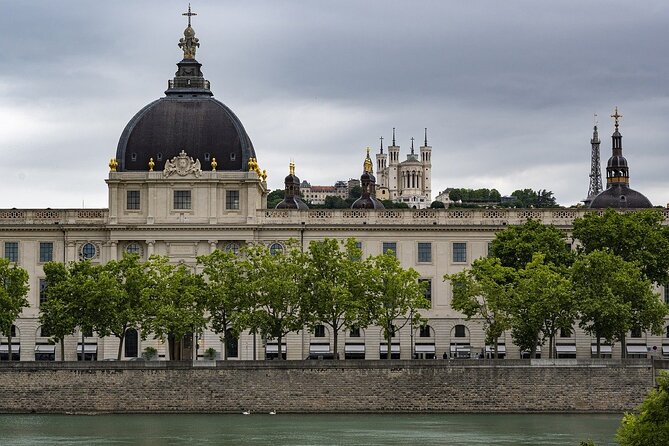
The final major sight is Grand Hôtel Dieu, a former hospital now renovated as a shopping center and food destination. Its long institutional history and new public use make it an interesting example of Lyon adapting old buildings to modern life.
This is a good final stop because it combines architecture with practical planning. You can see a significant building and also identify a place to return for food or shopping. The route ends at the original meeting point, so you can continue independently from Bellecour once the drive is over.
What the private Tesla adds
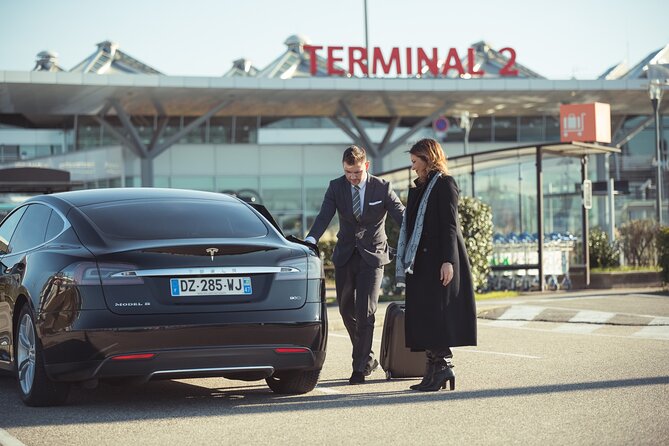
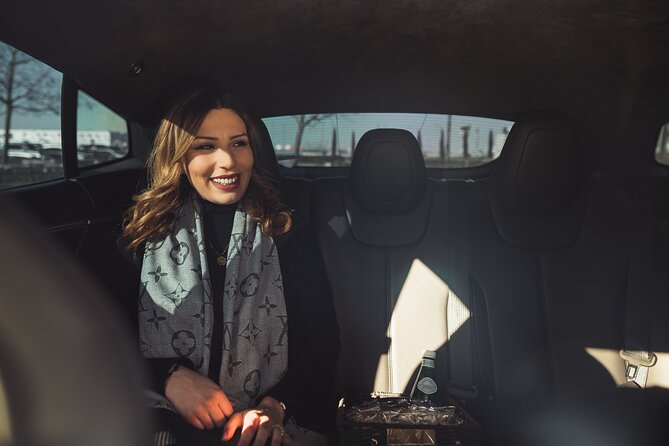
The vehicle is a Tesla, and that detail comes through as part of the experience rather than a minor extra. The car is described as clean, well kept, and comfortable, while the driver is praised for punctuality and safe driving.
A private car is especially useful for this route because it links the hilltop, river island, Croix-Rousse, central squares, and Presqu’île. You avoid organizing several separate journeys during a short window. You also have the convenience of returning to Bellecour instead of figuring out a new endpoint.
The personal service is the strongest part of the offering. Mickael is described as on time, careful, and willing to suggest restaurants and activities. Those small planning tips can be worth a lot when you have only a few days in Lyon.
Still, do not confuse a private driver with a full-time walking guide or museum specialist. The supplied details promise an interesting overview, but they do not specify detailed commentary at every stop. If you want long explanations, interior visits, or a specialist history lesson, compare this with a dedicated walking tour.
Who should book it
I would choose this for a couple, family, or small group of up to three who want a private first look at Lyon. It suits people with limited time, visitors who prefer not to walk up and down Lyon’s hills, and anyone who values a clean car and direct local advice.
It also works well at the start of a longer stay. Use the three hours to mark the viewpoints, districts, murals, food stops, and squares you want to revisit.
I would think twice if your main goal is slow sightseeing. The 15-minute stops at Fourvière and the Roman theaters are useful, but the five-minute stops at Paul Bocuse’s restaurant and the Fresque des Lyonnais are strictly brief. This is a sampler, not a series of full visits.
Confirmation is sent within 48 hours, subject to availability. Service animals are allowed, the route is near public transportation, and most people can participate. Free cancellation is available up to 24 hours before the start time, but changes or cancellations inside that window are not accepted for a refund.
Should you book this Lyon tour?
Book it if you want a polished private overview with strong viewpoints, a clean Tesla, and a driver who can help with your wider Lyon plans. The route covers a surprising range in three hours: Roman Lyon, religious Lyon, working-class Croix-Rousse, famous food, river scenery, public art, and the grand center.
Skip it if you want to enter every monument, spend an hour at each mural, or receive a detailed lecture at every stop. At $372.34 for up to three people, the value is clearest when your group shares the cost and wants comfort and efficiency. For that audience, it is a smart way to get your bearings before exploring Lyon on foot.
FAQ
How long is the private Lyon tour?
The experience lasts approximately three hours.
Where does the tour start?
The meeting point is Lyon Bellecour, 69002 Lyon, France.
Where does the tour end?
The activity ends back at the meeting point.
How many people can join the private tour?
The price covers one private group of up to three people.
Is pickup available?
Yes, pickup is offered.
Are admission tickets included?
The listed stops at Fourvière Basilica and the Roman theaters show free admission. The experience is primarily a driving and sightseeing circuit, and no paid entry is listed.
Can I cancel for a full refund?
Yes. You can cancel at least 24 hours before the experience start time for a full refund. Cancellations or changes made less than 24 hours before the start time are not accepted for a refund.