REVIEW · PARIS
Paris: Montmartre Small Group Guided Walking Tour
Book on GetYourGuide →Operated by Exploring Tours and Services · Bookable on GetYourGuide
Montmartre feels personal at walking pace. This small-group tour trades big-bus chaos for conversation, and I really like how the guide connects art stories to the streets you’re actually standing on, from Sacré-Cœur views to Place du Tertre’s painters. One catch: it’s a hill climb and it’s not set up for wheelchair users or people with mobility limits.
For your money, you’re paying for more than photos. You’ll get an expert local guide (English, Spanish, Italian, or French), plus a guided stop inside Sacré-Cœur Basilica and a route that reaches past the postcard spots into everyday Montmartre. The pace is friendly, and you should still bring comfortable shoes, because rain or shine doesn’t change the schedule.
If you’re planning your first Montmartre day, this is a smart intro that helps you “read” the neighborhood before you wander on your own. Just know you’ll be walking uphill most of the time, and bathroom access may be limited.
In This Review
- Key things you’ll notice on this Montmartre tour
- Where the tour starts: Anvers to Sacré-Cœur without the stress
- Sacré-Cœur Basilica: the view and the reason it matters
- Place du Tertre: painters, photos, and learning what you’re seeing
- Past the postcard: Lapin Agile and the cabaret spirit
- Vineyard time at Vigne du Clos Montmartre
- Dalida and the art of noticing statues and names
- Moulin de la Galette: windmill history in walking distance
- Le Bateau-Lavoir: where creative energy gathered
- Je t’aime (Wall of Love) in Abbesses: modern art meets local street life
- Downhill toward the Moulin Rouge: an ending that still feels like Montmartre
- Languages, group size, and why the tour’s feel is the real product
- What to bring and how to plan your day
- The $74 value: what you’re really paying for
- Should you book this Montmartre walking tour?
- FAQ
- Where does the tour meet?
- How long is the Montmartre small-group walking tour?
- What’s included in the price?
- Do I need tickets for the funicular?
- Which languages are available?
- Is the tour private or small group?
- Does the tour run in bad weather?
- Is this tour suitable for wheelchair users or mobility impairments?
- What should I bring?
Key things you’ll notice on this Montmartre tour
- Max 8 people: quieter, more personal guide time than big group tours.
- Anvers start point: easy to reach via metro (Line 2), right where the climb begins.
- Sacré-Cœur included: you’ll visit the basilica with a guide, not just view it from outside.
- Artists-and-everyday mix: painters at Place du Tertre, but also vineyards and working cabaret spots.
- Iconic landmarks, smart order: Je t’aime wall, Le Bateau-Lavoir, and the Moulin Rouge area—done in a way that makes sense.
- Your guide matters: reviews highlight guides like Monica, Jimmy, Melanie, Martina, Sylvia, Frederico, Romeo, and Laura for clear storytelling and good pacing.
Where the tour starts: Anvers to Sacré-Cœur without the stress
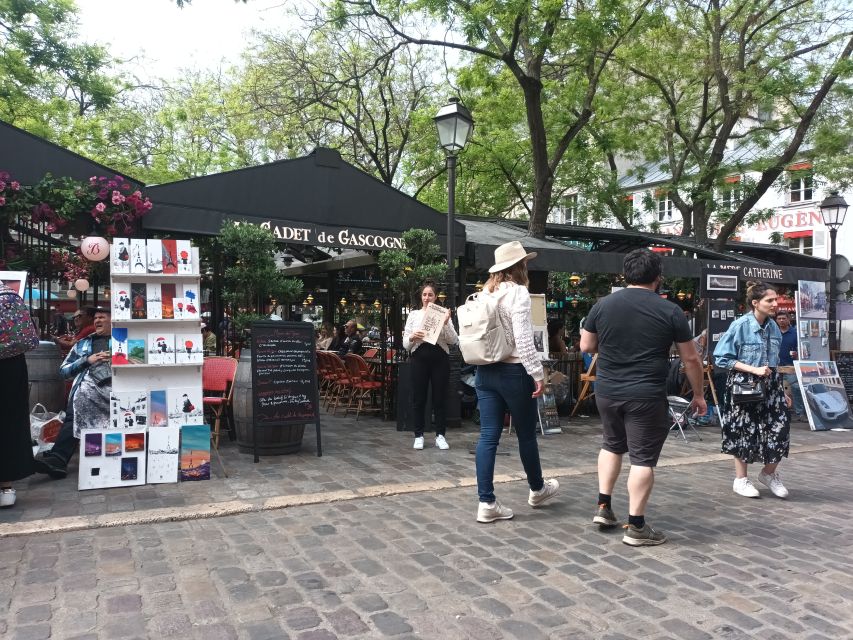
You meet at the exit of Anvers metro station (Line 2). The guide is holding a GetYourGuide sign, and you’ll want to arrive about 10 minutes early so you don’t lose your spot—latecomers aren’t guaranteed to join once the group is moving.
This matters because the whole experience is built around the climb. You’re not waiting around for a slow bus line or a late arrival; you’re starting with momentum. And for Montmartre, that’s huge: the earlier you start uphill, the easier it tends to feel, especially if the weather turns.
Once you’re together, the guide takes you up toward Sacré-Cœur Basilica. Expect scenic pauses on the way, with big views over Paris. Even on a gray day, you’ll still get that “oh, this is why people love this hill” feeling because the overlook moments are built into the flow.
You can also read our reviews of more walking tours in Paris



Sacré-Cœur Basilica: the view and the reason it matters
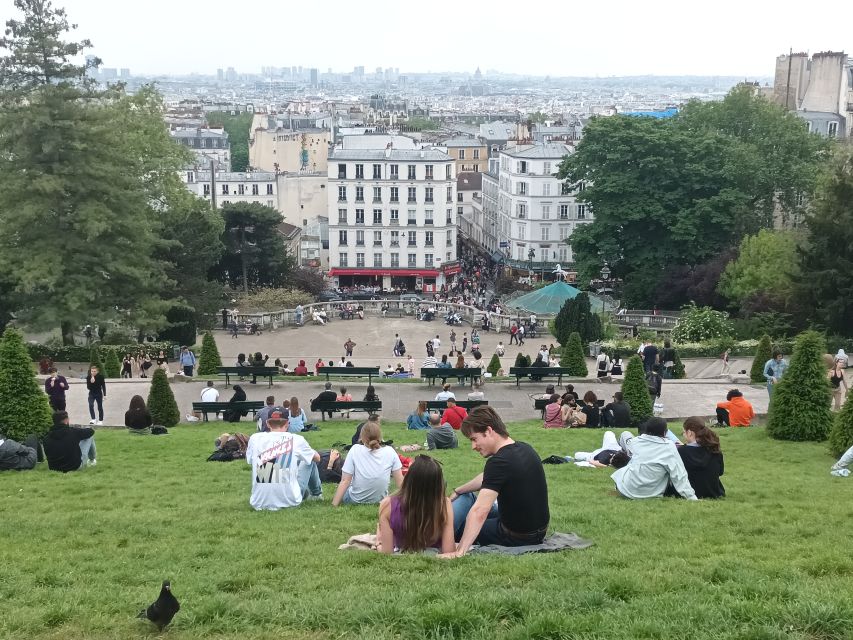
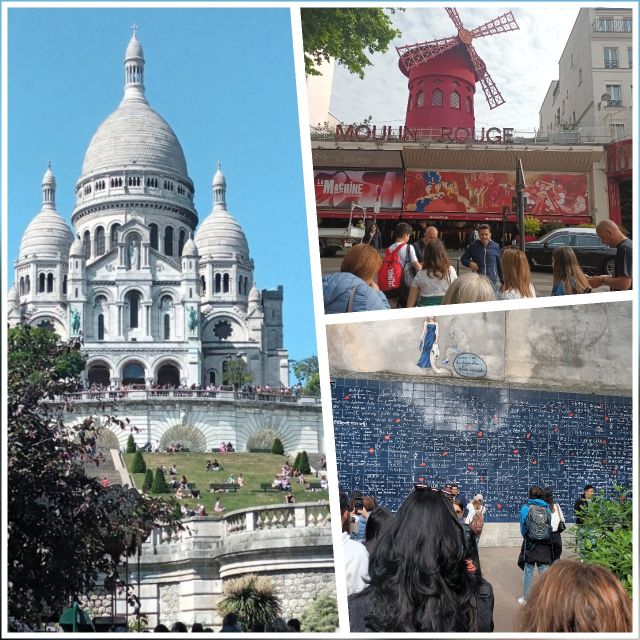
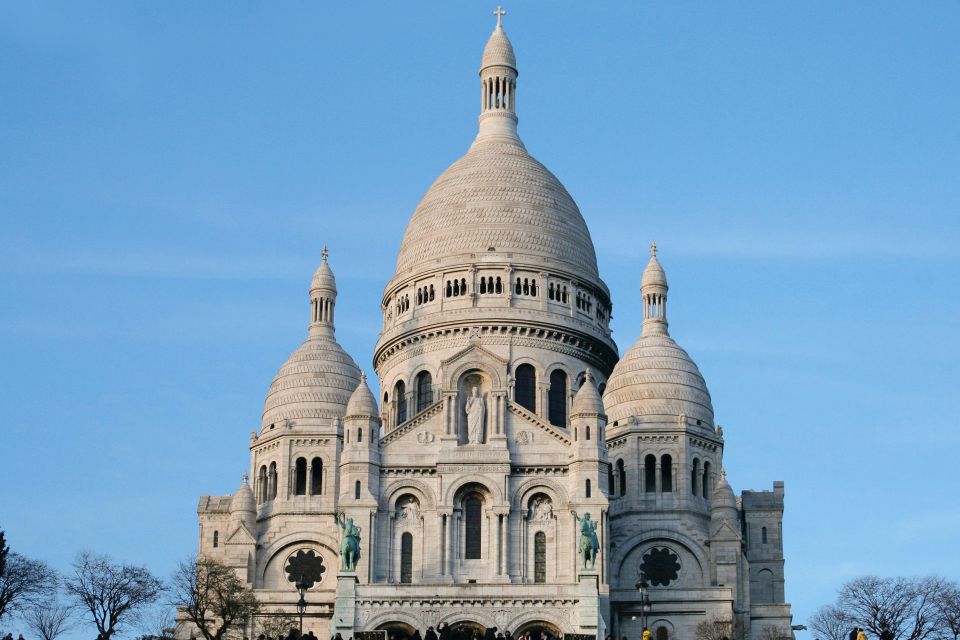
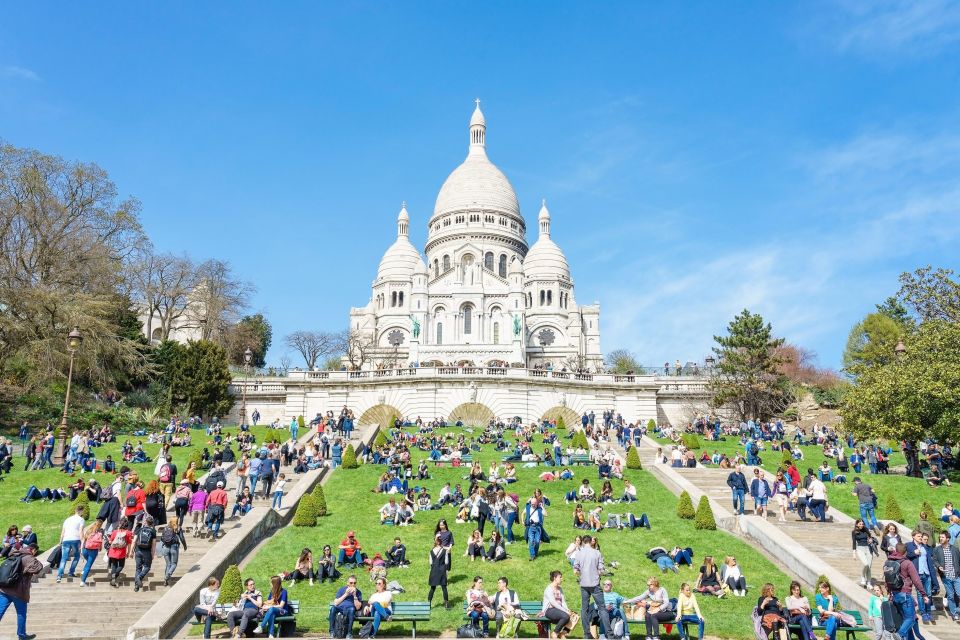
You’ll reach Sacré-Cœur after the climb, then go into the basilica with your guide. This is one of the most valuable parts of the tour because it turns a famous building into context—why it sits here, what it means for the neighborhood’s identity, and how the area’s history connects to the artists who flocked to Montmartre.
You’ll also get some free time at/around the basilica area. That’s not just a break; it’s time to orient yourself. From this side of the hill, Paris looks completely different than it does at street level, and you start to understand how Montmartre’s streets feed the big viewpoints.
Practical note: the tour is rain or shine, and the schedule doesn’t switch to “indoor only.” If you’re visiting in cooler months, bring layers and be ready for damp stone underfoot.
Place du Tertre: painters, photos, and learning what you’re seeing
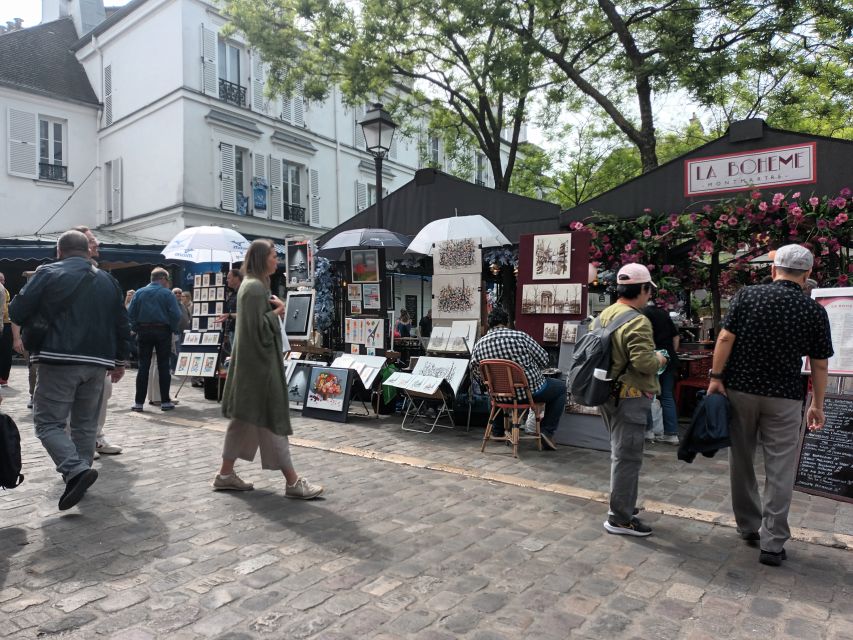
After Sacré-Cœur, you head to Place du Tertre, the well-known square where artists display paintings. The guide will point out details that are easy to miss if you just walk through with your phone up.
You’ll get a short guided stop plus time to look around and snap photos. This is also where you’ll likely notice how Montmartre sells art in small, human ways: not as a museum experience, but as something made and shown right on the street.
One drawback to keep in mind: this area can feel shop-and-photo heavy. If you’re sensitive to crowds, go in with a plan—watch what your guide suggests, then use your free time for browsing at a calmer pace rather than trying to do everything at once.
Past the postcard: Lapin Agile and the cabaret spirit
Next come the photo stops tied to Montmartre’s cabaret legacy, including Lapin Agile. Even if you only see the scene from the outside, the guide’s job is to connect it to why Montmartre became a magnet for artists in the first place.
In practice, this kind of stop works because it slows you down. You’re not just “passing by.” You’re learning what the place represents, then looking around with better questions: Who came here? What kind of work came out of this atmosphere? How did nightlife and creativity braid together on this hill?
You’ll also see other nightlife landmarks as you move through the neighborhood, including Moulin de la Galette later. Together, these stops make the famous art story feel less like legend and more like a lived place.
Vineyard time at Vigne du Clos Montmartre
One of the best “wait, they still do that here?” moments is Vigne du Clos Montmartre. You’ll have a short guided visit and scenic views on the way.
Why this stop is worth it: vineyards are the opposite of the postcard. They remind you Montmartre isn’t only painters and photography. It’s also lived neighborhoods with food production and local traditions—things that survive even when the area becomes famous.
The walk to this point helps you notice how Montmartre changes street by street. You’re going from grand views and tourist squares back into smaller-scale life, which makes the later landmarks feel more grounded.
You can also read our reviews of more guided tours in Paris






Dalida and the art of noticing statues and names
At Dalida Statue, you’ll have a photo stop with guided context. A statue sounds simple, but guides can make these stops useful by explaining who gets remembered and why, especially in a neighborhood known for reinvention.
This is one reason I like this style of tour. Instead of treating landmarks like checkboxes, you’re encouraged to look at naming, signage, and public art as part of the neighborhood’s cultural map.
Moulin de la Galette: windmill history in walking distance
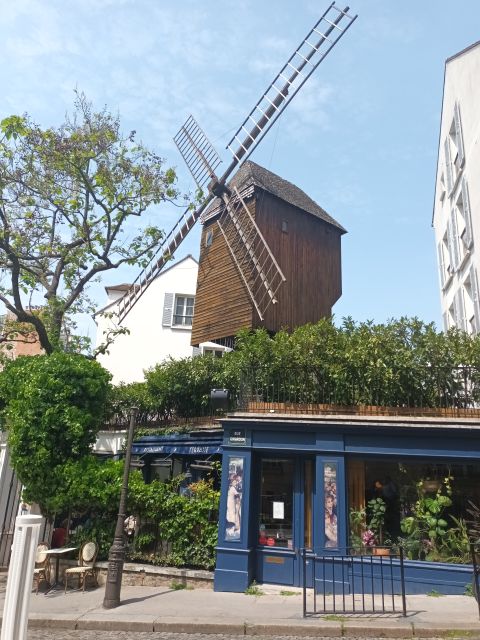
You’ll stop for photos around Moulin de la Galette. Your guide will give you the story behind it, which helps you understand why this windmill theme shows up so often in Montmartre’s artistic image.
This is a good spot to slow down for two reasons:
1) It helps you connect earlier art references to what you’re seeing now.
2) It’s a natural pause before the route turns more “creative geography” and less “big view geography.”
Le Bateau-Lavoir: where creative energy gathered
Next is Le Bateau-Lavoir, another photo stop with guided explanation. This stop tends to land well because it bridges the gap between famous artists and the everyday spaces they used.
The tour route specifically points to artist residences including Picasso and Van Gogh, and places like this are where that claim becomes more than a trivia fact. Even if you only see part of the area, you start understanding the ecosystem: studios, cheap spaces, and a community that made creative work possible.
This is one of those moments when a great guide really earns the price. When the guide explains what people did in these kinds of spaces, the neighborhood starts making sense as an art machine, not just an art label.
Je t’aime (Wall of Love) in Abbesses: modern art meets local street life
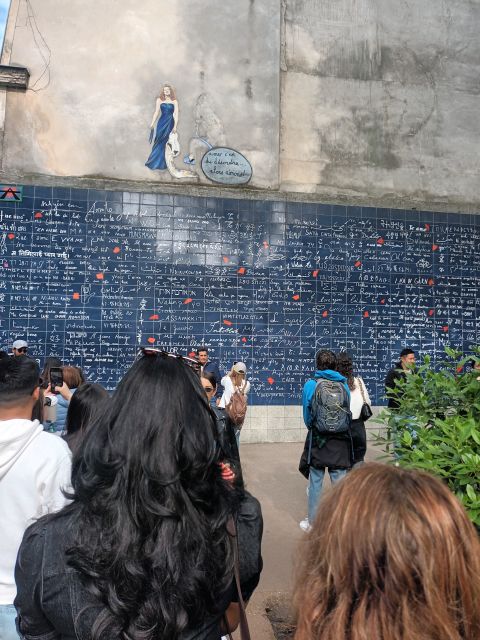
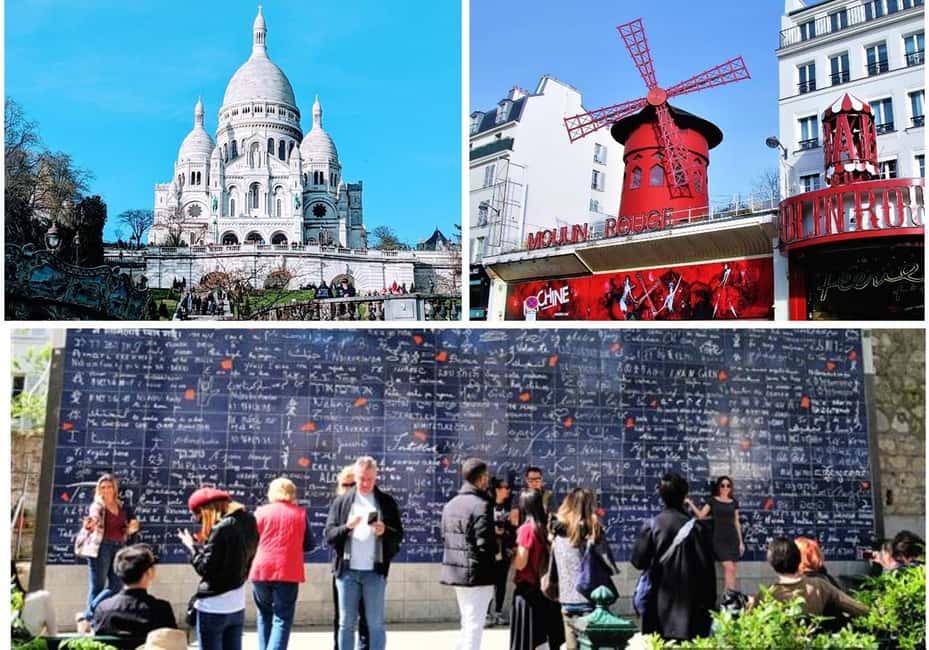
The walk continues toward Abbesses, and you’ll get to the Wall of Love (Je t’aime). This is one of the most “show up and be amazed” stops on the itinerary, even if you already know it from photos.
Expect a photo stop plus guided sightseeing and walking time around the area. The guide ties it into the neighborhood’s vibe, not just the fact that it’s a famous wall. And then you move on to Place des Abbesses, where you’ll have additional time to look around.
Why I think this stop is smart: it breaks the pattern. The tour isn’t only Sacré-Cœur and artists squares. It balances the old Montmartre myth with newer, public-facing art that still pulls people into the neighborhood.
If you’re a photographer, this section also tends to offer nice timing for light—your route includes photo time built around sunrise and sunset style moments.
Downhill toward the Moulin Rouge: an ending that still feels like Montmartre
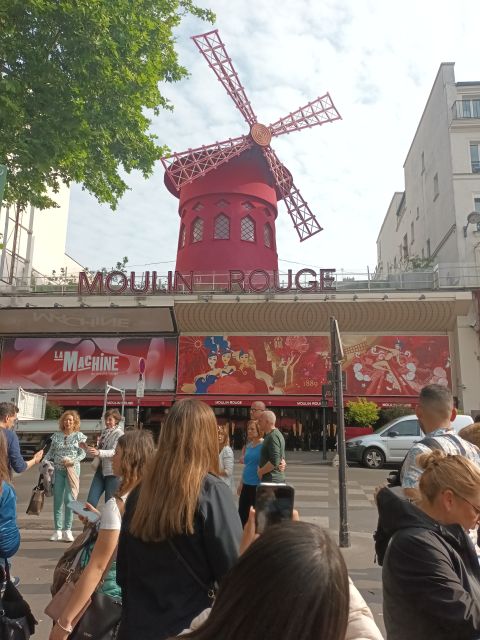
To finish, you walk down the hill and reach the area at the base opposite the Moulin Rouge. You’ll have a break time and a final photo stop, with some shopping time built in.
Here’s the practical value: ending lower on the hill makes it easier to leave with a plan. If you still want more, you’ll be in a position to keep exploring without immediately facing another steep climb.
Just keep your expectations real. Moulin Rouge is iconic, but it’s also tourist-heavy. Treat the finish as a landmark moment, then use your remaining energy for smaller nearby streets where the tour has already trained your eyes.
Languages, group size, and why the tour’s feel is the real product
This is a semi-private experience with a group limited to 8 people. That size changes everything: you’re more likely to hear the guide clearly, ask questions, and form a connection rather than just stand in a moving pack.
The reviews repeatedly highlight that the guide experience can be excellent in different ways. You might get humor and personality, like a guide using songs from a phone as part of the storytelling. You might get a guide who keeps a calm pace and answers questions patiently. And in some cases, the group becomes very small—so you might end up with a tour that feels even more personal than expected.
Names that come up in the strongest feedback include Monica, Jimmy, Melanie, Martina, Sylvia, Frederico, Romeo, Laura, and Francesca. What matters is the pattern: clear explanations, good timing, and a sense that the guide loves the neighborhood rather than just reciting a script.
If you want a Montmartre overview that doesn’t feel rushed, this tour is built for you.
What to bring and how to plan your day
Wear comfortable shoes. The tour includes walking uphill and it isn’t accessible for wheelchairs or people with mobility issues, so plan accordingly.
Also plan for the weather. It runs rain or shine, and the schedule doesn’t turn into an indoor-only plan. Bring a light rain layer and something warm if you’re traveling in cooler months.
You should also know that the bathroom may not be available during the tour. That’s not a reason to skip it, but it’s a good reason to use facilities before you start.
Food and drink aren’t included. You’ll have breaks and free time, but build your day like a walker—bring water if you like, or plan to grab a snack after.
The $74 value: what you’re really paying for
At $74 per person for about 2 hours to 150 minutes, the price is reasonable for three reasons.
First, the guide is a core part of the experience: expert local storytelling, not just movement between sites. With a small group, you’re paying for access to that person’s interpretation.
Second, you get a structured route that covers the “main hits” and the lesser-known corners: Sacré-Cœur, Place du Tertre, cabaret stops like Lapin Agile, the vineyard at Clos Montmartre, Le Bateau-Lavoir, and the Wall of Love in Abbesses.
Third, you don’t get stuck doing logistics. The meeting point is straightforward—Anvers metro Line 2—and the tour ends at the base near Moulin Rouge, which helps you continue your day smoothly.
One extra note: funicular tickets aren’t included. Since the tour includes walking uphill, you’ll need to decide whether you want to add that option outside the tour. If you’re comfortable walking, you’ll likely be fine. If not, this isn’t your best fit.
Should you book this Montmartre walking tour?
Book it if you want Montmartre to feel human. This tour is a good fit for first-timers who want an orientation, for couples who like a quieter pace, and for anyone who prefers small-group storytelling over big-group sightseeing.
Skip it (or pick a different style) if you need wheelchair access or you can’t handle a hill. Also, if you hate wet weather and hate walking in it, remember the tour runs rain or shine, and the schedule stays the same.
If you’re thinking about spending more time in Montmartre afterward, this tour sets you up to wander with better understanding. You’ll see the landmarks, sure—but more importantly, you’ll learn how the neighborhood’s art culture got under its skin.
FAQ
Where does the tour meet?
The guide meets you outside the Anvers metro station (Line 2) and will be holding a GetYourGuide sign.
How long is the Montmartre small-group walking tour?
The tour runs for about 2 hours to 150 minutes, depending on the starting time available.
What’s included in the price?
It includes a guided walking tour with an expert local guide, plus a visit to Sacré-Cœur Basilica.
Do I need tickets for the funicular?
Funicular tickets are not included. The tour includes walking uphill.
Which languages are available?
The tour is available in English, Spanish, Italian, and French.
Is the tour private or small group?
It’s limited to a small group of up to 8 people (semi-private). Private or small group options may be available.
Does the tour run in bad weather?
Yes. The tour takes place rain or shine.
Is this tour suitable for wheelchair users or mobility impairments?
No. It is not accessible to wheelchairs and isn’t suitable for people with mobility impairments due to the hill walk.
What should I bring?
Bring comfortable shoes and clothing appropriate to the weather.