REVIEW · PARIS
Paris: Montmartre Private Guided Walking Tour
Book on GetYourGuide →Operated by Paris in person private tours · Bookable on GetYourGuide
Montmartre works best when someone explains it. This private 2-hour walk mixes bohemian street scenes with stories about the Can-Can, illegal drinking, and how art movements took root. I love the way you’re guided street-by-street through places like Rue Lepic and into the hill neighborhoods where the look and feel of Paris changed over time.
I also like that it doesn’t just show postcard spots. You get the Place du Tertre street-art atmosphere plus a stop at Lapin Agile, tied to struggling artists and writers including Picasso and Modigliani. One drawback to weigh: you’re out there rain or shine, and the route includes a climb up Rue Lepic and toward Sacré-Cœur.
In This Review
- Key things I’d circle before you go
- Meeting at Metro Blanche: starting fast, with the right landmark
- Rue Lepic and the Impressionism story: art starts on ordinary streets
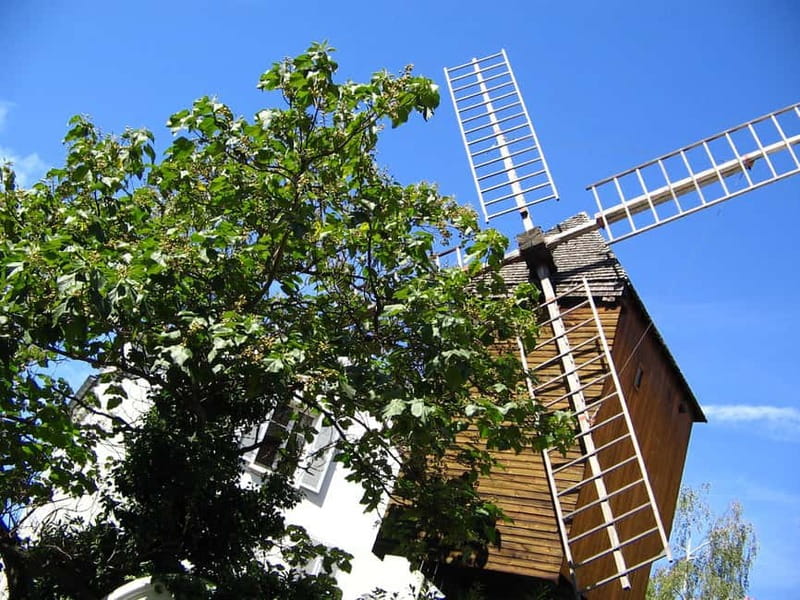
- Cabarets and Can-Can legends near Moulin Rouge and Moulin de la Galette
- Sacré-Cœur’s white façade: the view is the payoff, but the meaning matters too
- Place du Tertre: village charm inside a big city
- Vigne de Montmartre: a vineyard detail people often miss
- Lapin Agile: where struggling artists and writers found a stage
- Private guide value: what you’re really paying for
- A quick word on the guide experience (and why it matters)
- Who this Montmartre tour suits best
- Should you book this Paris: Montmartre Private Guided Walking Tour?
- FAQ
- What’s the duration of the Montmartre private guided walking tour?
- Where do I meet the guide?
- Is this tour private?
- What languages are available for the live guide?
- Does the price include food or drinks?
- What’s the weather policy?
Key things I’d circle before you go
- Your guide meets you at Metro Blanche (they’re carrying a red canvas tote bag)
- Rue Lepic uphill walking plus context on how Impressionism was born
- Cabaret stops tied to the Can-Can era, including viewpoints near Moulin Rouge and Moulin de la Galette
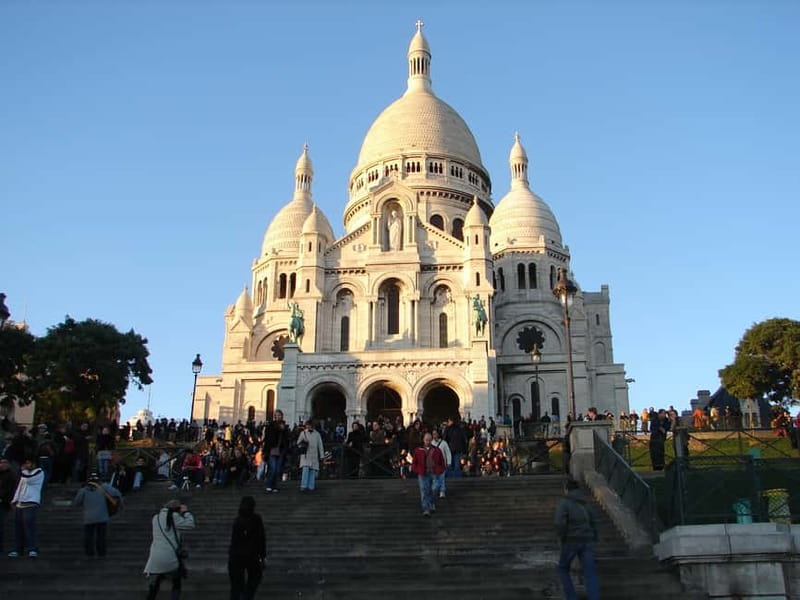
- Sacré-Cœur’s white façade as a natural high point of the tour
- Place du Tertre and the street artists you’ll see right on the square
- Lapin Agile cabaret, connected to Picasso and Modigliani
Meeting at Metro Blanche: starting fast, with the right landmark
You’ll meet your guide at the exit of Metro Blanche, and they’ll be holding a red canvas tote bag. That’s a smart setup because it gets you positioned right where Montmartre’s story starts showing up in everyday details—signs, streets, and the way neighborhoods shift from one vibe to another.
Metro Blanche is more than just a stop. The tour also notes it as the former Maison Blanche, and that kind of fact changes how you read the area. Instead of thinking of Montmartre as one big “tourist zone,” you start seeing it as a former suburb that used to sit outside the city’s jurisdiction—an important clue for why the district developed a reputation for being rough around the edges before it got fashionable.
If you’re tight on time in Paris, this 2-hour format is also practical. You don’t spend half the day commuting or hunting for meeting points. You get a planned route with a guide who can connect what you see with what came before.
You can also read our reviews of more walking tours in Paris



Rue Lepic and the Impressionism story: art starts on ordinary streets
One of the most compelling parts of this tour is the focus on Rue Lepic, described as a street where art movements of Paris were born. Even if you don’t know Impressionism from your impression of it, the guide’s approach matters: you’re walking the streets where creativity and experimentation actually clustered, not just looking at a museum label later.
You’ll also hear pointed stories along the way—like illegal alcohol and the era’s “obscene” Can-Can dancers. That might sound spicy, but it’s the point. Montmartre’s artistic reputation wasn’t built only on pretty views. It was built on a mix of poverty, nightlife, and rule-breaking that made room for new ideas.
And you’ll feel the district’s contrasts. The tour includes the idea of lavish houses next to run-down slums. That’s useful context because it helps you understand why the same hill can look romantic in one direction and gritty in another, sometimes only a few minutes apart.
Practical tip: since the tour includes climbing Rue Lepic, wear shoes you can trust. The streets are typically uneven, and the “2-hour walk” can feel longer if you’re in fashion sneakers that don’t grip well.
Cabarets and Can-Can legends near Moulin Rouge and Moulin de la Galette
You’ll stop at major cabaret landmarks, including Moulin Rouge and Moulin de la Galette. Even if you’ve seen photos of them before, I like the way this tour treats them as more than icons. It places them inside the nightlife culture where the Can-Can evolved.
The guide doesn’t just point at facades. You’ll get stories tied to the district’s reputation—everything from the illegal-alcohol angle to the way dancers and venues pushed boundaries. That kind of “why this place matters” turns a quick sight stop into something you remember.
Moulin de la Galette also helps you understand Montmartre as a working entertainment area, not just a stage for later generations. It’s one more reason the tour is a good use of time: you get the vibe plus context in a single circuit, instead of trying to piece it together on your own while you’re hungry and already tired.
Sacré-Cœur’s white façade: the view is the payoff, but the meaning matters too
The tour builds toward one of Montmartre’s most recognizable moments: climbing the street up to where you can marvel at the white façade of Sacré-Cœur. You’ll feel that shift immediately—at the top, the city opens out and the neighborhood’s layout makes more sense.
Still, the best part isn’t the photo. It’s what the guide helps you connect: why this district became “the fashionable, bohemian center” it is today, after starting out with a reputation for being a den of iniquity. When you understand that transformation, the basilica stops being just a view and becomes a symbol.
Also, this is one of those moments where you can manage your own expectations. Sacré-Cœur is popular. You’ll likely see plenty of visitors in the area around the tour’s highlights, but your guide’s storytelling helps you slow down and look for details instead of only scanning for the perfect angle.
Place du Tertre: village charm inside a big city
Next up is Place du Tertre, where the tour leans into the idea of village charm inside a metropolis. This square is where Montmartre still acts like a small world. You’ll see street artists, and it’s easy to fall into the photo-and-walk pattern.
What I like here is that the tour doesn’t treat the square as a stop you rush through. It frames it as part of Montmartre’s ongoing creative culture—an extension of the same “artists on the hill” idea that shows up in the stories around cabarets and painting movements.
If you’re the type who likes to understand how a place works day-to-day, you’ll appreciate that the guide points you toward what to watch for: the mood in the square, how it functions as an art spot, and how it fits into the district’s longer arc.
You can also read our reviews of more guided tours in Paris






Vigne de Montmartre: a vineyard detail people often miss
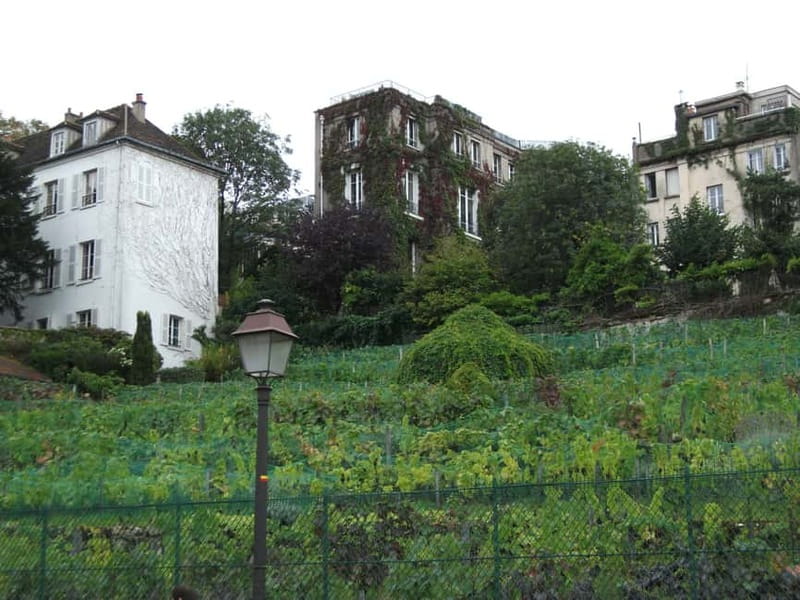
This tour also includes the vineyards of the Vigne de Montmartre. That’s a great add-on because it breaks the Montmartre routine of “streets, stairs, and viewpoints.” Vineyards make you remember that this hill isn’t only about nightlife and art studios—it’s also about land use and older patterns of production.
I like that this helps balance what can otherwise feel like a nonstop parade of monuments. A vineyard scene gives your eyes a different kind of texture. Even if you don’t know the first thing about wine production, it’s a reminder that Paris has layers and pockets that still carry older rhythms.
Because the tour is only 2 hours, every stop has to earn its spot. Vigne de Montmartre earns its place as a quick reset: a small change of pace that still fits Montmartre’s identity.
Lapin Agile: where struggling artists and writers found a stage
The tour ends with one of the most character-driven stops: Lapin Agile cabaret. This is where the storytelling gets especially human. The tour connects it to struggling artists and writers, including Picasso and Modigliani—and that link turns the cabaret into more than a fun name to remember.
I find stops like Lapin Agile valuable because they help you picture the creative scene as it likely felt day-to-day. You’re not just viewing the finished fame of later years. You’re learning about the kind of spaces people used when they were trying to break through with limited resources.
It also matches the tour’s broader theme: Montmartre as a place where rules were bent and creativity had room to grow. If you like your Paris with a little grit and a lot of personality, Lapin Agile is one of the best ways to get it fast.
Private guide value: what you’re really paying for
At $176 per person for a 2-hour private walking tour, you’re paying for two things: a guide who can steer the story, and the freedom of a private route pacing around your questions.
This isn’t a “stand near the statue and read a plaque” situation. The tour is designed around narrative stops—Metro Blanche (former Maison Blanche), the cabaret era around Can-Can, the Impressionism birth context, and artist-linked places like Lapin Agile. That kind of guided linkage is where the money usually goes.
Is it a fit for every budget? Not automatically. But if you’re choosing between doing Montmartre solo and doing it with a guide who knows how to connect details, private format often makes the difference. You get a focused route, a consistent thread, and fewer dead ends.
Also, if you’d like a guide who can explain in multiple languages, the tour is offered in English, French, and Serbo-Croatian, which is a real convenience if you’re traveling with someone who prefers something other than English.
A small practical note: the tour includes the guide, but food and drinks are not included. Plan on bringing water, especially since there’s a climb involved.
A quick word on the guide experience (and why it matters)
The reviews data you’re working with shows strong satisfaction, especially around how the guide handled the information and the atmosphere. Names that come up include Isabella and Boris, both praised for being informative and fun, and one review specifically mentions a night walk with great scenery and helpful learning.
That matters because Montmartre rewards attention. You can walk it and still miss what makes it tick. A good guide helps you notice the right details in the right order, so the district starts making sense instead of feeling like random streets plus viewpoints.
Who this Montmartre tour suits best
This tour is a great match if you want:
- A 2-hour way to understand Montmartre beyond the basics
- A guide-led route that links cabarets, Can-Can, and art movements to what you see on the street
- Stops connected to famous artists like Picasso and Modigliani, tied to places such as Lapin Agile
- A private walking experience with storytelling, not just photo stops
It’s less ideal if you want a long, sit-down meal-focused itinerary. Also, since it runs rain or shine, make peace with the idea that you’re walking outdoors—so bring a light rain layer if the forecast looks questionable.
Should you book this Paris: Montmartre Private Guided Walking Tour?
I’d book it if you’re aiming for a tight, high-impact Montmartre visit where the guide turns monuments into story. The combination of Rue Lepic, cabaret landmarks (Moulin Rouge and Moulin de la Galette), Place du Tertre, Sacré-Cœur, and Lapin Agile makes it hard for the tour to feel repetitive. It covers both the “performing side” of Montmartre and the “artist trying to make it” side, fast.
I’d think twice only if:
- You strongly dislike climbs and uneven streets, because Rue Lepic and Sacré-Cœur are part of the experience.
- You want food included or a longer cultural program. This one is focused: guide-led walking, no meals.
If your goal is to leave Montmartre understanding why it transformed—from rough suburb to bohemian center—this tour is built for that.
FAQ
What’s the duration of the Montmartre private guided walking tour?
It lasts 2 hours.
Where do I meet the guide?
Meet the guide at the exit of Metro Blanche. The guide will be carrying a red canvas tote bag.
Is this tour private?
Yes. It’s listed as a private group.
What languages are available for the live guide?
The guide is available in English, French, and Serbo-Croatian.
Does the price include food or drinks?
No. Food and drinks are not included.
What’s the weather policy?
The tour takes place rain or shine.