REVIEW · AVIGNON
Visit Avignon and Villeneuve lez Avignon aboard a Double-Decker Bus
Book on Viator →Operated by City tour · Bookable on Viator
Avignon feels like a lot until you see it from the right angle. This double-decker bus route strings together the big postcard hits and the calmer river-view spots, with English audio-style narration as you go. I like that it gives you an easy way to orient yourself fast, even if you only have a short stay.
Two standouts for me: the stop at Pont Saint-Bénézet (the famous bridge and chapel area) and the time near the Fort Saint-André gardens and Abbey of Saint-André lookouts. One drawback to plan around: some of the most interesting stops are marked as admission not included, so you may want a little cash or budget for entry if you want to go inside.
In This Review
- Key Things to Know Before You Ride
- Why a Double-Decker Bus Works So Well in Avignon
- Price and Value: What $16.30 Buys You
- Where to Start: The Cr Jean Jaurès Meeting Point
- Stop 1: Pont Saint-Bénézet, Lambert Modern Art, and the Philippe le Bel Tower
- Stop 2: Fort Saint-André and the Abbey of Saint-André Gardens
- Stop 3: Chartreuse de Villeneuve lez Avignon and the Cardinal’s World
- Stop 4: Ile de la Barthelasse for Rhône Views and a Short Reset
- The Audio Experience: Helpful Narration, Watch the Tech
- Practical Tips to Make the Most of This Loop
- Who This Bus Ride Fits Best
- Should You Book This Avignon + Villeneuve Double-Decker Bus?
- FAQ
- How much does the double-decker bus experience cost?
- How long is the experience?
- Is the tour offered in English?
- Do I need separate tickets for attractions?
- Where does the tour start?
- Is the experience weather-dependent?
- Is there a limit on group size?
Key Things to Know Before You Ride
- Double-decker views from above: You get a steady rhythm of sights without constantly changing streets or ferrying between neighborhoods.
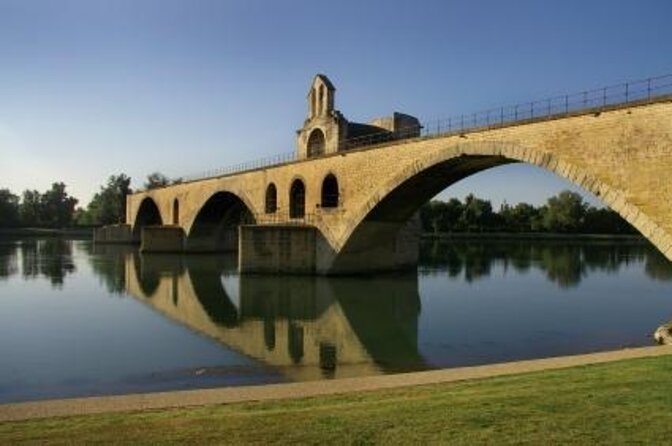
- Pont Saint-Bénézet and papal-era details: You’ll hear how the bridge was tied to pilgrims and the popes’ daily crossings.
- Fort Saint-André + Abbey Saint-André: Free areas plus a serious dose of gardens and medieval-to-Renaissance architecture outside.
- Chartreuse de Villeneuve lez Avignon: A cardinal residence site in Villeneuve, built under the Pope’s influence in the 1300s.
- Ile de la Barthelasse river pause: A short break on the Rhône with city views and a free shuttle option.
- Up to 73 people: Not tiny, but it usually feels manageable if you show up a few minutes early.
Why a Double-Decker Bus Works So Well in Avignon
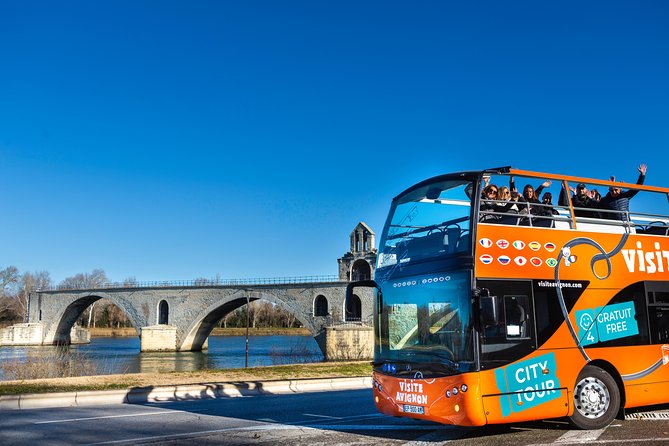
Avignon is a town where the view matters. The old core is beautiful, but it’s also easy to get turned around. This bus route gives you the best “big picture” benefit: you sit up high, you roll through key edges of the city, and you come out with a mental map you can actually use later for walking.
The route also helps you reach places that feel like they belong to a different day. You get a bridge stop tied to famous legends, a hillside/fort area with views, and a river island with a breather. Even if you skip a museum interior, you still get the payoff of seeing Avignon from multiple sides.
You can also read our reviews of more tours and experiences in Avignon.
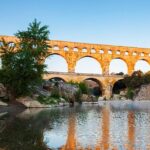


Price and Value: What $16.30 Buys You
At $16.30 per person, the value is really about compression. One ticket helps you cover several “walkable-but-far-apart” locations that otherwise would take multiple bus rides, taxis, or careful planning. The duration is listed as about 1 hour to 1 day, which is honest: you can treat it as a quick circuit or take your time at the stops that matter to you.
Here’s the key money detail: some stops are marked admission not included. That’s not a deal-breaker. It just means your total cost depends on whether you want to enter places like the museum area tied to the Lambert Collection and the Chartreuse de Villeneuve site. If you’re the type who loves reading plaques and enjoying views from outside, you’ll likely feel the ticket is a bargain. If you’re planning full entries at every stop, set aside a bit more.
Where to Start: The Cr Jean Jaurès Meeting Point
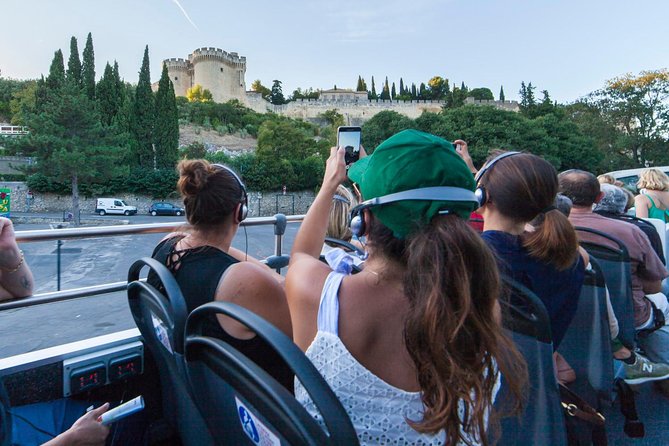
You start at 40 Cr Jean Jaurès, 84000 Avignon and the activity ends back at that same place. That round-trip structure is practical, especially in a city where streets can feel like puzzles when you’re tired.
Because it’s a paper ticket experience and offered in English, I suggest you keep your confirmation handy and arrive a few minutes before departure. The bus loop is time-based, and if you’re cutting it close, you’ll spend your first minutes stressing instead of looking.
Stop 1: Pont Saint-Bénézet, Lambert Modern Art, and the Philippe le Bel Tower
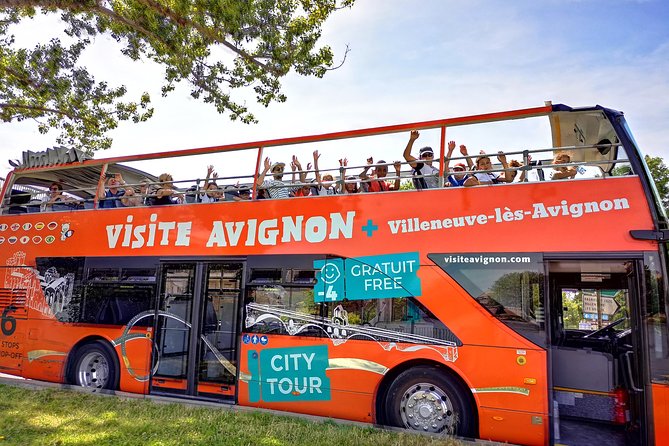
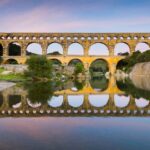
This is the “Avignon story in one breath” stop. You start at Pont Saint-Bénézet—the bridge made famous by the old song about dancing on it. Beyond the charm, the bridge has a real backstory that makes the whole area feel specific, not generic.
A few highlights you’ll hear as you’re there:
- Construction began in 1177 and was finished in 1185, with a long span of about 920 meters and 22 arches.
- During the siege in 1226, the bridge was destroyed up to the fourth arch, and later reconstruction created a new bridge of roughly 900 meters with about 22 arches again.
- In the Middle Ages, this bridge sat on major pilgrimage routes between Italy and Spain.
- When the papal court moved to Avignon, cardinals shifted residences to Villeneuve, and this crossing became one of the simplest connections between those homes and the Palais des Papes.
- At each crossing, the popes used to pause near the Bénezet chapel, pray, and leave an alms.
Then there’s a modern contrast built into the same general stopping zone: the Museum of Modern Art tied to the Lambert Collection. If you’re not usually a contemporary-art fan, don’t write it off automatically. This collection isn’t presented as random art for art’s sake. It’s housed in a former 18th-century mansion, and you’ll see that the museum is organized into five sectors spread across about 2,000 m²—exhibitions, preventive conservation, activities for younger visitors, a bookstore with artists’ editions, and even a restaurant in the courtyard.
If you do go in, I’d treat it as a shorter stop. Use the time to sample a few rooms and let one or two works grab you. You don’t need to “master” modern art in an afternoon.
The other stop element here is the Philippe le Bel Tower, a medieval military structure built in the 13th century to help control access to the Pont d’Avignon. It’s a sharp reminder that this crossing wasn’t just romantic. It was strategic, guarded, and tied to power between royal authority and papal influence.
One consideration: because this stop block is listed as admission not included, you’ll want to decide on the spot whether you’re visiting museum interiors. If you’re on a tight schedule, you can still get a lot out of the exterior views and interpretive context.
Stop 2: Fort Saint-André and the Abbey of Saint-André Gardens
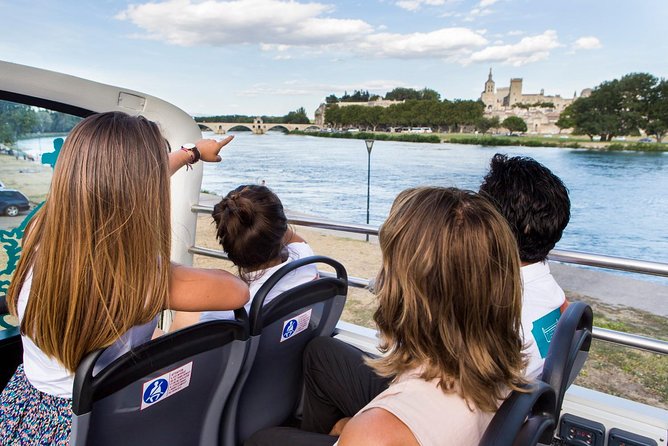
This is where the route earns its keep for me. Instead of rushing you through another “see-and-photoshoot,” this side of the loop is about viewpoints and gardens.
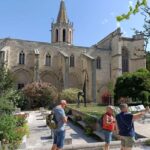
You reach Fort Saint-André and then the Abbey of Saint-André, both tied to medieval defense and later religious life. The fort construction began at the end of the 12th century, and it was still in use in the 14th century to defend the Benedictine abbey of the same name. Even without going inside anything, the fort-area setting helps you understand why it mattered: you can see the logic of height, control, and sightlines.
The gardens are a big deal. They’re ranked among the most beautiful in France, and that reputation makes sense once you’re there. The experience described focuses on what you can actually see and feel:
- Rose beds laid out around the space
- Mediterranean plants suited to the Rhône region
- A mix of Romanesque remains and Renaissance Tuscan-style ornaments
- Romanesque-to-early-modern transitions that make the place feel layered, not frozen
If you do step into areas of the abbey, you’re told to look for vaulted rooms with 17th-century decoration—so this isn’t only outdoor beauty. It’s a spot where you can enjoy architecture and atmosphere without needing a full guided lecture.
One practical tip: gardens take time even when you don’t plan to linger. If your goal is a quick look, you’ll want to set a personal time limit. Otherwise, you’ll drift, sit, and end up using up your best photo light.


Stop 3: Chartreuse de Villeneuve lez Avignon and the Cardinal’s World
Next up is Chartreuse de Villeneuve lez Avignon, described as a former cardinal residence in the Val de Bénédiction. It was built under the influence of Pope Innocent VI, starting in 1353. That date detail matters because it explains the atmosphere: this is a site shaped by the papal era, but located outside the daily noise of the city.
The architecture context you’re given is that it’s housed in a 14th-century mansion where cardinals followed residence there. This part of the route is a nice counterpoint to the river and bridge stops. Instead of focusing only on one iconic structure, you get a sense of how leadership lived—where they rested, withdrew, and organized their day.
As with the first major stop block, entry is listed as admission not included. If you’re tempted to go inside, I’d base the decision on your travel style:
- If you like sites where you can read slowly and look up details, plan entry time.
- If you prefer views and streets over museum interiors, prioritize the exterior atmosphere and move on to the next scenic pause.
Stop 4: Ile de la Barthelasse for Rhône Views and a Short Reset
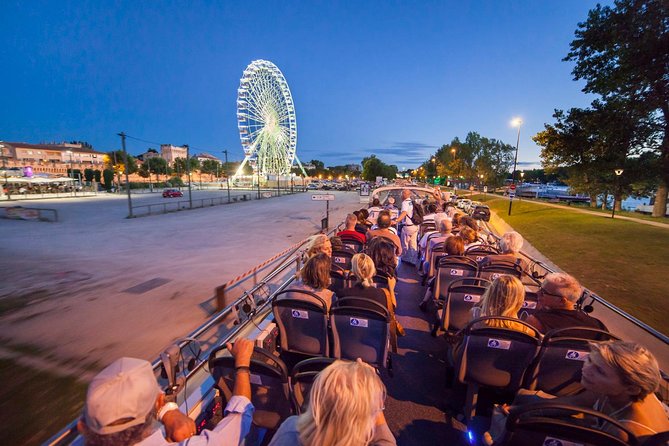
This is the “breathe and look” stop: Ile de la Barthelasse on the right bank of the Rhône. The island is described as a green lung of about 700 hectares, which is a lot of space to relax after the tighter city zones.
Your time here is short—about 10 to 15 minutes—and it’s designed for a reset. You get the “city of the popes” view across the water, and you can use the time to do the simplest tourist magic trick: stand still and let the scene settle.
You also have options depending on your energy:
- You can relax right there.
- You can continue biking (if you’re combining activities).
- Or you can reach the historic center via a free river shuttle.
Because this stop is listed as free, it’s also one of the easiest wins for value. You get views without paying extra.
The Audio Experience: Helpful Narration, Watch the Tech
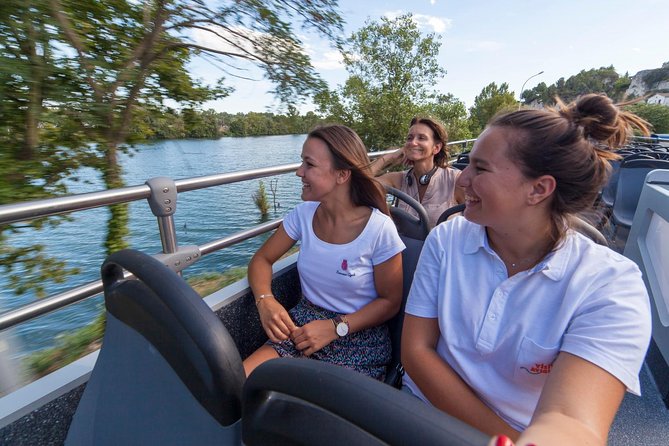
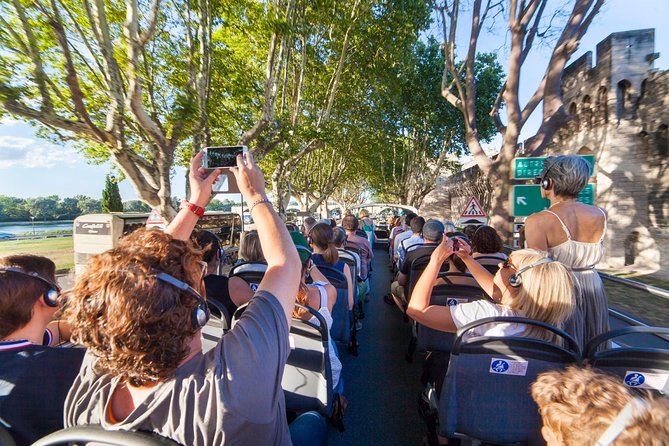
This bus experience is built around English narration, and most of the “what am I seeing” help happens through the audio system. The advantage is big: you can look outward while your explanation comes to you, which keeps you from needing to constantly read a guidebook while walking.
That said, audio can fail like any piece of equipment. If you notice one side or one headset isn’t working, don’t sit there guessing. Flag it quickly with the driver or staff so you can get switched to a working speaker or receive the right assistance.
Also, since you’re on a loop route, audio timing matters. If you want a smooth experience, listen during driving segments and save questions for when the bus is stopped.
Practical Tips to Make the Most of This Loop
Here’s how to turn this from a “bus ride” into a useful Avignon day:
- Choose your priorities before you board. The route includes bridge, museum-linked modern art, medieval fort and abbey gardens, a cardinal residence site, and a river island. Pick two “musts” and treat the rest as bonus.
- Wear shoes you don’t mind for garden and hill areas. Fort and abbey grounds can be uneven, and you’ll walk a bit even during shorter stops.
- Plan for entry costs at stops labeled admission not included. If you’re the type who likes interiors, budget extra. If not, you’ll still enjoy the key sights outside.
- Keep your camera accessible. One downside people sometimes feel on bus routes is speed while you’re passing spots. You’ll get the best photo opportunities during the actual stop times.
Who This Bus Ride Fits Best
This experience fits best if you want:
- A low-effort way to cover a lot of ground around Avignon
- High-value “first orientation,” especially if you’re not ready to build a complex walking plan
- Scenic breaks across the Rhône
- Museum or heritage add-ons only when you feel like it
It’s also a reasonable choice for families or mixed groups because it’s straightforward: ride, stop, look, return. Service animals are allowed, and the experience is set up so that most people can participate.
If you’re the kind of traveler who wants a slow, guided walk through one neighborhood for hours, you might find the pacing too structured. If you want breadth and context in a single outing, it’s a smart match.
Should You Book This Avignon + Villeneuve Double-Decker Bus?
I think you should book it if your goal is to see multiple sides of Avignon without building a transportation puzzle. At $16.30, it’s a strong value for the amount of ground covered, especially when you treat the free stops like Fort Saint-André gardens and Ile de la Barthelasse as your main payoff.
I’d hesitate only if you know you want to pay for and enter every ticketed site and you hate time pressure. The route can feel tight if you try to do everything inside every stop. In that case, pick a couple of entry choices (for example, Lambert Collection if you like contemporary art, or Chartreuse de Villeneuve if you like medieval settings) and let the views do the rest.
If you want a practical, scenic starter day in Avignon, this bus loop is a good bet.
FAQ
How much does the double-decker bus experience cost?
The price is $16.30 per person.
How long is the experience?
It’s listed as 1 hour to 1 day (approx.), depending on how long you spend at stops.
Is the tour offered in English?
Yes. It’s offered in English.
Do I need separate tickets for attractions?
Some stops are listed as admission ticket not included, while others are free. You’ll see admission varies by stop.
Where does the tour start?
The meeting point is 40 Cr Jean Jaurès, 84000 Avignon, France.
Is the experience weather-dependent?
Yes. The experience requires good weather. If it’s canceled due to poor weather, you’ll be offered a different date or a full refund.
Is there a limit on group size?
Yes. This activity has a maximum of 73 travelers.