REVIEW · AVIGNON
Full day lavender tour Luberon and Sault
Book on Viator →Operated by Time 4 Provence.H · Bookable on Viator
The big draw here is the chance to see several of Provence’s most photogenic places in one long day: Gordes, Roussillon, and Sault, plus the lavender fields between them. You also visit a lavender distillery, where the plant becomes a real product rather than just a pretty purple backdrop.
I like the small group of no more than eight and the air-conditioned minivan, which make a full day of village stops much easier. I also like the flexible guiding style shown by Gordana, who adjusted the plan during a cooler spring when the lavender south of Avignon was blooming late.
The main consideration is timing. This is an 8-hour-30-minute day, and the fields are seasonal. Book for July or August if full lavender bloom is your priority, and remember that lunch is not included.
In This Review
- Key points at a glance
- Why this lavender day works from Avignon
- Leaving Avignon for Gordes
- Sénanque Abbey and the classic Provence photograph
- Roussillon turns the scenery ochre
- Sault, France’s lavender capital
- Why the season can change the day
- A small van makes the long route easier
- The guide can make the schedule work
- Is $139.63 a fair price?
- Who should book this Provence day?
- Should you book the Luberon and Sault lavender tour?
- FAQ
- Where does the tour begin?
- What time does the tour start?
- How long does the tour last?
- Where does the tour end?
- How many people can join the tour?
- Is lunch included?
- When is the best time to see lavender in bloom?
- What is included in the price?
Key points at a glance
- Sault is the day’s lavender centerpiece: Visit the village known as France’s lavender capital, with views over fields and wheat country.
- Gordes is a quick but rewarding photo stop: You get a wide view of one of Provence’s most famous hill towns.
- Sénanque Abbey adds the classic postcard image: The 12th-century monastery and lavender fields make a memorable short stop.
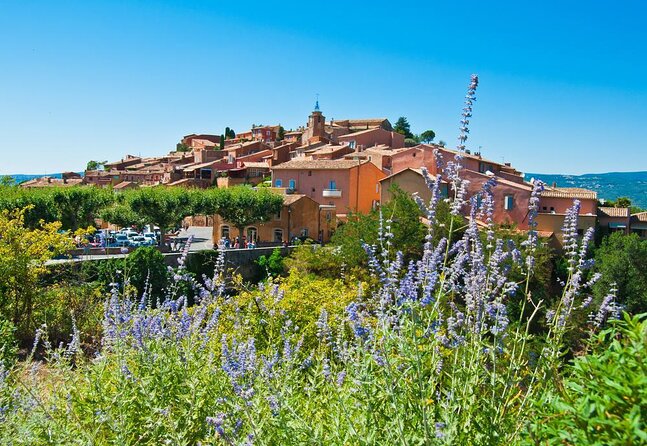
- Roussillon brings a different color palette: Ochre cliffs and buildings replace the pale stone and purple fields.
- The distillery visit gives the tour more substance: You can see how lavender is used and buy lavender ice cream.
- Small-group transport keeps the day personal: The van carries a maximum of eight people and returns to Avignon.
Why this lavender day works from Avignon
Provence is not a place you can fully understand from one town square. The famous lavender country lies beyond Avignon, and the prettiest villages are scattered across the Luberon and the high country around Sault.
This tour solves that problem with a compact route that mixes viewpoints, village time, agricultural scenery, and a working lavender stop. You are not simply driven to one field, given ten minutes for photos, and taken home. The day has several visual themes, from the stone village of Gordes to the red-gold tones of Roussillon and the purple fields around Sault.
The schedule runs from a 9 a.m. departure until the afternoon or early evening, depending on the day’s pace. Since the tour lasts about eight and a half hours, you should treat it as your main Provence outing rather than trying to fit another major activity around it.
The price is $139.63 per person. That is not a bargain-basement excursion, but the value is reasonable if you want transport, a guide, water, and several remote or awkward-to-connect stops in one day. You are paying for convenience as much as for sightseeing. A small group also means a more manageable day than a large coach tour.
A few more Avignon tours and experiences worth a look



Leaving Avignon for Gordes
The meeting point is at 41 Cr Jean Jaurès in Avignon. You travel in an air-conditioned minivan with a professional guide, and the group is limited to eight people.
That limit matters. Provence’s hill villages are much more enjoyable when you are not waiting for a large group to gather at every stop. With fewer people, photo breaks and short walks can feel less mechanical, although the exact amount of free time still follows the schedule.
Gordes comes first. The stop lasts about 30 minutes and focuses on a panoramic view of the village. From the viewpoint, Gordes appears as a dense cluster of pale stone buildings arranged on the hillside, one of the signature scenes of the Luberon.
Do not expect a long visit inside the village at this stop. The appeal is the broad view, not a leisurely wander through every lane. That is a fair trade on a day covering several places, and the short stop lets you save more time for Roussillon and Sault.
I like this opening because it gives you a quick sense of the region’s famous stone architecture before the lavender becomes the main subject. Have your camera ready as soon as you leave the van. The stop is built around the view.
Sénanque Abbey and the classic Provence photograph
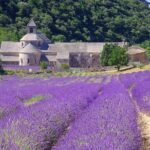
The next stop is the Abbaye Notre-Dame de Sénanque, with about 15 minutes for a look at the 12th-century monastery and its lavender fields.
This is one of those places where the setting does much of the work. The simple stone abbey framed by lavender is the image many people carry in their heads before arriving in Provence. If the plants are blooming, the contrast between the purple rows and the old monastery can be striking.
Fifteen minutes is brief, so think of this as a photo stop rather than a full abbey visit. The supplied details do not indicate an interior tour or extended time on the grounds. You should not book this experience expecting a deep examination of the monastery.
Still, the short stop makes sense in the larger plan. You get the essential view without using up the afternoon. If you care most about architecture, religious sites, or a slower pace, this part may feel rushed. If you want the classic lavender-and-stone picture, it delivers the right subject quickly.
Roussillon turns the scenery ochre
Roussillon receives the longest village stop, about one hour and 30 minutes, and it is also the planned lunch break. This village is known for its ochre color, which gives the streets and buildings a warm red and gold appearance under Provence’s strong sunlight.
The change from Gordes is welcome. Gordes is pale stone and hillside drama. Roussillon is warmer, earthier, and more playful in color. I like that the tour does not treat every village as the same postcard. Each stop gives you a different look at the region.
You have time here to walk around and choose lunch. Since lunch is not included, budget separately for your meal. The schedule gives you enough time to eat without forcing you to swallow a sandwich in the van, but the exact choice of restaurant or café is not specified.
Roussillon is ranked among France’s most beautiful villages, and its ochre setting is genuinely different from the lavender country. You may find this stop more satisfying than a quick viewpoint because you have time to move at your own pace.
The drawback is that a 90-minute stop must serve two purposes: sightseeing and lunch. If you like slow village visits, browsing, or sitting over a long meal, you may wish for more time. If you want a useful break in the middle of a full day, the timing is practical.
Sault, France’s lavender capital
Sault is the heart of the day. The tour allows about two hours here, including several photo stops and a visit to a local lavender distillery.
The village sits on a rocky outcrop and looks across a high valley where wheat fields and lavender fields meet. That description tells you why Sault is worth the longer drive. The view is not only purple. Gold wheat and lavender blue share the same broad scene, with the village acting as a high perch above it.
This is also where the tour moves beyond sightseeing. At the distillery, lavender becomes an agricultural product with a process and a purpose. You can learn about the local production and purchase lavender goods, as well as try lavender ice cream.
Lavender ice cream is exactly the sort of small, regional taste that makes a field tour more memorable. It may not become your new favorite dessert, but it is a simple way to experience the plant in a form other than perfume or soap.
Sault’s two-hour allocation is the strongest part of the schedule. It gives you time for photos, the distillery, and the village itself. The information does not promise a specific distillery demonstration or shopping selection, so keep expectations sensible. The visit is part of the tour, not a full technical workshop.
If full bloom is important to you, Sault is also the reason to think carefully about the calendar. Lavender is a summer crop, and July and August are the recommended months for seeing the fields in bloom. Outside that window, you may still have attractive scenery and village visits, but the purple fields cannot be guaranteed.





Why the season can change the day
Lavender timing is not perfectly fixed. One account from the tour describes a cooler spring when the lavender south of Avignon was still early, and guide Gordana adjusted the plan rather than stubbornly following the original route.
That detail is useful. It shows why a good guide matters on a countryside tour. Weather and flowering dates can change the best places to stop, and a local guide can make practical adjustments. It also means you should not treat a calendar promise as a guarantee of full purple fields.
For the strongest chance of bloom, choose July or August. Even then, conditions can vary by field and elevation. The tour’s route through the Luberon and Sault gives you several chances to see lavender country rather than relying on one single field.
I would book this in summer if the main goal is the classic Provence image. I would consider another month if the villages, ochre scenery, and countryside drive matter just as much. The tour has enough variety to remain worthwhile beyond peak bloom, but the visual centerpiece will change.
A small van makes the long route easier
The air-conditioned minivan is an important part of the experience, especially in summer. You avoid arranging separate connections between Avignon, Gordes, Sénanque, Roussillon, and Sault, and you have a sheltered place to cool down between stops.
The group maximum is eight people. That is small enough for a more direct exchange with the guide and less time spent organizing people at each stop. You also receive bottled water, a modest but useful touch on a warm day.
The tour begins and ends at the same Avignon meeting point. That makes planning simple, especially if you are using Avignon as your base. The meeting location is near public transportation, and the activity is listed as suitable for most participants. Service animals are allowed.
You should still be comfortable with a full day that includes several changes of place. The information does not give exact walking distances or specify how much time is spent on uneven village streets. If you have mobility concerns, ask the provider before booking rather than assuming every viewpoint or village area will be easy to reach.
The guide can make the schedule work
A route this full needs more than a driver. The guide has to watch the clock, explain the places, and decide when conditions call for a change.
Gordana is specifically identified as a guide who responded well to an unusual spring season. When cooler weather delayed the lavender bloom south of Avignon, she offered an adjustment rather than presenting the lack of flowers as a fixed problem. That kind of flexibility is valuable on a seasonal tour.
The available information does not name every guide, so you should not expect a particular person unless the provider confirms it. What you can expect is a professional guide accompanying the group in the minivan.
I would value the guide most during the transitions between stops. Gordes and Roussillon can be visited independently, but the guide connects them to the wider Luberon and explains why Sault is the agricultural center of the lavender route. The smaller group should also make it easier to ask questions than on a large bus.
Is $139.63 a fair price?
At $139.63 per person, this is best judged as a transport-and-access package. The price covers the professional guide, air-conditioned minivan, bottled water, and a full day of sightseeing. Lunch and personal purchases are extra.
If you rented a car, you might have more freedom and could stay longer in one village. But you would also need to navigate unfamiliar roads, plan the sequence, find the photo viewpoints, and manage the long day yourself. The tour earns its price by taking care of those practical pieces.
The small group adds value. You are not buying a seat on a large coach with a rigid crowd. You are buying a more personal format with a maximum of eight participants, which is especially useful for a route built around short stops and scenic viewpoints.
The tour is less appealing if you want a slow, self-directed day. The itinerary covers a lot of ground, and the two shortest stops, Gordes and Sénanque Abbey, leave little room for wandering. For a first visit to Provence, though, the variety is strong for the money.
Who should book this Provence day?
I would recommend it to you if you are staying in Avignon and want to see the Luberon without renting a car. It suits first-time visitors who want major viewpoints, famous villages, lavender fields, and a regional food stop in one outing.
It also suits photographers who prefer several chances at good scenery. Gordes, Sénanque Abbey, Roussillon, Sault, and the fields each offer a different subject, although the photo time at the first two is short.
The tour is a good match for couples, solo visitors, and small groups who value a limited van size. It is also useful for anyone who wants a guide to adjust the route when flowering conditions are unusual.
I would think twice if you dislike long day trips or want to spend half a day inside one village. I would also avoid booking outside the lavender season if your only goal is full bloom. July and August give you the best odds, but seasonal conditions still matter.
Should you book the Luberon and Sault lavender tour?
Book it if you want maximum variety in one day and prefer not to drive. The route gives you Provence’s famous stone villages, Roussillon’s ochre colors, Sault’s broad lavender country, and a distillery visit with time for lavender ice cream.
The strongest reasons to choose it are the eight-person limit, the full-day route, and the guide’s ability to react to changing bloom conditions. The main compromises are the long schedule, the short Gordes and Sénanque stops, and the fact that lunch costs extra.
For the classic purple-field experience, aim for July or August. For a broader taste of Provence, the tour can still make sense outside peak bloom, especially if the villages and changing scenery matter as much as the flowers.
FAQ
Where does the tour begin?
The tour begins at 41 Cr Jean Jaurès, 84000 Avignon, France.
What time does the tour start?
The stated start time is 9:00 a.m.
How long does the tour last?
The experience lasts approximately 8 hours and 30 minutes.
Where does the tour end?
The tour ends back at the meeting point in Avignon.
How many people can join the tour?
The tour has a maximum of eight participants.
Is lunch included?
No. Lunch is not included, and Roussillon is the designated lunch stop.
When is the best time to see lavender in bloom?
The summer tour in July and August offers the best chance to see the lavender fields in bloom.
What is included in the price?
The price includes bottled water, a professional guide, and transport in an air-conditioned minivan.