REVIEW · AVIGNON
Half-Day Walking Tour with Local Guide
Book on GetYourGuide →Operated by JAIME-TOUR · Bookable on GetYourGuide
Avignon’s best moments are not limited to the Palais des Papes. This three-hour walking tour takes you through quiet squares, old canals, craft streets, a Gothic church, and a cardinal’s former residence, with French art and architecture providing the connecting thread. Guide Jamie leads the route in English.
I like the easy pace and the fact that the sights sit close together, so you spend your time looking rather than marching across town. I also like the practical finish: your €4 drink is included, and Jamie offers advice on places to eat, shop, and continue sightseeing.
The main consideration is the guide’s English delivery. Jamie is praised for his patience and historical knowledge, but one participant found his pronunciation occasionally hard to follow. If clear, fast English matters greatly to you, keep that in mind before booking.
In This Review
- Key details that shape the experience
- Starting at Square Agricole Perdiguier
- Following the vanished ramparts
- Photographing the canal on Rue des Teinturiers
- Art and craft on Rue de la Bonneterie
- Taking a break at Central Market
- Entering Saint-Didier Collegiate
- Finishing at the Livery of Ceccano
- Ending with a drink and local advice
- What the $80 price buys you
- Choosing the morning or afternoon start
- Jamie’s guiding style and the English question
- Who should book this Avignon walk?
- Should you book this tour?
- FAQ
- Where does the tour meet?
- How long does the walking tour last?
- What language is the tour conducted in?
- Who leads the tour?
- Is admission to the monuments included?
- Is a drink included?
- Is lunch included?
Key details that shape the experience
- A local route beyond Avignon’s headline sights: Visit the Rue des Teinturiers, craft shops, galleries, and lesser-seen corners that are easy to miss alone.
- A compact three-hour walk: The close spacing between stops keeps the pace manageable and limits unnecessary walking.
- Free monument entry: Admission to the monuments visited during the tour is included in the $80 price.
- A useful market break: Central Market gives you time to look at regional food products and consider where to eat later.
- An English-speaking guide from Avignon: Jamie leads the tour and shares suggestions for restaurants, drinks, shopping, and other places to visit.
- A drink at the finish: The tour ends near the Tourist Office with a drink of your choice worth €4 per person.
Starting at Square Agricole Perdiguier
Meet at the main entrance of the Avignon Tourist Office. This is a sensible place to begin because you are already in the historic center, with no need for a taxi transfer or a complicated meeting point on the edge of town.
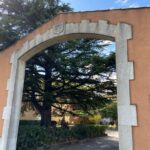
Your first stop is Square Agricole Perdiguier and the Temple Saint-Martial. The former Benedictine monastery gives the tour an immediate sense of Avignon’s older layers. Rather than rushing straight to the most famous palace, you begin with a place connected to the town’s development and its link to the County of Venaissin in the fourteenth century.
I like this opening because it sets up a useful question: how did Avignon grow into a politically important city? The square also gives your group room to gather while Jamie explains the themes of the walk. The experience is designed around French classical art of the eighteenth century, yet the buildings encountered range across several periods. That contrast lets you compare styles instead of treating Avignon as one large medieval museum.
Do not expect a long formal lecture at the first stop. The value here comes from orientation. You begin to understand the city’s religious, political, and architectural layers before moving into the streets.
You can also read our reviews of more walking tours in Avignon


Following the vanished ramparts
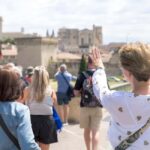
The next section traces the line of Avignon’s ancient ramparts, many of which have disappeared. You stop along the way to look at historic monuments that remain in the city center.
This is a good example of why a local guide can help. A wall that no longer exists is difficult to picture from a map alone. Jamie can connect the present street plan with the earlier defensive city, helping you see why certain streets and buildings sit where they do.
The walk is not built around one grand viewpoint. Instead, it links small discoveries. You move through the center, pause for monuments, and keep the distance between stops short. For you, that means less time spent covering ground and more time asking questions.
The pace should suit anyone who wants context without committing to a full-day walking program. Still, this remains a walking tour. Comfortable shoes are sensible, and anyone who prefers frequent sitting breaks should understand that the route moves from one historic area to another before reaching the market.
Photographing the canal on Rue des Teinturiers
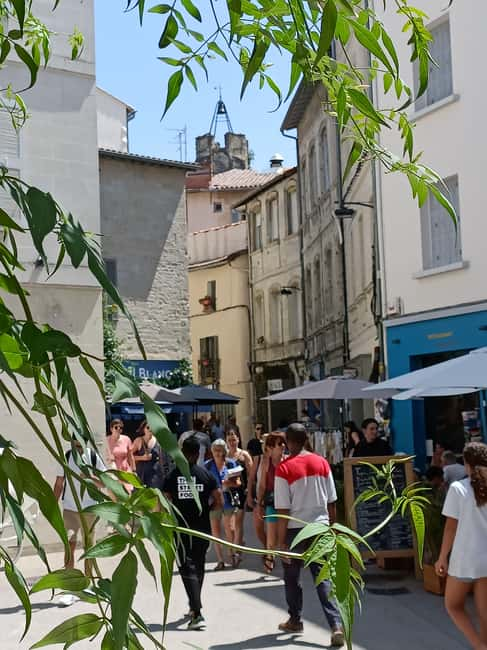
Rue des Teinturiers is one of the most appealing parts of the route. The street is known for its Sorgue canal, which surrounds the bell tower and apse of a church, creating one of the tour’s most distinctive photo settings.
The water adds something different to the usual stone streets of Avignon. You get a view where architecture, canal, and narrow urban space work together, rather than a simple stop in front of a facade. During the summer, the street is also lively, so this part of the walk can feel more social than the quieter opening square.
I would give this stop a little extra attention. It is the sort of place you might pass without knowing what to look for, particularly if you are focused on reaching the major monuments. Jamie’s explanation helps turn a pleasant street into a readable piece of the city.
The practical drawback is that a popular summer street may feel busy at times. That can make photographs harder, and it may be less peaceful than the first part of the route. Even so, the canal and church setting make it one of the strongest visual stops.
Art and craft on Rue de la Bonneterie
From Rue des Teinturiers, the group continues along Rue de la Bonneterie. This street is lined with craft shops and art galleries, giving the tour a more contemporary feel.
I like this change of mood. Avignon is easy to experience as a sequence of old churches and grand residences, but working artists and craftspeople bring the present day into the walk. You can browse at a relaxed pace and perhaps spot something worth returning to later.
This is also where Jamie’s local advice may be most useful. The route gives you a first look at places to shop, and he can point out other areas to explore after the tour. The information is practical rather than purely academic, which suits anyone who wants to combine sightseeing with a bit of browsing.
The stop is not presented as a dedicated shopping session, so you should not expect long time inside each gallery. Think of it as an introduction to a street you might otherwise overlook. If you find something you like, note the location and return after the tour.
Taking a break at Central Market
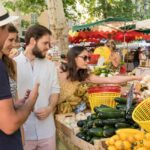
A few steps later, you reach Avignon’s famous Central Market, known locally as Les Halles. The group gets free time to look around and see the regional products on offer.
This break is one of the most useful parts of the schedule. A three-hour walk can feel much easier when it includes a change from listening and walking to browsing at your own pace. The market also gives you a chance to think about lunch, especially since lunch itself is not included.
I would use this time to notice the local food culture rather than simply treating the market as a restroom or refreshment stop. You can look over the regional products, decide what appeals to you, and ask Jamie for restaurant suggestions before you leave.
The length of the free time is not specified, so do not plan a full market meal around it. The tour continues after the break. If you want to shop seriously or sit down for lunch, save that for after the walk and use Jamie’s recommendations to narrow your choices.
You can also read our reviews of more guided tours in Avignon




Entering Saint-Didier Collegiate
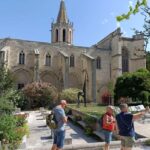
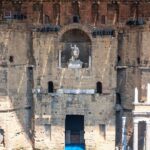
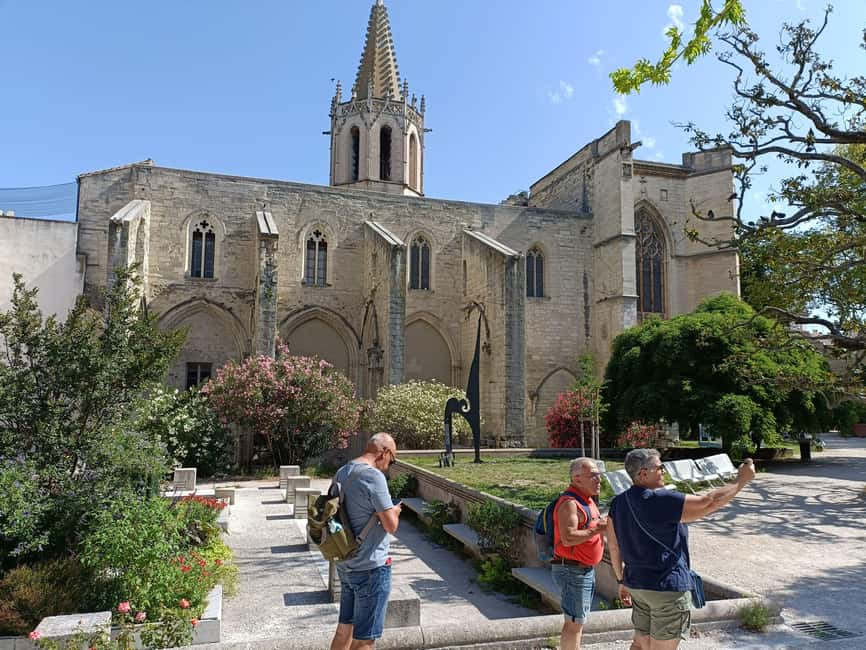
Near the market, the route reaches Saint-Didier Square and the Collegiate Church of Saint-Didier. The church is an impressive example of southern Gothic architecture, and the interior is included in the tour.
This stop gives the walk a strong architectural center. From the outside, the church’s scale and form make an immediate impression. Inside, you can see why a guided visit matters: the space is not just a large room of stone. Its proportions, details, and religious purpose make more sense when someone explains what you are seeing.
The free admission is an important part of the tour’s value. Many walking tours keep to public streets and leave you to pay separately for interiors. Here, the price includes entry to all the monuments visited on the route, so you do not have to choose between joining the group and seeing the inside of Saint-Didier.
If churches are not your main interest, this may be a quieter stop than Rue des Teinturiers or the market. I would still stay with the group. The church helps balance the tour’s street scenes with a more focused look at Avignon’s religious architecture.
Finishing at the Livery of Ceccano
The final major visit is the Livery of Ceccano, a fourteenth-century cardinal’s palace. It was the residence of Anibal de Ceccano, described as one of the city’s wealthiest cardinals.
This is a fitting finish because it shifts attention from public religious buildings to the private world of a powerful churchman. The word livery refers to a cardinal’s residence and household, so the stop helps you picture how church authority shaped daily life in Avignon.
The building also gives the tour a strong connection to the city’s papal-era past. You are not simply looking at an attractive old palace. You are considering who lived there, what role he played, and how wealth and religion were linked in fourteenth-century Avignon.
As with Saint-Didier, entry is included. That matters at the end of a route because you can continue into the final monument without worrying about another ticket. The Livery of Ceccano is also a useful counterpoint to the market and gallery street: one stop shows modern local life, while another points to the power structures of the past.
Ending with a drink and local advice
The tour returns to the Avignon Tourist Office, where everyone receives a drink at a nearby pub restaurant. Your choice is covered up to €4 per person.
This is more than a small freebie. It gives you a natural moment to ask final questions while the route is still fresh. Jamie can also suggest restaurants, shops, drinks, and other places to visit, which may save you from making a poor choice during a short stay.
Lunch is not included, so plan your meal separately. The market break and the closing advice make it easy to arrange lunch after the tour, but you should not assume that the drink replaces a meal.
I especially like this format for a first afternoon in Avignon. You finish with a better sense of where to eat and which streets deserve a second look, rather than being dropped back at the meeting point with only a list of monuments in your head.
What the $80 price buys you
The listed price is $80 per person. That is not the cheapest way to walk around Avignon, but the comparison should include more than the guide’s speaking time.
You receive three hours with a local English-speaking guide, entry to every monument visited, a drink worth €4, and personal suggestions for lunch and further sightseeing. The route also connects several places that you could visit independently, but the guide supplies the links between them.
I see the strongest value in the included monument admission and the route design. If you were to walk to the same sites alone, you might save the guide fee, but you would also need to research the vanished ramparts, the history of the cardinal’s palace, and the architectural details at Saint-Didier. For a first visit, that background can make the city easier to understand.
The price is less attractive if you already know Avignon well, prefer to explore in complete solitude, or only want the major landmark. You are paying for interpretation, local suggestions, and a carefully connected route, not transportation or lunch.
There is no drop-off service. That is not a serious issue for a central walking tour, but it is worth knowing if you expected transport back to a hotel or railway station.
Choosing the morning or afternoon start
You can choose a morning or afternoon tour, with starting times based on availability. The right choice depends on how you want to arrange the rest of your day.
A morning start can leave your afternoon open for a longer museum visit, independent shopping, or lunch after the final drink. An afternoon start may work better if you are arriving in Avignon in the morning and want time to settle in before meeting the guide.
Because the tour ends where it begins, planning is simple. You do not need to arrange a separate ride across town. Check the available departure times when booking, since the exact schedule is not fixed in the details provided.
The route’s close spacing also makes either time practical. You are not relying on a bus schedule or a long transfer between neighborhoods.
Jamie’s guiding style and the English question
Jamie receives particularly strong praise for historical knowledge, patience, enthusiasm, and useful suggestions about food, shopping, and drinks. That combination suits this tour because the route asks for both architectural explanation and local advice.
One point deserves a fair warning. A participant found Jamie’s English pronunciation difficult at times and needed him to repeat parts of the explanation. That does not mean the tour lacks substance, but it may affect your experience if you have hearing difficulties or need very crisp spoken English.
I would approach this as a matter of fit rather than a simple flaw. Jamie appears to give people time for questions and does not rush the route. If you value patience and local insight, those qualities may matter more to you than polished pronunciation. If every historical detail must be easy to catch the first time, you may prefer a different format.
Who should book this Avignon walk?
I would recommend this tour to you if you want a gentle introduction to central Avignon with more character than a basic landmark checklist. It suits first-time visitors, architecture fans, people interested in French art, and anyone who likes mixing major monuments with streets, galleries, canals, and food markets.
It is also a good choice if you want help deciding what to do next. Jamie’s restaurant and sightseeing suggestions can be especially useful when you have only a short stay.
You may want to skip it if you dislike guided walks, need a fully private pace, or already have detailed plans for the same monuments. The route is in English, but Jamie’s pronunciation may occasionally require patience.
Cancellation is free up to 24 hours before the activity, and you can reserve now while paying later. Those terms help if your Avignon plans are still changing, though the main decision remains whether guided context is worth the $80 price.
Should you book this tour?
Book it if you want to see Avignon through connected stories rather than isolated buildings. The canal on Rue des Teinturiers, the craft shops on Rue de la Bonneterie, the market pause, Saint-Didier’s interior, and the Livery of Ceccano give you a broad look at the city in three hours.
I would be most likely to choose it early in an Avignon visit. You get local pointers for lunch and later sightseeing, and the close route makes it easy to keep exploring afterward. Just set realistic expectations about the English delivery and remember that lunch and transport are separate.
FAQ
Where does the tour meet?
The meeting point is at the main entrance to the Avignon Tourist Office.
How long does the walking tour last?
The tour lasts three hours.
What language is the tour conducted in?
The live guided tour is conducted in English.
Who leads the tour?
The tour is led by Jamie, a guide from Avignon and the experience provider’s named guide.
Is admission to the monuments included?
Yes. Admission to all monuments visited during the guided tour is included in the price.
Is a drink included?
Yes. Each participant receives a drink of choice worth €4 per person at a nearby pub restaurant at the end of the tour.
Is lunch included?
No. Lunch is not included, but the guide provides suggestions for choosing a restaurant and visiting other places.