REVIEW · AVIGNON
Enchanting Historical Walking Tour in Avignon
Book on Viator →Operated by Enchanting Avignon: Walking Tour · Bookable on Viator
Popes, statues, and story time on foot. This guided walk ties Avignon’s biggest sights together with clear explanations and whisper-box radios so the city clicks fast.
I love the mix of stops: the popes’ power at the Palais des Papes and the calmer church interiors that make Avignon feel human-scale. I also like the relaxed small-group pace led by guides such as Ana or Ana Marie—great for getting your bearings without feeling rushed.
One possible drawback: not everything is enterable. The Pope’s Palace entrance isn’t included, and church access can depend on opening hours, so you may have to admire some places from outside.
In This Review
- Key Highlights at a Glance
- Meeting Avignon at Pl. Crillon and Rue de la République
- Palais des Papes: Big Gothic Drama, Without the Ticket Pressure
- Cathedrale Notre-Dame des Doms: The Gilded Mary and the Quiet Garden View
- Place de l’Horloge and the Opéra d’Avignon: Learn the City’s Center
- Saint-Agricol and Saint-Pierre: Two Church Stops That Feel Like a Reset
- Petit Palais and Saint-Didier: Art Rooms, Altarpieces, and Stone Details
- Whisper Boxes, Small Group Size, and a Pace That Works
- Price and Value: Why $24.03 Can Be a Smart First-Day Buy
- Who Should Book (and Who Might Prefer Something Else)
- Should You Book This Avignon Walking Tour?
- FAQ
- How long is the Enchanting Historical Walking Tour in Avignon?
- What’s included in the tour price?
- Are tickets to the Pope’s Palace or museums included?
- Where does the tour start and end?
- Will all the churches be open to enter?
- Is there free cancellation?
Key Highlights at a Glance
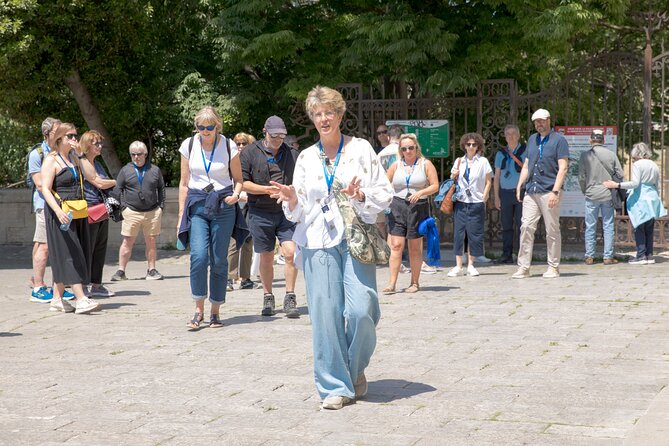
- Whisper-box audio (with your own 3.5mm earphones if you want) helps you hear the guide clearly in busy areas
- Papal Avignon context at the Palais des Papes makes the rest of the city easier to understand
- Two church visits are planned, but schedules can shift day to day
- Free-entry churches like Notre-Dame des Doms and Collégiale Saint-Didier keep costs down
- Main square + opera setting at Place de l’Horloge helps you learn the city’s layout quickly
- Short walking time with some steps suits most visitors with moderate mobility
Meeting Avignon at Pl. Crillon and Rue de la République

This tour is built for orientation. You start at 16 Pl. Crillon and finish near the main street at Rue de la République, by the fountain—an easy place to continue on your own after the walk.
It runs about 1 hour 30 minutes to 2 hours, so it works well on your first day. If Avignon feels like a puzzle of lanes and monuments, this is the kind of guided route that helps you stop guessing and start exploring.
You’ll be with a small group—up to 25 people—which keeps the walk comfortable. The guide uses English, and you get a mobile ticket, so you’re not dealing with paper hassles.
You can also read our reviews of more walking tours in Avignon

Palais des Papes: Big Gothic Drama, Without the Ticket Pressure
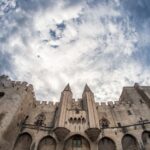
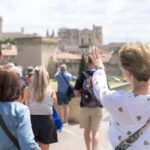
The Palais des Papes is why Avignon made such a loud mark in medieval Europe. It’s described as the largest Gothic palace in the world, built in the 14th century, and it served as the papal residence when Avignon was the center of Christendom.
Here’s the practical value of this stop: even if you don’t buy the palace ticket during the tour, you’ll leave with a mental map. You’ll learn what the grand halls, chapels, and courtyards were meant to communicate—power, politics, and faith in one stone package.
Do plan for some stairs. There can be a short climb near the palace area, including a stretch with roughly 15 steps. If stairs are tough for you, wear grippy shoes and pace yourself. The walk is generally easy-going, but it’s not totally step-free.
And yes, one important note: admission to the Pope’s Palace is not included. That means you’re buying your own entry if you want full access inside. The tour still helps you understand what you’re seeing—or what you’ll want to see next.
Cathedrale Notre-Dame des Doms: The Gilded Mary and the Quiet Garden View
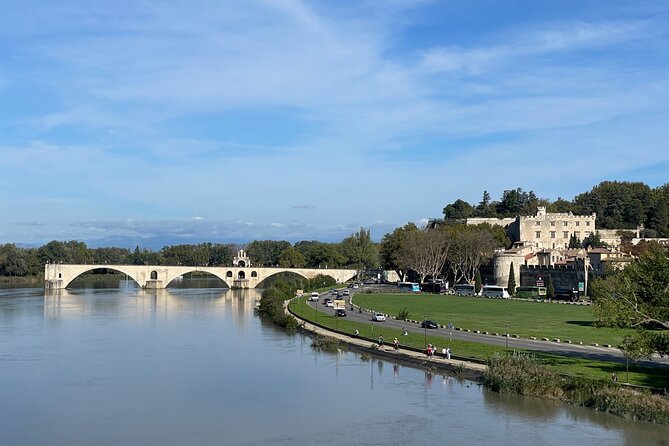
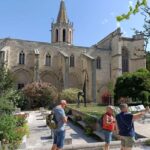
Right beside the palace grounds, Cathedrale Notre-Dame des Doms is the calmer counterpoint. It’s a 12th-century Romanesque cathedral, and the bell tower holds a famous gilded statue of the Virgin Mary that can be seen from far across the city.
What I like about this stop is the way it balances spectacle with peace. You’re not just looking at an exterior landmark—you get directed attention to what makes the cathedral special: interior religious art and frescoes, plus the fact that it contains tombs of popes who lived in Avignon during the 14th century.
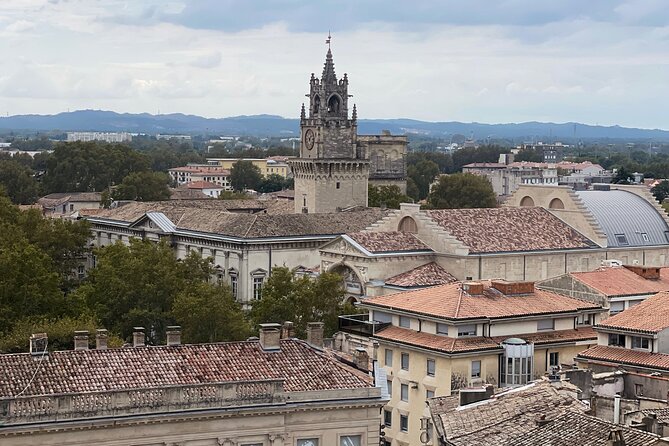
There’s also an added bonus: the nearby gardens are a good place to catch city views without feeling like you’re “on a tour treadmill.” This is one of the spots where the city looks layered—stone, rooftops, and the palace dominating the background.
Place de l’Horloge and the Opéra d’Avignon: Learn the City’s Center
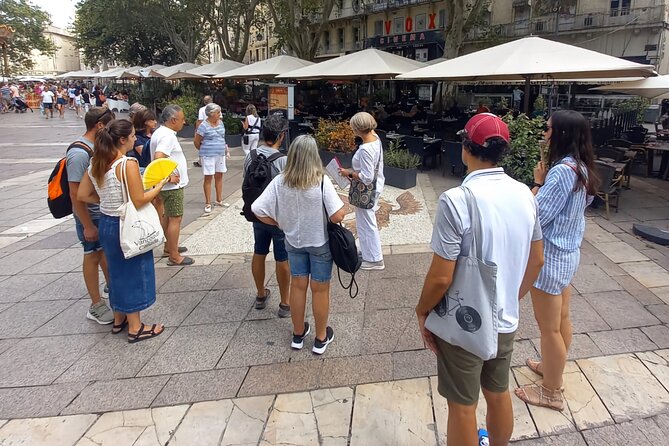
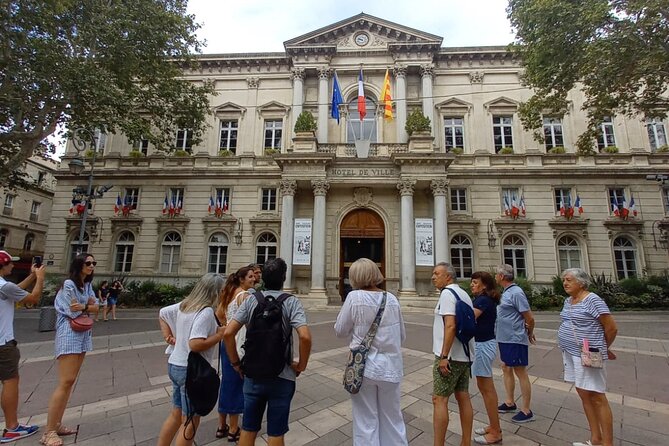
From sacred power to city life, you hit Place de l’Horloge, Avignon’s main square. It’s framed by cafés and restaurants, and it’s tied to civic life, not just monuments.
This is a smart stop for first-time visitors because it teaches layout. You’ll learn about the square’s clock tower connection, the City Hall, and the 19th-century Opera House that helps define the area’s rhythm.
Then you shift focus to the Opéra Théâtre d’Avignon itself. The building is known for its neoclassical façade and elegant interior, and it’s been an arts landmark for over 150 years. Even if you don’t catch a performance, the outside is a handy point of reference.
I also like how this section gives you a break from church-to-church intensity. It’s a chance to regroup and decide what to revisit later—especially if you plan to wander independently in the afternoon.
Saint-Agricol and Saint-Pierre: Two Church Stops That Feel Like a Reset
The tour includes visits to two churches, though this can vary depending on opening schedules. On the days when entries are possible, you’ll get inside two of Avignon’s older spiritual landmarks.
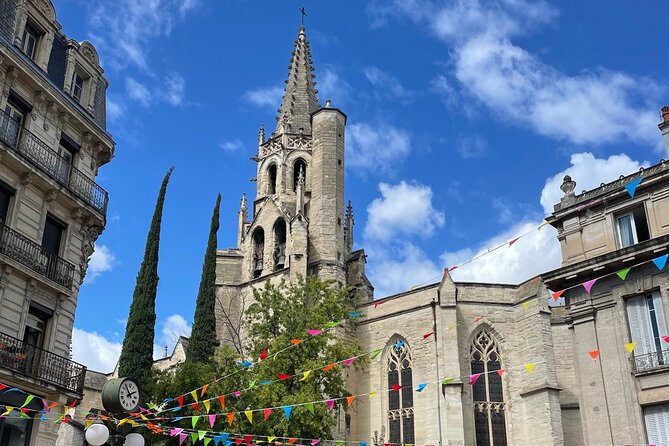
One of the planned stops is Eglise Saint-Agricol (Collégiale Saint-Agricol), an older church dating back to the 14th century. It blends Romanesque and Gothic influences and is known for stained glass windows and intricate carvings. The interior is where you slow down—look at the altar and sacred artwork, not just the architecture.
Another key stop is Basilique Saint-Pierre, a Gothic church originally built in the 14th century. It’s described as having an impressive facade with sculptures and a bell tower, plus interior stained glass and decorated chapels. It also connects back to the popes—this basilica was once a place of worship for them during their Avignon residence.
If you’re wondering what kind of experience this is, it’s not a “hit the biggest monument and move on” kind of tour. It’s more like: one stop teaches you what to look for in the next one. The guide’s stories help the churches feel linked rather than random.
Keep in mind that some days can be tricky for entries. If you’re traveling on a day when churches have reduced hours, you might still get the history and exterior context, but access inside may be limited.
You can also read our reviews of more historical tours in Avignon



Petit Palais and Saint-Didier: Art Rooms, Altarpieces, and Stone Details
After the churches, the tour moves into art-and-architecture territory.
You’ll pause at the Musée du Petit Palais, which sits in a Gothic palace. Even if you don’t go into the museum galleries, the setting matters. This site is connected to the archbishops of Avignon and holds a major collection of paintings, including works attributed to artists like Botticelli, Raphael, and Jean-Baptiste-Camille Corot. The museum also has a garden where you can relax and look out over the area.
Then the walk ends with Collégiale Saint-Didier. This church is another Romanesque-and-Gothic blend from the 14th century. It’s described as having vaulted ceilings, stone carvings, and stained glass that colors the interior light. One standout feature is the altarpiece, tied to the church’s long role in important events, including royal ceremonies and ecclesiastical gatherings.
If you like your travel guided by specifics—what to focus on, what a building was for, and why it looks the way it does—this is a strong final stretch. By this point, you’ve already learned how popes shaped Avignon’s “why,” so the stone and art land with more meaning.
Whisper Boxes, Small Group Size, and a Pace That Works
A tour is only as good as your ability to hear the guide and keep up. Here, that’s handled in a thoughtful way.
You’ll use whispering boxes for better communication. You can bring your own 3.5mm earphones if you prefer. The idea is simple: you don’t have to crane your neck toward the guide every time the street gets busy.
One tradeoff to know: a few people have found the headsets less satisfying than expected. If you’re sensitive to audio gear, consider bringing your own earphones so you can control comfort and sound.
The group size (up to 25) also matters. In a city with crowded historic lanes, it helps that the walk doesn’t feel chaotic. The guide keeps things moving at a pace that’s usually comfortable for most people.
And you’re not promised “all indoor entry.” This tour is designed around context and orientation. Expect to learn a lot even when some sites are outside-only due to hours.
Price and Value: Why $24.03 Can Be a Smart First-Day Buy
At $24.03 per person, this is priced like an efficient introduction tour. You’re not paying for expensive admissions across the board.
What you do get is a guided framework. The tour focuses on storytelling and city orientation, plus walk-around landmarks and streets, and includes guide-led visits to two churches (entry depends on schedules). The guide also brings history and local insight, which is where value gets real.
Important cost reality check: Pope’s Palace admission and museum tickets are not included. If you’re planning to enter the Pope’s Palace or pay for museum galleries, you’ll still budget extra. But the tour sets you up to make better choices after you understand what you care about.
If you’re visiting just a couple days, I’d treat this as your “Avignon base layer.” It helps you decide what to revisit later at your own pace, instead of touring blindly.
Who Should Book (and Who Might Prefer Something Else)
This tour is a good match if you want:
- An easy, structured start to Avignon with practical city orientation
- A guided focus on big themes like the papal era and church architecture
- A walk that doesn’t take over your whole day (about 2 hours)
It may not be your best fit if:
- You need a fully step-free experience. There are steps near the palace area, and some up-and-down is expected.
- You expect guaranteed entry into major sites every day. Church access can depend on schedules.
- You only want paid-entry museums and palaces. The tour includes context, but not museum or Pope’s Palace admission.
Good to know: service animals are allowed, and pets are welcome but must wait outside while you visit churches. Children under 12 won’t receive whispering boxes.
Should You Book This Avignon Walking Tour?
If you’re spending even a couple days in Avignon, I think it’s worth booking early—especially if it’s your first day. This kind of guided walk gives you an organized way to see the city: papal power at the palace, spiritual life in the churches, and the city’s social center at Place de l’Horloge.
Skip it or adjust expectations if your top goal is “only indoor masterpieces with included tickets.” This tour is more about context than ticket-heavy attractions. You’ll still likely want to go back on your own for deeper entries, but you’ll know what matters when you do.
Finally, because the tour requires good weather, plan to have some flexibility. If weather forces a change, you’ll be offered another date or a refund.
FAQ
How long is the Enchanting Historical Walking Tour in Avignon?
It lasts about 1 hour 30 minutes to 2 hours.
What’s included in the tour price?
You get an English-speaking guide with stories and insights, whispering boxes for better communication, walking around key streets and landmarks, and planned visits to two churches (which may vary by schedule).
Are tickets to the Pope’s Palace or museums included?
No. Tickets for the Pope’s Palace and museum visits are not included.
Where does the tour start and end?
You start at 16 Pl. Crillon, 84000 Avignon, France. The tour ends at the fountain by Rue de la République (la fontaine de la rue de la République, 35 Rue Théodore Aubanel, 84000 Avignon).
Will all the churches be open to enter?
Not guaranteed. The tour notes that church visits can vary based on schedules, and access may depend on opening hours.
Is there free cancellation?
Yes. You can cancel for a full refund up to 24 hours in advance. If you cancel less than 24 hours before, the amount paid isn’t refunded. The tour also depends on good weather.