REVIEW · AVIGNON
Guided tour of the Historic Center of Avignon
Book on Viator →Operated by JAIME-TOUR · Bookable on Viator
Avignon’s story unfolds in layers on this compact walk: a former Benedictine site, a textile canal, a market hall, Gothic churches, a cardinal’s palace, and elegant museums. The route gives you a useful frame for understanding how the city changed from Roman times through the Avignon papacy, monarchy, and French Revolution.
I like the small group limit of 12, which should make it easier to hear Jaime and ask questions. I also like the way the tour connects architecture with people and events, rather than treating each building as a separate photo stop. The main concern is language clarity: one participant found Jaime’s English difficult to follow, so this tour may be less satisfying if you need very simple or slow spoken English.
In This Review
- Key points to know before booking
- Why this walk helps you read Avignon
- Temple Saint-Martial and the opening chapter
- Rue des Teinturiers and the canal’s working past
- Avignon Les Halles and a taste of daily life
- Collegiale Saint-Didier and Southern Gothic design
- Bibliothèque Ceccano, a cardinal’s former palace
- Musée Lapidaire and the Jesuit chapel
- Musée Calvet and Avignon’s refined side
- What the three-hour format really gives you
- Price, language, and the guide’s role
- Who should book this Avignon tour
- Should you book it?
- FAQ
- Where does the guided tour of Avignon begin?
- Where does the tour end?
- How long does the tour last?
- What language is the tour offered in?
- How many people can join the tour?
- Is transportation included?
- Is lunch included?
- What places are visited?
- Can I cancel for a full refund?
Key points to know before booking
- Eight central stops in about three hours: Plan on roughly 20 minutes at each location, with the route beginning and ending at the Avignon Tourist Office.
- A history-led walk: Jaime links Roman influence, the Avignon papacy, the monarchy, and the French Revolution to the places you see.
- Strong architectural focus: Expect Southern Gothic art, Gothic paintings, Baroque design, classical French art, and 18th-century private architecture.
- A local-life stop at Les Halles: The market halls add Provençal food and daily life to a route otherwise centered on monuments.
- Coffee or tea is included: Lunch and private transportation are not included.
- Best for curious first-time visitors: The tour suits you if you want context before exploring Avignon on your own.
Why this walk helps you read Avignon
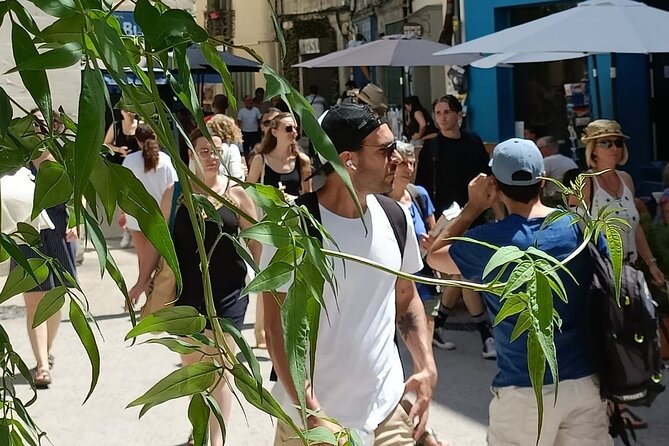
Avignon can feel like a city of isolated attractions. You see a church tower here, a canal there, and a grand palace farther along, but the connections are easy to miss. This tour is designed to join those pieces into one story.
Jaime’s approach, based on the tour’s stated themes, is to explain the architects, artistic styles, and political forces behind the buildings. That matters in Avignon because the city’s appearance reflects several different eras. Roman influence, the 14th-century papal court, later royal power, religious changes, and the French Revolution all left their mark.
I especially like the chronological feel of the route. One stop introduces a medieval religious foundation, another shows the economic power of textile production, and later stops move into churches, cardinal residences, Jesuit architecture, and private mansions. The result is more than a checklist of old buildings.
The walk also offers a useful first orientation. Since it starts and ends at the Office de Tourisme d’Avignon on 41 Cours Jean Jaurès, you can use it early in your stay and then return to the places that caught your attention. The end includes recommendations, so you have a chance to decide what deserves a longer visit.
You can also read our reviews of more guided tours in Avignon


Temple Saint-Martial and the opening chapter
The first stop is Temple Saint-Martial, a remnant of a Benedictine monastery connected with Cluny. Admission is free, and about 20 minutes are assigned to the stop.
This is a smart place to begin because it introduces the religious importance of Avignon before the route moves through later periods. The site is not presented simply as an old church. It serves as a starting point for discussing the 14th century and the influential figures associated with Avignon.
You should listen for the broad framework here. The tour later refers to the Avignon papacy, monarchy, and Revolution, so this opening stop helps you understand why religious institutions had such influence over the city’s buildings and fortunes.
The drawback is that 20 minutes is enough for an introduction, not a long architectural study. If Temple Saint-Martial particularly interests you, note the details and return independently after the walk.
Rue des Teinturiers and the canal’s working past
The route continues to the Street of Dyers, or Rue de Teinturiers, where the Sorgue canal recalls Avignon’s textile industry. The stop also touches on Les Cordeliers and Provençal printed fabrics.
This is one of the most useful parts of the walk because it shifts the focus from grand religious and political power to work and trade. The canal helps you picture the practical side of the neighborhood. Water was not just decorative. It supported textile production and shaped the district’s economy.
I like this stop because it gives Avignon a human scale. You are not only hearing about popes, cardinals, and architects. You are also learning how cloth production helped make the area important. The reference to Provençal printed fabrics adds a regional link, showing how local industry connected to the wider identity of Provence.
The 20-minute visit should give you a clear explanation of the canal and the textile past, but it will not cover every part of Avignon’s commercial story. If you care about craft traditions, this is a good place to ask Jaime for more detail.
Avignon Les Halles and a taste of daily life
At Avignon Les Halles, the tour pauses at the city’s market halls and focuses on local products. This is a welcome change of pace after the first historical and architectural stops.
Markets tell you how a city lives now, not just how it lived centuries ago. Here, the experience becomes more grounded in food and local routine. You may find this especially helpful if you want recommendations for what to taste during your stay, although the tour information does not promise a food sampling session.
The market stop also gives the route some balance. A tour centered only on churches and palaces can make a city feel like a museum. Les Halles reminds you that Avignon is still a place where people shop, eat, and meet.
Coffee or tea is included with the experience, but lunch is not. That distinction matters here. Do not count on the tour to replace a meal, and leave room in your schedule if you want to eat at or near the market afterward.
Collegiale Saint-Didier and Southern Gothic design
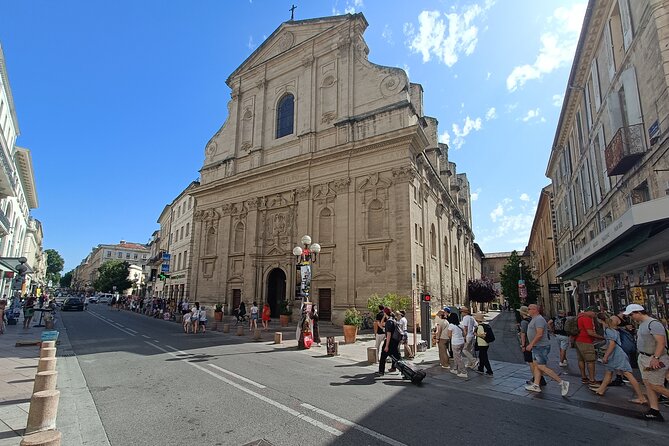
The Collegiale Saint-Didier brings the tour back to religious architecture. Its quadrangular bell tower is the key visual feature, while the discussion focuses on Southern Gothic art, tales, and legends.
A 20-minute explanation can help you see details that are easy to overlook when you enter a church on your own. Instead of only admiring the stonework, you can consider how Southern Gothic design differs from other medieval styles and how local stories shape the way the building is remembered.
I like that the tour includes both art and legend. Architecture gives you solid evidence, while stories explain how people have interpreted a place over time. Still, legends should be treated as part of local tradition, not always as proven historical fact.
This is another stop where the group size matters. A maximum of 12 people is small enough for the guide to manage a church visit without the talk becoming a distant speech. The tour details do not state whether seating is available, so comfortable shoes and a willingness to remain standing are sensible.
You can also read our reviews of more historical tours in Avignon


Bibliothèque Ceccano, a cardinal’s former palace
The Ceccano Library occupies a 14th-century cardinal’s palace known as a livery. It is described as the best-preserved cardinal livery in Avignon, with Gothic paintings and a later connection to a Jesuit college.
This stop brings the Avignon papacy into sharper focus. Rather than discussing the papal era only through famous names and major monuments, you see how senior church officials lived and how their residences shaped the city.
The building’s later use as a Jesuit college adds another layer. A structure can change function without losing its earlier identity, and Ceccano makes that process visible. I find this kind of stop valuable because it explains how Avignon’s buildings survived by being reused.
The library setting may appeal to you if you enjoy quieter historic interiors. The tour provides about 20 minutes here, enough to discuss the Gothic paintings and the building’s changing role. If access to the interior varies at the time of your visit, Jaime can still explain the site from the route, but the supplied details do not guarantee a particular interior presentation.
Musée Lapidaire and the Jesuit chapel
A short distance from the Tourist Office, the Musée Lapidaire occupies a Jesuit chapel with a notable Italian-inspired frontispiece. The discussion covers its architects and Baroque art.
This is a compact but worthwhile architectural comparison. After the medieval Gothic material at Saint-Didier and Ceccano, the chapel introduces a different visual language. The Italian influence and Baroque decoration show how religious design changed over time.
The museum’s name suggests a connection with stone or archaeological works, but the supplied tour details specifically emphasize the chapel, its frontispiece, architects, and Baroque art. You should expect the guide to focus on those elements rather than assume a full museum visit or a lengthy collection tour.
Because the stop is near the Tourist Office, the route remains easy to follow and does not require private transportation. That is a practical advantage for a short city walk: nearly all the value comes from the guide’s explanation, not from arranging transfers between distant sites.
Musée Calvet and Avignon’s refined side
The Musée Calvet provides a look at a grand private mansion designed by Jean Baptiste Franque, described as Avignon’s most renowned 18th-century architect. The tour also covers Avignon painters and classical French art.
This stop widens the story beyond the medieval and religious center. You see how wealth, taste, and architecture developed in the 18th century. The building’s private-mansion character gives you a different sense of status from the cardinal palace at Ceccano.
I would pay close attention to the comparison between these two sites. Ceccano reflects a 14th-century cardinal’s world, while Musée Calvet points to later domestic elegance and classical French artistic ideals. Placed together, they show that Avignon’s built environment was not frozen in the papal era.
Again, allow for a guided introduction rather than a full museum afternoon. The itinerary assigns roughly 20 minutes to each stop, and the price does not include a separate lunch or private transportation. If the art collection interests you, ask for advice at the end about returning with more time.
What the three-hour format really gives you
The tour lasts about three hours and divides its route into eight stops of around 20 minutes each. That schedule is brisk but sensible for a first look at Avignon’s central sights.
You will not receive an exhaustive museum tour at every location. Instead, you get a connected explanation of buildings, periods, and local life. I see the format as a strong choice for someone who wants to understand the city before spending the rest of the day exploring independently.
The walking route also keeps the experience simple. There is no private transportation, and the meeting and finishing point is the same. The tour is near public transportation, so reaching the starting point should be straightforward, though the supplied information does not specify a particular bus or train connection.
A group capped at 12 is another positive. Small groups usually make it easier to ask about architectural details, local figures, or places to eat. They also reduce the chance that you will spend the entire walk trying to stay near the guide.
Price, language, and the guide’s role
At $81.71 per person, this is not the cheapest way to take a walk through Avignon. Its value depends on how much you want interpretation. If you would be satisfied with photographs and brief notes from a guidebook, the price may feel high. If you want the political and architectural links explained as you move, the cost is easier to justify.
The inclusion of coffee or tea adds a small practical benefit, but it should not be treated as a meal. Lunch is excluded, as is private transportation. You are mainly paying for a three-hour guided experience in a small group.
Jaime is the named guide associated with the experience. The available feedback presents him as enthusiastic and well informed, but one person had trouble understanding his English. That is the most important caution in deciding. If spoken English is not your strongest language, or if you need very clear pronunciation, you may want to ask about the guide’s speaking style before booking.
The published rating is 4.4 out of 5 from seven ratings, a positive but still limited sample. I would treat it as encouraging rather than conclusive. The strongest pattern is appreciation for the way the tour connects Avignon’s monuments to Roman influence, the papacy, monarchy, and Revolution. That interpretive thread is the reason to choose this walk.
Who should book this Avignon tour
I would choose this tour if you are visiting Avignon for the first time and want a strong historical foundation. It also suits you if architecture matters, since the route covers Southern Gothic, Gothic painting, Baroque design, Italian influence, and classical French art.
It is a good fit for independent explorers who want a short introduction before returning to selected sites. The end-of-tour recommendations can help you decide where to spend more time.
You may want a different experience if you prefer a slow museum visit, a food-focused tour, or a tour conducted in very simple English. The route covers many places in three hours, so its strength is connection and context, not extended time inside any one building.
Free cancellation is available up to 24 hours before the start time for a full refund. Changes or cancellations made less than 24 hours before the start time are not accepted for a refund, and the cut-off follows local time.
Should you book it?
Book this tour if you want Avignon explained as a living city shaped by religion, trade, art, and politics. The route is especially useful because it includes less obvious subjects, such as the textile canal, a cardinal’s palace, and the city’s market halls, alongside churches and museums.
I would skip it only if you already know Avignon well, need a very slow English presentation, or want several hours inside a single museum. For most first visits, the small group, central route, and strong architectural focus make this a practical way to get your bearings before exploring on your own.
FAQ
Where does the guided tour of Avignon begin?
The tour begins at the Office de Tourisme d’Avignon, located at 41 Cours Jean Jaurès, 84000 Avignon, France.
Where does the tour end?
The activity ends back at the same meeting point, the Office de Tourisme d’Avignon.
How long does the tour last?
The tour lasts approximately three hours.
What language is the tour offered in?
The tour is offered in English.
How many people can join the tour?
The group has a maximum of 12 participants.
Is transportation included?
Private transportation is not included. The route is near public transportation.
Is lunch included?
No. Lunch is not included, although coffee and tea are included.
What places are visited?
The route includes Temple Saint-Martial, Rue de Teinturiers, Avignon Les Halles, Collegiale Saint-Didier, Bibliothèque Ceccano, Musée Lapidaire, and Musée Calvet. The tour begins and ends at the Avignon Tourist Office.
Can I cancel for a full refund?
Yes. You can cancel at least 24 hours before the experience start time for a full refund. Cancellations or changes made less than 24 hours before the start time are not accepted for a refund.