REVIEW · AVIGNON
Avignon: Private Walking Tour – Discover History & Heritage
Book on GetYourGuide →Operated by TOUR FRANCE EXPERIENCE · Bookable on GetYourGuide
Avignon is a medieval story you can walk. In just 2 to 3 hours, you get a guided pass through the city’s Papal power and defensive design, with the Palace of the Popes front and center. I like that the tour ties big monuments to the streets around them, so you don’t just see landmarks—you understand why they’re here.
My favorite part is how the route makes Avignon feel like one connected place: the Old Town lanes, the famous bridge, and the medieval fortifications all fit together into the city’s 14th-century Papal-era identity. One thing to consider: this is a cobblestone walking tour and it’s not suitable for people with mobility impairments, so choose shoes wisely and pace yourself.
In This Review
- Key highlights worth planning for
- Two lengths, one core story: picking 2 or 3 hours in Avignon
- Starting at Place de l’Horloge and getting your bearings fast
- Palace of the Popes: what you see outside (2 hours) versus inside (3 hours)
- Pont St. Bénezet: the famous bridge stop and the bridge-walk moment
- Old Avignon’s cobblestone alleys, squares, and café rhythms
- Medieval fortifications: reading the city’s defensive mindset
- A private blue badge guide changes the whole experience
- Price and value: is $235 per person fair?
- Timing, pacing, and what to do before you go
- Who should book this tour (and who should look elsewhere)
- Should you book this Avignon private walking tour?
- FAQ
- How long is the Avignon private walking tour?
- What’s included in the tour?
- What’s different between the 2-hour and 3-hour options?
- Where does the tour start?
- What languages are available?
- Is the tour suitable for mobility impairments?
Key highlights worth planning for
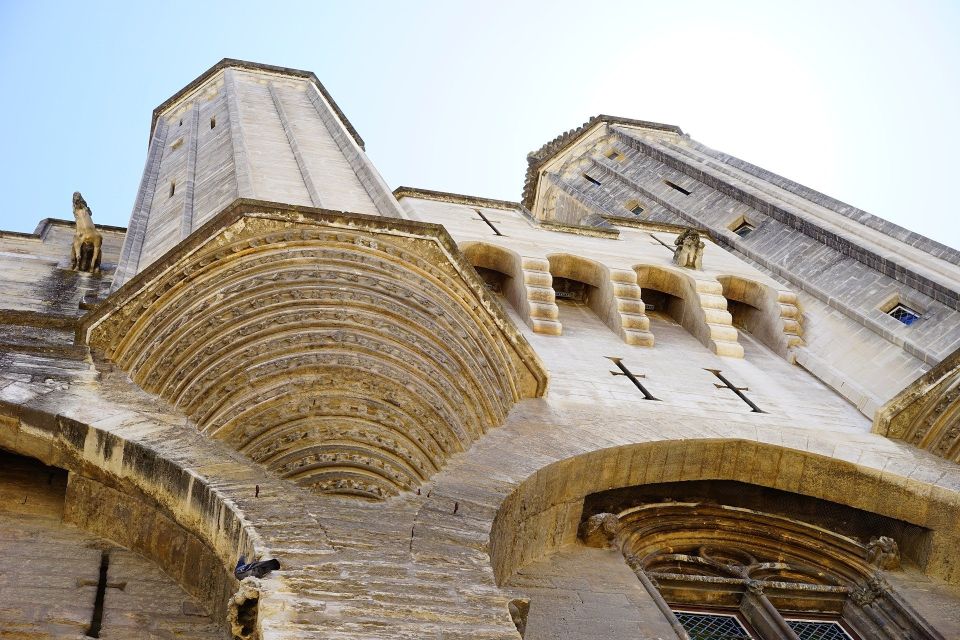
- 2-hour vs 3-hour payoff: the 2-hour option focuses on the Palace from the outside, while the 3-hour option includes entry tickets
- Pont St. Bénezet access: you’ll only stop in front on the 2-hour tour, but with the 3-hour tour you can walk on the bridge
- Old Avignon streets on foot: narrow cobblestone alleys, small squares, and sidewalk-café moments
- Medieval fortifications explained: you’ll see the defensive walls and learn how they shaped city life
- Private blue badge guidance: your guide handles the details in English, French, Italian, or Spanish
- Trusted guide energy: people have specifically praised guides such as Marc, Alexia, and Marie Joosée for making the tour lively and easy to follow
Two lengths, one core story: picking 2 or 3 hours in Avignon
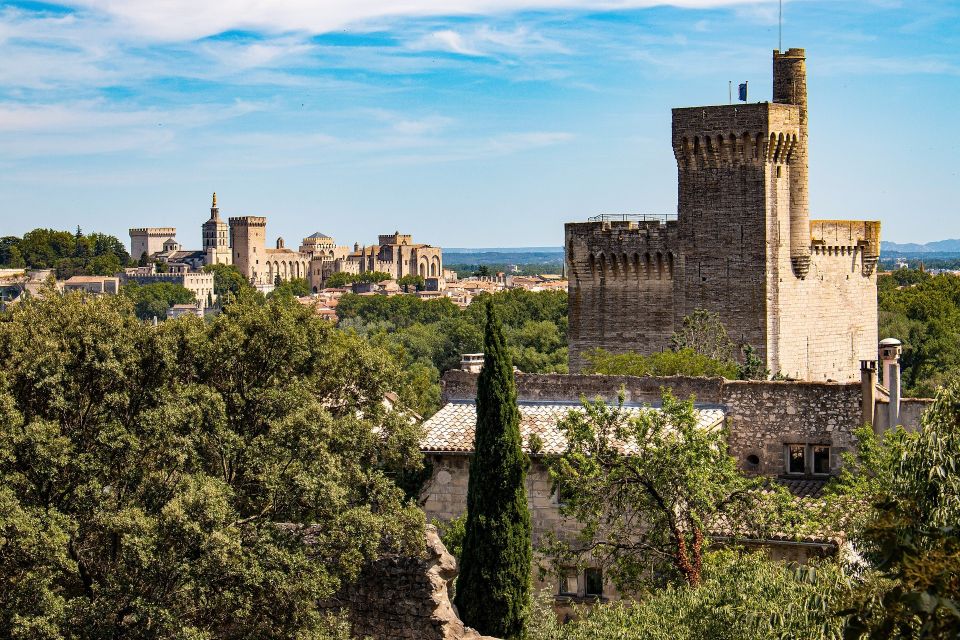
This is the kind of tour where your time choice changes the experience more than you might expect. If you’re short on time or want a lighter walk, the 2-hour tour gives you the essentials: the main sights, a guided story, and a look at the Palace area from the outside. It still includes a stop in front of Pont St. Bénezet, so you’ll understand why it’s become Avignon’s symbol.
If you can spare an extra hour, the 3-hour tour is the more complete version. You get entrance tickets to the Pope’s Palace and the chance to actually walk on Pont St. Bénezet. That difference matters because Avignon’s Papal period isn’t just about what you can see in photos. It’s about scale, elevation, and how the city’s layout feels when you’re standing in the right places.
Think of it like this: the 2-hour option is great for getting your bearings fast. The 3-hour option helps you slow down where it counts—inside the Pope’s Palace and on the bridge itself.
You can also read our reviews of more walking tours in Avignon



Starting at Place de l’Horloge and getting your bearings fast
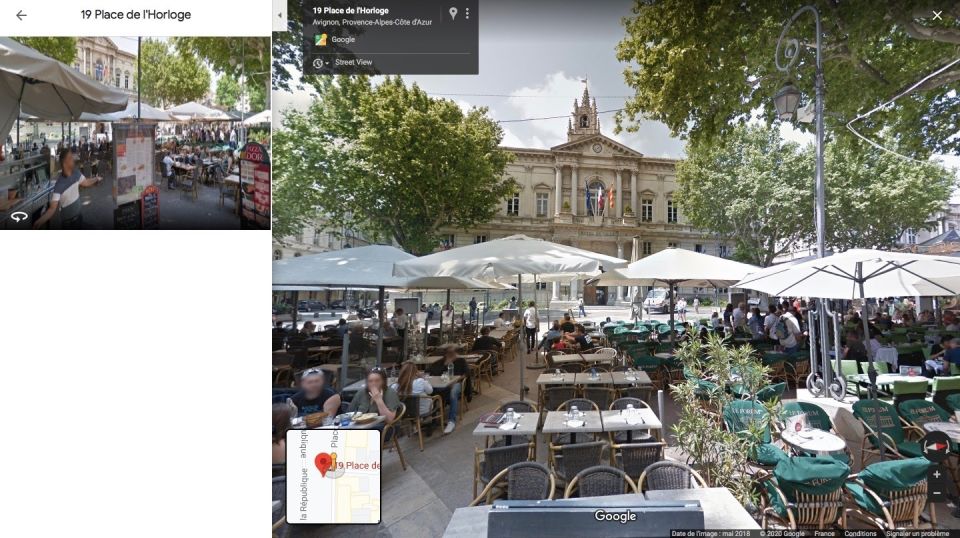
You’ll meet near Place de l’Horloge (the meeting point can be Pl. de l’Horloge, 19 or 1 Pl. de l’Horloge, depending on the option booked). That’s a smart launchpad because it puts you in the heart of where Avignon’s central life spills into the historic core.
The guide’s first job is simple: turn confusing streets into a map you can remember. You’ll move from squares and café frontage into the tighter medieval lanes. And because it’s private, you can ask quick questions as you go—especially useful when the city’s history can feel dense on paper.
This tour is also designed for an easy mental rhythm: walk, stop, look, then connect it to what you’re seeing—rather than a sprint from one photo spot to another.
Palace of the Popes: what you see outside (2 hours) versus inside (3 hours)
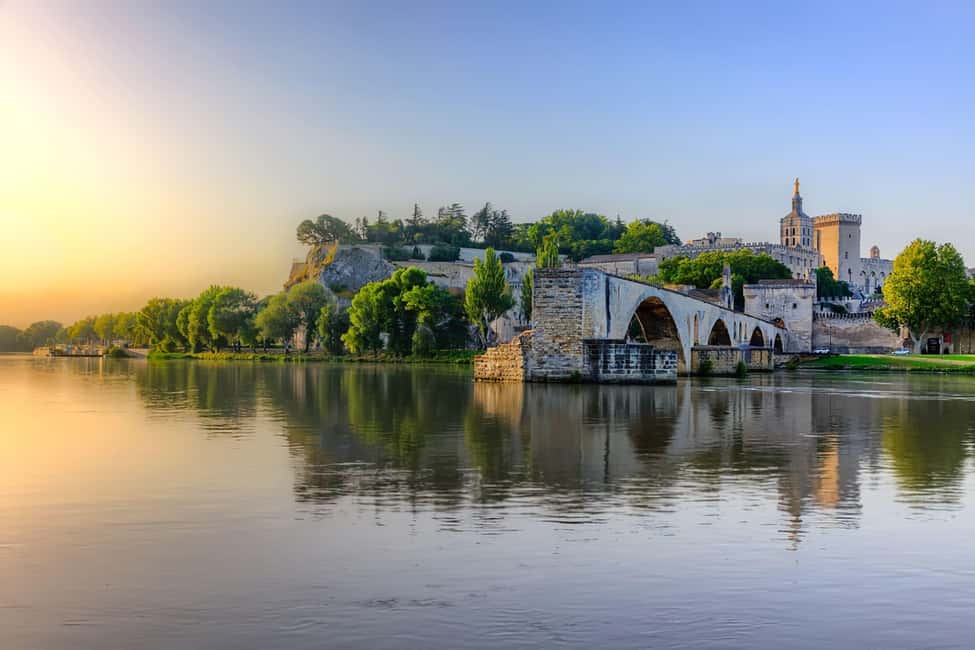
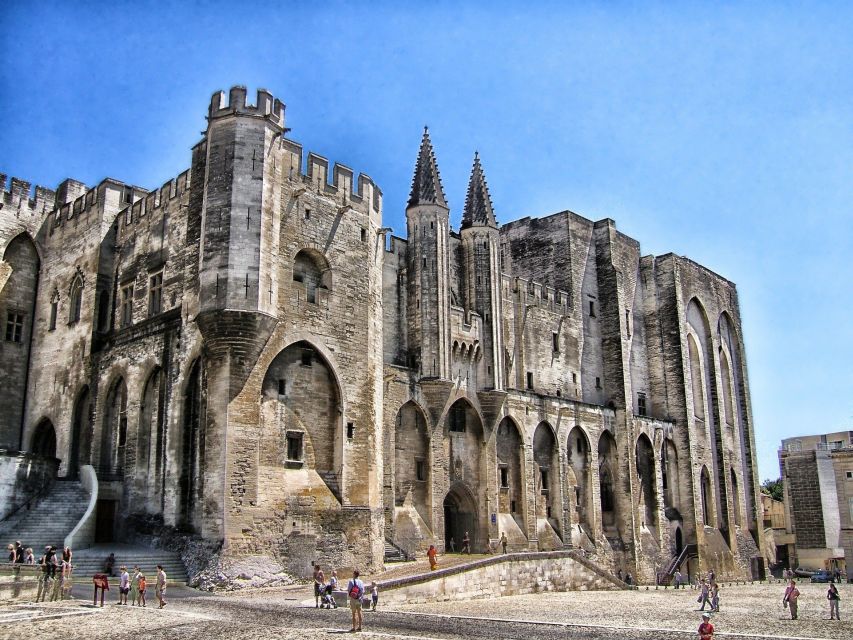
The Palace of the Popes is Avignon’s heavyweight. The city served as the capital of Christendom in the 14th century, and seven successive popes made Avignon their home. To rival Rome’s Papacy, the Papal court didn’t just govern from here—they shaped the city around them. The palace is the clearest proof.
On the 2-hour tour, you admire the Palace from the outside. You’ll get the main impression: the monumentality, the Gothic presence, and the sense that power was meant to be visible. Even an exterior view helps, because Avignon’s Papal influence isn’t subtle. The building’s massing and design communicate authority before you ever step inside.
On the 3-hour tour, you also get entrance tickets to the Pope’s Palace. This is where the value jumps: interior access turns the Palace from a dramatic backdrop into a place you can understand. You’re no longer only observing architecture; you’re walking through the environment that supported one of medieval Europe’s most influential leadership centers.
Practical note: even though you only have 2 to 3 hours, you’ll still want to bring your “slow looking” mode. The Palace rewards attention to details like structure and layout, not speed.
Pont St. Bénezet: the famous bridge stop and the bridge-walk moment
Pont St. Bénezet is one of those sites that people recognize immediately, even if they can’t place it. On the 2-hour tour, you’ll stop in front of the bridge so you can appreciate why it matters to Avignon’s identity. It’s a good primer, especially if you’re trying to understand how the city’s medieval story connects to its landmarks.
On the 3-hour tour, you go further: you can walk on the bridge. That’s a key upgrade, because the bridge is partly about views and spatial feeling. Being on it changes your perspective of Avignon’s river edge and the surrounding streets. It also gives the tour a satisfying “you’re there” finish, rather than ending with monuments across the way.
If you’re the type who likes iconic sites but also cares about context, the bridge-walk is worth the extra hour.
Old Avignon’s cobblestone alleys, squares, and café rhythms
Avignon’s charm isn’t just in the big buildings. It lives in the street-level experience: narrow cobblestone alleys, elegant squares, and sidewalk-café moments. The tour leans into that, so you get a sense of how people actually move through the city.
This is the part of the tour where a good guide earns their fee. When you’re walking tight lanes, history can get abstract fast. A guide helps you translate what you’re seeing into something you can picture later—what these streets likely meant for the city, how the Papal era influenced urban structure, and why the UNESCO designation fits.
You’ll also pass through tree-lined boulevards as the pace shifts away from the medieval core. That breathing space is useful on a walking tour: you get transitions, not just continuous tension.
If you want a tour that mixes monuments with the everyday feel of southern France, this section is a strong reason to book.
You can also read our reviews of more private tours in Avignon


Medieval fortifications: reading the city’s defensive mindset
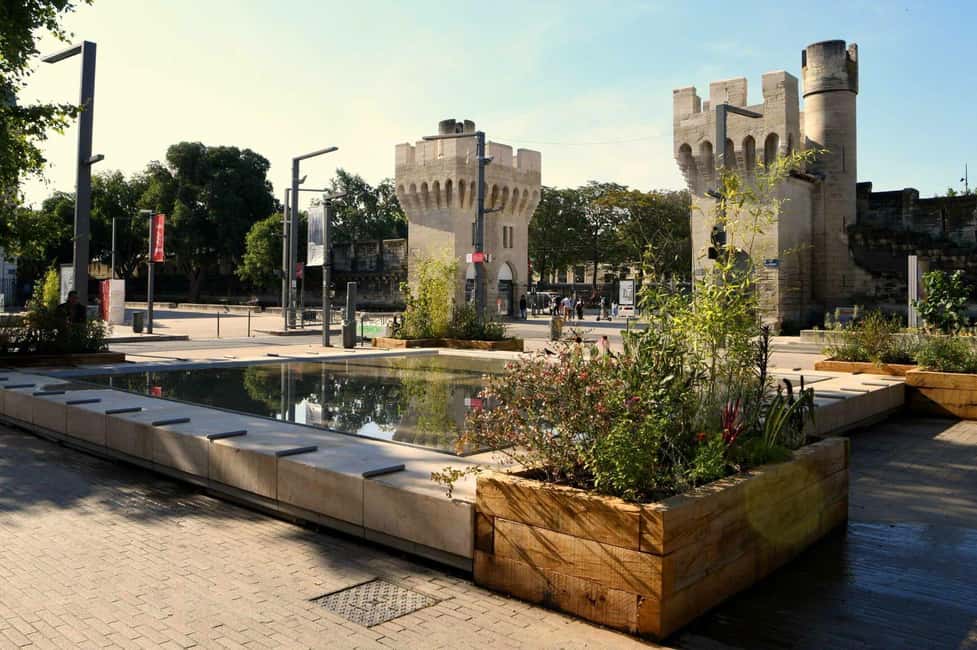
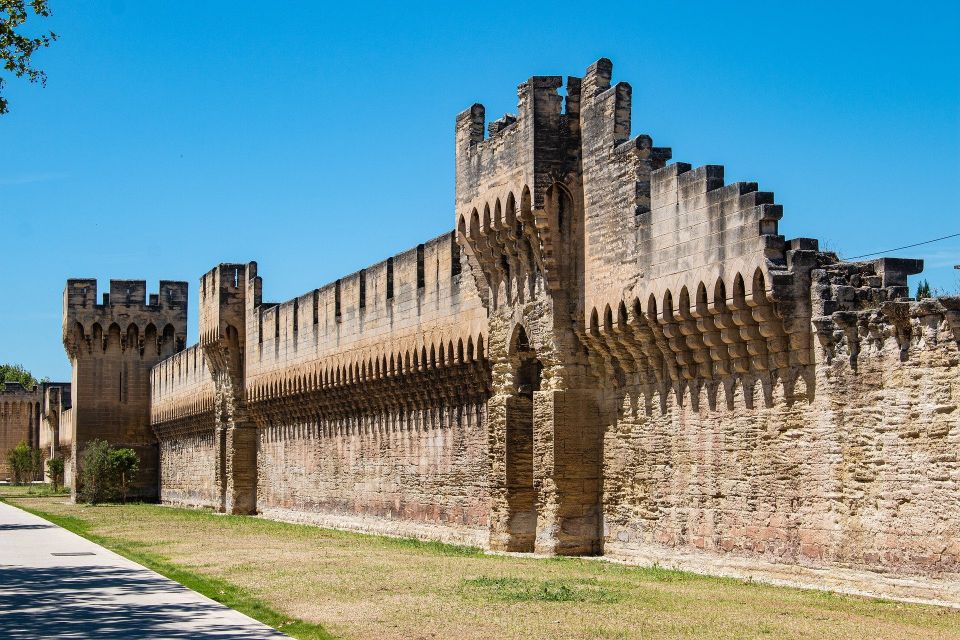
One of the most interesting parts of Avignon is how visibly the city’s walls and fortifications still shape movement and perception. You’ll see impressive medieval fortifications as part of the tour, and the guide helps you interpret what that meant when the city was a political and religious center.
This is more than sightseeing. Fortifications tell you how a city thought about risk. In Avignon’s case, the Papacy wasn’t a quiet neighbor—it was a power center. Defensive architecture supports that reality. Even if you don’t know the details before you arrive, your guide’s storytelling connects the walls to the larger “capital of Christendom” narrative.
Look at the fortifications as a way to read the city like a diagram. Where you can see walls, you can imagine boundaries. And where boundaries exist, daily routes and street patterns make more sense.
A private blue badge guide changes the whole experience
This is a private group tour with a local blue badge guide. That matters because you’re not just walking; you’re listening. The guide is there to share history and secrets of UNESCO-listed Avignon, and to answer the questions that pop up naturally when you’re standing in front of major sites.
What I like most about this format is pacing. Instead of having to keep up with a large group, you can slow down where it interests you—especially around the Palace area and the bridge zones. If you’re the kind of traveler who enjoys short, clear explanations (and doesn’t want a lecture), the guide approach here tends to fit well.
Also, language support is a real practical win. The tour is offered in English, French, Italian, and Spanish, so you can choose the option that best matches your comfort level. One group experience specifically praised guides like Marc (noted for humor and clear English) and Alexia (praised for being great), which suggests the guides aim for a lively, understandable style.
Price and value: is $235 per person fair?
Let’s talk money plainly. At $235 per person, this isn’t a budget walk. You’re paying for three things: private guiding, a structured route through major Avignon highlights, and (for the 3-hour tour only) entrance tickets to the Pope’s Palace.
So the value depends on which option you choose:
- If you pick the 2-hour tour, you’re paying for the private guided experience plus Palace exterior viewing and the bridge stop. That can be worth it if you mainly want orientation, context, and a smooth narrative through the medieval core.
- If you pick the 3-hour tour, the price feels easier to justify because you add Palace admission and the bridge-walk. If you want the full “stand where it happened” feeling, that extra hour pays off.
My practical advice: don’t just compare the price to other tours. Compare it to what you’ll actually want at the end of the walk. If you want interior access and the bridge experience, the 3-hour format usually gives better emotional value.
And yes, you’ll want to wear comfortable shoes. Cobblestones plus standing still to look at the Palace means your body will notice what your mind is learning.
Timing, pacing, and what to do before you go
The tour lasts 2 to 3 hours. That’s a sweet spot for Avignon because it’s long enough to get context, but short enough that you can still enjoy an unhurried meal afterward.
Before you go, I’d do two quick prep steps:
1) Decide whether you’re aiming for the 2-hour overview or the 3-hour full experience.
2) Bring water and a layer. Southern France can feel sunny and warm even when the breeze near river areas cools things down.
During the tour, let the guide do the heavy lifting. If you try to “DIY” the city story while also listening, you’ll miss the connections that make Avignon click.
Who should book this tour (and who should look elsewhere)
This is a good match if you:
- Want a clear narrative of Avignon’s Papal-era rise as the 14th-century capital of Christendom
- Prefer a private pace over crowded group tours
- Care about understanding why the Palace and bridge became central symbols
- Enjoy walking through real old-town streets, not just stopping for photos
It’s not a great fit if you have mobility limitations, since the tour involves walking on uneven cobblestones and isn’t suitable for people with mobility impairments.
If you’re traveling with limited time and want only the top sights with minimal walking, you might still find the 2-hour option workable. But if you can handle the full route, the 3-hour tour is the stronger choice.
Should you book this Avignon private walking tour?
I’d book it if you want Avignon to make sense fast. The combination of Papal Palace focus, the Pont St. Bénezet storyline, and medieval fortification context is a smart way to turn a UNESCO city into something you can actually remember.
Choose the 2-hour tour if you’re time-crunched and mainly want orientation plus the big sights from key viewpoints. Choose the 3-hour tour if you want the full payoff: Palace entry and the bridge-walk moment.
If you’re comfortable spending $235 per person for private guiding, and you want history that sticks because you walk through the places it happened, this is a solid, high-value way to experience Avignon the way it’s meant to be seen.
FAQ
How long is the Avignon private walking tour?
It runs for either 2 hours or 3 hours, depending on the option you book.
What’s included in the tour?
You get a private blue badge guide. For the 3-hour tour, entrance tickets to the Pope’s Palace are included.
What’s different between the 2-hour and 3-hour options?
With the 2-hour tour, you see the Palace of the Popes outside only and you stop in front of the St. Bénezet Bridge. With the 3-hour tour, you include Pope’s Palace entrance tickets and you can walk on the St. Bénezet Bridge.
Where does the tour start?
The meeting point is near Place de l’Horloge. It may be Pl. de l’Horloge, 19 or 1 Pl. de l’Horloge depending on the option booked.
What languages are available?
The live guide is available in English, French, Italian, and Spanish.
Is the tour suitable for mobility impairments?
No, it is not suitable for people with mobility impairments.