REVIEW · MARSEILLE
Marseille : Old Town Food Tour by Food Lover Tour
Book on GetYourGuide →Operated by FOOD LOVER TOUR · Bookable on GetYourGuide
Marseille’s food story makes the most sense on foot, moving from a café near La Canebière to Noailles, a rooftop viewpoint, and the Old Port. This three-hour tasting walk links Mediterranean products, Provençal cooking, and the city’s mix of French and international influences in a way a standard sightseeing tour cannot.
I like the small group of no more than 10 and the personal feel of the stops. I also like that the price includes meals, drinks, and restaurant taxes, so the $88 cost is easier to judge before you book. Guides Rocio and Marine have earned especially warm praise for their friendly explanations and attention to the group.
The main drawback is the walking. Cobblestones, narrow streets, and several historic districts make this a poor fit for anyone with limited mobility. The tour runs rain or shine, and it is not yet adapted for vegans, so those points deserve attention before you reserve.
In This Review
- Key points at a glance
- Why this Marseille food walk works
- Starting at 9 La Canebière
- Coffee and breakfast at 1860 Le Palais
- Small snacks in Marseille’s historic center
- A rooftop pause at Ciel
- Noailles, markets, and a mix of cultures
- Finishing beside the Old Port
- What the small group changes
- Food restrictions, pace, and comfort
- Who should book this experience
- Booking details worth knowing
- Should you book the Marseille Old Town Food Tour?
- FAQ
- Where does the Marseille Old Town Food Tour begin?
- How long does the tour last?
- What food and drinks are included?
- Does the tour visit a food market?
- Does the tour include lunch?
- What languages are available?
- How many people are in the group?
- Is the tour suitable for vegans or people with limited mobility?
Key points at a glance
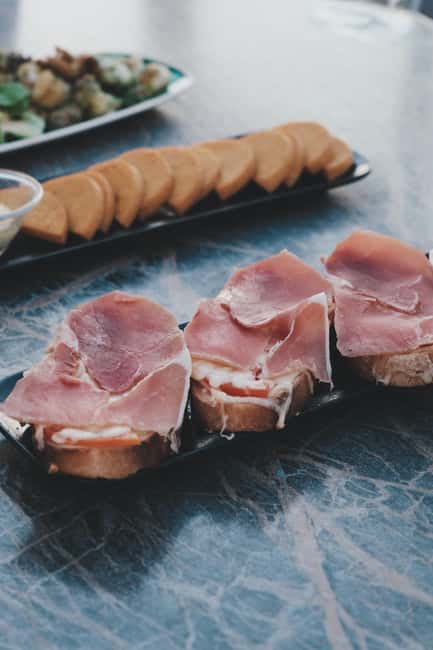
- A full food-and-drink route: Coffee, local snacks, an aperitif, market tastings, lunch, beer, wine, and regional food are included.
- A compact Marseille sampler: The route covers La Canebière, the historic center, Noailles, Place Estienne d’Orves, the Opera area, and the Old Port.
- A genuinely small group: With a maximum of 10 people, you get more room for questions and conversation than on a large coach excursion.
- Personal guides matter here: Rocio and Marine are specifically praised for warmth, patience, city knowledge, and clear explanations.
- A cultural walk as well as a meal: The food is tied to Marseille’s port, Mediterranean setting, architecture, and mix of cultures.
- Plan for uneven walking: This is a rain-or-shine walking tour and is not suitable for people with mobility impairments.
Why this Marseille food walk works
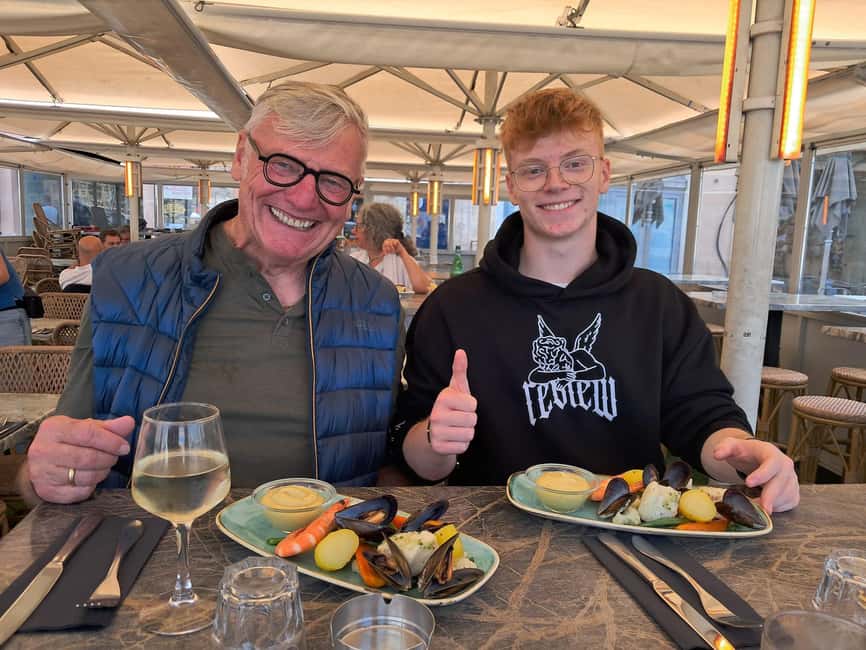
A food tour can be little more than a string of samples. This one has a stronger shape: you start with breakfast or coffee, move through neighborhoods and market streets, pause for a drink and a view, then finish with lunch near the Old Port.
That order matters. You get a sense of Marseille before the meal is over. The city’s old buildings and tight streets provide the setting, while the tastings give you a practical way to understand its Mediterranean character.
I especially like the link between place and plate. Marseille has long been shaped by its port and by people arriving from different parts of the Mediterranean and beyond. The route through Noailles and the historic center lets you see that mixture rather than hearing about it in a museum only.
The tour is conducted in English, French, or Spanish. English is the standard choice for many international visitors, while other languages are available through the activity options. If language is important to your booking, check the available guide before paying.
You can also read our reviews of more food & drink experiences in Marseille
Starting at 9 La Canebière
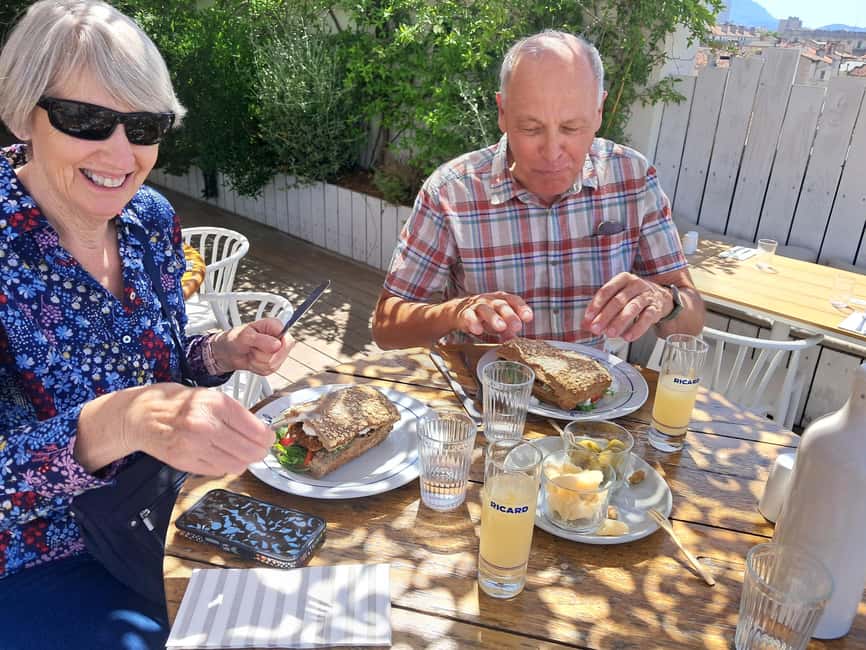
The meeting point at 9 La Canebière puts you near one of Marseille’s best-known central avenues. Arrive at least five minutes early. That small buffer is useful in a city where old streets can make a short walk feel less direct than it looks on a map.
The beginning is designed to ease you into the day rather than send you straight to a heavy lunch. You’ll make your way to 1860 Le Palais for coffee, tea, and breakfast, along with an introduction to the area.
This is a good first stop for two reasons. First, a café gives you time to meet the guide and the other people in the group. Second, it creates a natural opening for the food story, starting with everyday eating rather than only famous dishes.
The setting also helps you notice the contrast between Marseille’s grander avenues and its older side streets. I would use this first stretch to ask your guide about the food you will taste later, especially if you have allergies or dietary restrictions.
Coffee and breakfast at 1860 Le Palais
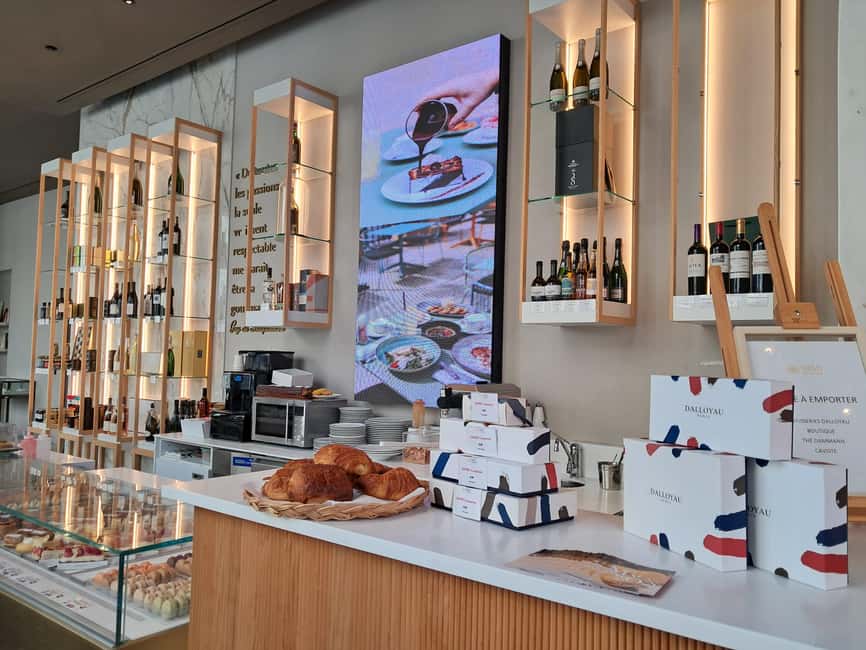
The stop at 1860 Le Palais combines coffee, tea, and breakfast with sightseeing. The supplied details do not name the exact breakfast items, so you should think of this as a light opening tasting rather than a promised signature dish.
That is not a weakness. A modest first course leaves room for the snacks, aperitif, and lunch still ahead. It also reflects the pace of a local morning better than rushing into a large meal at the first stop.
A guide such as Rocio can make this part more useful by explaining how the café fits into the neighborhood. The strongest personal comments about her point to patience and clear, helpful information. Marine has also been praised for sharing her affection for Marseille while explaining the city’s food and culture.
Those details are important on a food tour. You are not just paying for someone to point out a table of food. You want a guide who can keep the group moving, answer questions, and adjust the conversation to the people in front of her.
Small snacks in Marseille’s historic center
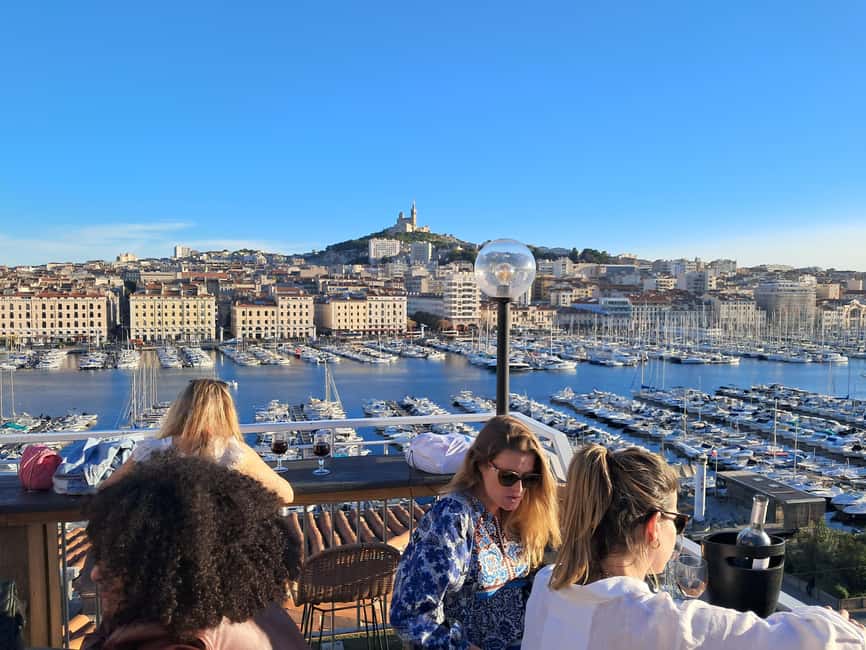
After breakfast, the walk turns toward the old center and a local snack stop. This is where the tour’s setting becomes as important as the tasting.
The cobblestone streets and narrow lanes give Marseille a distinct feel. Old buildings show French and Mediterranean influences, and the route can feel like a walk through several cultural worlds in a short distance. That sense of contrast is one of the better reasons to choose a walking food tour instead of a restaurant-only experience.
The exact snack selection is not fixed in the information provided. You can expect local tastes connected to Provençal cooking and Mediterranean products, but you should not book this tour expecting a published menu with named dishes.
That uncertainty is worth accepting if you enjoy discovery. It is less appealing if you need to plan every bite in advance. Tell the company about allergies, intolerances, or other dietary needs during booking, not when you arrive.
A rooftop pause at Ciel
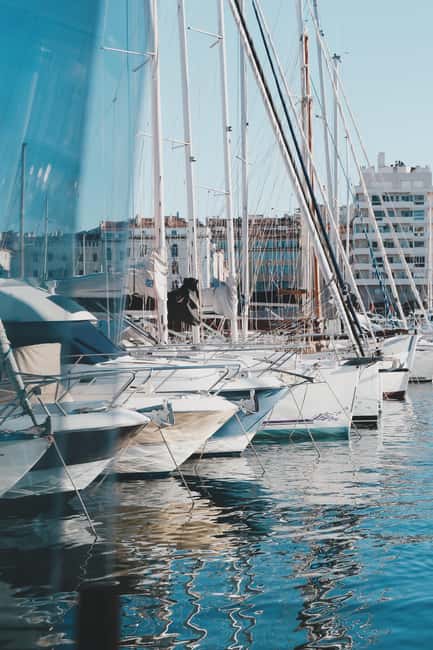
The Ciel stop adds a change of pace. Here, the group has a photo stop, an aperitif, more local snacks, sightseeing, and food tasting. The rooftop setting provides a view over Marseille and gives you a chance to step away from the close streets of the historic center.
One of the most memorable parts of the route is likely to be this pause above the city. A good viewpoint helps you understand how the old districts, the port, and the wider city relate to one another. It also gives the tour a visual break between tastings.
The aperitif is included, as are the drinks and restaurant taxes. The supplied information does not specify which aperitif or snacks are served, so the best approach is to treat the stop as a regional tasting rather than a guaranteed named specialty.
I like this part because it is not only about eating more. You get a place to look, take photographs, and talk with the guide. The stop may be particularly useful early in your Marseille visit, when you are still trying to get your bearings.
A few more Marseille tours and experiences worth a look





Noailles, markets, and a mix of cultures
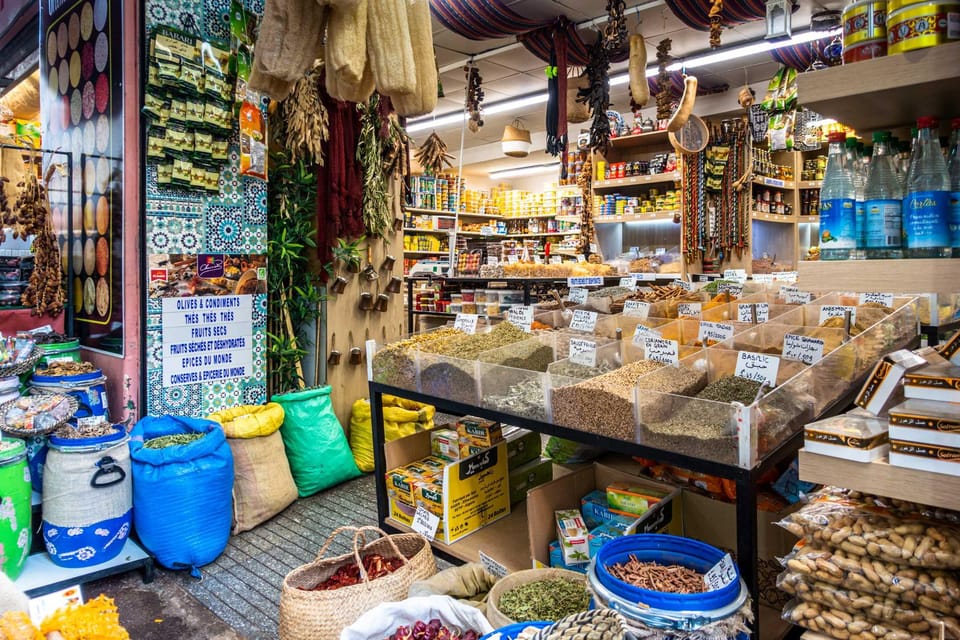
Noailles is the route’s most direct encounter with Marseille’s mixed food culture. The group makes a photo stop and guided visit, with local snacks, food tastings, and a visit to a food market.
This neighborhood is a strong choice for the tour’s central cultural lesson. Marseille’s port connection and Mediterranean location show up in its ingredients, shops, smells, and languages. The experience is not presented as a polished single-cuisine postcard. Instead, you see how Provençal and Mediterranean habits meet in an urban neighborhood.
The market visit also gives you a better sense of products before they appear in a meal. You may notice fresh foods, spices, baked goods, and other everyday ingredients, but the exact vendors and tastings can vary. The information does not promise a fixed market menu.
Keep an open mind here. Noailles can feel more energetic and crowded than a quiet historic square, and the streets are not always smooth. That is part of the point, but it can be tiring if you want a gentle, mostly seated food outing.
For me, the market section is one of the tour’s best values. A restaurant tells you what Marseille tastes like at one table. A market shows you the range of products and influences that shape meals across the city.
Finishing beside the Old Port
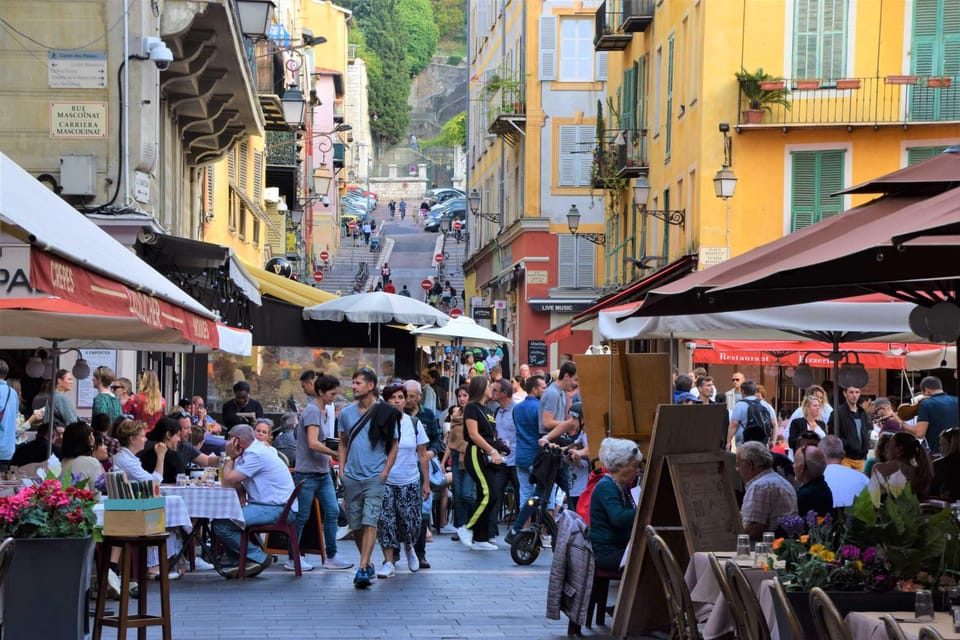
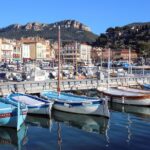
The walk ends at the Old Port, with a photo stop, guided sightseeing, regional food, lunch, beer, and wine. This is a satisfying finish because the port helps explain the city’s place in Mediterranean food culture.
The meal is included, along with beverages and restaurant taxes. That makes the $88 price easier to assess. You are receiving several tastings, breakfast or coffee, an aperitif, lunch, beer, and wine, plus a three-hour guided walk and cultural interpretation.
The value depends on how you normally eat while sightseeing. If you would buy breakfast, snacks, an aperitif, lunch, and drinks separately, the price is competitive. You also avoid the guesswork of choosing restaurants in a busy tourist area.
On the other hand, this is not the best choice if you prefer one long restaurant meal or if you eat very lightly. Part of the cost pays for the guide, the neighborhood walk, and access to small, intimate locations where you can interact with owners. You are buying a packaged food experience, not simply a cheap lunch.
The Old Port section also gives the day a clear sense of place. You end near one of Marseille’s defining sights rather than at an anonymous restaurant far from the center. If you have plans afterward, the central ending may be convenient, but allow yourself time to finish comfortably rather than scheduling something immediately.
What the small group changes
The group limit of 10 is one of the tour’s strongest practical features. Food stops work better when you can hear the guide and fit inside small businesses without splitting into several tables.
A small group also gives you more chances to ask about ingredients, neighborhoods, and local customs. This matters because the route includes owner interaction at intimate locations, not only brief stops outside major sights.
The personal quality is reflected in the feedback about Rocio. Danielle specifically valued her patience, helpfulness, and information, while Melissa found the small-group format worked well for teenagers. That suggests the tour can suit families with older children, provided everyone is comfortable walking and trying a range of foods.
Marine is another named guide connected with strong praise for the way she combines city information with food. Since guide assignments can change, you should not assume one particular person will lead your departure. Still, the repeated focus on warm, attentive guiding is encouraging.
Food restrictions, pace, and comfort
The tour includes all meals and beverages, but food needs require planning. Allergies, intolerances, and dietary requirements should be reported during the booking process. That gives the provider a chance to prepare or explain what can be adjusted.
The tour is not yet adapted for vegans. If you follow a vegan diet, this is not a suitable choice based on the current information. Other dietary requests may be worth asking about, but do not assume every tasting can be replaced.
Mobility is the clearest limitation. The route includes historic districts, cobblestones, and narrow streets, and the activity is specifically not recommended for people with limited mobility. Comfortable shoes are a sensible choice, although the provider does not state a formal dress requirement.
The tour runs rain or shine. Bring clothing that suits the forecast and be ready to keep walking in wet weather if needed. The three-hour length is manageable for many people, but the combination of standing, walking, and eating can feel full if you prefer a slow, seated morning.
Who should book this experience
I would choose this tour for a first or second day in Marseille. It gives you neighborhood orientation, a meal plan, and a guide who can help you understand what you are seeing. You can then return to Noailles, the Old Port, or another central area with more confidence.
It is also a good match for people who want local food without spending hours researching restaurants. The route covers several kinds of stops, from a café to a market to a lunch setting, and the price includes drinks and taxes.
Families with teenagers may find the changing pace helpful. The rooftop view, market, snacks, and port keep the morning from feeling like a long lecture. Still, younger children may find the walking and meal schedule less predictable.
I would skip it if you need step-free access, follow a vegan diet, dislike group tours, or want a precise menu in advance. I would also think twice if your Marseille visit is short and your schedule cannot tolerate a three-hour commitment.
Booking details worth knowing
The tour costs $88 per person and lasts about three hours. It has a maximum of 10 participants, with private tours available for individuals or larger groups by request.
You can cancel up to 24 hours before the activity for a full refund, and the reserve-now, pay-later option keeps your plans flexible. Starting times depend on availability, so check the date and time before booking.
Meet at 9 La Canebière and arrive at least five minutes early. Guides may conduct the experience in English, Spanish, or French. Gratuities are accepted if you feel the guide gave you a particularly good day.
Should you book the Marseille Old Town Food Tour?
Book it if you want Marseille explained through its streets, market culture, drinks, and shared food rather than through a list of monuments. The combination of Noailles, a rooftop stop, intimate food locations, and the Old Port gives you a well-shaped introduction to the city.
The strongest reasons to go are the small group, the generous range of included food and drinks, and the personable guiding associated with Rocio and Marine. The main cautions are just as clear: uneven walking, rain-or-shine conditions, and no vegan adaptation.
For an active food lover who wants a practical taste of Marseille’s many influences, $88 is a fair package. For anyone needing easy access or strict plant-based options, choose another activity.
FAQ
Where does the Marseille Old Town Food Tour begin?
The tour begins at 9 La Canebière in Marseille.
How long does the tour last?
The tour takes roughly three hours.
What food and drinks are included?
The price includes all meals and beverages, including coffee or tea, breakfast, local snacks, an aperitif, food tastings, lunch, beer, wine, and regional food. Exact dishes are not specified.
Does the tour visit a food market?
Yes. The route includes a visit to Noailles and its food market, along with local snacks and food tastings.
Does the tour include lunch?
Yes. Lunch and restaurant taxes are included, with the final meal taking place around the Old Port area.
What languages are available?
The tour is conducted in English, Spanish, or French. Other language requests may be available upon request.
How many people are in the group?
The tour is limited to 10 participants. A private tour can also be requested for an individual or a larger group.
Is the tour suitable for vegans or people with limited mobility?
The tour is not yet adapted for vegans and is not recommended for people with mobility impairments. You should report allergies, intolerances, or other dietary requirements during booking.