REVIEW · MARSEILLE
Odyssey of Discovery through the Great Marseille
Book on Viator →Bookable on Viator
Marseille’s story unfolds in striking contrasts on this private tour: an 870 church built over a Roman temple, a fortress beside a bold modern museum, a massive Byzantine cathedral, and a hilltop basilica with 360-degree city views. Guide Anthony leads the route, adding local history and practical advice along the way.
I like the private format for up to eight people, which makes it easier to ask questions and adjust the pace. I also like the mix of ancient, religious, military, and modern sights, rather than spending four hours on one narrow theme.
The main consideration is timing. Seven stops are packed into about four and a half hours, and several visits last only 30 minutes. You will see a lot, but this is a broad introduction to Marseille rather than a slow, in-depth visit to every site.
In This Review
- Key points at a glance
- What this private Marseille tour is really trying to do
- Église Saint-Laurent and Marseille’s earliest layers
- Fort Saint-Jean, the Vieux Port, and a useful bridge between eras
- Mucem and the modern face of Marseille
- Villa Méditerranée and the J5 waterfront
- La Major, two cathedrals in one stop
- Notre-Dame de la Garde and the best view of the day
- The Old Port and a local drink to finish
- Pace, transport, and group comfort
- What Anthony adds to the day
- Who will get the most from this experience
- Should you book the Great Marseille tour?
- FAQ
- Where does the tour take place?
- How long does the tour last?
- How much does the private tour cost?
- Is the tour private?
- What language is offered?
- Are admission tickets included?
- Is lunch included?
- Can I choose where the tour ends?
- What is the cancellation policy?
Key points at a glance
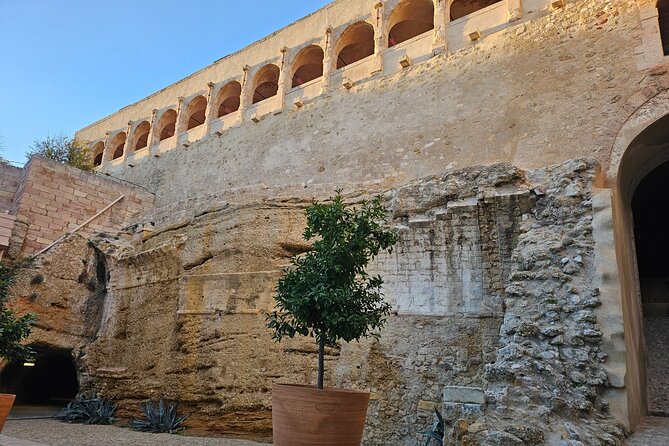
- A Roman temple lies beneath Église Saint-Laurent, a small church with more than a thousand years of change behind it.
- Fort Saint-Jean links old and new Marseille, with views toward the Vieux Port and a footbridge to Mucem.
- Mucem adds modern architecture and a rooftop café stop, while paid exhibitions remain optional.
- La Major Cathedral combines an older Romanesque church with a huge Byzantine and Roman Revival cathedral.
- Notre-Dame de la Garde gives you Marseille from 150 meters above sea level, with a wide city panorama.
- Anthony can help with restaurant reservations and your final drop-off, though meals and drinks are paid separately.
What this private Marseille tour is really trying to do
This is a fast-moving introduction to the city’s core sights. Instead of treating Marseille as a pretty port with a few photo stops, the route shows how the city grew from an ancient Greek landing place into a layered Mediterranean city shaped by religion, defense, trade, migration, and modern design.
The tour costs $396.52 per group of up to eight. That price makes the most sense when shared by a family or a small group. For eight people, the cost works out to about $49.57 per person. For two people, it is a much larger outlay, but you are paying for a private experience and a guide who can respond to your interests rather than leading a fixed public group.
Anthony’s strengths are clear from the way the experience is set up. He focuses on historical context, local culture, safety, communication, and practical help. He has also helped people arrange transportation onward, suggested places to eat, taken photographs, and adjusted the experience to personal requests. Those details matter when you have only one night in Marseille or are fitting the city into a larger French itinerary.
The route includes about four hours of named stop time. The full experience lasts roughly four and a half hours, including movement between stops and the return portion of the outing. That means you should expect a brisk rhythm, with enough time to see and discuss each place but not enough for long museum visits or extended time inside the churches.
You can also read our reviews of more tours and experiences in Marseille.
Église Saint-Laurent and Marseille’s earliest layers
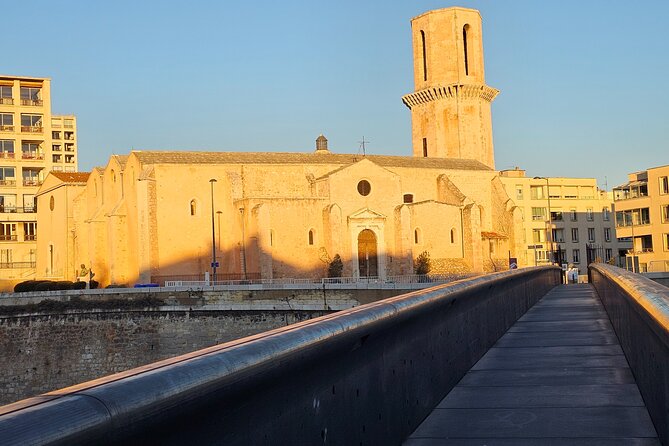
Begin at Église Saint-Laurent, where the story reaches back to 870 AD. The church was built on the site of an ancient Roman temple dedicated to Apollo, giving you a useful reminder that Marseille’s religious buildings often occupy much older sacred ground.
In the 13th century, the church served as a parish for Marseille’s fishermen. That connection helps place it within the daily life of the old port, where work, faith, and the sea were closely tied together.
The building’s past is unusually eventful. It was joined with the Sainte-Catherine chapel, stripped of its treasures during the French Revolution, and used as a military warehouse in 1794. It reopened as a church in 1801. Its Romanesque-Provençal design is not flashy, but the building’s survival gives the stop real weight.
You have about 30 minutes here, with no admission charge listed. I would use this time to ask Anthony about the church’s changes and its connection to the waterfront community. Do not expect a long architectural study. The value is in seeing an old building that has repeatedly been adapted instead of erased.
Fort Saint-Jean, the Vieux Port, and a useful bridge between eras
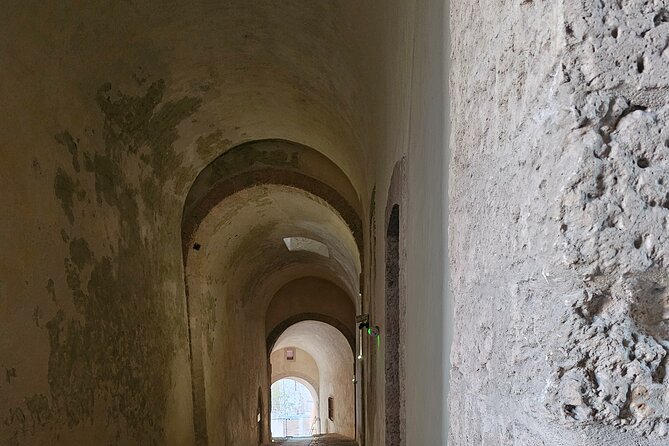
Fort Saint-Jean receives about 45 minutes, making it one of the longer stops. Anthony guides you through its past and points out the views over the Vieux Port from its moderate rise above the harbor.
The fort is especially useful as a transition point. On one side, a footbridge connects it with Église Saint-Laurent. On the other, it links to the modern Mucem. You can physically move from old Marseille to its contemporary cultural district in a few minutes, which gives the route a clear visual structure.
The fort’s elevated position also helps you get your bearings. From here, the port is not just a postcard view. You can understand how the harbor relates to the surrounding city and why this stretch of Marseille has mattered for so long.
Admission is listed as free. The route is not presented as a military-history lecture with every room covered, so your experience will depend on the questions you ask and the areas available during your visit. Comfortable shoes are sensible because this is a walking stop with a footbridge and changes in elevation.
Mucem and the modern face of Marseille
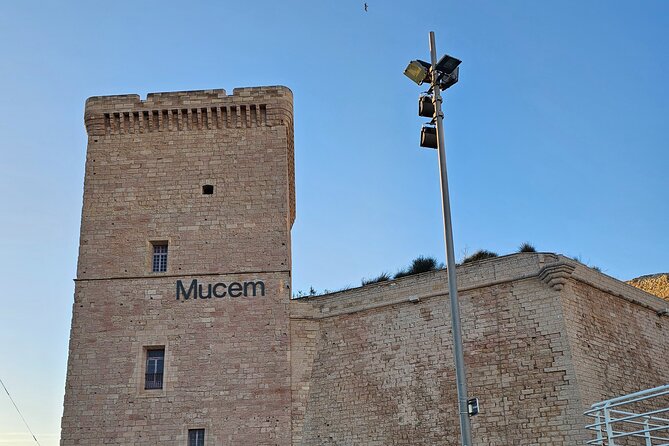
Mucem, the Museum of European and Mediterranean Civilisations, is joined to Fort Saint-Jean by the same network of walkways. Its dark, patterned exterior and strong geometric form create a sharp contrast with the fort’s stone walls.
The plan allows about 45 minutes here. Anthony guides you through the architectural setting and includes a short warm or cold drink stop at the rooftop terrace café. That break is a practical touch. After several historic sites, a drink and a high view give you a moment to pause without ending the tour’s momentum.
Mucem has exhibitions throughout the year. Some are free and some require payment. The tour lists admission as free, but you should understand that paid exhibitions are optional and are not presented as part of the included experience. With only 45 minutes, I would treat the museum as an introduction to the building, the terrace, and the surrounding setting unless you already know there is a particular exhibition you want to see.
This is also one of the better photo sections of the route. The fort, footbridge, sea, and modern museum create several different views within a small area. If architecture interests you, give Anthony a clear signal early on so he can spend more time explaining the design rather than rushing onward.
Villa Méditerranée and the J5 waterfront
Next comes Villa Méditerranée, a cantilevered building beside Mucem. Its unusual projecting form gives the waterfront a distinctly modern profile and shows how Marseille has reshaped its port district for cultural use.
You spend about 30 minutes here, mainly outside. The tour does not enter the premises, so you should see this stop as an architectural and photography break rather than a full attraction visit. You can photograph the building and the Esplanade J4, listed in the tour details as Esplanade J5.
The site also offers visits to Paleolithic caves under the sea, but those visits are not part of this route. That distinction is important. If the caves are a priority, you would need to arrange them separately and allow more time.
I like this stop because it keeps the tour from becoming a procession of old churches and forts. The drawback is simple: if you prefer interiors and guided visits, 30 minutes outside may feel brief. If you enjoy seeing how a city uses new architecture to change its waterfront, it earns its place.

La Major, two cathedrals in one stop
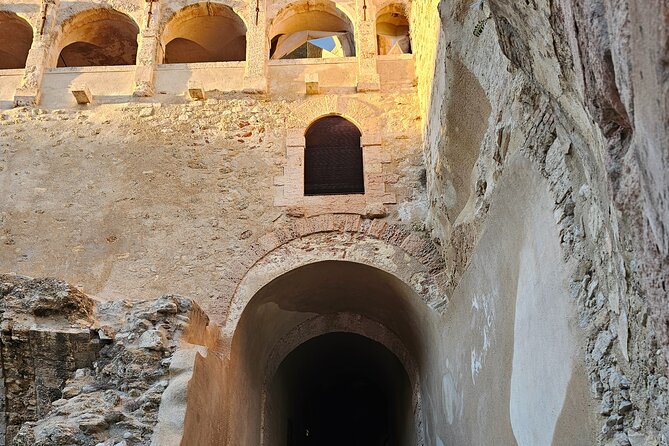
The Cathedral of La Major gives you two buildings and two very different moods. The older church, commonly called Vieille Major, dates to the 12th century and uses a simpler Romanesque style. Its former organist included Charles Desmazures, a French Baroque composer.
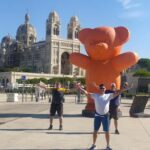
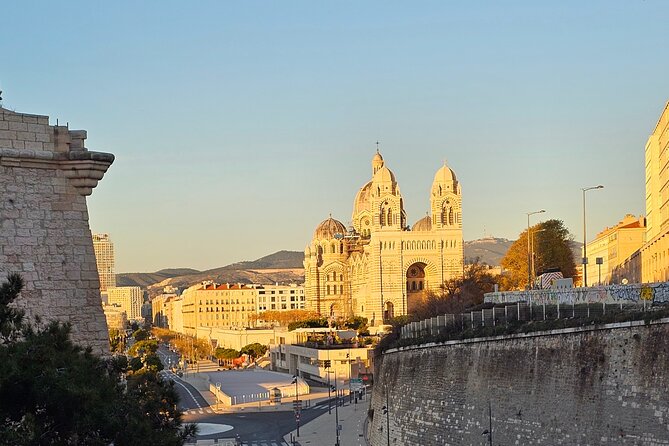
Beside it is Nouvelle Major, the vast cathedral that most people picture when they hear La Major. Built between 1852 and 1893, it blends Byzantine and Roman Revival ideas. Its scale is the point. The building feels grand from the outside, and its striped stonework and domed forms make it one of Marseille’s most memorable landmarks.
The stop lasts about 30 minutes and admission is listed as free. That is enough for an overview, a few photographs, and an explanation of why the old and new cathedrals sit together. It is not enough for a quiet, detailed look at every chapel, decoration, or piece of religious art.
I would pay attention to the contrast rather than trying to rank the two churches. Vieille Major tells you about medieval Marseille. Nouvelle Major reflects the confidence and ambitions of the 19th century. Together, they make a compact lesson in how the city changed.
Notre-Dame de la Garde and the best view of the day
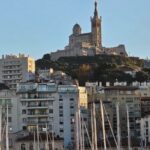
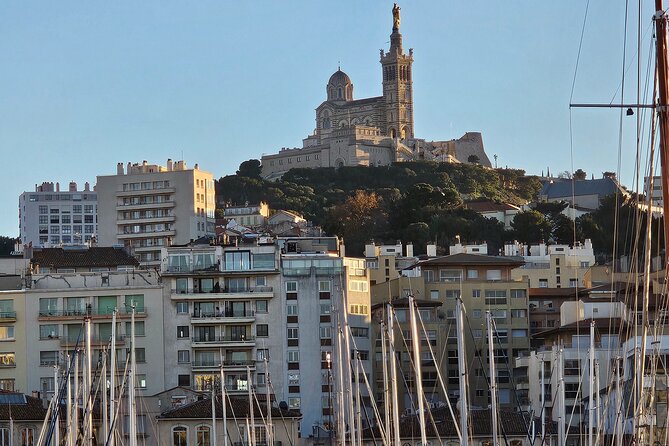
The basilica of Notre-Dame de la Garde is the high point of the route, both literally and visually. Perched about 150 meters above sea level, it offers a 360-degree view across Marseille.
The current basilica was completed in 1897 after 40 years of construction. The site itself reaches back much further, to 1214, when a local priest built a chapel dedicated to the Virgin Mary. Under King Francis I, the site became a defensive fortress before taking on its later religious role.
That combination of lookout, fortification, pilgrimage site, and basilica makes this more than a viewpoint. Anthony’s historical explanation can help you connect the hilltop to the city below, the harbor, and Marseille’s long concern with defense and seafaring.
You have about 30 minutes here. The short visit means you should prepare for a focused stop, not a leisurely exploration of every part of the basilica. Still, the panorama gives the tour one of its strongest moments. You can see why Notre-Dame de la Garde is so closely tied to Marseille’s identity.
If you are taking photographs, this is the place to keep your camera ready. Weather can affect the views, and the experience does not promise a particular level of visibility, but the elevated position is the reason this stop is included.
The Old Port and a local drink to finish
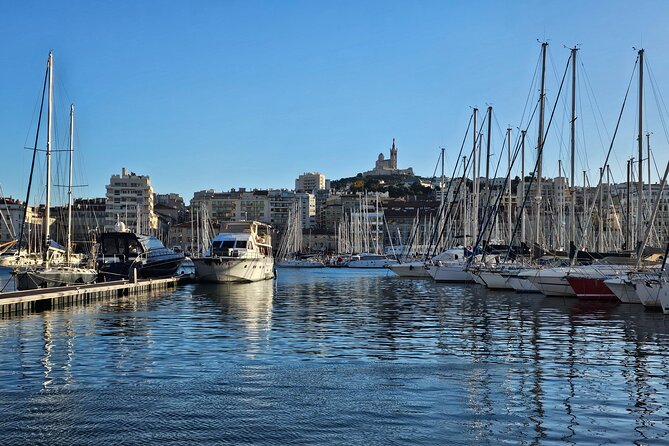
The final listed stop is the Old Port, where Greek sailors first landed around 600 BC. This is the natural place to end a tour about Marseille because the harbor connects the city’s ancient beginning with its modern life.
The stop lasts about 30 minutes. You can take a break at one of the port’s restaurants or bars and enjoy a local drink while looking across the water. The cost of the drink is not included, so plan to pay directly.
This ending is less formal than the churches and fort. It gives you time to ask final questions, compare the places you have seen, and decide what you want to revisit on your own. The Old Port is also a practical orientation point if you plan to continue exploring after the tour.
Lunch can be arranged around your preferences, with Anthony organizing a restaurant reservation. You pay your own bill and the guide’s meal. That arrangement gives you flexibility, but it also means lunch is an additional expense rather than part of the $396.52 price.
Pace, transport, and group comfort
The tour is private, and only your group participates. The maximum group size is eight, which makes this a useful choice for an extended family, a group of friends, or a small corporate party that wants one guide.
The experience is offered in English. It is near public transportation, and the total duration includes the movement from the start through each leg and back. The information does not specify a dedicated vehicle, so you should confirm the exact transport arrangement before booking if you need private driving between every stop.
The tour includes safety and protection from a professional close-protection-certified guide. That is a distinctive feature, especially if you value a guide who pays close attention to group comfort and personal safety. It does not replace ordinary city awareness, but it adds reassurance to a busy sightseeing day.
You can choose your drop-off point after the tour. One account of the experience describes hotel pickup and drop-off assistance, but the stated inclusion specifically promises a chosen drop-off point. I would confirm pickup arrangements directly rather than assuming hotel pickup is included.
Most people can participate according to the provided details. Even so, the route includes walking, bridges, historic areas, and uphill viewing points. If anyone in your group has mobility concerns, ask for a route discussion before booking.
What Anthony adds to the day
Anthony’s role is not limited to naming buildings. He places Marseille in a wider historical setting and gives the tour a local, personal feel. His approach has been praised for clear communication before, during, and after the outing, as well as for helping with onward transportation and restaurant ideas.
That practical help is useful when your schedule is tight. One account describes a one-night stay that included a stop at a local African café for dinner and drinks, along with help getting to and from the hotel. Another describes an extended family group where attention to safety and individual comfort mattered.
The strongest pattern is his ability to adapt the day. If you want more history, ask for it. If photographs matter most, say so. If you need help deciding what to do after the tour, save time for those questions at the Old Port.
Who will get the most from this experience
I would recommend this tour to you if you want a broad first look at Marseille and prefer a private guide over a fixed group schedule. It suits people who enjoy historical explanation but also want practical help with restaurants, onward transport, photographs, and the shape of the city.
It is especially useful for:
- Families and groups of friends who can share the group price
- First-time visitors with only a short stay
- People who want major landmarks covered in one half-day
- Guests who prefer English-language guiding
- Anyone who wants both ancient sites and modern waterfront architecture
I would think twice if you want long museum visits, extended time inside each church, or a slow walking tour focused on one neighborhood. The route covers a lot, and the 30-minute stops require you to keep moving.
Free cancellation is available up to 24 hours before the start time for a full refund. Changes or cancellations made less than 24 hours before the start are not accepted for a refund. Confirmation normally arrives at booking, though bookings made within four hours of departure are confirmed as soon as possible, subject to availability.
Should you book the Great Marseille tour?
Book it if your priority is range, context, and flexibility. In four and a half hours, you see the old church quarter, Fort Saint-Jean, Mucem, Villa Méditerranée, La Major, Notre-Dame de la Garde, and the Old Port. Few short outings cover such different sides of Marseille.
The value improves sharply with a larger group. At eight people, the private price is reasonable for a half-day guide. For a couple, the cost is harder to justify unless you place a high value on private attention and customized advice.
My practical advice is to confirm the pickup and transport details, decide how much museum time you want, and tell Anthony your interests before the day begins. If you do that, this can give you a strong first understanding of Marseille without leaving you to piece the city together on your own.
FAQ
Where does the tour take place?
The experience takes place in Marseille, France, and visits Église Saint-Laurent, Fort Saint-Jean, Mucem, Villa Méditerranée, Cathedral of La Major, Notre-Dame de la Garde, and the Old Port.
How long does the tour last?
The tour lasts approximately 4 hours and 30 minutes, including the start, movement between each leg, and the return portion.
How much does the private tour cost?
The listed price is $396.52 per group of up to eight people.
Is the tour private?
Yes. Only your group participates, with a maximum group size of eight.
What language is offered?
The tour is offered in English.
Are admission tickets included?
Admission is listed as free at the named stops. Mucem has both free and paid exhibitions, and you may choose to visit a paid exhibition separately.
Is lunch included?
No. Anthony can organize a restaurant reservation based on your preferences, but you pay your own meal, the guide’s meal, and any drinks.
Can I choose where the tour ends?
Yes. Guests can choose their drop-off point after the tour.
What is the cancellation policy?
You can cancel at least 24 hours before the start time for a full refund. Cancellations or changes made less than 24 hours before the start are not accepted for a refund.