REVIEW · MARSEILLE
Marseille: cityrando Le Vieux-Port Le Panier La Joliette
Book on GetYourGuide →Operated by Le Bon Trip · Bookable on GetYourGuide
Marseille reveals itself best on foot, one neighborhood at a time. This cityrando starts among fishing boats and the fish market at the Vieux-Port, then moves through Le Panier’s narrow lanes, the cathedral, La Joliette, and the J4 Esplanade. I like the mix of old streets and bold new buildings, and I like that guide Stéphane has a store of local anecdotes rather than giving you a dry list of dates. The main consideration is the walking: one particularly long outing covered about 10 kilometers in four hours, so bring sensible shoes.
I also like the small-group format, limited to 10 people, which gives you room to ask questions. The route offers a useful first look at central Marseille for $34, but food, drinks, museum admission if required, and transport to the meeting point are extra.
In This Review
- Key points to know before you book
- Starting among fishing boats at the Vieux-Port
- Finding Marseille’s old lanes in Le Panier
- Marseille Cathedral and the route toward La Joliette
- La Joliette, from grain silo to shopping terrace
- J4 Esplanade and the MuCEM waterfront
- How much walking should you expect?
- What the guide adds to the price
- Who should book this Marseille walking tour?
- Should you book the Old Port, Le Panier, and La Joliette walk?
- FAQ
- Where does the Marseille walking tour start?
- Where does the tour finish?
- What neighborhoods does the route visit?
- Is a guide included?
- What languages are available?
- How large is the group?
- Is the activity wheelchair accessible?
- Are hotel pickup and drop-off included?
- Are food and drinks included?
- Can I cancel for a full refund?
- Can I reserve now and pay later?
Key points to know before you book
- The route links four very different parts of Marseille: You go from the working Old Port to historic Le Panier, redeveloped La Joliette, and the modern J4 waterfront.
- Stéphane is a major part of the experience: He is known for detailed explanations, local anecdotes, and taking time with questions.
- The walk can be longer than the schedule suggests: One outing lasted four hours and covered 10 kilometers.
- You get both street life and major sights: Expect the fish market, street art, Vieille Charité, Marseille Cathedral, MuCEM, and Fort Saint-Jean views.
- Food tasting is included in the route, but food and drinks are not included in the price: Budget for anything you want to sample or buy.
- The group stays small: A maximum of 10 participants makes this more personal than a large city tour.
Starting among fishing boats at the Vieux-Port
Your meeting point is the Marché aux Poissons at Marseille’s Old Port. Look for the guide holding the company name Le Bon Trip, and have your voucher ready before the walk begins.
The Old Port is the right place to start. For centuries, this natural harbor has been Marseille’s center of sea trade and daily life. Today, it is still a working waterfront, but it also serves as the city’s main public square. Fishing boats, waterfront cafés, restaurants, and people heading across town all share the same space.
The fish market gives the opening minutes a local feel. This is not simply a grand view for a photograph. It connects the modern city to Marseille’s long relationship with the Mediterranean. You can also look uphill toward Notre-Dame de la Garde, the basilica that watches over the city.
The first historical stop is the Marseille History Museum, reached after about 15 minutes of walking. The route does not treat the city as a collection of disconnected attractions. Instead, the guide can use the port and museum to explain how Marseille developed around the water and how its past still shapes the streets you are about to walk.
I would pay close attention here, even if museums are not usually your main reason for booking a walking tour. The early context helps the rest of the route make sense. You will see why Le Panier feels so different from La Joliette, and why the port remains the natural reference point for finding your way around central Marseille.
You can also read our reviews of more tours and experiences in Marseille.



Finding Marseille’s old lanes in Le Panier
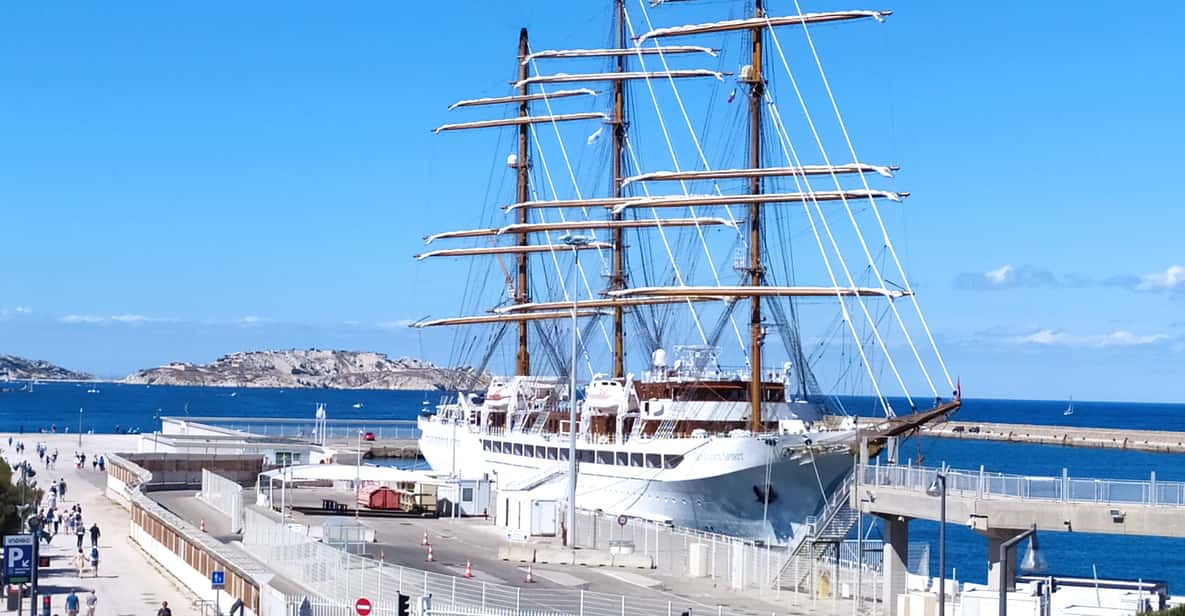
From the waterfront, the route turns north into Le Panier. This is one of the most atmospheric parts of the walk, with steep or narrow lanes, old buildings, small squares, painted walls, and independent shops. It is a place where the pleasure comes from moving slowly and looking up, not from rushing between formal sights.
The neighborhood is known for street art, historic architecture, hidden courtyards, and small boutiques. Your guide leads the way through the maze, which matters here. Without local direction, it is easy to walk the same few streets near the main entrances and miss the quieter corners.
The scheduled visit lasts about an hour and can include food tasting. Since food and drinks are not included in the $34 price, ask the guide what is part of the tasting and what you may wish to purchase yourself. This is one of those small practical points that can affect your budget.
The strongest part of Le Panier is the storytelling. Stéphane has been praised for using anecdotes to make Marseille’s past easier to grasp. His style is especially useful in a neighborhood where every lane can look like a photo stop, but the real value lies in understanding how the area fits into the city.
You will also visit the Vieille Charité, a 17th-century former almshouse now used as a cultural center. Its architecture gives the walk a welcome change of pace. The courtyards and stonework are a reminder that Le Panier is more than a pretty quarter with painted walls. It has been shaped by charity, housing, trade, and generations of city life.
This section is likely to suit you if you enjoy walking tours that leave time for questions. It is less suited to anyone who wants a smooth, flat promenade. Wear shoes with good grip, and expect uneven streets.
Marseille Cathedral and the route toward La Joliette
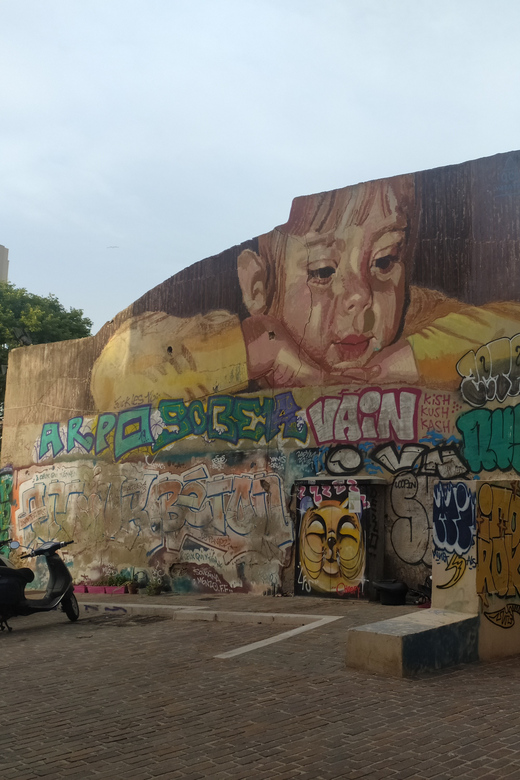
The next major stop is Marseille Cathedral, also known as Cathédrale de la Major. The visit and photo stop take about 30 minutes. Its position near the waterfront creates a striking transition between old Marseille and the newer port district.
The cathedral is a useful place to pause because the route has already taken you through smaller streets. Its scale feels different from Le Panier’s intimate lanes. Here, you get a broad architectural view and another chance to connect the city’s religious and civic history with its seafront setting.
The guide leads the visit in English or French. If you have a question about the building or the surrounding area, the small-group setup should make it easy to ask. The tour is not designed as a long specialist architecture lecture, but the guide’s historical explanations add meaning to what you see.
From the cathedral, the walk continues toward La Joliette. This is where Marseille’s changes become most obvious. Old port functions, restored buildings, offices, shopping, and cultural venues now sit together in a district that was heavily redeveloped.
La Joliette, from grain silo to shopping terrace
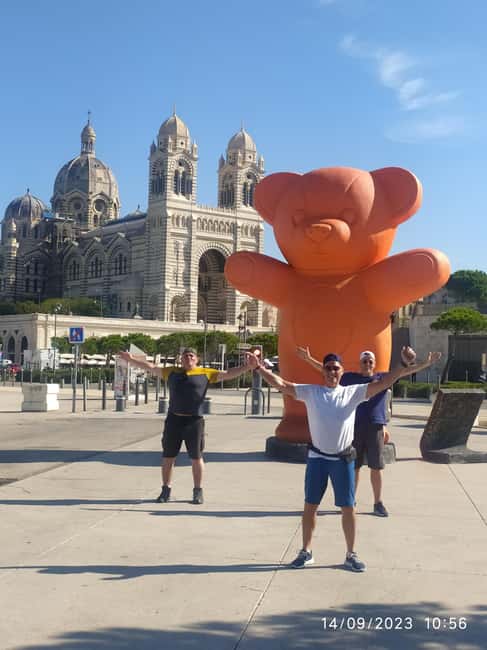
La Joliette gives you a different side of Marseille. It is less about old lanes and more about the city’s recent efforts to renew its waterfront. The neighborhood combines modern structures with reused industrial buildings, giving the walk a sharper, more contemporary feel.
One notable stop is the Silo d’Arenc. The former grain silo has been converted into a cultural venue for concerts, exhibitions, and performances. Even if no event is taking place during your visit, the building tells an important story about reuse. Marseille has not simply replaced its old working port with polished new construction. Some industrial structures have been given another role.
The route also includes Les Terrasses du Port, a shopping center with a rooftop view over the city and sea. This can be a useful rest point after the older streets of Le Panier. The rooftop is more commercial than historic, but the view helps you understand how the waterfront has changed.
The La Joliette section is scheduled for about an hour and can include shopping and food tasting. I would treat the shopping center as a practical stop rather than the main reason to book the tour. Its value is the contrast. After seeing market stalls, fishing boats, old stone, and narrow alleys, you get a clear look at present-day Marseille.
This part also helps you judge the city honestly. Marseille is not a preserved museum town. It is a working Mediterranean city with cranes, offices, shops, cultural venues, and residential streets. The mix can feel untidy at times, but that is part of its character.
J4 Esplanade and the MuCEM waterfront
The final major section is the J4 Esplanade, at the entrance to the Old Port. This open waterfront space is home to the Museum of European and Mediterranean Civilisations, better known as MuCEM.
MuCEM is one of Marseille’s most recognizable modern buildings. Its design gives the waterfront a strong contemporary focus, while its exhibitions explore the cultures and history of Europe and the Mediterranean. The planned stop lasts about 45 minutes and includes a photo stop, sightseeing, and a guided visit.
You should check what museum access is covered on your chosen date, because admission is listed separately from the tour price. The guide can still explain the setting and architecture, but entrance to an indoor exhibition may require its own ticket.
The Passerelle Saint-Jean connects MuCEM to Fort Saint-Jean. Crossing this footbridge is one of the best visual moments on the route. From above, you can look back toward the Old Port, across the sea, and over the city’s mixture of historic and modern buildings.
The views are a fitting end to the walk. At the start, Marseille is introduced through its harbor and daily activity. At J4, you see the port as part of a much wider city, with the cathedral, Le Panier, La Joliette, and the sea all tied together.
Fort Saint-Jean also gives the final stop a historical counterpoint to MuCEM’s modern design. The route does not spend a full day inside each museum or monument. Instead, it gives you a broad introduction, with enough time to decide which places deserve a return visit.



How much walking should you expect?
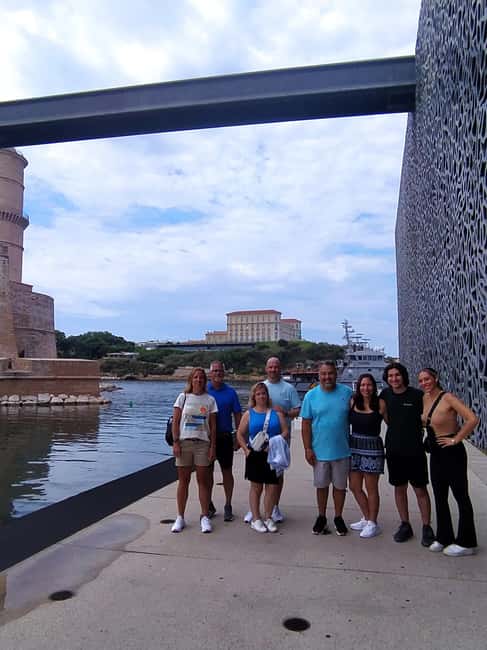
The activity is described as lasting one day, with starting times available when you book. The listed route sections add up to a little over four hours of walking and guided stops, and one outing lasted four hours while covering 10 kilometers.
That longer example is important. The experience may work better as a half-day city walk than as a relaxed, full-day outing. The exact pace can change with group size, questions, food stops, and the guide’s route on the day.
You should be comfortable walking for several hours. The route includes streets in Le Panier and connections between neighborhoods, not just flat paths along the water. Bring water, sun protection in warm weather, and shoes made for city walking.
The activity is wheelchair accessible, but the route’s overall comfort can still depend on the exact streets used and the pace of the group. If you use a wheelchair, contact the provider before booking to confirm how the narrow lanes and connections are handled on your date.
What the guide adds to the price
At $34 per person, this is a reasonable price for a small-group introduction to central Marseille. You are paying mainly for the private guide, route planning, local context, and the chance to ask questions rather than for a package of admissions or meals.
The value improves if this is your first time in Marseille and you want to understand how the main districts connect. A guide can save you time in Le Panier, point out the purpose of the old port buildings, and explain the shift from industrial La Joliette to the J4 cultural waterfront.
The experience also becomes more valuable when Stéphane leads it. He has received strong praise for his clear explanations, friendliness, flexibility, and lively anecdotes. One especially useful detail is that he has led a walk for a single participant, spending four hours exploring the city. That suggests he can adapt the amount of explanation to the people in front of him rather than simply reciting a fixed script.
Still, keep your expectations in line with the price. Hotel pickup and drop-off are not included. Food and drinks are not included, and museum admission may not be included. You are booking a guided walking experience, not an all-inclusive sightseeing package.
Who should book this Marseille walking tour?
I would recommend it to first-time visitors who want a solid orientation before exploring Marseille alone. The route covers the city’s essential central contrasts in one outing, so you can return later to MuCEM, Le Panier, the cathedral, or the Old Port with a better sense of where you are.
It also suits people who enjoy local stories more than formal lectures. Stéphane’s approach, based on anecdotes and detailed answers, should appeal to you if you want the city explained in human terms.
This is a good choice for couples, solo visitors, families with older children, and small groups who prefer a personal guide. The maximum group size of 10 keeps the outing from feeling like a procession.
I would think twice if you want a short, easy walk with little uphill or uneven walking. I would also choose another activity if your main aim is long museum visits or a food-focused tour. Here, museums and food tasting are parts of a wider city route.
The tour is offered in English and French. Free cancellation is available up to 24 hours before the start, and you can reserve now and pay later, which gives you some flexibility when planning a Marseille stay.
Should you book the Old Port, Le Panier, and La Joliette walk?

Book it if you want Marseille explained through its streets, harbor, buildings, and changing waterfront. The best reasons are the varied route, the small group, the views from J4, and the guide’s reputation for useful anecdotes and patient answers.
The main caution is the walking distance and the extra cost of meals, drinks, transport, and possible museum admission. If those points suit your plans, $34 is a fair way to get your bearings and see several sides of Marseille in one well-planned outing.
FAQ
Where does the Marseille walking tour start?
The tour starts at the Marché aux Poissons in Marseille’s Vieux-Port.
Where does the tour finish?
The walk returns to the Marché aux Poissons.
What neighborhoods does the route visit?
The route visits the Old Port, Le Panier, La Joliette, and the J4 Esplanade.
Is a guide included?
Yes. A private guide is included.
What languages are available?
The tour is available in English and French.
How large is the group?
The small group is limited to 10 participants.
Is the activity wheelchair accessible?
Yes, the activity is listed as wheelchair accessible.
Are hotel pickup and drop-off included?
No. You must make your own way to the meeting point and arrange your return afterward.
Are food and drinks included?
No. Food and drinks are not included in the price, although the route can include food tasting stops.
Can I cancel for a full refund?
Yes. You can cancel up to 24 hours in advance for a full refund.
Can I reserve now and pay later?
Yes. The activity allows you to reserve your place and pay later.