REVIEW · MARSEILLE
Marseille : The Old Port and “le Panier”
Book on GetYourGuide →Operated by Les visites de Noémie · Bookable on GetYourGuide
Marseille’s long story unfolds on foot, from the grand sweep of La Canebière to the narrow streets of Le Panier and the waterfront setting of the Mucem. Noémie leads this 1.5-hour walk, bringing the city’s story to life with careful historical detail and strong storytelling.
I like the route’s compact shape: you get major landmarks without a full-day commitment, and the private-group format lets the guide focus on your group. I also like the price, $125 for up to 20 people, which can be excellent value when shared among several guests. The tradeoff is pace. One and a half hours gives you a useful introduction, but not enough time for extended visits inside the cathedral or Mucem.
In This Review
- Key points to know before booking
- Starting at La Canebière, Marseille’s grand urban stage
- The Old Port and Marseille’s early story
- Turning into Le Panier’s older streets
- La Major gives the walk a powerful finish
- Reaching the Mucem and Marseille’s newer waterfront
- What Noémie adds to a short tour
- Why the $125 group price can be good value
- Who should choose this Marseille walk
- Practical details before you set out
- Should you book the Old Port and Le Panier tour?
- FAQ
- Where does the Marseille walking tour start?
- How long does the tour last?
- What places are included on the route?
- Is the tour private?
- How many people can join for the listed price?
- What languages does Noémie speak during the tour?
- What is included in the price?
- Can I cancel the booking for a full refund?
- Can I reserve now and pay later?
Key points to know before booking
- A classic Marseille route: Walk from 9 La Canebière through the Old Port and Le Panier toward La Major and the Mucem.
- Noémie leads the walk: Expect the tour in English or French, with special attention to history and small details.
- Private-group pricing: The $125 rate covers a group of up to 20 people, not each individual participant.
- A short introduction: The 1.5-hour schedule is well suited to a first look at Marseille.
- Outdoor sightseeing: The included experience is a guided walking tour, so plan for time on foot between stops.
- Flexible booking: You can reserve now and pay later, with full cancellation available up to 24 hours before the tour.
Starting at La Canebière, Marseille’s grand urban stage
Your walk begins at 9 La Canebière, the natural place to start a first look at central Marseille. This famous avenue gives the tour a broad opening before the route tightens into the older quarters around the port and Le Panier.
I like this beginning because it helps you understand Marseille as more than a postcard waterfront. The city’s character changes quickly as you move from a major avenue to older streets and then back toward the sea. In a short time, you get several different sides of Marseille rather than spending the entire tour in one square.
Noémie’s role matters here. Marseille has many layers, and a guide can connect places that might otherwise seem like separate sights. Her explanations focus on the city’s past and on details you could easily walk past without noticing. The available feedback describes her storytelling as precise, instructive, and well delivered, which is exactly what you want on a short city walk.
This is not a sightseeing bus ride or a museum visit. You are on foot from the start, and the experience is built around seeing the city in sequence. Wear comfortable shoes and keep your expectations practical: the value comes from the guide’s interpretation and the route, not from a long stop at any single attraction.
You can also read our reviews of more tours and experiences in Marseille.



The Old Port and Marseille’s early story
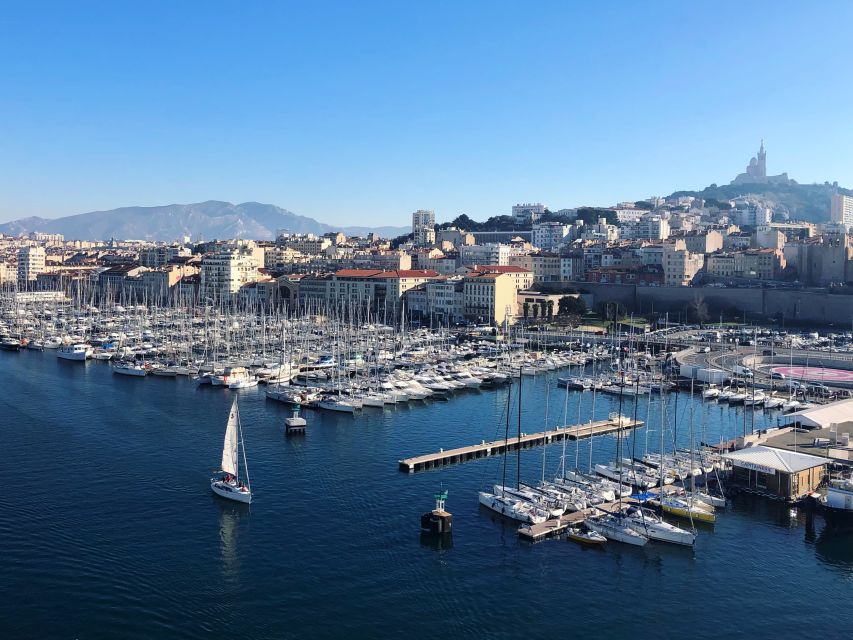
The Old Port is the central picture of Marseille, but it is also the place where the city’s age becomes easier to understand. Marseille dates its beginnings to 600 BC, giving this waterfront a story that reaches far beyond its modern cafés, boats, and daily activity.
A guide can make the Old Port more useful than a quick photo stop. You will learn about Marseille as the Phocaean City and see how the harbor relates to the city’s identity. The tour is designed to explain the past while you move through the places where that story took shape.
The route does not promise a long harbor-side pause or time for a separate boat trip. That is an important distinction. You are getting a guided orientation, not a full port excursion. If you want to sit beside the water, browse at leisure, or stop for a meal, plan that for afterward.
Still, I like the Old Port section because it gives the rest of the walk a clear center. La Canebière, Le Panier, La Major, and the Mucem all make more sense when you see their connection to the harbor. For a first visit, that sense of place is more useful than a long list of disconnected dates.
Turning into Le Panier’s older streets
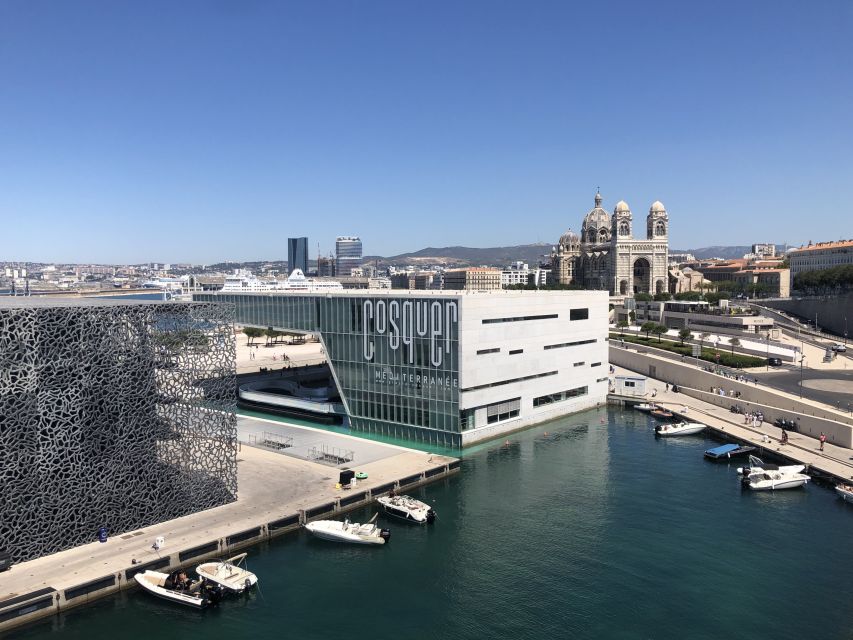
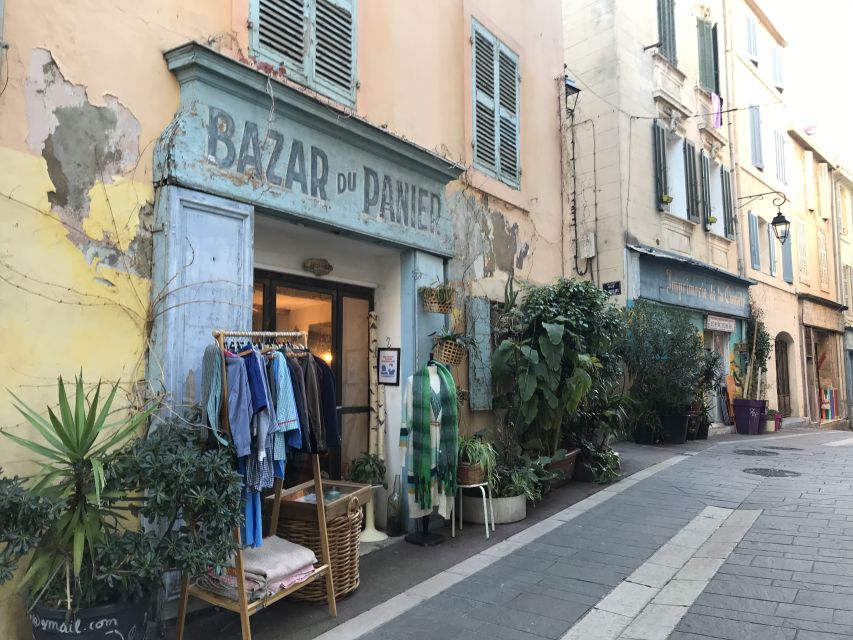
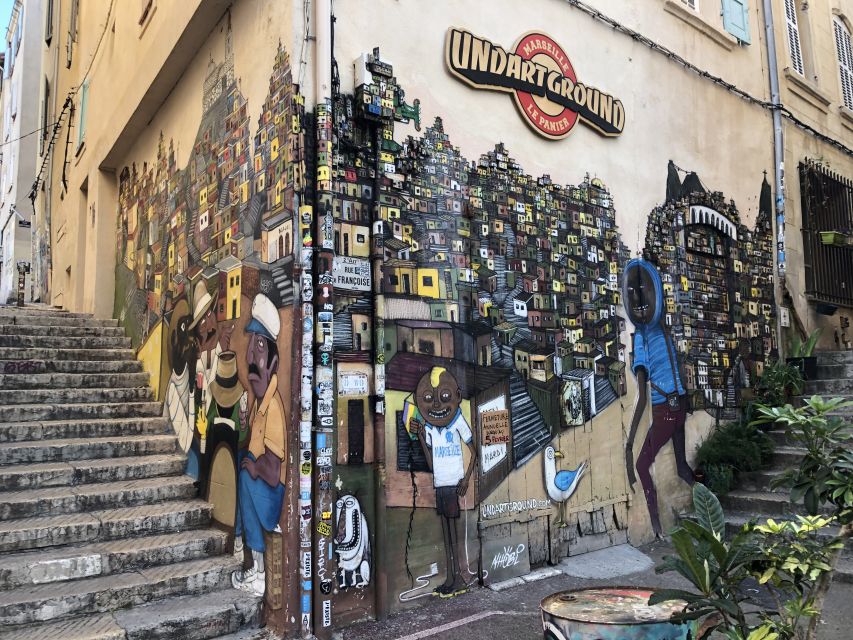
Le Panier is the most intimate part of the route. After the broad public spaces around La Canebière and the Old Port, the district offers a more enclosed, old-city feel. The walk here is about noticing the fabric of the neighborhood and understanding its place in Marseille’s story.
Noémie’s historical commentary is especially useful in this section. Narrow streets and older buildings can be attractive, but without context they can blur together. A guide points out the details that might otherwise pass unnoticed and explains why the district matters.
You should keep the scale of this visit in mind. The tour includes a guided look at Le Panier, not an open-ended neighborhood exploration. The 1.5-hour schedule means you will see part of the district while continuing toward the cathedral and Mucem. You will not have the time to examine every lane, stop for shopping, or settle into a café.
That short format can work in your favor. Le Panier is easier to appreciate when someone gives you a framework first. After the tour, you can decide if you want to return on your own for a slower walk. I often prefer this arrangement in an unfamiliar city: get the orientation, then use the remaining day with a better sense of direction.
La Major gives the walk a powerful finish
The route ends at or near Cathédrale La Major, on Place de la Major. The cathedral is one of Marseille’s key landmarks and gives the walk a strong visual finish after the older streets of Le Panier.
The setting also helps tie together the historic and newer parts of the city. You have moved through the old quarter and along the port, then arrive at a major monument near the waterfront district. That progression makes the tour feel like a story rather than a checklist.
The stated route includes two drop-off locations, with Cathédrale La Major specifically identified. Since the precise second location is not listed, check the meeting and ending details when you book if your plans depend on finishing at a particular spot. The Mucem is also part of the sightseeing route, so you should expect the tour to bring you through this modern waterfront area.
The cathedral stop is primarily part of the walking experience. Admission inside is not listed as an included feature, and the tour description does not promise an interior visit. If entering La Major is important to you, ask Noémie about the plan before booking rather than assuming the walking tour includes extended interior time.
Reaching the Mucem and Marseille’s newer waterfront
The Mucem provides a modern counterpoint to the older sections of the tour. Its presence shows how Marseille connects its ancient origins with a contemporary cultural district. Even without a museum visit, seeing the Mucem as part of the route gives you a useful final landmark.
I like this contrast. A tour that stayed only in old streets might leave you with a narrow picture of Marseille. By including the Mucem, the route shows the city in transition from historic port to modern cultural destination.
The activity includes only the guided walk. Museum admission, meals, drinks, and other extras are not included. The supplied information lists no included add-ons, so treat the Mucem as a sightseeing stop unless you receive different instructions from the guide.
If you want to tour the museum itself, allow separate time and make your own admission arrangements. The 1.5-hour walk is not designed to cover every attraction along the way. Its job is to connect the main sights and explain the city’s development.



What Noémie adds to a short tour
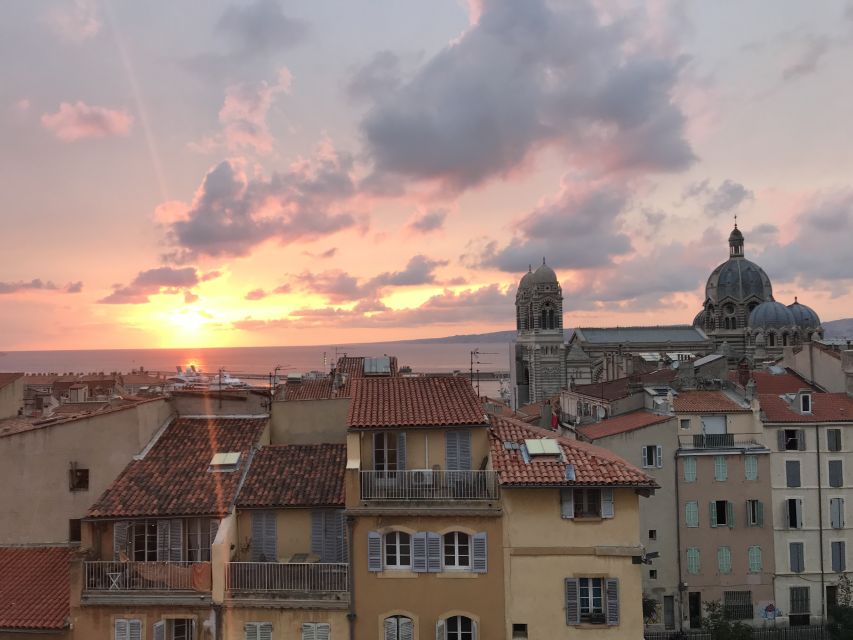
A 90-minute walk depends heavily on the guide. There is not enough time for long pauses, so explanations need to be clear and well chosen. Noémie’s strongest quality, based on the information available, is her ability to present precise historical material with confident oral storytelling.
That combination is valuable in Marseille. You can easily find the Old Port, La Canebière, Le Panier, La Major, and the Mucem on a map. The harder part is understanding what you are seeing and how the places relate to one another.
The comments about Noémie also highlight small details that might otherwise go unnoticed. That is an important benefit of a private tour. Instead of simply pointing out a landmark, she can explain why it matters and help you see more in the streets around it.
The tour is offered in English and French. If your group has mixed language needs, confirm the preferred language before the walk. The guide is live, and the activity is private rather than a large scheduled group.
Why the $125 group price can be good value
The price is $125 per group of up to 20 people. That changes the calculation completely. A couple pays the full group rate, so the cost per person is higher than it would be for a large family or group of friends. For 10 people, it works out to $12.50 each, and for 20 people, $6.25 each.
For a private guided walk in central Marseille, that can be strong value, especially if you want personal attention and a planned route. You are paying for Noémie’s time, the historical explanation, and the convenience of seeing several important areas in one continuous walk.
For two people, the decision is more personal. You should book if you value a private introduction and want help understanding Marseille quickly. You may find better value elsewhere if you prefer to wander independently and read about the sights on your own.
The tour’s short duration also limits the price comparison. This is not a half-day experience with transport, meals, or entry tickets. It is a focused walking orientation. I would judge it as good value for a group that wants an informed start to a Marseille visit, rather than as a full sightseeing program.
Who should choose this Marseille walk
I would recommend this experience to first-time visitors who want a clear introduction to central Marseille. It suits you particularly well if you like history, prefer walking to riding between sights, and want a guide to explain the details behind the major landmarks.
It also works for a group with limited time. Ninety minutes is manageable before lunch, after arriving in the city, or during a day built around the Old Port and Mucem area. The reserve-now, pay-later option also helps if your schedule is still taking shape.
Families and private groups may appreciate the simple format. You are not committing to a full day, and the price covers up to 20 people. The main requirement is that your group can take part in a walking tour for the full 1.5 hours.
I would be more cautious if you want extensive time inside buildings, a food-focused experience, shopping, or a slow photographic walk. None of those is promised. The tour moves through several areas, so its strength is context and coverage.
Practical details before you set out
The walk starts at 9 La Canebière. Check the exact starting time when you select a date, since availability determines the available departures.
The tour lasts 1.5 hours and is guided live in English or French. It is a private-group activity, with pricing for up to 20 people. The included service is the walking guided tour itself.
Because the route connects several central sights, plan for continuous movement. The information provided does not specify the walking distance, street surfaces, pace, or accessibility arrangements, so contact the provider if your group needs those details.
Free cancellation is available up to 24 hours before the start time for a full refund. You can also reserve now and pay later, which is useful if you want to secure a time while keeping your plans flexible.
Should you book the Old Port and Le Panier tour?
Book it if you want a concise, private introduction to Marseille and care more about clear historical storytelling than lengthy visits inside attractions. Noémie’s strength is explaining the city, its origins, and its small details while leading you from La Canebière through the Old Port and Le Panier toward La Major and the Mucem.
Skip it if you want a long, leisurely exploration or admission to the cathedral and museum included in the price. For most first-time visitors, though, the route offers a sensible first chapter. You see the essential central districts, learn how they connect, and finish with a better plan for exploring Marseille on your own.
FAQ
Where does the Marseille walking tour start?
The tour starts at 9 La Canebière in Marseille.
How long does the tour last?
The walking tour lasts 1.5 hours.
What places are included on the route?
The route includes La Canebière, the Old Port, Le Panier, the cathedral, and the Mucem.
Is the tour private?
Yes. The activity is offered as a private group tour.
How many people can join for the listed price?
The $125 price covers one group of up to 20 people.
What languages does Noémie speak during the tour?
The tour is available in English and French.
What is included in the price?
The included service is a guided walking tour.
Can I cancel the booking for a full refund?
Yes. You can cancel up to 24 hours in advance for a full refund.
Can I reserve now and pay later?
Yes. The booking option allows you to reserve your place and pay later.