REVIEW · PARIS
Paris Macaron baking class with a Chef Patissier
Book on Viator →Operated by Studio Pâtisserie · Bookable on Viator
Paris and macarons are a match. This hands-on workshop teaches the technique behind real French macarons, not just a sweet souvenir. In a group capped at 10, I like how chefs such as Vivian, Marie, Leo, and Maria focus on the small steps that make the shells crisp, smooth, and properly footed.
Two standouts for me: you get step-by-step guidance in a live kitchen, and you leave with a boxed batch plus the chef’s secret recipe for trying again at home. One thing to consider: start times are strict and the venue is at 85 Rue de Rome in the 17th, so double-check your directions and plan to arrive a bit early.
In This Review
- Quick hits before you go
- Why this Paris macaron class beats a cookbook
- Meeting at 85 Rue de Rome: the calm start you need
- Inside the workshop: how macaron shells come to life
- Macaronage and piping: the steps you’ll remember at home
- Fillings and flavor choices: ganache, fruit, and balance
- What you take home: boxed macarons plus the chef’s recipe
- Group size, English instruction, and who should book
- Price and value: is $113.20 worth it?
- Tips to get the best outcome in 2.5 hours
- My take: should you book this macaron workshop?
- FAQ
- What is the duration of the Paris macaron baking class?
- How many people are in the class?
- Is the class offered in English?
- What’s included in the price?
- Where does the class meet?
- Can I cancel if my plans change?
Quick hits before you go
- Max 10 people means you actually get hands-on help while you mix, pipe, and fill
- Technique-focused teaching covers macaronage and the texture target for better shells
- Flavor selection is part of the fun, with options like black currant and white chocolate mentioned in class
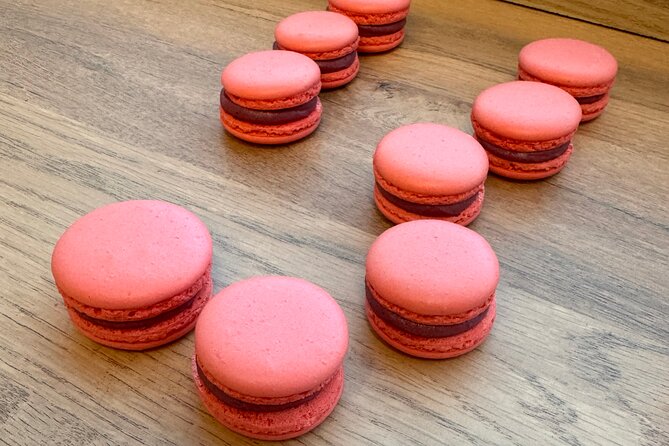
- You take home your macarons in a box, and many people report around 15 to 22+ per person
- Chef’s secret recipe included so you can repeat the process after Paris
- English instruction plus coffee/tea keeps the vibe relaxed and easy to follow
Why this Paris macaron class beats a cookbook
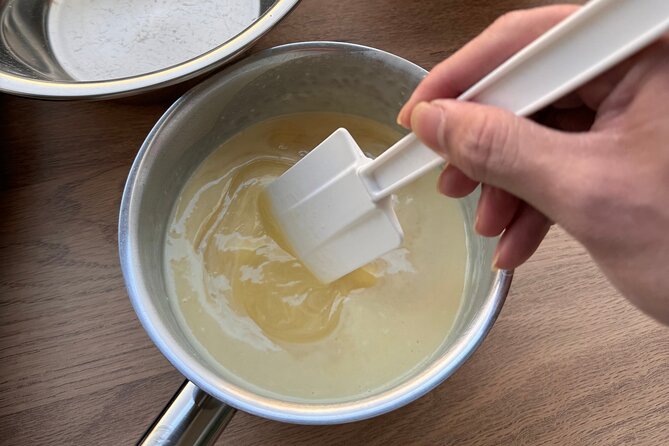
Paris sells macarons everywhere, but the real trick is understanding what changes the moment you start mixing. A class like this is valuable because it turns guesswork into a set of actions you can repeat. When your batter is right, you get better shape, more consistent texture, and those signature little feet.
I also like the way the teaching lands for different skill levels. Reviews repeatedly mention non-bakers having an easy, not-stress experience. That matters, because macarons intimidate people for no good reason. The chefs are there to correct your mix, your piping, and your timing before it becomes a melted-hope mess.
Finally, you’re not doing this in a big room where you can’t get noticed. With up to 10 people, you can ask questions at the exact moment you realize something feels off. That is where most of the learning happens.
You can also read our reviews of more cooking classes in Paris
Meeting at 85 Rue de Rome: the calm start you need
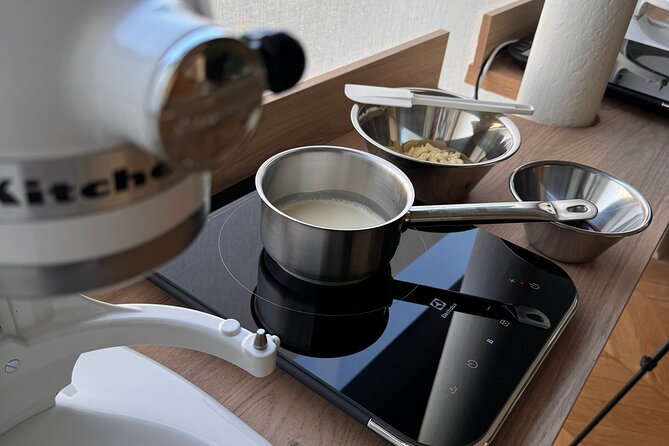
The class meets at 85 Rue de Rome, 75017 Paris and ends back there. It’s near public transportation, so you should be able to get there without a long walk. You’ll also get a mobile ticket, which is handy when you’re bouncing between sights.
Because macarons are time-sensitive, I treat arrival like part of the recipe. Give yourself buffer time to check in, wash hands, and settle before you start mixing. In one unfortunate case, a guest missed the class after using a wrong link from an email. You don’t want that kind of stress happening while your batter is waiting.
Once you’re in, the pacing is built for a workshop rhythm: instructions, hands-on work, then tasting and adjusting as you go. Coffee or tea is included, and soda/pop is also provided, which helps if you’re coming straight from a museum or a long walking day.
Inside the workshop: how macaron shells come to life
Most of the learning centers on the macaron shell process. You’ll get guided through the steps that lead to the right shell look and texture—crisp exterior, tender interior, and that clean, even surface.
Here’s what you should expect in practice:
- You’ll mix and handle the batter under instruction so you don’t overshoot or under-mix
- You’ll learn how the batter should behave before piping, not just what ingredient goes where
- You’ll work through the shell creation process before filling anything
This is where technique matters. Multiple reviews mention the instructors focusing on the small details you can’t easily pick up from a book. When chefs talk about the batter’s consistency and the reason behind each step, you start to understand what your eyes should look for.
If you’re the type who likes to get control of variables, this part will feel satisfying. You’re basically training your hands to hit a repeatable result.
Macaronage and piping: the steps you’ll remember at home
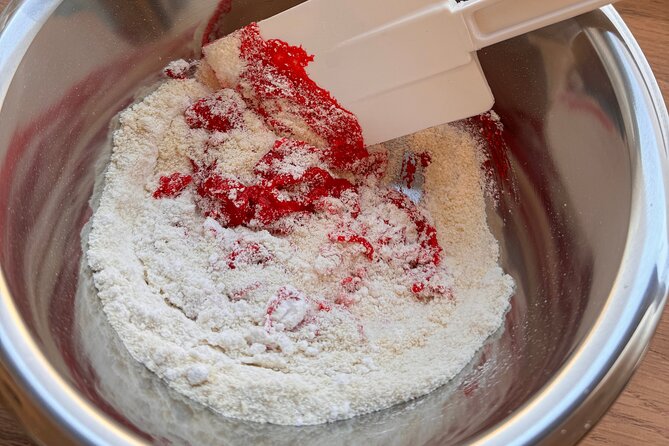
Macarons rise to fame because they look simple in photos. In real life, the batter and piping stage are where success is decided.
During the class, you’ll practice the core moves chefs want you to internalize:
- Macaronage (the batter-mixing technique) so the batter flows correctly
- Piping in a way that creates consistent rounds
- Working carefully while keeping your process steady
Reviews highlight that instructors explain things step by step, and that they’re patient with people who are new to baking. That’s not just nice—it’s practical. If you’re not mixing with the right rhythm or stopping at the wrong moment, your shells will tell you fast.
Also, the small group setting helps because you can see what others are doing too. That turns the class into a live feedback loop instead of a one-way lecture.
If you only take one thing from this workshop, make it the idea that macaron making is about feel plus timing, not magic. You’ll still need practice at home, but you’ll have a clear target.
Fillings and flavor choices: ganache, fruit, and balance
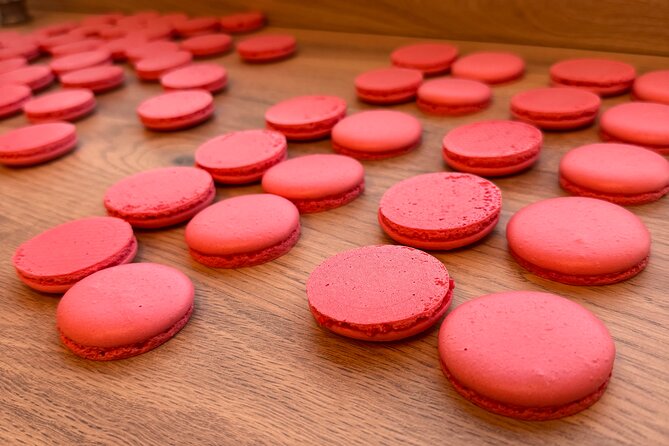
Shells are only half the story. The other half is filling—how it tastes, how it pairs, and how it turns a cookie into a proper macaron sandwich.
In class, you’ll create a filling (typically a ganache-style filling based on the information shared) and pair your shells with it. Reviews mention that you get to choose flavors, with examples like black currant and white chocolate.
Here’s the practical benefit for you: you’re not stuck with whatever the teacher decides for the group. Flavor choice makes the take-home box more personal, and it also helps you learn what you actually like. For example, people who aren’t fans of macarons sometimes end up eating theirs immediately after learning better shells and a filling that matches.
One caution from the reviews: a couple of guests felt uncomfortable with an end-of-class instruction to trade half their macarons with others. If you’re picky about hygiene or you just want your own flavors, I’d suggest setting expectations early. Ask the chef what the options are for sharing versus keeping your creations. A fun class should still feel comfortable.
A few more Paris tours and experiences worth a look



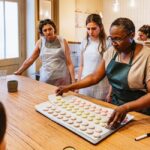

What you take home: boxed macarons plus the chef’s recipe
This workshop is set up so you leave with something concrete. Not just a memory. Not just one sad cookie. You make enough to bring home in a box, and many people report taking a generous batch.
From the info available:
- One review response mentions taking your 15 pastries per person
- Other reviews mention people leaving with around 22 macarons each
- You also receive a chef’s secret recipe to make at home
I love this part because it turns your class into a short-term payoff and a long-term project. You can eat them right away in a Paris apartment moment, then use the recipe later when you want to impress friends without relying on store-bought luck.
One small planning tip: macarons don’t last forever at home tastes-wise, so if you’re heading to the airport soon, bring them with intention. One review explicitly warned to book early so you have time to enjoy them before flying.
Group size, English instruction, and who should book
This is offered in English, and that’s a genuine benefit. Baking classes can get technical fast, and having a chef explain the why behind each step in a language you’re comfortable with makes the experience smoother.
The group cap of 10 travelers is also a big deal. It’s not only about crowd comfort. It’s about getting corrections when you need them. If your batter looks off, you want the instructor to notice before you pipe.
A few other details that matter:
- Single or odd-numbered bookings get paired with another participant or with the chef, so you’re not just standing around
- People mention taking the class as a couple, with a parent, or even with a teen (a 9-year-old and a 14-year-old were both mentioned)
This class is a great fit if you want:
- A hands-on Paris activity that doesn’t require baking knowledge
- Skills you can repeat later, not just photos
- A small-group format where you can ask questions
It might be less ideal if:
- You hate the idea of any social sharing or exchanging food at the end
- You’re extremely pressed for time and can’t arrive early for a strict start
Price and value: is $113.20 worth it?
At $113.20 per person, it’s not the cheapest thing you can do in Paris. But here’s why I think it can be good value.
You’re paying for four things that would cost extra if you did them separately:
- A trained chef patissier teaching technique live, in a kitchen setting
- All baking ingredients and utensils provided
- A small group with real guidance, not a distant demo
- A take-home result plus a chef’s secret recipe for your next attempt
Also, the class duration is about 2 hours 30 minutes. That’s a tight block of instruction. You’re not spending half a day getting oriented and then waiting for the next step.
If you’ve ever tried to make macarons at home from internet directions, you already know how easily ingredients and time disappear. A workshop helps you compress that learning curve into one visit. For many people, that’s what makes it worth the price.
Tips to get the best outcome in 2.5 hours
Macaron success is mostly preparation and calm. Here are the practical moves I’d make if I were you.
First, arrive early and re-check your route to 85 Rue de Rome. Even a small navigation error can be costly when the class has a strict start. If you’re using transit, plan your walk so you’re not sprinting with a bottle of water.
Second, treat the class like a technique lesson. The goal isn’t only to make cookies. It’s to learn the batter behavior and the piping consistency. Watch closely during demonstrations, then apply immediately. That’s how you turn instructions into muscle memory.
Third, decide in advance how you want to handle the take-home box. Some guests discussed how sharing or trading macarons was handled at the end. If that would bother you, ask how it works before you start filling and boxing.
My take: should you book this macaron workshop?
Yes, you should book this if you want a small-group Paris food experience with real technique. The repeated praise for clear, step-by-step teaching—and for chefs like Vivian, Marie, Leo, and Maria—points to a class designed to make macarons doable for regular people, not only expert bakers.
I’d also book it if you like structured learning. You’re not just mixing random bowls. You’re building a process you can repeat, and you leave with macarons in a box and the recipe for next time.
The only reason to hesitate is if you feel strongly about social sharing/trading during the class end or you have tight timing. If you can show up early, stay flexible, and communicate what you’re comfortable with, this looks like one of the more satisfying pastry workshops in Paris.
FAQ
What is the duration of the Paris macaron baking class?
The class lasts about 2 hours 30 minutes.
How many people are in the class?
The workshop has a maximum of 10 travelers.
Is the class offered in English?
Yes. The experience is offered in English.
What’s included in the price?
Coffee and/or tea, soda/pop, and all baking ingredients and utensils are provided. You also get the chef’s secret recipe for you to make at home.
Where does the class meet?
The meeting point is 85 Rue de Rome, 75017 Paris, France. The activity ends back at the meeting point.
Can I cancel if my plans change?
Yes. You can cancel up to 24 hours in advance for a full refund. If you cancel less than 24 hours before the start time, the amount paid is not refunded.