REVIEW · BEAUNE
Skip the Line: Abbaye de Fontenay Admission Ticket
Book on Viator →Operated by Abbaye de Fontenay · Bookable on Viator
A monastery you can actually hear. The Abbaye de Fontenay is one of the best places in Burgundy to slow down, because the buildings are preserved and the atmosphere stays calm. I especially like the pre-booked, skip-the-line ticket feel, so you spend less time fussing and more time looking closely at stone and shadow.
What I really love is how complete the ensemble is: you can walk through major Romanesque spaces like the church and the dormitory, then keep going to the cloister and chapter areas. The second thing I like is the site’s lived-in care—restoration work done by the current owners has kept the abbey looking intentional, not patched.
One consideration: if you visit during busier hours, the quiet you’re hoping for can be harder to find. Even so, it’s still a thoughtful stop, and you can plan your timing to get more breathing room.
In This Review
- Key highlights you’ll care about
- Fontenay Abbey: a UNESCO abbey you can walk through slowly
- A quick note on the skip-the-line ticket advantage
- The real itinerary: what you’ll see inside the abbey complex
- 1) The abbey church and the power of quiet
- 2) Dormitory: the monastic scale you can sense
- 3) Cloister: the calm connector between spiritual rooms
- 4) Chapter room and common room: where order mattered
- 5) Forge: the industrial chapter that preserved the past
- Gardens and lapidary museum: the included extras worth timing
- When to go: opening hours that help you manage crowds
- Price and value: what $13.91 buys you
- What this visit feels like in real life
- Who should book this admission ticket
- Should you book Abbaye de Fontenay skip-the-line admission?
Key highlights you’ll care about
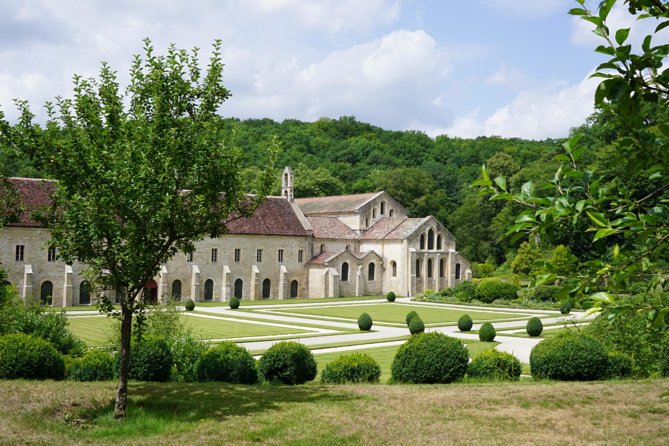
- Oldest preserved Cistercian abbey: Founded in 1118, and still standing in a remarkably intact form
- UNESCO World Heritage setting: The abbey is protected for both its architecture and its environment
- Original Romanesque buildings preserved: Church, dormitory, cloister, chapter room, common room, and forge
- Extra time with gardens and the lapidary museum: Included with admission
- Small group size: Maximum of 15, which helps keep your visit comfortable
- English availability: The ticket is offered in English
Fontenay Abbey: a UNESCO abbey you can walk through slowly
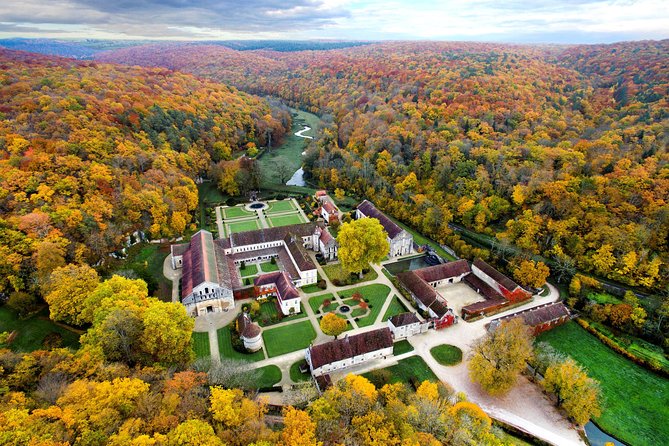
Abbaye de Fontenay sits in northern Burgundy, in a fully preserved valley that stretches over 1,200 hectares. It’s not just an old church and a few ruins. You’re touring a whole working arrangement of spiritual and practical spaces—laid out for a monastic day and then preserved across huge historical swings.
This is one of those sites where the architecture feels “readable.” The Romanesque forms are clear, the layout makes sense, and you can follow the rhythm of the complex without feeling like you need a textbook. That’s part of why it’s such a strong value for your time: you get a lot of significant places in a visit that’s typically about 1 to 2 hours.
You can also read our reviews of more tours and experiences in Beaune.


A quick note on the skip-the-line ticket advantage
Here, skip-the-line means you show up with a pre-booked paper ticket rather than trying to sort out timed entry on the spot. That matters if you’re juggling a day in Burgundy—because abbeys and major historic sites can get slow when lines form.
It’s also the kind of ticket that tends to reduce friction. One easy win I look for on day trips is “less waiting, more seeing,” and this is designed for that. You’ll still need to follow on-site rules and timings, but the entry part should feel smoother.
The real itinerary: what you’ll see inside the abbey complex
Your main stop is the Abbaye de Fontenay itself, and the value is in how much is still here. After the French Revolution drove the monks out, the site was converted to industrial use—yet the Romanesque buildings survived. That’s the key: you’re not looking at a modern reconstruction. You’re seeing the original structure set preserved through changing purposes.
1) The abbey church and the power of quiet
The church is your first big emotional hit. It’s a space meant for attention, and it tends to reward the slower pace. What I like about it is how quickly you feel the architectural discipline: lines, proportions, and light that don’t demand drama. They just hold you there.
If your timing is right, you may experience that almost library-level hush—exactly the kind of moment that makes the place feel special. Even on a more normal day, this is the stop where you’ll get the clearest sense of why Cistercian spirituality shaped how these buildings were used.
2) Dormitory: the monastic scale you can sense
Next comes the dormitory area, which helps you understand the abbey as a functioning community, not just a sacred landmark. This is where the size of the complex starts to make sense. The rooms feel designed for routine—sleep, rest, and the flow of daily life.
One of the best ways to enjoy this section is to stand still for a minute and let the space “settle.” The difference between rushing and taking your time is huge here. If you’re the kind of traveler who likes architecture but sometimes feels like you’re skating past it—this is the place where you can slow down without it becoming boring.




3) Cloister: the calm connector between spiritual rooms
The cloister acts like the quiet hallway of the abbey life. It’s the place where your photos may look less dramatic than you expect, but your experience tends to feel more rewarding. Why? Because it’s the connector between major spaces, so your eyes naturally track how movement and contemplation fit together.
This is also where I find myself thinking less about dates and more about design. The cloister is a reminder that monasteries weren’t built only for ceremonies. They were built for the daily mental habits of the people living there.
4) Chapter room and common room: where order mattered
The chapter room and common room add a different kind of interest. These spaces show the practical backbone of monastic life—the need for structure, discussion, and shared routine. If you’re into how institutions work, these rooms are where you start to feel the logic.
The drawback here is also simple: if you’re not in the mood for interior interpretation, you might find yourself wanting the “wow” of the exterior again. But if you like historic sites that feel like they have a system, these rooms will do a lot of the heavy lifting.
5) Forge: the industrial chapter that preserved the past
One of Fontenay’s most interesting facts is what happened after the monks left. The site was converted to industrial use, yet it preserved the Romanesque buildings of the abbey. The forge is a strong reminder that history often comes with repurposing.
It’s also a good place to connect the dots: you’re not only seeing religious architecture. You’re seeing architecture that survived because it was adapted—without being erased.
Gardens and lapidary museum: the included extras worth timing
Admission here doesn’t stop at the main buildings. Your ticket also includes the gardens and the lapidary museum.
The gardens are a nice counterweight to the stone interiors. They give you a slower pace and more space to breathe between rooms. If you’re traveling with kids or anyone who needs frequent pauses, these grounds can make the whole visit feel easier to manage.
The lapidary museum adds another layer: it helps you notice how stone and craft connect to the abbey’s story. It’s not always the top priority for visitors who race through sites, but since it’s included, it’s a good way to extend your understanding without adding extra cost.
When to go: opening hours that help you manage crowds
Timing matters at Abbaye de Fontenay, mostly because it’s a quiet kind of place. According to the posted opening hours, you’ll have two seasonal schedules:
- 11/12/2025 to 03/31/2026: 10:00 AM–12:00 PM and 2:00 PM–5:00 PM
- 04/01/2026 to 11/11/2026: 10:00 AM–6:00 PM
If you want the best chance at a calm visit—think church and dormitory moments where you don’t feel constantly surrounded—try to plan for earlier open hours within those windows. You’ll feel it most in the most spiritual interiors.
Price and value: what $13.91 buys you
At $13.91 per person, this isn’t a bargain in the sense of being free or ultra-cheap. But it’s solid value for what’s included.
You’re paying for:
- Admission to the abbey itself
- Access that covers major buildings you’ll actually want to see
- Entry to the gardens and the lapidary museum
- A small-group-friendly experience (maximum of 15)
- English availability
What makes the value make sense is that you’re not buying a “quick glance” ticket. The site is built to reward slow attention, and the visit duration lines up well with that—about 1 to 2 hours is enough to see the key rooms without turning the day into an all-day marathon.
What this visit feels like in real life
This is the kind of place where the best memory often isn’t a photo. It’s the sensation of stepping into spaces that were designed for contemplation.
One review highlight I’d put front and center is how restoration work has impressed people—owners have done long-term care, and that shows in the way the abbey looks preserved rather than neglected. Another recurring theme is that the visit can feel unusually calm, with people mentioning times when they had the church and dormitory nearly to themselves. That doesn’t mean you’ll always get perfect timing, but it tells you what kind of experience the site aims to provide: quiet, attention, and architectural clarity.
And the practical side matters too. People have described smooth entry and easy payment experiences, which is exactly what you want from an admission ticket on a travel day.
Who should book this admission ticket
You’ll enjoy Abbaye de Fontenay most if:
- You love medieval architecture and want something preserved rather than reconstructed
- You want a calmer alternative to major city monuments
- You like sites where the story is still visible in the rooms and layout
- You appreciate a small, orderly visit rather than a free-for-all
It also works well as a half-day stop when you’re based in Burgundy. If your itinerary includes other wine-country stops, this is a refreshing change of pace: fewer tastings, more centuries of stone, and a quiet walk that feels like a reset.
Should you book Abbaye de Fontenay skip-the-line admission?
Yes, if your goal is a meaningful, low-stress historic visit. This ticket is priced reasonably for the access you get, and the combination of major preserved buildings plus the gardens and lapidary museum makes it feel like more than a quick pass-through.
Book it especially if you care about spending time inside the church and dormitory without wasting your day waiting. If you’re sensitive to crowds or you’re traveling during a popular period, aim for earlier hours in the opening window so you can catch that calmer tone the abbey is famous for.
If you want, tell me your travel month and what else you’re doing in Burgundy (towns and rough timings), and I’ll suggest a simple schedule that pairs Fontenay with nearby stops without rushing.