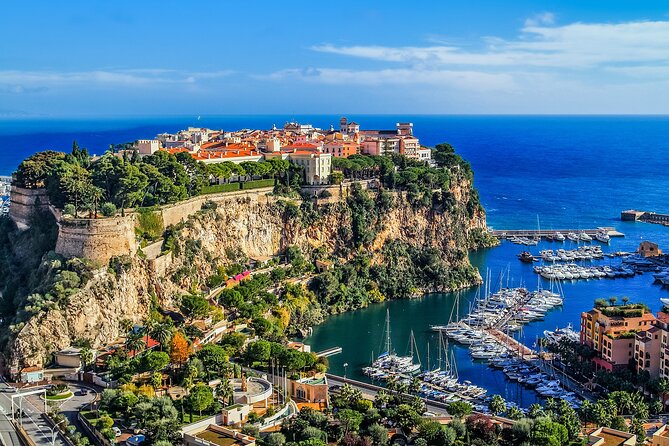
REVIEW · PARIS
Paris Jewish Heritage: Le Marais & Montmartre Guided Walking Tour
Book on Viator →Operated by Walks In Europe · Bookable on Viator
Paris has layers. This walk connects them. You’ll move through Le Marais and Montmartre with a local guide who links streets, synagogues’ architecture, and big historical moments into one clear story of Jewish life in Paris.
Two things I really like: the focus on specific places you can still see today, like the Agoudas Hakehilos Synagogue exterior and the Mémorial de la Shoah viewpoint, and the small-group format (up to 12, and designed for interactive small groups). One possible drawback to plan around: it’s more about guided interpretation and exterior viewing than about going inside sites, so if you’re hoping for lots of interior visits, your time will feel more “outside the door” than “inside the experience.”
In This Review
- Key highlights at a glance
- Entering Le Marais: a Jewish Paris start point you can feel
- L’Elephant du Nil to Hôtel de Ville: where the walk begins
- The Agoudas Hakehilos Synagogue exterior: Art Nouveau detail, not just a name
- Mémorial de la Shoah from the outside: remembrance with no museum ticket
- Rue des Rosiers: Jewish commercial life, change, and rebuilding
- The short transfer to Montmartre: a necessary reset
- Montmartre’s Jewish artistic chapter: Modigliani and Chagall’s Paris
- Sacré-Cœur steps finale at Square Louise-Michel: views with meaning
- Group size, guide quality, and how to get the most out of it
- Weather and comfort: walking time adds up in Paris
- Is it worth the $102.12 price?
- Who should book this Jewish Paris heritage walk?
- Should you book it? My practical call
- FAQ
- FAQ
- What’s the duration of the Paris Jewish Heritage tour?
- How much does the tour cost?
- Is the tour offered in English?
- How big is the group?
- Are synagogue interiors included?
- What stops are included in Le Marais?
- What happens during the Montmartre part?
- Do you include tickets for public transportation between districts?
- Can I cancel or join late?
Key highlights at a glance
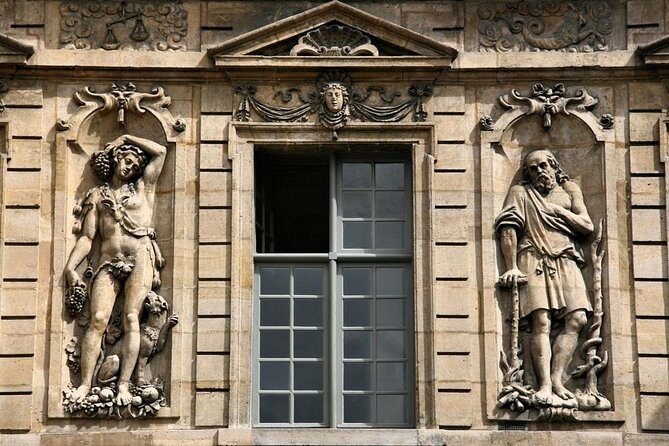
- Le Marais first: medieval Jewish quarter context, then modern-day streets like Rue des Rosiers
- Agoudas Hakehilos (exterior): Art Nouveau synagogue architecture associated with Hector Guimard
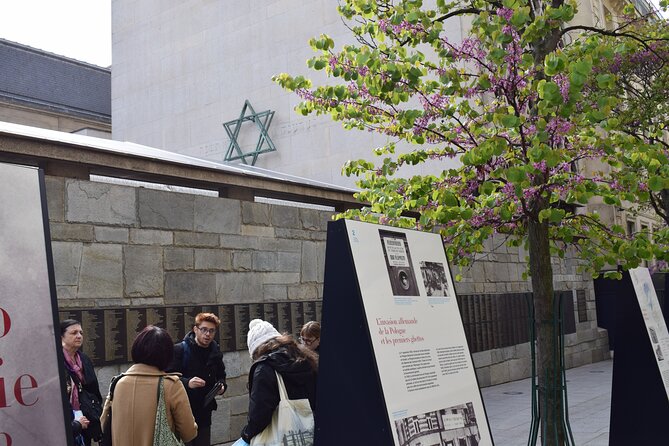
- Mémorial de la Shoah (exterior): remembrance and history without museum entry time
- Montmartre chapter: immigrant artists and writers, with names like Modigliani, Max Jacob, and Chagall
- Finish at Sacré-Cœur: big Paris views paired with reflection on layered identity
- Short public transfer: included transport tickets between districts so you’re not guessing routes
Entering Le Marais: a Jewish Paris start point you can feel
This tour’s opening choice is smart. Starting in Le Marais puts you in the part of Paris where Jewish community life left long, visible traces in street layout, institutions, and businesses. You’re not just hearing dates. You’re walking through an area that still carries the shape of the community in its blocks, corners, and landmarks.
The pacing here matters. The Le Marais portion is designed for an hour of walking and context, which means you’ll get orientation before you move on. It can feel a touch slow at first if you want the story to jump straight into the biggest events right away, but the payoff comes when the guide starts connecting the dots between medieval presence, later migration, rebuilding, and memory.
You can also read our reviews of more walking tours in Paris



L’Elephant du Nil to Hôtel de Ville: where the walk begins
Your meeting point is L’Elephant du Nil at 125 Rue Saint-Antoine (75004). The tour starts at 2:30 pm, and you’re asked to arrive about 5–10 minutes early. That matters in Paris because you’ll be weaving between streets and transit stops, and the guide won’t wait once the walk has started.
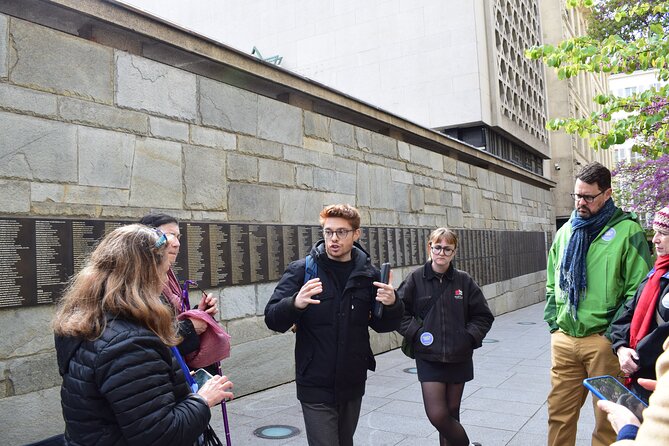
From there, you’ll work through the Marais with the guide adjusting pace for the group. The tour is capped at 12 travelers, and the format is built to feel intimate for up to 9 people, so you’re more likely to get your questions answered instead of being spoken at from a megaphone.
The Agoudas Hakehilos Synagogue exterior: Art Nouveau detail, not just a name
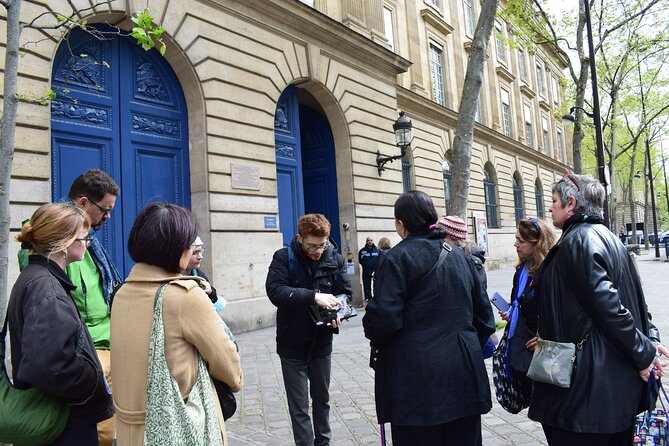
One of the most visually interesting moments is the stop at the Agoudas Hakehilos Synagogue exterior. This is a rare example linked to Art Nouveau synagogue architecture associated with Hector Guimard. Even if you don’t go inside, you get something valuable: an architectural clue about how immigrant communities shaped and expressed identity in the city.
Here’s the practical angle. Paris streets can make it easy to walk past “a building” and miss why it matters. This stop is meant to correct that. Your guide puts the exterior into context—especially the waves of Eastern European Jewish immigration that influenced institutions, schools, and cultural life in the late 19th and early 20th centuries.
If you love design, you’ll likely enjoy this more than you expect. And if you’re more history-first, the architecture still acts like a shortcut into understanding why certain parts of Paris developed the way they did.
Mémorial de la Shoah from the outside: remembrance with no museum ticket
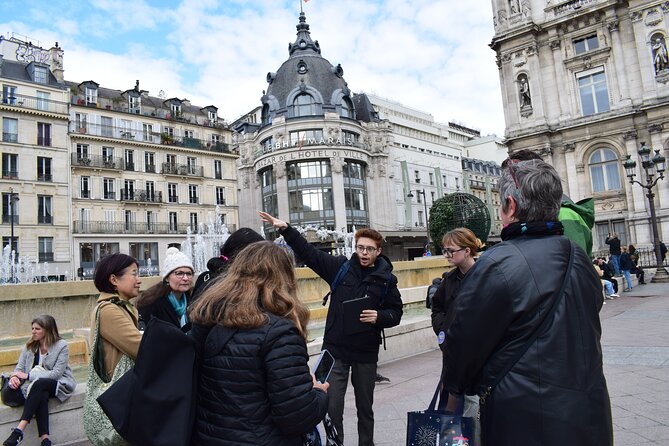
Next comes a solemn stop at the Holocaust Memorial (Mémorial de la Shoah), viewed from the exterior. The guide provides the historical framing—occupation, resistance, and remembrance—and how those chapters continue to shape Jewish identity and memory in Paris.
This is also where you should be mentally prepared for tone. You’re not going into the museum spaces; you’re standing outside and absorbing context through the guide’s explanation and the place’s significance. If you want additional time inside exhibits, you’d need to add that yourself after the tour ends or on another day.
A useful way to think about this stop: it gives you orientation and meaning, without turning the tour into a full museum day. That helps the itinerary stay balanced and keeps the rest of the story moving toward community continuity and cultural life.
Rue des Rosiers: Jewish commercial life, change, and rebuilding
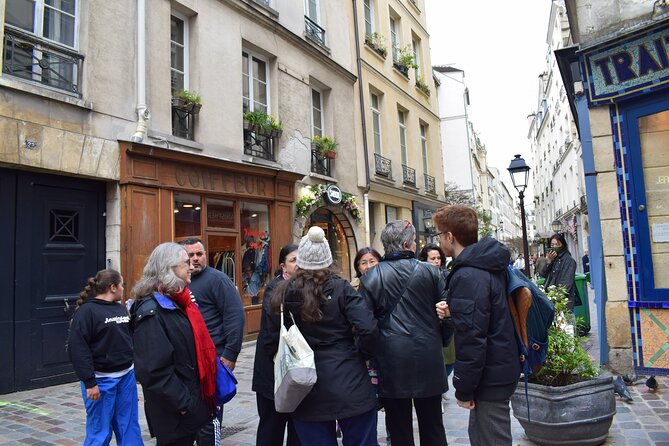
Then the tour shifts to streets you can practically smell and see. You’ll continue along Rue des Rosiers, historically the heart of Jewish commercial and community life in the Marais. Bakeries, delis, and specialty shops line the street, and the guide connects that everyday “street life” to the longer arc of how the neighborhood developed, changed, and rebuilt through the 20th century.
This part is important because it refuses to treat Jewish Paris as only the tragic chapters. You get the normal rhythms too—the kind of neighborhood culture that grows when communities establish businesses, schools, and social spaces.
One note: a couple guides have been praised for pacing and storytelling in this area, and some people found the walking story stronger than a pure list of sites. If you’re the type who likes learning how people lived (not just where they went), keep an eye out for the guide’s examples of daily community life, institutions, and the feel of the street.
You can also read our reviews of more guided tours in Paris






The short transfer to Montmartre: a necessary reset
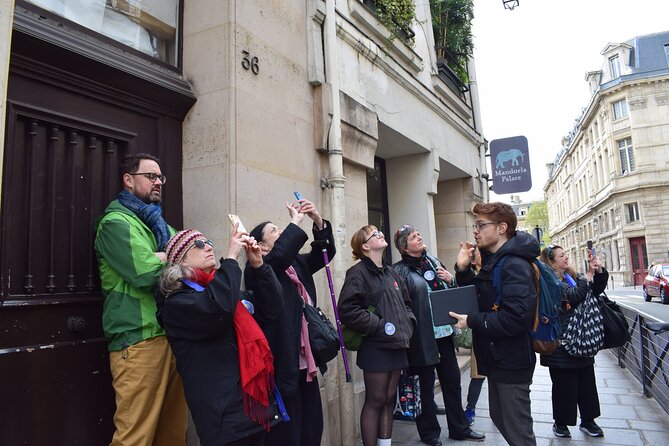
After wrapping up near Hôtel de Ville, you’ll take a short public transport ride to Montmartre. The tour includes public transport tickets, which is a real value in central Paris—no time wasted looking up routes or trying to interpret signage while you’re already thinking about history.
This transfer also does a job for your brain. Montmartre is a different mood. Le Marais is tradition and communal continuity; Montmartre becomes the story of artistic reinvention, immigrant creativity, and the risks that rose alongside political uncertainty.
Montmartre’s Jewish artistic chapter: Modigliani and Chagall’s Paris
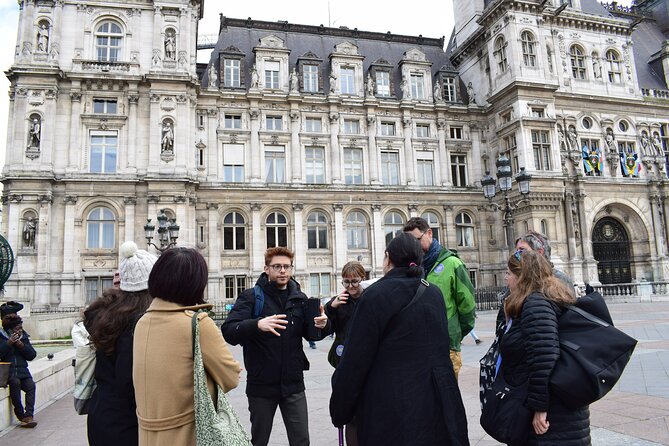
In Montmartre, the tour turns to the artistic world that fed early 20th-century modernism. The focus is on Jewish immigrant artists, writers, and musicians who found community in cafés, studios, and literary circles.
You’ll hear names that stick, including Amedeo Modigliani, Max Jacob, and Marc Chagall. The guide ties these cultural lives to the broader European context: rising nationalism, antisemitism, and political uncertainty. That contrast is the key idea—creativity and ambition flourishing in public spaces, while threat gathered in the background.
This section matters if you want Jewish Paris to feel like more than “a historic neighborhood.” It’s also about influence. Many of the creative figures associated with Montmartre later faced exile, persecution, or rupture during the Second World War, but their legacy helped shape the trajectory of modern art—and that legacy still colors how people mythologize Paris today.
If you enjoy art history, you’ll probably like the Montmartre portion best. If you’re more focused on community institutions, just keep your expectations aligned: here you’re studying culture-making, not synagogue life.
Sacré-Cœur steps finale at Square Louise-Michel: views with meaning
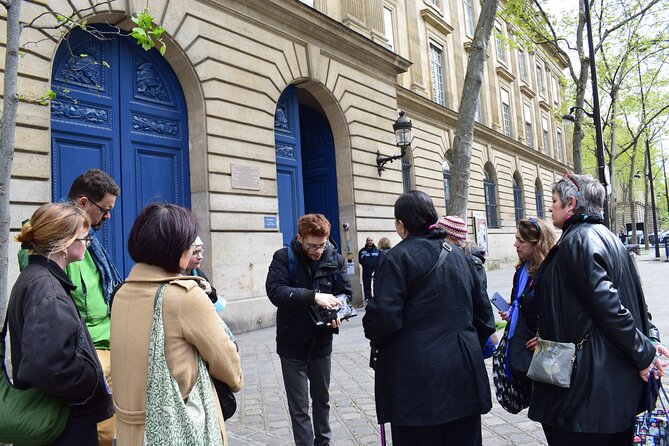
The tour ends near the steps of the Sacré-Cœur Basilica in Montmartre. You’ll finish at Square Louise-Michel, where you get one of those classic Paris moments—big views from an iconic hilltop—paired with a final layer of reflection on Jewish history, creativity, and resilience.
This last stretch is short (about 15 minutes), but it’s a good way to tie the itinerary together. You start in a neighborhood shaped by centuries of Jewish presence and rebuilding, and you end in a district famous for art and reinvention. Same city. Different lens.
And honestly, this ending is handy even if your legs are tired. It’s not an all-day hike—just enough outdoor time to feel like you visited Montmartre for real, not just passed through it.
Group size, guide quality, and how to get the most out of it
The tour’s design is built for interaction. It’s small-group by default, and the guide is supposed to be flexible with pace and questions. That’s a huge deal on walking tours, because a good guide helps you see details you’d otherwise miss.
Guide names that have shown up with strong praise include Benjamin, Thomas, Pierre Louis, Adrian, and Boniet, with a few people mentioning “PL” and “Benoit/ Benoit” (as nicknames or guide names). The common thread in the positive feedback is storytelling depth and an ability to provide context without becoming cold or robotic.
Still, it’s worth flagging two real considerations from the experience format:
- The content can lean heavily toward big-picture historical explanation, sometimes more than street-level “how people lived” detail. If your priority is daily life and neighborhood texture, ask your guide (in the moment) to point out what you’re seeing beyond the major events.
- English quality can vary by guide. The tour is offered in English, but if you’re sensitive to accents or fast phrasing, plan to be patient and ask for clarification when needed.
Weather and comfort: walking time adds up in Paris
This is an outdoor-heavy walk across two districts, plus a public transport ride. Rain or cold won’t stop the itinerary, and at least one guide has been praised for keeping the experience going even in bad weather. Still, you should dress for it. Bring a layer, shoes you can walk in all day, and something for wind.
Also remember: Montmartre involves slopes. Even with breaks and guided pacing, you’ll feel the hill by the end.
Is it worth the $102.12 price?
At $102.12 per person for about 3 hours 30 minutes, this tour isn’t “cheap,” but it also isn’t trying to be. You’re paying for:
- A small-group guided experience
- A local expert guide
- A structured route linking multiple districts
- Included public transport tickets
- Exterior viewing of major, meaningful landmarks
The value is strongest if you like guided interpretation—especially when the guide connects architecture, neighborhood change, and memory into a single narrative. If you mainly want to check off sites and then go eat on your own, you may feel the price is harder to justify.
A smart middle-ground strategy: use this tour to build context and then spend the rest of your day wandering Rue des Rosiers or revisiting a viewpoint without time pressure.
Who should book this Jewish Paris heritage walk?
This tour fits best if you:
- Want a history-and-identity guided route rather than a pure architecture stroll
- Like seeing how one neighborhood evolves into another story across the city
- Want a small-group format with time for questions
- Prefer a mix of reflective moments and street-level context
It may also work for families, as at least one review said it’s good for children. If you’re bringing kids, I’d still keep expectations realistic: you’re covering difficult history and big themes, so bring snacks, plan a brief pace adjustment, and choose your moments to pause.
Should you book it? My practical call
I’d book this if your goal is understanding Jewish Paris through place-based storytelling—Le Marais for communal continuity and Montmartre for creativity amid political danger. The exterior-only approach makes it easier to cover more ground without committing to museum entry schedules, and that can be a big advantage for a first-time Paris visitor.
I’d think twice if you’re specifically hunting for lots of interior synagogue time and museum access. This tour is designed around exterior landmarks like Agoudas Hakehilos and the Mémorial de la Shoah, plus street-level context on Rue des Rosiers and the Montmartre cultural scene.
If you’re on the fence, here’s the decision shortcut: if you like your tours guided and explanatory, this one is likely to land well. If you prefer mostly self-guided sightseeing, you may want to allocate your budget to longer independent time in specific sites.
FAQ
FAQ
What’s the duration of the Paris Jewish Heritage tour?
It’s about 3 hours 30 minutes (approx.).
How much does the tour cost?
The price is $102.12 per person.
Is the tour offered in English?
Yes, it’s offered in English.
How big is the group?
It’s a small-group experience, with a maximum of 12 travelers.
Are synagogue interiors included?
No. You only visit synagogue and landmark exteriors, and indoor visits are not included.
What stops are included in Le Marais?
You’ll cover the Jewish heritage area of Le Marais, including the exterior of the Agoudas Hakehilos Synagogue, views of the Mémorial de la Shoah, and time walking along Rue des Rosiers.
What happens during the Montmartre part?
You explore the artistic chapter of Jewish Paris in Montmartre and finish at the Sacré-Cœur Basilica steps, with the tour ending at Square Louise-Michel.
Do you include tickets for public transportation between districts?
Yes. Public transport tickets are included for the short journey from Le Marais to Montmartre.
Can I cancel or join late?
You’re asked to arrive 5 to 10 minutes early, and it isn’t possible to join after the tour has started. For cancellations, you can cancel up to 24 hours in advance for a full refund.