REVIEW · PARIS
Paris French Macarons Small Group Baking Class with a Chef
Book on Viator →Operated by Meeting the French · Bookable on Viator
You can smell butter and sugar in a Paris apartment. This small-group macaron class puts you at a chef’s side to learn the Pierre Hermé–style approach, with hands-on help in a real local kitchen. I like that it stays small (max 8) and that you leave with both a box of macarons and a recipe you can actually use again.
One watch-out: macaron making has built-in waiting time. Between resting the batter, baking, then cooling the shells before filling, you may have stretches where the chef is working and you’re not constantly piping.
In This Review
- Key Highlights You’ll Care About
- A 3pm Macaron Mission in a Real Paris Apartment
- Small-Group Tutoring That Makes the Difference
- Why This Class Starts With Pierre Hermé and Ladurée
- Two Flavor Choices, One Shared Recipe Rhythm
- The Macaron Timeline: Rest, Bake, Cool, Fill
- The Chef Factor: Teaching Style You Can Learn From
- What You Actually Take Home (And Why It Matters)
- Price and Value: Is $218.90 Fair?
- Practical Tips So Your Class Goes Smooth
- Who Should Book This Macaron Class
- Should You Book This Paris French Macaron Class?
- FAQ
- How many people are in the small group?
- How long is the class, and when does it start?
- Is hotel pickup included?
- Are recipes included?
- Can the class be adapted for almond allergies?
- What is the cancellation window for a full refund?
Key Highlights You’ll Care About
- Max 8 people means real attention, not a crowd scene
- Central Paris apartment setting feels like a local kitchen lesson
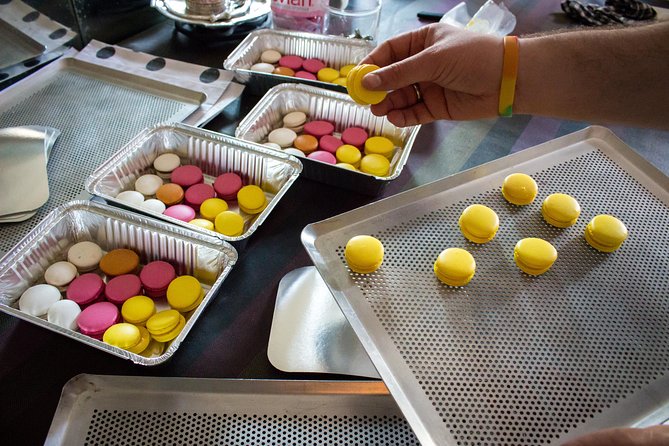
- You choose two flavors as a group, then learn how to assemble
- Supplies and equipment provided (apron, utensils, and tools you can find at home)
- Take-home box plus recipe copy so your effort doesn’t end at the tasting
- Allergy note matters: macarons contain almond powder, and it can’t be adapted for almond allergies
A 3pm Macaron Mission in a Real Paris Apartment
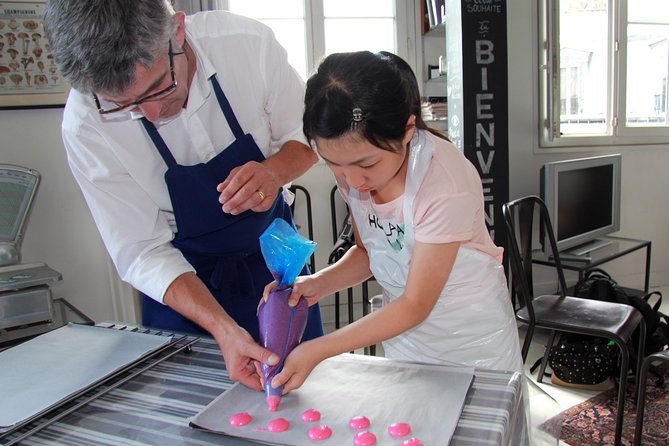
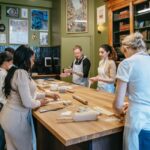
This is a chef-led class in central Paris, not a big cooking school. You head to a private apartment kitchen, meet your French pastry chef, and settle in for about 3 hours, starting at 3:00 pm.
The biggest appeal is the setting. An apartment kitchen changes the mood: you’re working at a table, not watching from the back row. And because it’s designed for small groups, the chef can steer your technique when it matters.
You can also read our reviews of more cooking classes in Paris
Small-Group Tutoring That Makes the Difference
The class runs at a maximum of 8 travelers, and that size shows in how the session feels. You’re not just learning macaron theory. You’re doing steps with the tools, under guidance, so you can connect the why to the what.
Also, the included setup removes the usual friction. You get an apron, the utensils, and the cooking equipment—so you can focus on the process rather than hunting for gear. The chef also uses equipment that exists in most home kitchens, which is crucial if you want to repeat the results later.
Why This Class Starts With Pierre Hermé and Ladurée
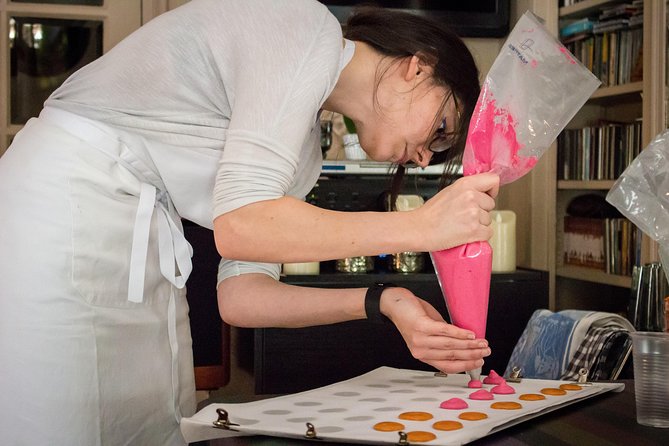
The recipe inspiration traces back to storied French pastry chef Pierre Hermé, and the class links that lineage to how macarons became famous through Ladurée, which has produced the confection since 1930.
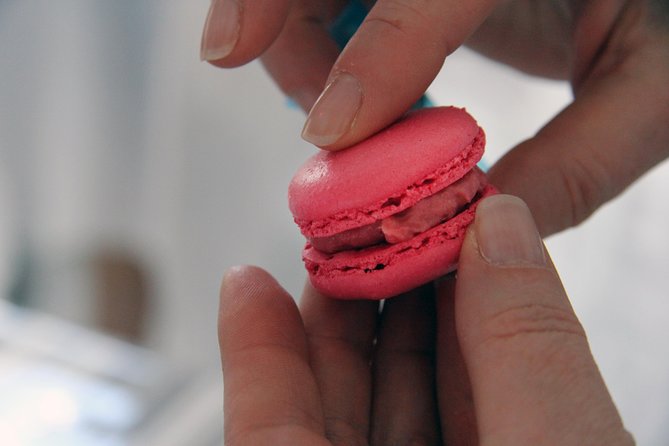
That context matters because it explains what you’re making. A French macaron isn’t a single cookie. It’s two delicate meringue cookies that sandwich a filling. The balance is in the shell texture and how it pairs with the filling, not in sweetness alone.
You’ll also get a simple visual rhythm in your mind: shells first, filling second, then assembly. When you understand that sequence, the rest of the class makes more sense—and you’re less likely to rush.
Two Flavor Choices, One Shared Recipe Rhythm
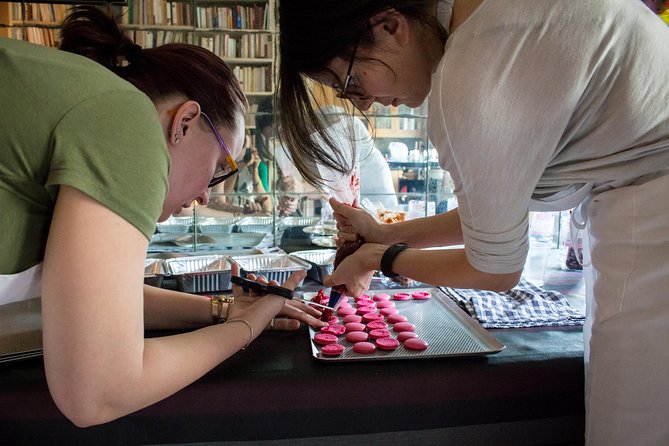
During your class, your group picks two macaron flavors to make together. You’re not stuck with one option, and that choice helps keep everyone engaged, especially if you go with friends or family.
You’ll work through the macaron process for the flavors you choose, and the chef guides you on how the shells should look and how to handle the next step. This is where a good teacher earns their paycheck: macarons punish impatience, and the chef keeps the timing aligned.
Even when the chef pre-measures ingredients to speed things up, you’re still part of the making. That mix of chef expertise plus your participation is a good balance for a class length of about three hours.
The Macaron Timeline: Rest, Bake, Cool, Fill
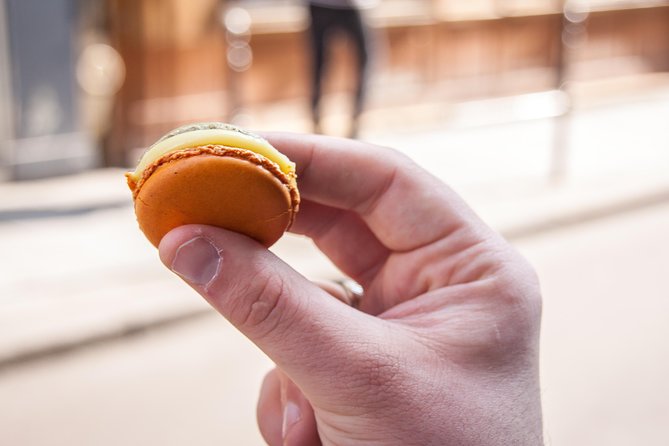
Macaron success is mostly timing and texture. The class explicitly follows the real-world sequence: prepare the dough, let it rest, bake, cool, then fill and assemble.
Here’s the practical reality: you should expect downtime. Once the batter is piped, the resting period and later cooling take time. In a home kitchen, you’d wait too; in a class, you’ll just be waiting with a chef nearby to keep you on track.
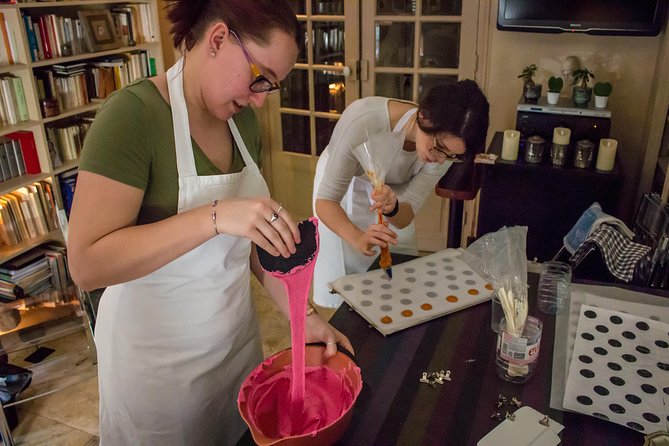
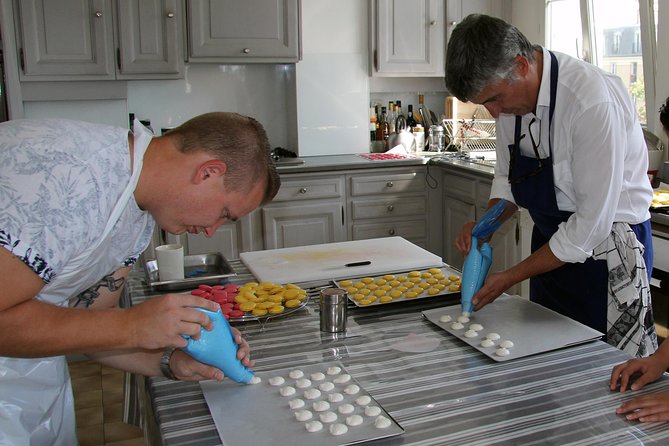
Some parts are also more delicate than others. In similar sessions, chefs often handle the most finicky pieces with precision while you help with mixing, folding, piping, and assembling. So if you want every minute to be hands-on, you might find the pace more like guided crafting than constant action.
A few more Paris tours and experiences worth a look




The Chef Factor: Teaching Style You Can Learn From
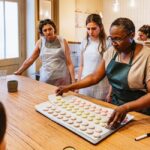
This class is hosted by a French chef, and the experience quality is tied to how they explain technique. The names you might meet include Chef Marthe, Chef Myriam, and Chef Frédéric, and the common thread is clear: they teach the steps and also the reasoning behind them.
What I like about this style of instruction is that it targets what you can’t reliably learn from random online videos. You’ll get practical tips, the kind that help you avoid the most common macaron mistakes—especially around how the shells should be treated between baking and filling.
You’ll also notice the way chefs manage the room. Multiple sessions are described as warm, patient, and well-paced. The goal isn’t speed. It’s control, so your macarons come out as macarons, not sad little cookies wearing a macaron costume.
What You Actually Take Home (And Why It Matters)
You’ll leave with two things that make the class worth it: a box of homemade macarons and a copy of the recipes.
That recipe sheet is the key. Without it, you’d be stuck trying to remember ratios and steps from a single afternoon. With it, you can recreate the flavors and the method at home, which is where the value comes alive.
Also, the take-home box is not just a snack. It’s your proof of concept. You made the shells, the filling, and the final pairings. Then you can adjust your next attempt based on what you tasted and how the texture turned out.
Price and Value: Is $218.90 Fair?
At $218.90 per person for about 3 hours, this isn’t a budget activity. But it’s also not just buying ingredients and watching a show.
Here’s what you’re paying for:
- A professional French chef host
- Small group (max 8) attention
- Supplies, apron, utensils, and equipment
- Two flavor choices and guided execution
- A take-home box plus recipe copy
If you compare it to buying a box of Paris macarons alone, the class still has extra value because you’re learning a repeatable process, not just tasting the finished product. It’s a premium experience, but it’s premium in a way that can pay off later when you make macarons at home.
Practical Tips So Your Class Goes Smooth
A few small prep moves make a big difference with macarons.
1) Plan for timing, not constant motion. Rest, bake, cool—expect pauses. Treat it like a calm workshop, not a sprint.
2) If you have allergies, speak up early. The class includes almond powder, and it can’t be adapted for almond allergies. You should advise the team about allergies (food and animals) before you go.
3) Bring comfortable clothes and room in your bag. You’ll be handling tools and piping, so wear something you don’t mind getting a little flour dust on. Also, you’ll want safe space for your macaron box on the way back.
4) Don’t rely on memory for recipes. The class includes a recipe copy, so keep an eye on how you receive it and make sure it reaches you. If you use email often, check spam folders just in case.
5) Expect a no-pickup setup. Hotel pickup and drop-off aren’t included. The class ends back at the meeting point, and it’s listed as near public transportation—so plan your route accordingly.
Who Should Book This Macaron Class
This class fits best if you want:
- A hands-on chef session in a small group
- Authentic-style technique for French macarons
- A fun Paris activity that’s more than a museum stop
- Something you can rebuild later using the recipe copy
It may be less ideal if:
- You need nonstop participation every minute
- You’re allergic to almonds (since almond powder is part of the macarons and the class can’t be adapted)
Should You Book This Paris French Macaron Class?
If macarons are on your Paris list, this one makes sense. You get chef teaching, real process steps (not just theory), and a take-home box plus recipes. The price is steep, but the structure is built for learning and repeat results, not a quick cookie souvenir.
Book it when you want a break from walking and a solid skill you’ll use again. Skip it if you’re almond-allergic or you’re mainly looking for a nonstop hands-on event with no waiting.
FAQ
How many people are in the small group?
The class has a maximum of 8 travelers, which keeps the instruction personal.
How long is the class, and when does it start?
It runs for about 3 hours and starts at 3:00 pm.
Is hotel pickup included?
No. Hotel pickup and drop-off are not included, and the activity ends back at the meeting point.
Are recipes included?
Yes. You receive a copy of the recipe to take home.
Can the class be adapted for almond allergies?
No. Macarons contain almond powder, and the class cannot be adapted for those with almond allergies.
What is the cancellation window for a full refund?
You can cancel up to 24 hours in advance for a full refund. If you cancel less than 24 hours before the start time, the amount paid is not refunded.